OEM / ODM Cosmetic Bag Pricing Guide
What Affects the Price of Custom Cosmetic Bags? 10 Cost Factors Explained
When beauty brands, skincare companies, retailers, promotional buyers, subscription box teams, wholesalers, and private label sellers request a factory quotation, one of the first questions is: what affects the price of custom cosmetic bags? The answer is not one single factor. A custom cosmetic bag price is shaped by material, size, structure, logo method, MOQ, packaging, sampling, quality control, shipping, and supplier capability.
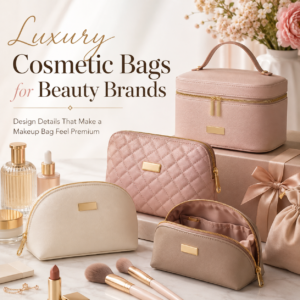
A simple polyester makeup pouch with a printed logo and basic polybag packaging will not cost the same as a structured PU leather vanity case with a metal logo plate, branded lining, custom zipper puller, dust bag, belly band, and gift box. A clear PVC travel pouch, cotton canvas drawstring bag, makeup brush bag, toiletry bag, mini pouch, and cosmetic bag set all have different production paths.
This guide explains the 10 most important custom cosmetic bag cost factors buyers should understand before comparing quotations. If you are preparing a custom project, you can explore Custom Bag Manufacturing Services, browse the Cosmetic Bag Collection, or send your project details through Contact Us.
Why Custom Cosmetic Bag Prices Vary
Custom cosmetic bag prices vary because custom bag manufacturing is specification-based. A factory quote is not only based on the product name. It is based on the full production specification: bag type, dimensions, outer material, lining, zipper, logo, structure, color quantity, packaging, order quantity, inspection standard, and shipping method.
For example, two cosmetic bags may both be called “makeup pouches,” but one may be a flat unlined polyester pouch with screen printing, while the other may be a lined PU leather pouch with a branded metal plate, premium zipper, side handle, printed insert card, and retail box. Their prices will be different because the material cost, labor cost, accessory cost, packaging cost, and inspection requirements are different.
Buyers should avoid comparing quotes only by unit price. A lower price may mean thinner fabric, lower-grade zipper, simpler lining, smaller size, weaker packaging, or less inspection. A higher price may include better materials, stronger construction, retail-ready packaging, and more reliable quality control. The right price is not always the lowest price. It is the price that matches your target market, retail margin, brand positioning, and customer expectations.
A good cosmetic bag manufacturer should help buyers understand the price logic. It should explain what is included, what is optional, what increases cost, and what can be adjusted to meet the target price. For a broader cost overview, you can also review How Much Do Custom Cosmetic Bags Cost?.
1. Material Type and Material Grade
Material is one of the biggest cost factors in custom cosmetic bag production. Polyester, nylon, PU leather, canvas, cotton, PVC, TPU, satin, velvet, terry cloth, recycled polyester, and specialty fabrics all have different costs. Even within the same material category, price can vary by thickness, finish, coating, texture, color, and supplier quality.
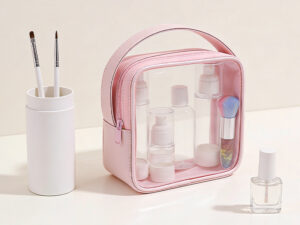
Polyester is often cost-effective and practical for promotional pouches, basic makeup bags, and high-volume projects. Nylon can feel stronger and more travel-oriented. PU leather usually creates a more premium look and may support higher retail value. Canvas and cotton can create a natural or boutique appearance. PVC and TPU are used for clear cosmetic bags and transparent travel pouches. Satin, velvet, terry cloth, quilted fabric, and plush fabrics are often used for giftable or trend-focused products.
Material grade matters as much as material type. A thin PU may be cheaper but may wrinkle or scratch more easily. A thicker pebbled PU may cost more but look more premium. A low-cost PVC may have odor or clarity issues, while higher-grade transparent material may look cleaner. A basic polyester may work for promotions, but a higher-density polyester can make the product feel more durable.
Custom-dyed fabrics, custom prints, recycled materials, metallic finishes, textured PU, quilted fabric, and specialty lining can increase both MOQ and price. If you are still choosing materials, review the Cosmetic Bag Materials Guide and the PU Leather Cosmetic Bags Guide.
2. Bag Size and Material Consumption
Size directly affects price because larger cosmetic bags use more material, longer zippers, more lining, more thread, larger packaging, and more carton space. A mini pouch usually uses less material than a travel toiletry bag, cosmetic case, or vanity case. However, smaller does not always mean extremely cheap if the design is complex or the logo method is premium.
Buyers should provide exact dimensions whenever possible: length, height, depth, gusset, handle length, and any special pocket sizes. If exact dimensions are not ready, share the products the bag must hold. For example, a bag designed for lipstick, compact powder, and mascara will be different from a bag designed for skincare bottles, makeup brushes, travel toiletries, or gift set products.
The filled shape also matters. A pouch may look good when empty but become bulky, unstable, or hard to close when filled. If the bag must hold bottles or brushes, the factory may need to adjust height, depth, zipper opening, lining strength, and base structure. These changes can affect cost.
Size also affects shipping. A flat pouch can pack more efficiently than a structured boxy bag. A rigid vanity case or gift-boxed product may take more carton volume, increasing freight cost. If your project is for retail or subscription boxes, confirm both product size and packed size early.
3. Structure, Shape, and Sewing Complexity
Structure is one of the most important cost factors because it affects pattern development, cutting, sewing time, labor difficulty, inspection, and defect risk. A flat zipper pouch is usually easier to produce than a gusseted cosmetic bag, brush bag, toiletry bag, vanity case, or multi-compartment travel organizer.
A simple pouch may include only front panel, back panel, zipper, and basic seams. A more complex product may include side panels, gussets, curved zipper openings, handles, inner pockets, brush slots, elastic loops, mesh compartments, clear windows, divider panels, removable pouches, reinforced base, padding, or metal accessories.
Curved shapes and structured bags usually require more accurate cutting and sewing. Clear PVC bags may need careful edge control and scratch protection. PU leather bags may need cleaner stitching and surface inspection. Quilted bags require additional stitching before assembly. Brush bags need precise slot spacing. Toiletry bags need functional capacity and lining control. Vanity cases need shape stability and handle reinforcement.
Buyers should decide which structure features are truly necessary. Extra compartments can increase perceived value, but they also increase cost. If the customer only needs a simple daily makeup pouch, a complex structure may not improve sales enough to justify the cost. If the product is for premium retail, better structure may support a higher retail price.
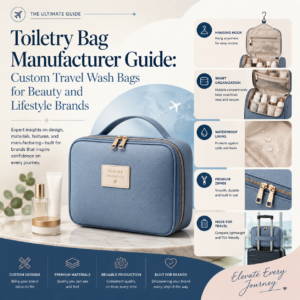
For product structure comparison, review the Cosmetic Case vs Cosmetic Bag Guide, Toiletry Bag Manufacturer Guide, and Custom Vanity Cases Guide.
4. Lining, Interlining, Padding, and Reinforcement
Lining and reinforcement can significantly affect custom cosmetic bag cost. A bag with no lining is usually simpler and cheaper. A lined bag feels more finished and can hide inner seams. A wipe-clean lining can improve usability for beauty and travel products. A printed lining can strengthen brand identity. A padded lining can protect contents and improve perceived value.
Common lining options include polyester lining, satin lining, printed lining, TPU lining, PVC-coated lining, water-resistant lining, wipe-clean lining, mesh lining, and branded lining. Each option has different cost and production requirements. If the bag is designed for skincare, toiletry, or travel use, lining may matter more because customers may carry liquids, bottles, brushes, or products that can leave residue.
Interlining and padding can help a cosmetic bag hold its shape. A soft pouch may not need heavy reinforcement, but a structured case, vanity bag, brush organizer, or premium PU pouch may need foam, board, nonwoven backing, sponge, or reinforced panels. These materials add cost but can improve shape and quality.
Reinforcement is also important for handles, zipper ends, side tabs, hooks, and stress points. If a bag is designed to carry heavier items, skipping reinforcement may reduce cost but increase quality risk. A factory should recommend reinforcement based on real use, not only appearance.
5. Zippers, Pullers, Hardware, and Accessories
Zippers and hardware are small details, but they can strongly affect both cost and customer experience. A basic nylon zipper is usually more cost-efficient. A metal zipper can look premium but may cost more and feel heavier. A waterproof-style zipper can support travel or toiletry positioning but may be stiffer. A double zipper, curved zipper, or wide-opening zipper can improve usability but may increase labor and material cost.
Zipper pullers also matter. Standard pullers are cost-effective, while custom metal pullers, PU pull tabs, rubber pullers, logo pullers, and special shapes may require extra setup or molds. These details can improve brand value but should match the product price tier.
Hardware may include D-rings, buckles, snaps, metal logo plates, rivets, hooks, chain straps, handle connectors, eyelets, and magnetic closures. Hardware finish can also change the price: silver, gold, rose gold, antique brass, matte black, or custom plating may have different costs and MOQ requirements.
Buyers should not reduce cost by choosing weak zippers or low-grade hardware for a product that will be opened frequently. A broken zipper can ruin the entire product. For more detailed zipper planning, review the Best Zipper for Custom Cosmetic Bags Guide.
6. Logo Method and Branding Details
Logo customization is a major price factor because different branding methods require different materials, setup work, labor, and inspection. Common logo methods include screen printing, heat transfer, digital printing, embroidery, woven labels, PU patches, rubber patches, silicone patches, debossing, embossing, foil stamping, metal plates, printed lining, and custom zipper pullers.
Screen printing is often practical for simple logos and cost-controlled projects. Heat transfer can support more detailed artwork. Embroidery adds texture but may cost more and may not work well for tiny letters. Woven labels can create a clean retail look. PU patches and rubber patches add dimension. Metal plates and debossing can make a PU bag feel more premium. Custom zipper pullers can strengthen brand identity but may require higher setup cost.
Logo size, color count, placement, and complexity also affect cost. A one-color front logo is usually easier than full-surface printing or multiple logo placements. Metallic finishes, small text, gradients, custom molds, and Pantone matching can increase production work.
The best logo method depends on material and brand positioning. A canvas pouch may look good with embroidery or woven label. A PU leather cosmetic bag may work better with debossing or metal plate. A nylon travel pouch may pair well with a rubber patch. For more options, review the Cosmetic Bag Logo Printing Guide and the Patch Cosmetic Bags Guide.
7. MOQ, Order Quantity, and Color Split
MOQ and order quantity affect unit price because factory setup, material sourcing, cutting, logo setup, packaging preparation, inspection, and production management are spread across the order. A lower quantity may reduce total investment, but the unit price is usually higher. A higher quantity can improve production efficiency and reduce unit cost, but it also increases inventory risk.
Buyers should also understand color split. An order of 1,000 pieces in one color is not the same as 1,000 pieces split into five colors. Each color may require separate material preparation, cutting, sewing, logo checking, packaging, carton labeling, and inspection. The same issue applies to multiple sizes, logo versions, and packaging versions.
Existing ODM styles with available materials may support more flexible MOQ. Fully custom OEM projects with special material, custom hardware, custom lining, or retail gift boxes may require higher MOQ. The more unique the specification, the more important MOQ planning becomes.
For first orders, a practical strategy is to start with one hero style, one or two commercial colors, one logo method, and one packaging format. After market validation, you can expand into more colors, sizes, or premium details. For full MOQ planning, review What Is the MOQ for Custom Cosmetic Bags? and Cosmetic Bag MOQ Explained.
8. Packaging, Labels, and Retail Requirements
Packaging can change the total cost of custom cosmetic bags. A simple polybag is usually cost-effective and works for wholesale, promotional, or basic shipping needs. Retail-ready packaging costs more but can improve shelf presentation, barcode management, customer experience, and perceived value.
Common packaging options include individual polybags, hangtags, belly bands, insert cards, barcode labels, dust bags, paper sleeves, kraft boxes, rigid gift boxes, drawer boxes, tissue paper, thank-you cards, and retail display cartons. Each option adds different material cost, printing cost, labor cost, and packing time.
Packaging MOQ can also affect price. Printed belly bands, gift boxes, hangtags, insert cards, and dust bags may have separate production minimums. If the buyer needs multiple language versions, barcode versions, color labels, or retailer-specific packaging, the cost can increase.
Packaging also affects shipping. A flat pouch in a polybag packs efficiently. A structured bag in a rigid gift box takes more carton space. This can increase freight cost even if the product unit price looks reasonable. For packaging strategy, review the Cosmetic Bag Packaging Guide and Cosmetic Bags with Belly Bands.
9. Sampling, Development, and Revision Cost
Sampling is part of the cost structure because custom cosmetic bags require development work before bulk production. A sample helps confirm size, material, color, zipper, logo placement, lining, structure, packaging, and overall workmanship. Without a sample, buyers may discover problems too late.
Sample cost depends on complexity. An existing bag style with a simple printed logo may be easier to sample. A fully custom vanity case with new pattern, custom PU material, metal logo plate, custom puller, printed lining, and gift box packaging requires more development work.
Revisions can also affect cost and timeline. If the buyer changes material, size, zipper, logo method, or packaging after the first sample, the supplier may need to remake parts or create a new sample. Clear requirements at the beginning reduce revision cost.
Buyers should approve a final pre-production sample before mass production. This sample should represent the final material, size, logo, zipper, lining, packaging, and quality standard. For a full development process, review How to Customize Cosmetic Bags for Your Beauty Brand.
10. Quality Control, Carton Packing, and Shipping
Quality control is part of the real cost of custom cosmetic bag manufacturing. A reliable factory must inspect material, cutting, stitching, zipper function, logo accuracy, lining, size, packaging, carton labels, and final quantity. Stronger inspection takes time and labor, but it helps reduce complaints, returns, and shipment problems.
Different bag types have different inspection priorities. Clear PVC bags need checks for scratches, odor, and transparency. PU bags need surface and logo checks. Brush bags need slot accuracy. Toiletry bags need lining and zipper checks. Vanity cases need structure and handle inspection. Retail-ready bags need barcode and packaging inspection.
Carton packing also affects cost. Some bags can be folded flat. Others require shape protection, tissue paper, individual polybags, bubble protection, or gift boxes. Products with multiple colors, sizes, or packaging versions need SKU separation and carton marks. Poor carton packing can damage products during transport.
Shipping cost depends on carton size, gross weight, destination, shipping method, and delivery timeline. Air shipping is faster but more expensive. Sea shipping is usually better for larger orders but requires more planning. Express delivery may be suitable for samples or urgent small shipments. For inspection planning, review the Cosmetic Bag Quality Control Guide.
How Buyers Can Control Custom Cosmetic Bag Cost
Buyers can control cost by simplifying the first production plan. Start with a clear product goal, one main bag style, one or two commercial colors, available material, a practical logo method, and packaging that matches the sales channel. This reduces unnecessary complexity and helps the factory quote more accurately.
If your budget is limited, consider using an existing ODM structure and customizing material color, logo, and packaging. This can reduce development risk compared with a fully custom OEM design. If your brand needs a unique structure, prepare a realistic MOQ and allow enough time for sampling.
Choose upgrades that customers can actually notice. Better zipper quality, cleaner logo placement, nicer material, and retail-ready packaging may support higher perceived value. Extra hidden features that customers do not care about may only increase cost.
Share your target price with the factory. A professional manufacturer can often recommend cost-saving alternatives: a different material grade, simpler logo method, standard zipper, adjusted size, or more efficient packaging. The goal is not to remove all cost. The goal is to spend on the details that improve product value.
Quotation Checklist for Buyers
To receive an accurate quotation, send a clear project brief instead of only a product photo. The checklist below can help a cosmetic bag factory understand your requirements.
- Bag type: makeup pouch, mini pouch, toiletry bag, brush bag, clear bag, vanity case, drawstring bag, or cosmetic bag set.
- Reference images: photos, sketches, links, or examples showing the desired shape and style.
- Size: length, height, depth, gusset, handle length, and what products the bag must hold.
- Material: polyester, nylon, PU leather, canvas, cotton, PVC, TPU, satin, velvet, terry cloth, RPET, or other material.
- Lining: no lining, polyester lining, wipe-clean lining, printed lining, water-resistant lining, or branded lining.
- Color plan: standard color, Pantone color, printed pattern, and quantity per color.
- Logo: artwork file, logo size, logo placement, and preferred branding method.
- Structure: pockets, zipper, puller, handle, compartments, clear window, brush slots, padding, or hardware.
- Packaging: polybag, hangtag, belly band, barcode label, insert card, dust bag, sleeve, or gift box.
- Quantity: target order quantity, MOQ expectation, color split, SKU count, and reorder plan.
- Timeline: sample deadline, bulk production deadline, and delivery deadline.
- Shipping: destination country, warehouse address, port, or preferred shipping method.
For a complete RFQ guide, review What Information Should You Send a Cosmetic Bag Factory for a Quotation?.
FAQ: Custom Cosmetic Bag Price Factors
What affects the price of custom cosmetic bags?
The main price factors include material, size, structure, lining, zippers, hardware, logo method, MOQ, packaging, sampling, quality control, carton packing, and shipping.
Which material is most cost-effective for custom cosmetic bags?
Polyester is often cost-effective for promotional and high-volume projects, but the best material depends on target market, product use, brand positioning, logo method, and retail price.
Does bag size affect the price?
Yes. Larger bags use more fabric, lining, zipper length, thread, packaging, and carton space. Size also affects shipping cost and retail packaging.
Does logo customization increase cost?
Yes. Logo methods such as embroidery, patches, debossing, metal plates, foil stamping, printed lining, and custom zipper pullers may increase setup cost, unit cost, MOQ, or lead time.
Why does MOQ affect unit price?
MOQ affects unit price because setup, material preparation, cutting, logo work, packaging, inspection, and production management are spread across the order quantity. Higher quantities often improve unit economics.
Does packaging affect custom cosmetic bag cost?
Yes. Polybags are usually more cost-efficient, while hangtags, belly bands, insert cards, dust bags, sleeves, gift boxes, and retail cartons add material, printing, labor, and shipping cost.
How can I reduce the price of custom cosmetic bags?
Use available materials, simplify the structure, reduce color split, choose a practical logo method, use efficient packaging, avoid unnecessary features, and order a quantity that balances unit cost with inventory risk.
Why is the cheapest cosmetic bag quote risky?
The cheapest quote may use thinner material, weaker zipper, poor lining, basic packaging, or limited inspection. Buyers should compare full specifications, not only unit price.
What should I send to get an accurate price?
Send bag type, size, material, lining, logo artwork, structure details, packaging, quantity, color split, timeline, and shipping destination.
Where can I request a custom cosmetic bag price quote?
You can contact Bling Accessory Co. through the Contact Us page and share your project requirements for MOQ, sampling, pricing, packaging, and production support.
Request a Custom Cosmetic Bag Price Review
Custom cosmetic bag pricing is not only about the lowest unit cost. It is about choosing the right material, size, structure, logo method, MOQ, packaging, quality standard, and shipping plan for your brand. Whether you need a simple makeup pouch, low MOQ custom cosmetic bag, wholesale beauty pouch, private label cosmetic bag, PU leather vanity case, clear travel pouch, brush bag, toiletry bag, or retail-ready gift set, a clear specification helps the factory quote accurately.
Share your bag type, reference images, size, material, logo artwork, packaging requirement, order quantity, color split, destination, and launch timeline to discuss sample cost, unit price, MOQ, production lead time, quality control, and shipping options.