Cosmetic Bag Logo Printing Guide: Screen Printing, Embroidery, Heat Transfer, and Metal Labels
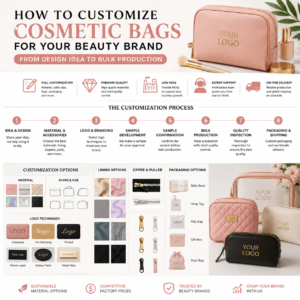
Cosmetic bag logo printing is one of the most important decisions in a custom cosmetic bag project. A cosmetic bag may have the right shape, material, zipper, lining, and packaging, but without the right logo method, the final product may not communicate the brand image clearly. For beauty brands, skincare companies, retailers, wholesalers, promotional buyers, and private label sellers, logo customization turns a simple makeup pouch into a branded product that customers can recognize and reuse.
The best logo method depends on your cosmetic bag material, order quantity, budget, target market, brand style, packaging plan, and durability requirement. Screen printing, embroidery, heat transfer, digital printing, woven labels, rubber patches, silicone patches, debossing, embossing, metal labels, and custom zipper pullers can all be used for different types of custom cosmetic bags with logo.
This complete guide explains how to choose the right logo technique for makeup bags, toiletry bags, vanity cases, brush bags, mini pouches, clear PVC bags, PU cosmetic cases, and private label beauty accessories. If you are planning a custom project, you can also explore our custom bag manufacturing services, browse the cosmetic bag collection, or contact us for logo samples and quotation support.
Why Cosmetic Bag Logo Printing Matters for Beauty Brands
A cosmetic bag is often a small product, but it can carry a large amount of brand value. When customers use a makeup bag every day, carry it during travel, place it on a bathroom counter, or keep it inside a handbag, the logo becomes a repeated brand impression. This is why cosmetic bag logo printing should not be treated as a final decoration. It should be part of the product design strategy from the beginning.
For beauty brands, the logo method communicates positioning. A simple printed logo can feel clean, modern, and cost-effective. Embroidery can feel soft, textured, and boutique. Debossing can feel subtle and premium. A metal logo plate can create a luxury appearance. A rubber patch can make the bag feel sporty or youthful. A woven label can give a casual fashion feeling. Each logo technique tells a different visual story.
Logo quality also affects perceived product quality. Even if the cosmetic bag is well made, a crooked logo, weak printing, loose metal plate, uneven embroidery, or peeling heat transfer can make the product look cheap. Customers may not understand the technical details, but they can quickly notice whether the branding looks clean and professional.
For B2B buyers, logo customization also affects MOQ, sampling cost, production lead time, and quality control. Some logo methods are flexible for small orders, while others require molds, setup fees, special materials, or higher production quantities. A professional custom cosmetic bag manufacturer can help buyers choose the right method based on product positioning, order quantity, and target price.
Before Choosing a Cosmetic Bag Logo Method
Before selecting screen printing, embroidery, heat transfer, or metal labels, buyers should review several key factors. The first factor is material. A logo method that works well on cotton canvas may not work well on clear PVC. A debossed logo may look excellent on PU leather, but it is not suitable for mesh or terry cloth. Embroidery may work well on fabric, but it may distort thin or highly elastic materials. Heat transfer may create detailed graphics, but the surface must support proper adhesion.
The second factor is brand positioning. A promotional makeup pouch may need a simple and affordable printed logo. A luxury beauty gift set may need a metal plate, debossed logo, foil stamping, or custom puller. A natural skincare brand may prefer woven labels, cotton tags, or soft embroidery. A fashion-forward brand may use bold patches, colorful prints, or contrast branding.
The third factor is order quantity. Some logo methods are economical for small quantities, while others become cost-effective only when the order is large enough. For example, screen printing can be practical for simple logos and moderate quantities. Metal logo plates may require mold cost and accessory MOQ. Custom zipper pullers can look premium, but they may require additional development time and quantity planning.
The fourth factor is durability. A logo on a cosmetic bag may experience hand contact, friction, travel pressure, moisture, cosmetics residue, and repeated use. A logo that looks good in a sample photo may still fail if it rubs off, cracks, peels, or detaches. Buyers should consider how the product will actually be used and ask for appropriate logo testing during sample approval.
Screen Printing for Cosmetic Bags
Screen printing is one of the most widely used logo methods for cosmetic bags. It is practical for simple logos, clean text, solid colors, and cost-sensitive production. It can be used on many materials, including polyester, nylon, cotton canvas, PU leather, some PVC materials, and promotional pouches. For brands that need a clean logo at a controlled cost, screen printing is often the first option to consider.
The main advantage of screen printing is efficiency. Once the screen is prepared, the logo can be printed repeatedly with consistent size and placement. It is especially useful for one-color or two-color logos. It can also support large logo areas or simple graphic elements. For promotional cosmetic bags, gift-with-purchase pouches, and wholesale makeup bags, screen printing offers a strong balance between price and visual impact.
However, screen printing has limitations. It may not be the best choice for highly detailed artwork, gradients, photographic images, or very small text. On textured materials, the ink edge may not look as sharp as on a smooth surface. On some glossy or coated materials, adhesion must be tested carefully. If the logo will experience heavy friction, the buyer should request rubbing tests or handling tests during sample approval.
Screen printing is suitable when the brand wants a simple, clear, and cost-effective logo. It works well for mini pouches, canvas makeup bags, polyester toiletry bags, flat cosmetic pouches, travel bags, and promotional products. Buyers should provide vector artwork and confirm Pantone colors before production. The logo position should be measured clearly from bag edges, zipper lines, seams, or panel centers.
Embroidery for Custom Makeup Bags
Embroidery adds texture, dimension, and a handcrafted feeling to custom cosmetic bags. It is a popular option for brands that want a soft, premium, boutique, or lifestyle-oriented look. Embroidery works well on cotton canvas, velvet, terry cloth, polyester fabric, satin, denim-look fabrics, and some quilted materials. It is often used for makeup pouches, spa bags, beauty gift sets, hair accessory pouches, and lifestyle collections.
The main strength of embroidery is tactile quality. Unlike flat printing, embroidery creates raised thread texture. This can make a logo feel more expensive and durable. It also works well for simple wordmarks, small icons, initials, monograms, and decorative brand marks. For beauty brands with a soft or feminine style, embroidery can make a cosmetic pouch feel more personal and giftable.
Embroidery also has technical limits. Very small text may not be readable. Fine lines may become thicker after stitching. Complex logos may need simplification. Gradient effects are difficult to reproduce. Thick embroidery can affect the flexibility of the material. On very thin fabrics, embroidery may cause puckering or distortion if the backing and stitch density are not controlled properly.
Buyers should request an embroidery sample before bulk production. The sample should be checked for thread color, stitch density, logo clarity, backing, loose threads, distortion, and placement. If the logo includes small letters, ask the manufacturer whether the artwork should be simplified. A professional supplier can convert the logo into embroidery-friendly artwork and recommend suitable thread colors.
Heat Transfer Printing for Cosmetic Bags
Heat transfer printing is a flexible logo method that can support more detailed graphics than basic screen printing. The logo or design is printed onto a transfer film and then applied to the bag surface using heat and pressure. It can work well for multicolor artwork, gradient effects, small details, and modern fashion-style graphics, depending on the material and finish.
Heat transfer is commonly used on polyester, nylon, some PU surfaces, and certain fabric cosmetic bags. It can create a smooth and clean logo effect. For beauty brands that want colorful graphics, seasonal artwork, influencer campaign designs, or limited-edition patterns, heat transfer may offer more visual flexibility than one-color screen printing.
The key issue is adhesion and durability. The material surface must accept the transfer properly. If the temperature, pressure, or material compatibility is wrong, the logo may crack, peel, bubble, or detach after use. This is why heat transfer should always be tested on the actual bulk material. Buyers should not approve heat transfer only based on artwork mockups.
Heat transfer is useful for custom makeup bags with colorful logos, brand slogans, small graphic elements, or campaign designs. It can also be a good option when the brand wants a more vivid effect than embroidery. During sampling, check logo edge sharpness, color accuracy, adhesion, flexibility, surface feel, and resistance to rubbing.
Digital Printing and Sublimation for Cosmetic Bag Designs
Digital printing is useful when a brand needs full-color graphics, complex patterns, seasonal prints, or custom artwork across a larger surface. Instead of only adding a small logo, digital printing can turn the whole cosmetic bag into a branded visual product. It is often used for polyester pouches, printed makeup bags, travel organizers, promotional collections, and lifestyle accessories.
Sublimation printing is commonly used on polyester-based materials. It can create vivid colors and durable artwork because the dye becomes part of the fabric surface. This makes it useful for all-over prints, repeated patterns, floral designs, brand illustrations, and colorful seasonal collections. However, sublimation usually works best on lighter polyester materials and may not be suitable for all bag structures.
Digital printing allows more creative freedom, but it also requires careful artwork preparation. Buyers should provide high-resolution files, correct color references, bleed areas, repeat pattern instructions, and placement requirements. If the artwork must align across seams or panels, the pattern should be reviewed carefully during sampling.
Full-surface printing may also affect MOQ and lead time because the fabric may need to be printed before cutting and sewing. If only a small logo is needed, screen printing or heat transfer may be simpler. If the product concept depends on a strong visual pattern, digital printing or sublimation can make the cosmetic bag more distinctive.
Debossing and Embossing for PU Cosmetic Bags
Debossing and embossing are popular logo methods for PU leather cosmetic bags and premium vanity cases. Debossing presses the logo down into the material, creating a subtle recessed effect. Embossing raises the logo above the surface, creating a dimensional effect. Both methods can look elegant, minimal, and premium when used on suitable materials.
Debossing is especially popular for brands that want understated luxury. It does not rely on strong color contrast, so it can look clean and sophisticated. It works well on smooth PU, textured PU, vegan leather, and some coated surfaces. Embossing can create stronger visual impact, but it depends heavily on material thickness and surface behavior.
These methods usually require a mold or stamping die. That means there may be setup cost, mold cost, and additional development time. The logo should not be too detailed because very thin lines or tiny letters may not press clearly. The sample should be checked for depth, clarity, alignment, surface damage, and consistency.
Debossing and embossing are best for premium cosmetic bags, minimalist beauty brands, skincare gift pouches, structured vanity cases, and private label collections where a subtle logo is preferred. They are less suitable for soft, loose, furry, mesh, or heavily textured fabrics.
Woven Labels and Fabric Labels
Woven labels and fabric labels are practical logo options for cosmetic bags that need a fashion, lifestyle, natural, or boutique look. They can be sewn onto the front panel, side seam, zipper area, inner lining, or packaging accessory. A woven label can be small and discreet or used as a visible brand element.
Woven labels work well on canvas pouches, cotton cosmetic bags, terry cloth bags, denim-look pouches, satin bags, casual makeup bags, and some travel organizers. They are also useful when the bag surface is not ideal for printing. Instead of printing directly onto a textured material, the logo can be produced on a label and stitched onto the bag.
The main advantage is consistency. A well-made label can carry clean brand text and colors. It can also be used across multiple products, such as cosmetic bags, scrunchies, headbands, toiletry bags, and packaging pouches. This helps create a unified brand system.
Buyers should check label size, fold type, color, edge finishing, sewing position, and durability. A label that is too large may look heavy. A label that is too small may be hard to read. If the label is sewn poorly, it can make the product look low quality. Placement should be confirmed on the physical sample.
Rubber Patches, Silicone Patches, and Molded Logo Labels
Rubber and silicone patches can create a modern, sporty, playful, or durable logo effect. They are often used on travel cosmetic bags, clear pouches, toiletry bags, outdoor-inspired pouches, youth-focused products, and promotional collections. These logo elements are made separately and then stitched, glued, or heat-applied to the bag.
Rubber patches can support raised designs, molded details, color blocks, and flexible surfaces. Silicone patches can feel softer and more refined depending on the design. They are useful when the brand wants a three-dimensional logo but does not want a metal plate. They can also work well on bags that need a casual or functional look.
The main consideration is mold cost and MOQ. A custom patch may require a mold, and the patch supplier may have its own minimum quantity. This means molded patches are usually better for larger orders or repeat programs. For small first orders, a woven label or printed logo may be more practical.
Patch attachment should be tested carefully. If the patch is stitched, the sewing should be clean and secure. If it is glued, adhesion must be strong enough for repeated handling. If it is heat-applied, the bag material must tolerate heat. Buyers should check patch alignment, surface finish, color, edge quality, and attachment strength before approving mass production.
Metal Labels and Logo Plates for Premium Cosmetic Bags
Metal labels are one of the most premium logo methods for cosmetic bags. They are often used on PU leather cosmetic bags, quilted vanity cases, structured travel makeup bags, luxury beauty pouches, and retail-ready cosmetic bag collections. A metal logo plate can instantly make a product feel more polished and valuable.
Metal labels can be gold, silver, rose gold, gunmetal, matte black, antique brass, or custom-plated depending on the brand style. The logo can be engraved, embossed, etched, printed, or laser-marked. The plate shape can be rectangular, oval, round, custom-shaped, or minimal flat bar. Metal labels can be attached by rivets, prongs, stitching, adhesive, or embedded construction.
The advantage of metal labels is premium appearance. They reflect light, create dimension, and can match zipper hardware. For example, a rose gold zipper with a matching rose gold metal logo plate can create a cohesive beauty brand look. A matte black plate can support a modern minimalist brand. A small gold plate can make a neutral PU cosmetic bag feel more luxury-oriented.
However, metal labels require careful planning. They may involve mold cost, plating selection, minimum quantity, and longer development time. The attachment method must be secure. Sharp edges must be avoided. The plate should not scratch easily, rust, fall off, or damage the bag material. Buyers should inspect plating consistency, logo clarity, edge smoothness, attachment strength, and alignment.
Metal labels are best for brands that want a premium retail impression and are willing to invest in stronger product presentation. For low-cost promotional bags, screen printing or woven labels may be more suitable.
Custom Zipper Pullers as a Branding Detail
A custom zipper puller is a small detail that can make a cosmetic bag feel more branded and thoughtful. Many customers interact with the zipper puller every time they open the bag, so this detail has a strong user-experience impact. A custom puller can include the logo, initials, symbol, shape, color, material, or decorative element.
Zipper pullers can be made from metal, PU leather, fabric, cord, rubber, silicone, acrylic, resin, or webbing. A metal puller can feel premium and match hardware. A PU pull tab can feel soft and elegant. A fabric puller can support a casual look. A rubber or silicone puller can feel sporty or youthful. A charm-style puller can add personality to beauty and lifestyle products.
Custom pullers are often used with other logo methods. A bag may have a small debossed front logo and a branded metal zipper puller. Or it may have a simple printed logo and a matching color pull tab. This layered branding can make the product feel more complete without overloading the front panel.
Buyers should test puller strength, comfort, size, attachment, and finish. The puller should be easy to hold, not too heavy, not too sharp, and not likely to break. For bags with frequent use, the puller is a functional part, not only a decoration.
Cosmetic Bag Logo Method Comparison Table
Different logo methods have different strengths. The best choice depends on the material, target market, order quantity, and desired brand effect. The table below gives a practical comparison for custom cosmetic bag buyers.
| Logo Method | Best For | Visual Effect | Cost Level | Key Consideration |
|---|---|---|---|---|
| Screen Printing | Simple logos, promotional pouches, fabric bags | Clean and flat | Low to medium | Best for simple artwork and solid colors |
| Embroidery | Canvas, velvet, terry, satin, lifestyle pouches | Textured and premium | Medium | Small text may need simplification |
| Heat Transfer | Colorful logos, campaign graphics, modern designs | Smooth and detailed | Medium | Adhesion must be tested on real material |
| Digital Printing | All-over prints, full-color patterns, seasonal designs | Colorful and creative | Medium to high | Artwork resolution and color control are important |
| Debossing | PU leather, vegan leather, premium cosmetic cases | Subtle and elegant | Medium to high | Usually requires a mold or stamping die |
| Woven Label | Casual bags, fabric pouches, lifestyle collections | Fashion and boutique | Medium | Sewing placement affects final appearance |
| Rubber/Silicone Patch | Travel bags, sporty pouches, youth products | Dimensional and modern | Medium to high | Mold cost and patch MOQ may apply |
| Metal Logo Plate | Luxury cosmetic bags, vanity cases, premium retail | High-end and polished | High | Plating, edge safety, and attachment strength matter |
Best Logo Methods by Cosmetic Bag Material
Material compatibility is one of the most important parts of cosmetic bag logo customization. A logo method should not be chosen only because it looks attractive in a reference photo. It must work on the actual material used for bulk production.
PU Leather Cosmetic Bags
PU leather works well with debossing, embossing, screen printing, foil stamping, metal plates, custom zipper pullers, and some heat transfer methods. Smooth PU can create a clean logo effect, while textured PU may need testing for sharpness and adhesion.
Canvas and Cotton Cosmetic Bags
Canvas and cotton are suitable for screen printing, embroidery, woven labels, fabric patches, and heat transfer. These materials work well for natural, casual, and eco-inspired beauty brands.
Polyester and Nylon Cosmetic Bags
Polyester and nylon can support screen printing, heat transfer, digital printing, woven labels, rubber patches, and custom zipper pullers. Coated surfaces should be tested for logo adhesion.
Velvet, Satin, and Terry Cloth Bags
Soft textured materials often look good with embroidery, woven labels, and small sewn patches. Printing may be less sharp on thick or fuzzy surfaces, so sampling is important.
Clear PVC and TPU Cosmetic Bags
Clear bags can use screen printing, heat transfer, rubber patches, woven labels, or custom zipper pullers. Transparent materials show alignment and surface defects easily, so logo placement and handling must be controlled carefully.
Buyers can view related transparent pouch directions in the Packing & Promo Bag category, which includes clear PVC makeup and travel toiletry pouch styles.
Artwork File Requirements for Cosmetic Bag Logo Printing
Clear artwork files help the manufacturer prepare accurate logo samples. The best file formats are usually AI, EPS, PDF, or SVG for vector artwork. Vector files allow the logo to be resized without losing clarity. PNG or JPG files may be useful for reference, but they are not ideal for production unless they are high resolution and suitable for the selected process.
Buyers should provide Pantone color references when exact color matching is required. Screen colors on a phone or computer can vary, so a Pantone reference or physical color standard is more reliable. For embroidery, thread color may not match Pantone perfectly, but the supplier can choose the closest available thread. For metal plates, plating color should be confirmed with samples or standard finish references.
Logo size and position should be defined with measurements. For example, the logo may be centered on the front panel, 3 cm below the zipper, or 2 cm above the bottom seam. A visual placement mockup is helpful, but exact measurements are better. If the bag shape is curved, quilted, pleated, or structured, placement should be checked on a physical sample.
The buyer should also confirm whether the logo should appear on the bag body, zipper puller, lining, hangtag, dust bag, belly band, gift box, or polybag. A strong branding system often uses the logo in several places, but each placement should be intentional and cost-controlled.
Cosmetic Bag Logo Quality Control Checklist
Logo inspection is an essential part of cosmetic bag quality control. A logo error can make the product difficult to sell, even when the bag itself is well made. Buyers should include logo requirements in the product specification sheet and check them during sample approval, in-process inspection, and final inspection.
- Confirm logo method matches the approved sample.
- Check logo size, position, alignment, and distance from seams or edges.
- Verify logo color against Pantone reference, artwork, or approved sample.
- Check spelling, font, symbol shape, and artwork accuracy.
- Inspect screen printing for edge sharpness, ink coverage, and adhesion.
- Inspect embroidery for stitch density, loose threads, backing, and distortion.
- Inspect heat transfer for peeling, bubbles, cracking, and edge adhesion.
- Inspect debossing or embossing for depth, clarity, and surface damage.
- Inspect metal plates for plating, scratches, edge smoothness, and attachment strength.
- Inspect custom zipper pullers for function, comfort, logo clarity, and durability.
- Compare bulk production with the approved pre-production sample.
For a complete inspection framework, buyers can also read the Cosmetic Bag Quality Control guide. For order quantity planning, the Cosmetic Bag MOQ Explained guide can help buyers understand how logo methods may influence MOQ, cost, and production setup.
Common Logo Customization Mistakes to Avoid
The first common mistake is choosing the logo method before confirming the material. A logo that looks good on one fabric may not work on another. Always test the logo on the real material selected for bulk production.
The second mistake is using low-resolution artwork. Blurry files, missing fonts, wrong colors, or unclear placement instructions can create production errors. Provide vector files whenever possible and confirm logo size before sampling.
The third mistake is using a logo that is too detailed for the selected method. Embroidery, debossing, metal plates, and woven labels all have technical limits. Fine lines and tiny letters may need to be simplified.
The fourth mistake is ignoring durability. A logo should not only look good in a photo. It should stay clean and attached during normal use. Ask the supplier to check rubbing resistance, adhesion, stitching strength, or attachment security depending on the logo method.
The fifth mistake is overbranding. A cosmetic bag does not always need a large logo on every surface. Sometimes a small metal plate, subtle debossed mark, or branded zipper puller creates a stronger premium effect than a large printed logo.
Recommended Internal Linking Structure for This Article
Internal links help Google understand the relationship between logo printing, cosmetic bag customization, OEM manufacturing, packaging, MOQ, quality control, and product categories. They also help buyers move from education to product browsing and inquiry.
- Custom Cosmetic Bag Manufacturer — Link when discussing overall OEM/ODM manufacturing capability.
- Custom Bag Manufacturing Services — Link when discussing logo samples, design development, and bulk production.
- Cosmetic Bag Collection — Link when readers need product inspiration for makeup pouches, vanity cases, toiletry bags, and mini pouches.
- Mini Pouch Category — Link when discussing simple logo printing for compact makeup pouches and promotional bags.
- Packing & Promo Bag — Link when discussing clear bags, promotional pouches, and branded campaign products.
- OEM Cosmetic Bag Manufacturer Guide — Link when explaining OEM/ODM logo customization and private label sourcing.
- Cosmetic Bag MOQ Explained — Link when discussing how logo method affects MOQ and cost.
- Cosmetic Bag Packaging Guide — Link when discussing logo use on belly bands, gift boxes, hangtags, dust bags, and retail packaging.
- Contact Us — Link as the final inquiry path for logo samples, quotation, MOQ, and lead time.
FAQ: Cosmetic Bag Logo Printing
What is the best logo printing method for cosmetic bags?
The best method depends on the bag material, budget, order quantity, and brand style. Screen printing is practical for simple logos, embroidery creates a textured premium look, heat transfer supports colorful details, debossing works well on PU leather, and metal labels are suitable for luxury cosmetic bags.
Can I print my logo on custom cosmetic bags?
Yes. Custom cosmetic bags can use screen printing, embroidery, heat transfer, digital printing, woven labels, rubber patches, silicone patches, debossing, embossing, metal logo plates, and custom zipper pullers.
Is screen printing good for makeup bags?
Yes. Screen printing is a cost-effective option for simple logos, solid colors, promotional makeup bags, canvas pouches, polyester bags, and many basic custom cosmetic bags.
Is embroidery suitable for cosmetic bags?
Embroidery is suitable for fabric cosmetic bags, canvas pouches, velvet bags, terry cloth pouches, satin bags, and lifestyle beauty accessories. It works best for logos that are not too small or overly detailed.
Can PU cosmetic bags use debossed logos?
Yes. PU leather cosmetic bags are often customized with debossed or embossed logos. This method creates a subtle and premium look, but it may require a mold or stamping die.
Are metal logo plates suitable for cosmetic bags?
Metal logo plates are suitable for premium cosmetic bags, vanity cases, structured makeup bags, and luxury beauty gift sets. They create a polished appearance but require careful control of plating, edge safety, and attachment strength.
What artwork files are needed for logo customization?
Vector files such as AI, EPS, PDF, or SVG are preferred. Buyers should also provide Pantone colors, logo size, placement instructions, and reference images if available.
Does logo customization affect MOQ?
Yes. Simple logo methods may be more flexible, while metal plates, molded patches, custom zipper pullers, woven labels, and debossing may involve setup costs, mold costs, or accessory MOQ.
How do I check logo quality before bulk production?
Approve a physical sample first. Check logo color, size, position, clarity, adhesion, stitching, attachment strength, spelling, and durability before confirming mass production.
Where can I request logo samples for custom cosmetic bags?
You can contact Bling Accessory Co. through the Contact Us page and share your logo file, bag style, material, quantity, packaging needs, and target market.
Start Your Custom Cosmetic Bag Logo Project
The right logo method can make a cosmetic bag look more professional, premium, and brand-focused. Whether you need screen printing, embroidery, heat transfer, debossing, woven labels, rubber patches, metal logo plates, or custom zipper pullers, logo planning should start before mass production.
Share your bag style, material, logo artwork, target quantity, packaging requirement, and market positioning to discuss logo samples, MOQ, pricing, lead time, and bulk production options.
Request Cosmetic Bag Logo Options