OEM / ODM Cosmetic Bag Manufacturing Guide
OEM Cosmetic Bag Manufacturer: The Complete Guide to Custom Makeup Bags, Private Label Production, and Wholesale Sourcing
Choosing the right OEM cosmetic bag manufacturer is one of the most important decisions for beauty brands, skincare companies, gift set suppliers, retailers, wholesalers, and private label businesses. A cosmetic bag may look simple from the outside, but behind a successful product there are many decisions: material, size, lining, zipper, logo method, packaging, sample quality, MOQ, lead time, inspection standards, and long-term production stability.
This complete guide explains how to work with a professional cosmetic bag factory, how to plan your custom makeup bag project, how to compare OEM and ODM options, how to avoid common sourcing mistakes, and how to build a cosmetic bag line that looks good, performs well, and supports your brand positioning.
If you are preparing a custom bag project, you can also visit our Custom Bag Manufacturing Services page or explore our Cosmetic Bag category for product inspiration.
What Is an OEM Cosmetic Bag Manufacturer?
An OEM cosmetic bag manufacturer is a factory or production partner that makes cosmetic bags according to a buyer’s own design, specifications, branding requirements, and commercial needs. OEM stands for Original Equipment Manufacturer. In the cosmetic bag industry, this usually means the buyer provides a design direction, target size, material preference, logo requirements, packaging expectations, and quantity plan, while the factory develops samples and produces the bags under the buyer’s brand.
For example, a skincare brand may want a soft PU makeup pouch for a holiday gift set. A beauty retailer may need a transparent travel cosmetic bag with a printed logo. A private label seller may want a velvet cosmetic pouch with custom lining and a metal logo plate. A promotional company may need a large quantity of polyester makeup bags for a campaign. In each case, the OEM cosmetic bag manufacturer turns the product idea into a finished bag that can be sold, gifted, packaged with cosmetics, or distributed through retail channels.
A good OEM partner does more than sew fabric together. A professional cosmetic bag factory helps buyers choose suitable materials, adjust dimensions, improve structure, select a logo technique, control cost, test samples, inspect bulk production, and prepare retail-ready packaging. This is especially important because cosmetic bags are both functional and visual. They must protect beauty products, feel pleasant in the hand, photograph well, match the brand image, and survive real daily use.
The best OEM cosmetic bag manufacturer should understand both manufacturing and market needs. It should know how a small makeup pouch differs from a toiletry bag, how a brush bag should protect tools, how lining affects user experience, how zipper quality influences perceived value, and how materials change the final price. For a brand, this knowledge can reduce development time, prevent costly mistakes, and create a more attractive product line.
Why Choosing the Right OEM Cosmetic Bag Manufacturer Matters
A cosmetic bag is often a small product, but it can have a big effect on brand perception. When a customer receives a makeup bag with clean stitching, a smooth zipper, a pleasant material, and a beautiful logo, the bag feels like a useful accessory rather than a low-cost add-on. When the quality is poor, the opposite happens. Loose threads, weak lining, chemical odor, poor printing, uneven shape, and broken zippers can damage the impression of the beauty brand behind the product.
For sourcing teams, the right manufacturer also affects cost control and delivery reliability. A factory with experience in cosmetic bags understands the balance between material cost, labor complexity, design details, packaging, and shipping volume. It can help buyers avoid over-designed products that are too expensive for the target market. It can also recommend simpler construction methods when a project needs to meet a promotional price point.
For private label businesses, an experienced cosmetic bag factory can support long-term product development. Instead of buying the same generic wholesale pouch as every other seller, a private label brand can build a recognizable collection: one signature pouch, one travel organizer, one brush bag, one vanity case, one clear airport bag, and one gift set bag. With the right OEM partner, these items can share a consistent color story, logo style, lining, packaging, and brand language.
For retailers and distributors, manufacturing reliability is just as important as style. A beautiful sample is not enough if the bulk order arrives late or inconsistent. Buyers should pay attention to quality control systems, production capacity, inspection process, communication speed, and the factory’s ability to repeat quality across different orders. This is why the selection of an OEM cosmetic bag manufacturer should be treated as a strategic sourcing decision, not only a price comparison.
A strong manufacturer can help you move from idea to sample faster, reduce revision cycles, control production risk, and create a cosmetic bag that fits your market. A weak manufacturer may create hidden costs through rejected samples, delayed shipments, inconsistent batches, poor communication, and customer complaints. The cheapest quote is not always the best business decision.
OEM vs ODM vs Private Label vs Wholesale Cosmetic Bags
Before contacting suppliers, buyers should understand the difference between OEM, ODM, private label, and wholesale cosmetic bags. These terms are often used together, but they do not mean exactly the same thing.
OEM Cosmetic Bags
OEM cosmetic bags are produced according to the buyer’s own design or detailed requirements. The buyer may provide sketches, reference photos, technical drawings, material direction, color codes, logo files, packaging instructions, and target price. The manufacturer then develops samples and produces the goods after approval. OEM is suitable for brands that want a more unique product and have a clear idea of what they want to create.
ODM Cosmetic Bags
ODM stands for Original Design Manufacturer. In this model, the factory already has existing designs or product concepts that buyers can modify. For example, a factory may offer a ready cosmetic pouch shape, and the buyer can customize the color, logo, zipper puller, lining, and packaging. ODM is often faster than full OEM development because the base pattern and structure already exist. It is useful for brands that need speed, lower development risk, and proven product styles.
Private Label Cosmetic Bags
Private label cosmetic bags usually refer to products made for a buyer’s own brand. The design may be OEM or ODM, but the final product carries the buyer’s logo, packaging, and brand identity. Private label buyers often care about how the product looks in online stores, gift sets, subscription boxes, boutiques, and retail shelves. They may need brand labels, hang tags, belly bands, barcode stickers, custom cartons, or other retail-ready details.
Wholesale Cosmetic Bags
Wholesale cosmetic bags are usually purchased in larger quantities, sometimes with limited customization. A wholesale buyer may choose existing styles and request logo printing, color changes, or packaging adjustments. Wholesale is useful for importers, distributors, and retailers that need a stable supply of popular designs. However, wholesale products may be less unique than fully custom OEM cosmetic bags.
The right model depends on your business goal. If you need full design ownership, choose OEM. If you need faster development and proven styles, choose ODM. If you want to sell under your own brand, focus on private label production. If you need broad inventory at efficient cost, wholesale cosmetic bags may be suitable. Many buyers use a mix of these models as their business grows.
Who Needs OEM Cosmetic Bag Manufacturing?
OEM cosmetic bag manufacturing is not only for large beauty brands. It can support many types of buyers, from startups to established retailers. The key is to match the customization level with the buyer’s stage, budget, quantity, and market plan.
Beauty and Skincare Brands
Beauty and skincare brands often use cosmetic bags as gift-with-purchase items, holiday kits, product launch sets, influencer mailers, subscription box accessories, or retail add-ons. A custom bag helps extend the brand experience beyond the core skincare or makeup product. When the bag is well designed, customers continue using it, which increases brand visibility in daily life.
Private Label and E-Commerce Sellers
Private label sellers need products that can stand out on Amazon, Shopify, TikTok Shop, marketplace stores, and independent websites. A custom cosmetic pouch with a strong color story, useful compartments, and attractive product photography can create a more competitive listing. For online sellers, the bag must be photogenic, easy to describe, and supported by clear specifications.
Retail Chains and Boutique Stores
Retailers need cosmetic bags that match customer expectations and seasonal trends. Some stores prefer minimal PU pouches. Others want cute mini pouches, quilted vanity cases, terry cloth travel bags, or transparent cosmetic organizers. A manufacturer with material and design flexibility can help retailers refresh collections throughout the year.
Wholesalers and Importers
Wholesalers and importers usually need stable production, competitive pricing, and consistent quality across repeat orders. They may supply different markets, so they need a wide product range and the ability to adjust details for different customers. For them, supplier reliability and production capacity are essential.
Promotional Gift Companies
Cosmetic bags are popular promotional products because they are practical, lightweight, and easy to customize. Promotional buyers often care about price, logo visibility, simple packaging, and delivery schedule. Common options include polyester makeup pouches, clear travel bags, drawstring cosmetic bags, and flat pouches with screen printing.
Hotels, Spas, Salons, and Wellness Brands
Hotels, spas, salons, and wellness brands may use cosmetic bags for guest amenities, spa kits, travel kits, or retail gifts. These buyers often prefer clean designs, soft materials, calm colors, and packaging that feels premium but not overly complicated.
Main Types of Custom Cosmetic Bags
A professional OEM cosmetic bag manufacturer should be able to support different bag structures and use cases. The best choice depends on what the bag will carry, where it will be sold, and how it will support your brand.
1. Makeup Pouches
Makeup pouches are the most common cosmetic bag type. They can be flat, semi-structured, rectangular, curved, round-bottom, or boxy. They are suitable for everyday makeup, small skincare items, travel minis, and gift sets. A makeup pouch can be made from PU, polyester, nylon, canvas, velvet, terry cloth, PVC, TPU, recycled fabric, or other materials.
2. Toiletry Bags
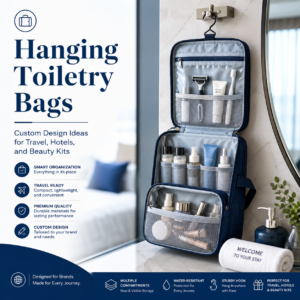
Toiletry bags are usually larger and more functional than simple makeup pouches. They may include waterproof lining, multiple compartments, mesh pockets, handles, hooks, or structured panels. Toiletry bags are popular for travel brands, men’s grooming brands, hotel amenity kits, and outdoor lifestyle collections. If you are developing this category, visit the Travel Accessories page for related product direction.
3. Brush Bags
Brush bags are designed to hold makeup brushes and beauty tools. They may use elastic loops, inner dividers, protective flaps, transparent panels, or roll-up construction. The inside must be easy to clean because brushes may carry powder or cream residue. Logo placement should not interfere with the functional structure.
4. Vanity Cases
Vanity cases are more structured and often feel more premium. They can be used for skincare, cosmetics, nail tools, travel storage, and retail gift sets. A vanity case may use PU leather, quilted fabric, EVA reinforcement, metal zippers, custom handles, or branded hardware. This type usually requires more careful sampling because structure and shape are important.
5. Clear Cosmetic Bags
Clear cosmetic bags are popular for travel, stadium events, retail visibility, and organized storage. They are often made from PVC or TPU. Buyers should pay attention to material thickness, softness, odor control, edge finishing, zipper quality, and printing method. A clear bag may look simple, but poor material can make it feel cheap or stiff.
6. Cosmetic Bag Sets
A cosmetic bag set may include two or three pouches in different sizes. Sets are attractive for gifting, retail bundles, subscription boxes, and holiday campaigns. They create higher perceived value and give customers more storage options. For private label brands, a set can also increase average order value.
7. Mini Pouches and Keychain Pouches
Mini pouches are useful for lip balm, coins, keys, mini perfume, earbuds, or small accessories. They are often used as add-on items, promotional gifts, or cute retail accessories. Because they are small, details such as zipper puller, logo size, and stitching accuracy become more visible.
8. Men’s Cosmetic and Grooming Bags
Men’s grooming bags often use more minimal colors, durable fabrics, waterproof lining, and practical structure. They are suitable for shaving kits, skincare, travel grooming, and lifestyle brands. Common materials include PU, canvas, nylon, polyester, and water-resistant fabrics.
OEM Cosmetic Bag Development Process
A successful custom cosmetic bag project follows a clear development process. When buyers and manufacturers communicate in a structured way, sampling becomes faster and production risks are lower.
Step 1: Prepare a Product Brief
The product brief is the foundation of the project. It should explain the bag type, target customer, use case, size range, material direction, color, logo method, packaging, target quantity, target price, and desired launch date. If you have reference images, sketches, Pantone colors, brand guidelines, or competitor examples, include them. A clear brief helps the manufacturer understand both the product and the business goal.
Step 2: Choose Material and Structure
After reviewing the brief, the manufacturer can recommend materials and construction methods. For example, a premium beauty brand may choose soft PU with a custom metal zipper puller. A travel brand may choose nylon with waterproof lining. A gift set supplier may choose velvet or satin for a more elegant feel. A promotional buyer may choose polyester for cost efficiency.
Step 3: Confirm Logo and Branding Details
Logo technique affects both appearance and cost. Screen printing, digital printing, embroidery, woven labels, silicone patches, debossing, hot stamping, jacquard, and metal plates all create different effects. Buyers should choose a method that matches the material, brand positioning, and expected durability.
Step 4: Make a Sample
Sampling is where the idea becomes real. The sample allows you to check size, shape, material feel, color, zipper movement, stitching, lining, logo position, and overall quality. A sample may require revisions, especially when the project is highly customized. Good communication during sampling can prevent problems in bulk production.
Step 5: Review the Quotation
The final quotation depends on material, size, quantity, logo method, lining, zipper, hardware, labor complexity, packaging, inspection requirements, and shipping terms. Buyers should not compare only unit price. They should also compare what is included in the price. A low quote may exclude important details such as better lining, custom packaging, thicker material, or proper inspection.
Step 6: Approve Pre-Production Details
Before mass production, all details should be confirmed. This may include the approved sample, material swatches, color standard, logo artwork, size tolerance, packaging method, carton mark, barcode label, hang tag, and inspection criteria. Pre-production confirmation reduces misunderstanding and gives both sides a clear quality reference.
Step 7: Mass Production
During mass production, materials are prepared, cut, printed or embroidered, sewn, trimmed, assembled, inspected, packed, and prepared for shipment. A professional OEM cosmetic bag manufacturer should manage each stage carefully, especially when the design includes multiple materials, complex compartments, custom zipper pullers, or retail packaging.
Step 8: Quality Inspection and Shipping
Before shipping, the products should be inspected for appearance, size, stitching, zipper function, logo quality, lining, cleanliness, packing, and quantity. Buyers may request photos, inspection reports, or third-party inspection depending on order size and market requirements.
How to Choose Cosmetic Bag Materials
Material is one of the most important choices in custom cosmetic bag manufacturing. It affects appearance, price, durability, weight, cleaning, structure, printing, sustainability, and customer perception. For a deeper material comparison, read our Cosmetic Bag Materials Guide.
PU Leather
PU leather is popular for cosmetic bags because it creates a clean and polished look. It can be smooth, pebbled, quilted, matte, glossy, or embossed. PU is often used for private label makeup pouches, vanity cases, travel organizers, and gift-ready cosmetic bags. It works well with debossing, hot stamping, metal plates, and custom zipper pullers.
Polyester
Polyester is practical, cost-effective, lightweight, and suitable for many styles. It is commonly used for promotional cosmetic bags, travel pouches, drawstring bags, and high-volume wholesale orders. Polyester can support printing, embroidery, labels, and different lining options. It is a good choice when the buyer needs balance between price and function.
Nylon
Nylon is often selected for travel cosmetic bags and toiletry bags because it is lightweight and performance-oriented. Depending on the finish, it can provide a sporty, modern, or premium look. Nylon pairs well with waterproof lining, mesh pockets, and functional compartments.
Canvas and Cotton
Canvas and cotton create a natural, casual, and lifestyle-oriented appearance. They are suitable for clean beauty brands, gift shops, eco-conscious campaigns, and daily-use pouches. These materials work well with embroidery, woven labels, and screen printing. However, buyers should consider stain resistance and cleaning needs.
Velvet, Terry Cloth, Plush, and Trend Fabrics
Trend fabrics can make a cosmetic bag feel special and seasonal. Velvet can feel elegant. Terry cloth can feel relaxed and spa-inspired. Plush can feel cute and giftable. Corduroy can create a retro look. These materials are useful for fashion beauty brands, holiday sets, teen accessories, and boutique retail collections.
PVC, TPU, and Clear Materials
Clear materials are useful when visibility matters. They are common for travel cosmetic bags, transparent pouches, stadium bags, and organized storage. TPU can be a softer and more flexible option than some PVC materials. Buyers should check clarity, thickness, smell, softness, edge finishing, and durability.
Recycled and Eco-Friendly Materials
Recycled materials such as RPET are increasingly popular for brands that want to communicate responsibility. Eco-friendly cosmetic bags can also use organic cotton, recycled polyester, kraft packaging, reusable packaging, or lower-impact design choices. Sustainability should be practical and honest. The material should still meet the product’s performance needs.
Logo and Branding Customization Options
Branding turns a simple pouch into a recognizable product. The right logo method depends on the material, order quantity, target price, brand style, and durability requirements.
Screen Printing
Screen printing is common for simple logos, promotional cosmetic bags, cotton pouches, polyester bags, and clear designs. It is cost-effective for larger quantities and works best with relatively simple artwork.
Digital Printing
Digital printing is useful for colorful artwork, all-over patterns, seasonal graphics, and small-batch design testing. It can help brands create more expressive cosmetic bags, especially for lifestyle and fashion collections.
Embroidery
Embroidery gives a soft and premium feel. It works well on canvas, cotton, terry cloth, velvet, and some fabric pouches. Embroidery can make a logo look more tactile and high-value, but it may not be suitable for very small or highly detailed artwork.
Woven Labels
Woven labels are practical for many materials and create a professional brand finish. They can be sewn onto the outside, side seam, lining, or packaging. This option is common for private label cosmetic bags and lifestyle accessories.
Debossing and Hot Stamping
Debossing and foil stamping are often used on PU cosmetic bags. Debossing creates a subtle, premium impression, while hot stamping can add metallic shine. These methods are suitable for beauty brands that want a more refined look.
Metal Plates and Custom Zipper Pullers
Metal plates and custom zipper pullers can increase perceived value. They are useful for premium pouches, vanity cases, gift sets, and retail collections. However, they may increase mold cost and lead time, so buyers should consider them carefully for new projects.
When choosing a logo method, do not only ask which option looks best. Ask which method is suitable for the material, which method can survive daily use, which method fits the target price, and which method supports the brand identity.
Structure, Lining, Zippers, and Functional Details
The structure of a cosmetic bag determines how useful it feels. A beautiful outside is not enough if the bag is difficult to open, too small for the intended products, unstable when placed on a table, or hard to clean after use.
Lining
Lining affects both appearance and function. A waterproof lining can help with spills. Satin lining can feel more premium. Polyester lining can be practical and cost-efficient. Mesh pockets can improve organization. For beauty products, lining should be easy to clean and properly stitched.
Zippers
Zipper quality is one of the most noticeable details in a cosmetic bag. A smooth zipper makes the product feel better immediately. Buyers should check zipper movement, zipper tape color, zipper teeth, slider strength, puller design, and whether the zipper matches the bag style. Double sliders may be useful for larger toiletry bags or vanity cases.
Compartments
Compartments help customers organize cosmetics, brushes, skincare minis, tools, and travel items. However, too many compartments can increase cost and make production more complicated. The best structure depends on the use case. A simple pouch may need only one main compartment, while a travel organizer may need multiple pockets.
Handles and Straps
Handles are useful for vanity cases, toiletry bags, and travel organizers. A handle should be comfortable, properly reinforced, and visually aligned with the bag design. For smaller pouches, a wrist strap or keychain detail may add convenience.
Shape and Stability
Some bags need to stand upright. Others need to fold flat. Some need a soft body, while others need a structured shape. Material thickness, panel reinforcement, stitching method, and pattern design all affect the final silhouette. This is why sample review is essential.
MOQ, Cost, Sampling, and Lead Time
Buyers often ask three questions at the beginning of a project: What is the MOQ? How much does it cost? How long does production take? The answer depends on the design and customization level.
MOQ
MOQ means Minimum Order Quantity. A simple existing design with logo customization may have a lower MOQ than a fully custom design requiring special material, custom hardware, new pattern development, or special printing. If you are launching a new product, discuss your test-market plan with the supplier. A flexible manufacturer may suggest an efficient way to start without overcomplicating the first order.
Sample Time
Sample time depends on material availability, logo method, structure complexity, and revision requirements. A simple pouch sample can be faster. A custom vanity case with special hardware, new pattern, custom lining, and multiple compartments may take longer. Buyers should build sample revision time into the launch schedule.
Production Lead Time
Production lead time depends on order quantity, material preparation, printing or embroidery, sewing complexity, QC, packaging, and factory schedule. Seasonal demand can also affect timing. If the product is for a holiday campaign, retail launch, influencer campaign, or gift set promotion, confirm the timeline early.
Cost Factors
The main cost factors include material, size, lining, zipper, hardware, logo method, labor complexity, quantity, packaging, inspection requirements, and shipping method. A larger bag is not always only slightly more expensive; it may require more material, stronger structure, larger packaging, and higher shipping volume.
How to Control Cost Without Hurting Quality
Cost control does not always mean choosing the cheapest material. Sometimes the best solution is simplifying the structure, using an existing mold, reducing unnecessary compartments, choosing a more efficient logo method, or adjusting packaging. A good OEM cosmetic bag manufacturer can help you protect the product’s visual value while avoiding unnecessary production cost.
Quality Control for Cosmetic Bag Production
Quality control is essential because cosmetic bags are handled closely by customers. Small issues are easy to notice. A buyer should define quality expectations before production begins, not after the goods are finished.
Material Inspection
Material should be checked for color, texture, thickness, smell, surface defects, and consistency. If the bag uses transparent material, clarity and softness should also be reviewed. If the material is printed, the print should match the approved artwork and color standard.
Cutting Accuracy
Cutting affects shape and sewing accuracy. Poor cutting can create uneven edges, distorted panels, and inconsistent size. For structured cosmetic bags, cutting accuracy is especially important.
Sewing and Stitching
Stitching should be neat, stable, and consistent. Buyers should check loose threads, skipped stitches, uneven seams, weak stress points, and crooked lines. Reinforcement may be needed for handles, zipper ends, and corners.
Zipper Function
Every zipper should open and close smoothly. The slider should not jam. The puller should be firmly attached. The zipper tape should be sewn evenly. For high-use bags, zipper quality is one of the most important performance factors.
Logo Quality
Logos should be positioned correctly and applied clearly. Printing should not crack or bleed. Embroidery should be clean. Labels should be straight. Metal plates should be attached securely. Logo quality directly affects brand perception.
Final Appearance and Packaging
Finished bags should be clean, properly shaped, and packed according to instructions. Packaging should protect the product during shipping and support the intended retail or wholesale presentation. A bag that arrives wrinkled, dusty, or poorly packed can create extra work for the buyer.
Eco-Friendly and Sustainable Cosmetic Bag Options
Sustainability is becoming more important in beauty, lifestyle, and retail markets. Many buyers now ask for eco-friendly cosmetic bags, recycled materials, reusable packaging, or more responsible production choices. However, sustainability should be practical, transparent, and matched with the product’s real use.
Eco-friendly options may include RPET recycled polyester, organic cotton, natural canvas, reusable packaging, kraft paper belly bands, reduced plastic packaging, or durable designs that encourage long-term use. The best option depends on the target customer and price range.
A sustainable cosmetic bag should still perform well. If the material stains easily, breaks quickly, or does not fit the intended use, the product may create disappointment. Buyers should ask suppliers about material source, available certifications, color options, durability, cleaning method, and MOQ for eco-friendly fabrics.
For more details, read our Eco-Friendly Cosmetic Bags Guide.
How to Design Cosmetic Bags for Different Markets
A successful custom cosmetic bag should be designed for a specific customer and sales channel. The same bag will not work equally well for every market. Before production, buyers should think about who will use the bag, where it will be sold, and what price point it needs to support.
Premium Beauty Brands
Premium beauty brands usually need refined materials, elegant colors, clean branding, better hardware, and careful packaging. PU leather, velvet, satin lining, custom zipper pullers, debossing, hot stamping, and metal logo plates can help create a higher-value look. The design should feel intentional and aligned with the brand’s skincare or makeup products.
Clean Beauty and Wellness Brands
Clean beauty and wellness brands may prefer natural textures, soft colors, cotton, canvas, recycled fabrics, simple labels, and minimal packaging. The design should communicate calm, practicality, and responsibility.
Travel and Lifestyle Brands
Travel and lifestyle brands need function. Nylon, waterproof lining, transparent panels, compartments, handles, hanging hooks, and wipeable surfaces may be more important than decorative details. The bag should be easy to pack, easy to clean, and useful during real travel.
Teen and Trend Markets
Teen and trend-focused cosmetic bags can use playful fabrics, bright colors, plush textures, charms, embroidery, patches, and seasonal shapes. These products need strong visual appeal for social media and gift purchases.
Promotional and Corporate Gift Markets
Promotional cosmetic bags should be simple, useful, and cost-effective. Logo visibility, delivery time, and unit cost are usually key. Polyester pouches, clear bags, drawstring bags, and simple makeup bags are common choices.
Amazon and E-Commerce Markets
E-commerce products must photograph well and communicate value quickly. Buyers should consider product images, size comparison, capacity, features, packaging, and keyword-rich listing content. A bag with clear features such as waterproof lining, compartments, large capacity, or travel-friendly structure may be easier to market online.
Packaging and Retail Presentation
Packaging is an important part of cosmetic bag manufacturing, especially for private label brands and retail buyers. The right packaging protects the product, communicates the brand, and supports sales presentation.
Common packaging options include OPP bags, PE polybags, paper belly bands, hang tags, custom cartons, barcode labels, insert cards, tissue paper, dust bags, and gift boxes. The best choice depends on the sales channel. A wholesale buyer may prefer simple protective packaging. A boutique brand may need a hang tag and belly band. A gift set supplier may need the cosmetic bag packed with skincare products or accessories.
Buyers should confirm packaging details before production. Important details include bag folding method, individual packaging, carton quantity, carton size, carton mark, barcode placement, hang tag position, moisture protection, and whether products need to be ready for retail shelves or e-commerce fulfillment.
Packaging can also affect shipping cost. A structured vanity case may require more space than a flat pouch. A gift box may increase volume. When calculating total landed cost, buyers should consider not only unit price but also packaging weight and carton dimensions.
Supplier Evaluation Checklist: How to Choose an OEM Cosmetic Bag Manufacturer
When comparing cosmetic bag suppliers, use a structured checklist instead of relying only on price. A reliable supplier should help you develop better products, not only provide a quick quote.
Factory Experience
Ask how long the factory has produced cosmetic bags and related accessories. Experience matters because cosmetic bags involve many details: material behavior, small accessory sewing, zipper installation, logo application, lining, and packaging.
Product Range
A broad product range shows that the manufacturer can support different structures and market needs. Look for experience with makeup pouches, toiletry bags, brush bags, vanity cases, travel organizers, clear bags, cosmetic bag sets, and mini pouches.
Customization Capability
Ask whether the supplier can customize material, color, size, lining, zipper, zipper puller, logo method, label, packaging, and carton details. A real OEM cosmetic bag manufacturer should be able to support more than simple logo printing.
Sampling Support
A good supplier should help you turn ideas into samples. Ask what information they need, how long sampling usually takes, how revisions are handled, and whether they can suggest improvements.
Quality Control
Ask how the factory checks raw materials, cutting, sewing, logo application, zipper function, finished goods, and packaging. Quality control should be part of the process, not an afterthought.
Communication
Communication quality is very important in custom manufacturing. A responsive supplier can help avoid misunderstandings and delays. Pay attention to how clearly the supplier answers technical questions and whether they understand your market needs.
Production Capacity
If you need repeat orders or large-volume production, ask about capacity, production schedule, peak season planning, and lead time. A supplier that works well for a small trial order may not always be suitable for large-scale retail programs.
Buyer Fit
The best supplier for a startup may not be the same as the best supplier for a chain retailer. Choose a manufacturer that fits your order size, customization level, timeline, and communication expectations.
Common Mistakes to Avoid When Sourcing Custom Cosmetic Bags
Many sourcing problems can be avoided if buyers prepare clearly and evaluate suppliers carefully. Here are common mistakes to watch for.
Mistake 1: Comparing Only Unit Price
A lower unit price may not include the same material, lining, zipper, packaging, logo method, or inspection standard. Always compare full specifications, not only price.
Mistake 2: Starting Without a Clear Brief
If the brief is unclear, the sample may not match your expectation. Provide size, material, color, logo artwork, use case, quantity, and reference images whenever possible.
Mistake 3: Ignoring Material Function
A material may look good in a photo but fail in real use. Think about cleaning, water resistance, stiffness, softness, durability, and how the customer will use the bag.
Mistake 4: Choosing the Wrong Logo Method
Not every logo method works on every material. For example, embroidery may not suit very detailed logos, while debossing may be better for PU. Ask the factory for recommendations.
Mistake 5: Not Testing the Sample Properly
Do not approve a sample only by looking at it. Open and close the zipper, test the capacity, check the lining, inspect stitching, place products inside, and take photos from different angles.
Mistake 6: Overcomplicating the First Order
If this is your first order, avoid too many custom details at once unless your budget and timeline allow it. A simpler design can help you enter the market faster and collect customer feedback.
Mistake 7: Forgetting Packaging and Carton Requirements
Packaging is part of the final product. Confirm individual packaging, carton marks, labels, and retail presentation before mass production starts.
Mistake 8: Leaving QC Standards Undefined
If quality standards are not defined, it becomes harder to judge the final goods. Agree on approved sample, tolerance, logo position, color standard, and inspection points before production.
Recommended Internal Links for Buyers
If you are researching custom cosmetic bag manufacturing, these pages can help you compare product types, materials, sizes, and customization options:
- Home: OEM/ODM Custom Bag Manufacturer
- Custom Bag Manufacturing Services
- Cosmetic Bag Category
- Travel Accessories and Toiletry Bags
- Cosmetic Bag Materials Guide
- Cosmetic Bag Size Guide
- Eco-Friendly Cosmetic Bags Guide
- Contact Us for a Custom Quote
These internal links help buyers move from general education to product exploration and quotation. They also help search engines understand the relationship between cosmetic bag manufacturing, material selection, size planning, eco-friendly options, and custom bag services.
Why Work with Bling Accessory Co. as Your OEM Cosmetic Bag Manufacturer?
Bling Accessory Co. works with beauty brands, lifestyle brands, retail buyers, private label businesses, wholesalers, and sourcing companies that need custom cosmetic bags and related accessories. The company focuses on OEM and ODM bag manufacturing, including cosmetic bags, travel bags, toiletry bags, packaging and promo bags, brush bags, mini pouches, makeup bag sets, and other custom bag categories.
For buyers, the value of working with a specialized cosmetic bag factory is not only production. It is also product development support. A professional team can help you choose suitable materials, refine structure, apply the right logo method, create samples, prepare packaging, and control quality before shipment.
Bling Accessory Co. supports material customization, lining options, zipper choices, zipper puller details, logo application, custom packaging, and pack-out solutions. This is useful for brands that need more than a generic pouch. Whether you are creating a gift-with-purchase cosmetic bag, private label makeup pouch, travel toiletry bag, retail cosmetic bag set, or promotional beauty pouch, customization can help your product better match your market.
The company’s website also highlights factory strength, trend-driven design, strict quality control, and global experience. For buyers who need a long-term manufacturing partner, these factors are important because cosmetic bag production requires consistent execution across sampling, production, inspection, and delivery.
If you are ready to develop a custom cosmetic bag project, prepare your product brief and contact the team for material suggestions, sample planning, and quotation support.
Start Your Custom Cosmetic Bag Project
Tell us your bag type, material idea, size, logo method, quantity, packaging needs, and target market. Our team can help you turn your concept into a practical OEM or ODM cosmetic bag solution.
FAQ: OEM Cosmetic Bag Manufacturer
What is an OEM cosmetic bag manufacturer?
An OEM cosmetic bag manufacturer produces makeup bags, cosmetic pouches, toiletry bags, and related accessories according to a buyer’s design, specifications, branding, and packaging requirements.
What is the difference between OEM and ODM cosmetic bags?
OEM cosmetic bags are usually made according to the buyer’s own design or detailed requirements. ODM cosmetic bags are based on the manufacturer’s existing designs, which can be customized with color, logo, material, or packaging changes.
Can I put my own logo on cosmetic bags?
Yes. Common logo methods include screen printing, digital printing, embroidery, woven labels, silicone patches, debossing, hot stamping, metal plates, and custom zipper pullers. The best method depends on the material and brand style.
What materials are best for custom cosmetic bags?
Popular materials include PU leather, polyester, nylon, canvas, cotton, velvet, terry cloth, PVC, TPU, RPET, and recycled fabrics. The best material depends on your target customer, price point, cleaning needs, structure, and brand positioning.
What information should I provide for a quotation?
Provide bag type, size, material, color, logo artwork, quantity, lining, zipper preference, packaging requirements, target price, and reference images. A clear brief helps the manufacturer quote more accurately.
How long does it take to make a custom cosmetic bag sample?
Sample time depends on the design complexity, material availability, logo method, and revision requirements. Simple pouches are usually faster, while structured vanity cases or highly customized designs may take longer.
What affects the cost of OEM cosmetic bags?
Cost is affected by material, size, lining, zipper, hardware, logo technique, labor complexity, order quantity, packaging, inspection, and shipping method.
Can I order eco-friendly cosmetic bags?
Yes. Options may include RPET, recycled polyester, organic cotton, canvas, reduced plastic packaging, reusable packaging, and kraft paper packaging. Ask the supplier which eco-friendly materials fit your design and budget.
Are cosmetic bags suitable for beauty gift sets?
Yes. Cosmetic bags are widely used for gift-with-purchase promotions, skincare sets, makeup kits, holiday gifts, subscription boxes, and retail bundles because they are practical and brandable.
How do I choose the right cosmetic bag factory?
Compare factory experience, product range, customization capability, sampling support, quality control, communication, production capacity, and ability to meet your target market needs. Do not choose only based on the lowest price.
Final Thoughts
Working with the right OEM cosmetic bag manufacturer can help your brand create products that are attractive, practical, and commercially successful. From material selection to logo customization, from sample review to bulk production, every decision affects the final customer experience.
If you are developing custom makeup bags, private label cosmetic pouches, toiletry bags, brush bags, vanity cases, or promotional beauty bags, start with a clear product brief and choose a factory that understands both manufacturing details and market positioning. A good manufacturing partner can help you reduce risk, improve quality, control cost, and build a stronger product line for your brand.