What Waterproof Really Means in a Cosmetic Bag
Before comparing styles or materials, it is important to define the term “waterproof” correctly. In the market, many products are described as waterproof when they are actually water resistant, splash resistant, or easy to wipe clean. Those are related but not identical claims. A true waterproof cosmetic bag is designed to prevent water from penetrating the bag body or reaching the contents under normal use conditions. A water resistant cosmetic bag can handle light splashes, condensation, or brief exposure to moisture, but it may not protect sensitive items if it is exposed to prolonged wet conditions or a liquid spill inside a suitcase.
That distinction matters because beauty buyers do not always use cosmetic bags in the same way. One customer may only carry lipstick, brushes, and powder compacts. Another may pack serums, face wash, sunscreen, shampoo samples, and medication. In a travel scenario, the bag may sit next to wet swimsuits, humid bathroom counters, or leaked pump bottles. In a retail or promotional scenario, the bag may be expected to function as a giftable organizer that looks premium while still offering practical protection. The more demanding the use case, the more important the waterproof structure becomes.
For SEO purposes, the phrase waterproof cosmetic bags attracts users with high purchase intent because it signals a functional solution rather than a purely decorative accessory. Searchers using this term often want a bag that is suitable for travel, durable enough for repeated use, and attractive enough for beauty or lifestyle branding. That makes the keyword commercially strong for B2B and DTC positioning alike.
Why Waterproof Construction Matters
Waterproof construction solves more than one problem. The most obvious benefit is protection from spills and splashes, but the commercial benefit is even larger. A well-built waterproof bag improves product confidence. When a customer trusts that the bag will protect her items, she is more likely to use it every day, carry it while traveling, and recommend it to others. That creates stronger perceived value than a similar bag with no protective features.
Waterproof bags also support a cleaner user experience. Cosmetics and skincare often leave residue on the inside of pouches. A waterproof lining or coated exterior makes cleaning easier, which improves the lifetime value of the product. From a brand perspective, this is important because accessories that stay clean tend to stay in use longer. The longer a product stays visible in a customer’s routine, the more brand impressions it creates.
There is also a merchandising benefit. Waterproof or water-resistant claims can justify higher price points when paired with better materials, premium zippers, elegant silhouettes, and useful compartments. This is especially useful for wholesale buyers who need to create clear product differentiation. Instead of competing only on color or size, brands can build a more compelling value proposition around functionality.
For factories and private-label buyers, waterproof construction can be added in several ways: through coated fabrics, laminated linings, TPU or PVC panels, welded seams, sealed inner compartments, or wipe-clean treatments. Not every method fits every budget. The right choice depends on target price, target market, desired appearance, and expected usage conditions.
Best Waterproof and Water-Resistant Materials
Material selection is the foundation of a good waterproof cosmetic bag. A beautiful design will still fail if the body fabric absorbs moisture too easily, frays at the edges, or cannot hold its shape during travel. Below are the most common material choices and how they perform in practice.
1. Coated Polyester
Coated polyester is one of the most common materials for waterproof cosmetic bags because it balances cost, performance, and production simplicity. A coating adds a moisture-resistant layer to the fabric surface and helps prevent quick absorption from splashes or condensation. It also creates a smoother feel that can be easier to wipe down. For mass-market products, coated polyester is often a strong starting point because it supports many shapes, colors, prints, and trims.
2. Nylon with Water-Resistant Finish
Nylon is popular for travel accessories because it is lightweight, flexible, and durable. When treated or laminated properly, nylon can perform very well in everyday water-resistant use. Many buyers like the slightly sporty appearance of nylon because it works for practical travel products, athletic beauty kits, and compact organizers. If you want a bag that feels modern and easy to carry, nylon is a reliable option.
3. TPU and PVC Panels
TPU and PVC are useful when visibility, full wipeability, or stronger moisture isolation is required. Transparent or semi-transparent panels can give a bag a contemporary aesthetic while making it easy to see the contents at a glance. This is particularly useful for travel compliance, airline carry-on requirements, and promotional product lines. The tradeoff is that a fully plastic look may not suit every premium beauty brand. TPU typically feels more modern and flexible, while PVC is often chosen for cost efficiency and clarity.
4. PU Leather
PU leather is commonly used when the goal is to create a more polished cosmetic bag with a premium appearance. It is usually easy to clean, visually refined, and suitable for structured silhouettes. While PU leather itself is not always waterproof in the technical sense, it is often highly water resistant and can perform well when combined with coated linings and durable zippers. Many brands use PU when they want an upscale retail look without moving into much higher-cost genuine leather.
5. Waxed Canvas
Waxed canvas offers a rugged, tactile, and more lifestyle-driven aesthetic. It is not the most common choice for beauty-first branding, but it can work beautifully for heritage-inspired collections, gender-neutral travel kits, and artisanal product lines. A waxed finish helps repel moisture while preserving a natural textile feel. The style tends to appeal to buyers who want something that feels less glossy and more durable.
6. Laminated Fabric and Composite Structures
Some of the best waterproof cosmetic bags use a layered construction: an outer fabric for appearance, an intermediate barrier layer for protection, and an inner lining that is easy to clean. This kind of composite structure often delivers the strongest overall performance. The outside can be fashionable, while the inside handles real-life mess. For higher-end wholesale programs, this is usually the best approach because it improves function without forcing the product to look overly technical.
7. Recycled and Sustainable Materials
Many brands now want waterproof performance without sacrificing sustainability messaging. Recycled polyester, RPET fabrics, and other responsible material options can create a better brand story, especially for eco-conscious beauty lines. The key is to avoid vague claims. If your product uses recycled materials, specify the proportion, the fiber type, and any certifications if available. Buyers are increasingly sensitive to precise sustainability language, so accuracy matters.
For manufacturers, the best material choice is rarely the “most waterproof” in isolation. It is the best match between appearance, price, hand-feel, structure, and use scenario. A compact pouch for daily makeup touch-ups may only need water resistance. A travel toiletry bag used in hotels and gym bags may need a stronger barrier and wipe-clean lining. A gift set pouch for a luxury skincare brand may need elegant texture plus practical protection.
Design Features That Improve Performance
Even the best material will underperform if the construction details are weak. Waterproof cosmetic bags need thoughtful engineering. The right shape, closure, seam treatment, and lining can dramatically improve the user experience.
Sealed or High-Quality Zippers
Zippers are a common leakage point. A bag may have a water-resistant fabric body, but if the zipper area is poorly designed, moisture can still enter. High-quality zippers with tighter tape construction, smooth glide, and strong alignment can improve performance. Some bags also use zipper garages, protective flaps, or overlapping openings to reduce exposure to splashes. For premium products, zipper pullers can become part of the branding story as well.
Wipe-Clean Lining
The inside of a cosmetic bag matters as much as the outside. A wipe-clean lining makes the bag easier to maintain after accidental spills from foundation, lotion, sunscreen, or shampoo. This is one of the most practical selling points in the category because it makes the product feel more hygienic and more durable. Buyers respond well to this feature because it directly reduces frustration.
Structured Base and Side Walls
A structured base helps the bag stand upright, which improves packing efficiency and product visibility. Side walls can create better internal organization and prevent items from collapsing into one another. This is especially useful for pouch formats with a wide opening or a boxy silhouette. For travel use, a structured cosmetic bag is often easier to pack and unpack than a soft unshaped pouch.
Internal Compartments
Compartments are not required, but they can turn a simple waterproof cosmetic bag into a much more useful organizer. Elastic bands, divider walls, mesh pockets, brush loops, and slip pockets help sort products by category. A customer can keep lip products separate from skincare, brushes separate from tools, and wet items separate from dry items. Better organization makes the bag feel more premium and more practical.
Handle, Strap, or Carry Loop
Carry features are important because they change how the bag is used. A side handle, top handle, or wrist strap makes a waterproof cosmetic bag more travel-friendly. It also makes the bag easier to move between bathroom counters, luggage compartments, and hotel shelves. For e-commerce and retail, visible carry details can improve the product’s perceived value and visual identity.
Opening Style
The opening style influences both capacity and convenience. Top-zip bags are simple and popular. Wide-mouth openings improve access and reduce the chance of digging around for small items. Box-shaped openings can maximize internal visibility. Drawstring and fold-over constructions may suit different product families, but for waterproof purposes, the closure should still feel secure and robust. When a bag is meant to protect against splashes or leaks, the opening cannot be an afterthought.
Base Gusset and Volume Control
Gussets and base widths determine how much the bag can carry and whether it maintains shape when full. A very thin pouch may look neat but fail in actual travel use. A well-designed gusset can improve the internal geometry of the bag, making it easier to fit bottles, brushes, and taller items. The goal is not simply to increase capacity. The goal is to create usable capacity without compromising the silhouette.
Real Use Cases for Different Buyers
Waterproof cosmetic bags serve different markets, and each market has its own expectations. The more precisely you define the use case, the easier it is to select materials and features.
Everyday Beauty Users
For the everyday user, a waterproof cosmetic bag should be easy to carry, stylish enough for daily use, and simple to clean. This segment values convenience over technical complexity. A compact pouch or medium organizer with a wipe-clean lining and a reliable zipper is often enough. If the product looks attractive in a vanity setup and can be cleaned quickly after accidental spills, it will perform well.
Travel Shoppers
Travel is one of the strongest application areas for waterproof cosmetic bags. Travelers face more moisture, more compression, and more chance of leakage. In this context, buyers want a bag that can hold several products, organize small items, and protect surrounding luggage. A travel cosmetics bag that pairs a structured body with a sealed or high-performance lining is especially attractive. This is also a natural bridge into the broader travel accessories category.
Skincare and Beauty Brands
Beauty brands use waterproof cosmetic bags as promotional gifts, retail accessories, seasonal bundles, and product launch items. The bag can reinforce the brand image while adding practical value to a skincare purchase. When the product is inserted into a beauty box or bundled with a serum routine, waterproof performance signals care and quality. Brands can also use color-matched packaging and custom logos to align the bag with the rest of the collection.
Hotels, Spas, and Hospitality
Hospitality businesses often need elegant but practical pouches for guest amenities or gift sets. A waterproof cosmetic bag is a strong fit because it feels premium while still handling bathroom moisture and travel use. Hotels can use these items for welcome kits, spa retail, and executive gift programs. A clean silhouette and subtle branding usually work best here.
E-commerce and Subscription Boxes
For e-commerce sellers, waterproof cosmetic bags are attractive because they photograph well and explain themselves quickly on a product page. Consumers instantly understand the value. The product can be sold as a standalone item or as part of a set. Subscription boxes also benefit from this category because the bag can become both an accessory and a packaging vehicle.
Corporate Gifts and Promotions
Promotional buyers often want a product that has useful daily value and a broad audience appeal. A waterproof cosmetic bag fits that requirement very well. It is not too niche, not too expensive, and easy to personalize with a logo. For this channel, the product often belongs in the broader packing & promo bag category, where utility and branding work together.
Branding and Private-Label Opportunities
One reason waterproof cosmetic bags are so commercially useful is that they are highly brandable. The physical surface can be turned into a strong brand touchpoint through logo placement, texture, color, packaging, zipper details, and printed messaging. The bag can also support a brand’s functional identity. For example, a clean, simple waterproof pouch suggests efficiency and modern utility. A glossy or quilted version can feel more fashionable and lifestyle-driven.
Private-label projects benefit from clear design direction. A beauty brand may want a minimal logo and soft neutral colors to support a premium skincare story. A youth-focused brand may prefer bright shades, playful trim, or trend-led textures. A travel brand may prefer a darker palette with a durable construction that communicates reliability. Each of these positions can be achieved with the same basic bag family if the manufacturing plan is flexible.
Logo methods should be chosen based on material and brand positioning. Printing is versatile and cost-effective. Embroidery can feel more premium when the surface supports it. Labels, patches, metal plates, debossing, TPU accents, and woven tags can all be used depending on the desired aesthetic. The key is consistency. A waterproof cosmetic bag should not only protect products. It should make the brand feel organized and intentional.
Packaging also matters. Retail-ready packaging can improve the perceived value of the bag and strengthen the unboxing experience. For eco-conscious lines, minimalist recycled packaging may be appropriate. For premium gift products, a custom box or drawstring dust bag may increase conversion. If you are sourcing through a factory partner, ask for packaging options early so the entire project feels coherent from the start.
Wholesale and OEM Buying Guide
For wholesale buyers, the most important question is not “Which waterproof cosmetic bag looks nicest?” It is “Which version will sell reliably in my channel?” That means thinking about price point, target user, durability expectations, and replenishment cycle.
At the OEM and ODM level, waterproof cosmetic bags are especially attractive because they can be customized in shape, capacity, logo treatment, and material mix. The same base construction can be adapted for pharmacy-style toiletry bags, premium cosmetic organizers, travel kits, gift-with-purchase items, or seasonal retail drops. That flexibility helps brands test multiple market messages without rebuilding the product from zero every time.
How to think about MOQ and sampling
In a custom program, MOQ and sample time affect speed to market. A lower MOQ is valuable for startups, niche collections, or seasonal launches. Faster sample turnaround helps teams validate size, feel, and fit before mass production. Before approving a final style, ask for the sample to be tested with real products inside. Does the zipper close smoothly when full? Does the bag stand upright? Does the lining feel easy to clean? Does the structure collapse too much?
How to compare factories
When comparing suppliers, do not focus only on price. A slightly cheaper quote can be a false economy if the bag leaks, tears, or arrives with inconsistent stitching. Compare material sourcing, stitching quality, zipper grade, QC processes, packaging consistency, and communication speed. For a bag intended to protect cosmetics, the cost of poor construction is higher than in a purely decorative item.
How to evaluate design flexibility
A good manufacturing partner should be able to adjust dimensions, compartments, fabric, branding, and finishing details without making the project overly complicated. The factory should also be able to suggest practical alternatives if a requested feature will raise cost or reduce quality. In other words, the supplier should act like a development partner, not just a production line. That is one reason many buyers start from a broader service page such as custom bag manufacturing services rather than going straight into a single product page.
For buyers who are still deciding what product family to enter, the most logical route is often to compare the dedicated cosmetic bag category with the broader travel-accessory and promo-bag lines. That way you can decide whether your waterproof cosmetic bag should sit as a standalone hero product or as part of a set.
Quality Control and Testing Checklist
Waterproof claims should be supported by careful testing. Buyers do not need laboratory-grade engineering in every project, but they do need practical quality control to avoid returns and reputation damage.
1. Water Exposure Test
Expose the outer material to light water contact and check whether moisture beads, absorbs, or penetrates. For a water-resistant bag, the surface should handle normal splashes without immediate saturation. For a more protective design, the lining and seams should prevent contents from getting damp during typical travel conditions.
2. Seam and Edge Inspection
Inspect seam lines, stitch density, edge binding, and corner finishing. Weak seams can compromise moisture resistance and overall durability. Even if the fabric itself is fine, a poorly finished edge can create the first point of failure.
3. Zipper Function Test
Open and close the zipper repeatedly to check for snagging, misalignment, or uneven pull resistance. The zipper should feel smooth and secure. If the product uses a covered closure or overlapping flap, confirm that the closure remains neat when the bag is full.
4. Fill Test
Load the bag with real product categories: bottles, brushes, tubes, palettes, and other common items. Then observe the shape. Does the bag hold structure? Does it bulge awkwardly? Does it still close comfortably? A cosmetic bag can only be called practical if it performs well when packed.
5. Spill Cleanup Test
Place a small amount of lotion, cream, or liquid product inside a test area and confirm that the lining is easy to clean. This is especially important for travel and toiletry formats. The bag should support real-life usage, not just showroom conditions.
6. Packaging and Transit Test
Evaluate how the finished bag behaves after being packed, stacked, compressed, and shipped. Some bags look excellent when new but lose shape after transit. If the product is meant for retail shelves, gifting, or e-commerce fulfillment, packaging consistency is part of the quality standard.
Factories that care about consistency will usually mention QC checkpoints during material preparation, sewing, finishing, and final inspection. This is especially relevant for brands that want to keep returns low and repeat orders high. For a product category that is used near liquids and fragile items, QC is not optional.
How to Care for Waterproof Cosmetic Bags
One advantage of waterproof cosmetic bags is that they are generally easier to maintain than fabric-only pouches. Still, buyers should know how to care for them if they want the bag to last.
First, wipe the inside after use. Do not let lotion residue or makeup buildup stay inside for long periods, especially if the lining is coated or laminated. Second, avoid storing the bag when it is still damp. Even water-resistant materials perform better when dry before storage. Third, keep sharp tools and hard objects from scraping the lining or zippers. A cosmetic bag may be built for everyday use, but unnecessary friction will reduce its lifespan.
If the bag has decorative trims, embroidery, metallic hardware, or printed surfaces, use gentle cleaning methods rather than abrasive products. The goal is to maintain the functional barrier while preserving the appearance. For travel brands, a simple care instruction card can improve customer satisfaction and reduce misuse.
Common Mistakes to Avoid
Many waterproof cosmetic bag projects fail for predictable reasons. The first mistake is overclaiming. If the bag is only water resistant, do not market it as fully waterproof unless testing supports that language. Overpromising creates avoidable customer complaints.
The second mistake is choosing style before function. A bag may look beautiful in a mood board, but if it cannot hold brushes, bottles, or travel essentials comfortably, it will underperform. The third mistake is ignoring zipper quality. The zipper is one of the most important parts of a waterproof or water-resistant cosmetic bag because it controls access and helps protect the contents.
The fourth mistake is using the wrong material for the market. A premium skincare brand may not want an overly technical-looking PVC pouch. A budget travel promotion may not justify a complex multi-layer construction. The best solution depends on brand positioning.
The fifth mistake is forgetting about packaging and shipping. If the bag arrives wrinkled, misshaped, or damaged, the customer experience suffers before the product is even used. Finally, many buyers underinvest in sample testing. A small sample run can reveal a great deal about user comfort, closing force, cleaning ease, and real-world fit. Skipping that step is expensive.
Recommended Related Product Pages
If you are building a waterproof cosmetic bag collection, these internal pages are useful starting points for product development and category linking:
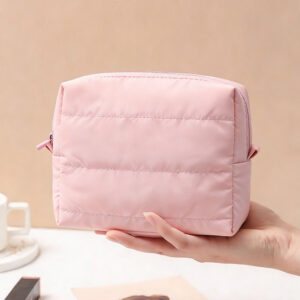
- Puffer Handle Pouch / Quilted Travel Makeup & Toiletry Bag — a structured, travel-friendly pouch with a soft puffer texture and easy-carry handle.
- Flat-Grain Barrel Pouch / Cylindrical Makeup & Brush Bag — a compact cylindrical format that is suitable for brushes, lip products, and small tools.
- Drawstring Bucket Bag / Mini Handle Pouch Organizer — a versatile organizer shape that can support casual beauty and lifestyle packing.
- Glossy Quilted Puffer Pouch / Compact Toiletry & Makeup Bag — a fashion-forward pouch style that works well for trend-led beauty positioning.
FAQ
Is a waterproof cosmetic bag the same as a water-resistant cosmetic bag?
Not always. Water-resistant means the bag can handle light moisture or splashes, while waterproof implies stronger protection against water entering the bag. In real sourcing, always confirm material, seam, zipper, and lining performance before using waterproof claims.
What is the best material for waterproof cosmetic bags?
It depends on the market. Coated polyester and nylon are common for practical wholesale programs. TPU and PVC are useful when stronger barrier performance or visibility is needed. PU leather works well for premium styling, while laminated composites are often best when you want a balance of appearance and protection.
Can waterproof cosmetic bags be customized with logos?
Yes. They can be customized with printing, embroidery, labels, metal plates, patches, zipper pullers, and packaging. The right method depends on the surface material and the desired brand image.
Are waterproof cosmetic bags good for travel?
Yes, travel is one of the best use cases for this category. A good travel bag should be easy to clean, easy to pack, and able to protect the rest of the luggage from moisture or small spills.
How should I position the product on my website?
Use clear use-case language. Focus on protection, convenience, cleaning ease, travel value, and customization. Pair the blog article with category and product pages so the shopper can move from education to purchase quickly.
Where should I start if I want to source custom waterproof cosmetic bags?
The best starting point is the factory’s main site and contact page. From there, you can define your target material, size, structure, logo, and packaging requirements, then request a sample and quote.
Final Takeaway
Waterproof cosmetic bags are more than a trend. They are a practical, highly brandable, and commercially flexible product family that fits beauty, travel, gifting, and wholesale markets. The strongest versions combine the right material, a dependable closure, a wipe-clean lining, useful structure, and thoughtful branding. When those pieces work together, the bag becomes more than storage. It becomes a small but powerful expression of your brand’s quality standard.
For custom sourcing, product development, or wholesale inquiries, start with the contact page and move into the custom bag manufacturing services page for a more detailed discussion.