Luxury Cosmetic Bag Market 2026: Trends, Materials, Pricing, and Sourcing Guide
The luxury cosmetic bag market has moved far beyond simple storage. In 2026 it sits at the intersection of beauty, travel, gifting, and lifestyle branding, which makes it attractive for both consumer-facing retail and B2B sourcing. Buyers are no longer just shopping for a pouch; they are shopping for an object that signals taste, convenience, and quality. That is why luxury cosmetic bags can perform well even when broader fashion spending is under pressure. McKinsey’s 2026 fashion outlook notes low-single-digit industry growth and value-conscious consumers, while Deloitte’s 2026 luxury outlook and IMD’s 2026 luxury commentary both point to a more selective, proof-driven luxury buyer who cares about value, provenance, and relevance.
For brands and wholesalers, this is good news. A cosmetic bag can be positioned as an entry premium item, a mid-tier lifestyle accessory, or a giftable luxury object. The difference is not only in price. It is in how the product feels, how it is styled, how it is packaged, and how clearly it solves a real problem. Luxury shoppers are willing to pay when the product looks intentional and performs better than a generic alternative. In this category, the best-performing products usually combine strong materials, thoughtful structure, subtle branding, and a clear use case such as travel, vanity organization, or beauty routine management.
Bling Accessory Co. is already positioned to serve that market because the site presents the company as a Chinese OEM/ODM manufacturer specializing in custom cosmetic bags, with over 15 years of experience, factory-direct supply, weekly new launches, and customization support. The site’s structure also includes a cosmetic bag category, a mini pouch category, a trend bag category, a packing and promo bag category, hair accessory category, school supply category, and tech accessory category, which makes it suitable for a broader lifestyle-accessory content cluster.
Why the luxury cosmetic bag market matters
Luxury cosmetic bags are interesting because they are a small product with a surprisingly large emotional footprint. A shopper may use one every day, carry it on a flight, place it on a vanity, or give it as a gift. That means the bag must work in several situations at once. It needs to be practical enough for daily storage, attractive enough for gifting, and refined enough to justify a premium price. That multi-use profile is exactly what makes the market so resilient.
The wider luxury market is changing in 2026. Recent luxury commentary highlights greater scrutiny of pricing, stronger expectations around transparency, and a shift from loud status signals toward more refined, earned desirability. In other words, buyers increasingly want to know why a product is expensive and what real value it delivers. That trend is especially relevant to cosmetic bags because the category sits close to beauty, personal care, and travel, where consumers already expect a mix of function and style.
This article focuses on the luxury cosmetic bag market from a practical point of view. It explains what makes a bag feel premium, which materials support high-end positioning, what styles matter most, where the market is heading, how packaging and personalization affect demand, and how to structure the page so it helps SEO and internal linking on your site. It is written for brands, wholesalers, product developers, and content teams who need something more useful than a generic trend summary.
What makes a cosmetic bag feel luxury
A luxury cosmetic bag is not just a pouch with a high price tag. It is a product that communicates refinement through material, shape, finishing, and presentation. The consumer should be able to sense quality even before opening the bag. That is why premium products often rely on restrained branding, consistent stitching, good hardware, and materials that hold their shape. The sensory experience matters just as much as the visual one.
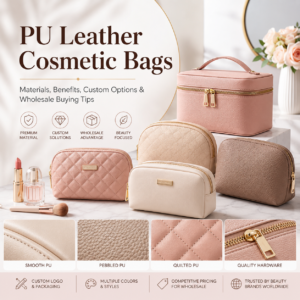
There are a few key cues that shoppers consistently associate with luxury. First is texture. Soft quilted surfaces, smooth coated fabrics, and refined PU or vegan-leather finishes all create a more elevated feeling than a basic flat polyester pouch. Second is structure. A bag that sits upright and opens cleanly feels more composed than one that collapses. Third is hardware. Zippers, pulls, handles, and closures influence how the product feels in use. Fourth is packaging. A luxury bag often arrives in a presentation format that feels gift-ready. Finally, the brand story matters. Buyers want the bag to feel tied to a broader idea of taste, travel, wellness, or beauty ritual.
That luxury logic is reflected in the kinds of products already present on the site. The Puffer Handle Pouch / Quilted Travel Makeup & Toiletry Bag uses quilted polyester, a nylon zipper, and a padded carry handle. The Glossy Quilted Puffer Pouch / Compact Toiletry & Makeup Bag and the Flat-Grain Barrel Pouch / Cylindrical Makeup & Brush Bag also show how texture and structure can elevate a simple organizer into a more premium object. The Drawstring Bucket Bag / Mini Handle Pouch Organizer adds another premium-casual direction with a soft silhouette and OEM/ODM customization language.
2026 market backdrop
The luxury cosmetic bag market should be read against the broader backdrop of fashion, luxury, and packaging trends. McKinsey’s 2026 fashion outlook points to low-single-digit industry growth and value-conscious consumer behavior, which suggests that shoppers are still buying, but they are buying more carefully. Deloitte’s 2026 luxury outlook also emphasizes changes in consumer expectations and market structure, while recent business commentary on luxury points to a market that is no longer driven only by price increases.
What this means for cosmetic bags is straightforward. Premium products still have room to grow, but they must justify themselves more clearly. Buyers want something that looks beautiful and also feels rational. They want design quality, useful organization, and the sense that the item will last. That opens the door for premium cosmetic bags with better materials, refined silhouettes, and strong branding discipline.
Packaging and personalization are also important. Mintel’s 2026 beauty packaging coverage points to sustainability, material innovation, and personalization as important forces. The Sustainable Packaging Coalition’s 2025 trends report similarly emphasizes innovation, design, policy, and recovery. That matters because cosmetic bags are often purchased alongside beauty products, and buyers increasingly expect packaging and accessory choices to reflect those same values. A premium cosmetic bag should therefore support reusable use, careful presentation, and packaging that feels aligned with the brand story.
Luxury materials and construction
Materials are the fastest route to luxury perception. PU and vegan leather are common because they deliver polish, easy maintenance, and a relatively controlled cost base. They can support a clean luxury look without the complexity of genuine leather. Quilted textiles and puffer constructions add softness, visual depth, and a more tactile premium experience. Coated fabrics and wipe-clean surfaces also matter because consumers do not want a beautiful bag that stains easily or looks worn after a few trips.
Hardware and construction details are equally important. Smooth zippers, durable pullers, neat lining, and balanced proportions all create confidence. Even a small cosmetic bag can feel expensive if the zipper glides properly and the body maintains its shape. Conversely, a stylish bag can feel cheap if the edges are rough or the hardware is flimsy. Luxury is often about consistency in the details.
The site’s current product examples make this clear. The puffer handle pouch presents a quilted padded body for shape and protection, while the barrel pouch supports brushes and small essentials in a cylindrical structure. The drawstring organizer uses a soft silhouette but still provides room and an accessible opening. These are practical premium cues rather than decorative ones.
Luxury style directions
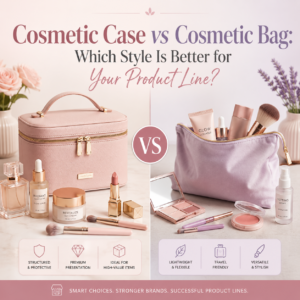
There is no single “luxury” cosmetic bag style. There are several style directions, each suited to a different buyer and channel. Minimalist luxury uses quiet colors, subtle branding, and clean geometry. It suits customers who want sophisticated restraint. Quilted or puffer luxury is softer and more tactile, often appealing to lifestyle and travel shoppers. Structured vanity luxury feels more protected and more elevated, which makes it ideal for premium gifting and vanity storage. Transparent luxury uses visibility as a design feature and works especially well for travel and organization. Soft casual luxury, such as drawstring bucket pouches or mini handle cases, suits users who want something refined but relaxed.
Style selection should align with audience behavior. For example, a shopper who wants to store daily lipstick and powder may prefer a mini pouch or flat pouch. A traveler who wants to organize skincare and liquids may prefer a clear case or hanging organizer. A premium buyer who wants a display-worthy item may prefer a structured vanity case. A brand should not try to force one style to do every job. Instead, it should create a style family that covers different use cases while keeping a coherent brand look.
Pricing psychology and margin structure
In the luxury cosmetic bag market, pricing is part of the product story. Consumers often use price as a proxy for quality, but only when the product presentation supports that assumption. If a bag looks and feels premium, the customer will accept a higher price. If it looks generic, the price becomes harder to justify. That is why premium positioning must start with product design rather than after it.
A practical pricing ladder can be built around the style and the level of perceived refinement. Mini pouches and flat pouches work well as entry premium products. Quilted puffer pouches and clear organizers can sit in the mid-premium range because they look more distinctive and solve a clear use case. Structured vanity cases and premium sets can sit at the top of the ladder because they have more visual presence, more protection, and a stronger gifting story. The key is that each price point should be easy to explain.
This matters more in 2026 because luxury commentary increasingly points to buyers who are value conscious and selective. They still buy premium products, but they want a clear reason. That means your page copy and product structure should be ready to explain the value stack: material quality, structure, aesthetic, usability, and packaging.
Where luxury cosmetic bags sell best
Luxury cosmetic bags can succeed in several channels. Direct-to-consumer e-commerce is strong because it allows the brand to control storytelling, imagery, and bundling. Boutique and concept stores are strong because the product can be displayed as a beautiful object. Beauty retailers are strong because the bag can be sold alongside makeup and skincare. Travel and lifestyle retail are strong because consumers want compact, organized, high-utility products for movement and routine.
Wholesale and private label channels are especially interesting because they reward clarity, consistency, and repeatability. A buyer wants to understand which styles are in the range, how they differ, and how they can be reordered. A supplier that can provide mini pouches, barrel pouches, puffer pouches, clear organizers, and sets has a more useful story to tell than a supplier with only one generic pouch.
Travel demand is particularly relevant. Recent media coverage of travel beauty products in 2026 continues to show editorial attention around travel makeup bags and on-the-go beauty essentials, which reinforces the idea that travel remains a strong use case for the category. That makes luxury cosmetic bags a natural fit for carry-on-friendly merchandising.
Travel and gifting as demand drivers
Travel and gifting are the two strongest emotional drivers in the market. Travel creates a functional reason to buy: people need to keep items organized, separate, and protected. Gifting creates a social reason to buy: people want to give something that feels useful, attractive, and premium without being too difficult to understand. Luxury cosmetic bags excel in both cases.
For travel, the bag should help the user pack faster, unpack faster, and keep items visible and secure. Clear organizers, hanging toiletry bags, structured vanity cases, and compact pouches all support this need. For gifting, the bag should feel special before it is even opened. That means the product needs attractive material, elegant color, and packaging that feels ready to hand over as a present.
This is why the category can work across age groups and occasions. A luxury cosmetic bag can be a travel companion, a vanity storage solution, a bridesmaid gift, a premium beauty bundle, or a seasonal retail item. It is a small item with a big number of sales contexts.
B2B sourcing strategy
Brands and wholesalers should not source luxury cosmetic bags by aesthetics alone. They should evaluate the factory’s ability to maintain consistency across sample, production, and repeat orders. Luxury products fail quickly when the batch quality drifts. That means material control, hardware quality, finishing, and packaging must all be specified clearly from the beginning.
The best B2B strategy is to build a style family rather than a one-off SKU. For example, a brand can launch a mini pouch, a quilted puffer pouch, a clear organizer, and a structured vanity case as one coordinated collection. That gives distributors and consumers an obvious reason to buy more than one item. It also makes internal linking easier because each style can point to related styles in the same cluster.
On Bling Accessory Co.’s site, the OEM/ODM language on product pages and the factory-facing homepage emphasize customization, weekly new products, quality control, and stable lead time. That makes the site suitable for a luxury or premium collection strategy because the commercial story is not just “we sell bags”; it is “we build custom cosmetic bags with an organized supply process.”
Branding and private label strategy
Luxury branding should be integrated into the product, not layered on top of it. That means the logo placement, hardware, zipper pull, lining, and packaging should all feel consistent. A restrained tone-on-tone logo can feel more premium than a large printed mark. A woven label can feel more artisanal. An embossed mark can feel more composed. The right choice depends on the style family.
Packaging matters as well. Luxury buyers often expect a more refined unboxing experience. A branded box, dust bag, or presentation sleeve can elevate the product quickly. Since beauty packaging trends are leaning toward personalization and sustainable material innovation, packaging should not be treated as an afterthought. It is part of the product’s perceived quality.
For private label programs, the best approach is to pick one hero style, one support style, and one premium style. The hero style should be accessible and clear. The support style should broaden the collection. The premium style should anchor the highest margin. This creates a stronger ladder than trying to launch too many random products at once.
FAQ
What is a luxury cosmetic bag? A luxury cosmetic bag is a premium organizer for makeup, skincare, toiletries, or travel essentials that uses refined materials, better finishing, and stronger visual design to justify a higher price.
Which materials work best for luxury cosmetic bags? PU, vegan leather, quilted textiles, coated fabrics, and premium transparent materials are all strong options because they can feel elevated while staying practical.
What styles sell best in the luxury segment? Mini pouches, quilted puffer pouches, structured vanity cases, clear organizers, and premium travel sets are among the strongest styles because they each solve a clear use case.
Is the luxury cosmetic bag market growing? The broader luxury and premium accessory market remains active in 2026, but growth is selective and value-driven rather than broad-based. Buyers are more careful and more focused on quality, story, and utility.
How do I source luxury cosmetic bags? Choose a supplier with premium material access, sample quality, stable production, customization options, and packaging capability. Build a style family rather than sourcing random one-off products.
Can luxury cosmetic bags be sustainable? Yes. Many brands now combine premium positioning with sustainability through better materials, reusable construction, and packaging that reflects current sustainable packaging trends.
Final takeaway
The luxury cosmetic bag market is strongest when the product feels intentional. The buyer should immediately understand why the bag deserves its price. That explanation can come from the material, the silhouette, the packaging, the use case, the branding, or the craftsmanship, but in successful premium products it usually comes from several of those factors working together.