OEM / ODM Patch Cosmetic Bag Branding Guide
Patch Cosmetic Bags: How Logo Patches Add Brand Value to Custom Makeup Pouches
Patch cosmetic bags are custom makeup pouches, cosmetic bags, toiletry pouches, travel organizers, or beauty accessory bags decorated with a logo patch instead of only printed branding. A logo patch may be woven, embroidered, leather-like, rubber, silicone, PVC, PU, metal-look, or fabric-based. Compared with simple printing, a patch can add texture, dimension, durability, and a stronger retail feeling to a custom cosmetic pouch.
For beauty brands, skincare companies, lifestyle retailers, wholesalers, subscription box businesses, promotional buyers, and private label sellers, logo patches are a practical way to make a makeup pouch feel more finished. A small patch can turn a basic zipper pouch into a branded accessory. It can make a travel cosmetic bag look more premium, make a canvas pouch feel more boutique, make a clear pouch feel more modern, or make a PU cosmetic bag feel more retail-ready.
This guide explains how logo patches add brand value to custom makeup pouches. It covers patch types, patch materials, design positioning, patch placement, bag material matching, stitching and attachment methods, logo artwork requirements, packaging, MOQ, pricing, wholesale buying tips, quality control, and supplier selection. If you are preparing a custom project, you can explore Custom Bag Manufacturing Services, browse the Cosmetic Bag Category, or review related styles in the Custom Cosmetics Bag Category.
What Are Patch Cosmetic Bags?
Patch cosmetic bags are cosmetic pouches or makeup bags customized with a sewn, heat-applied, bonded, or attached logo patch. The patch can display a brand logo, icon, slogan, monogram, product line name, campaign message, or decorative graphic. Unlike a logo printed directly on the bag surface, a patch is a separate branding element that is added to the bag during production.
In the beauty accessory industry, patch cosmetic bags may also be called patch makeup bags, logo patch cosmetic pouches, woven patch pouches, embroidered patch makeup bags, rubber patch cosmetic bags, leather patch toiletry bags, PVC patch travel pouches, or branded cosmetic bags with patches. The name usually depends on the patch material and the bag style.
Patch branding is popular because it creates a physical detail that customers can see and feel. A woven patch can look clean and fashion-oriented. An embroidered patch can feel handmade and textured. A leather or PU patch can communicate premium lifestyle value. A rubber patch can look modern, sporty, and durable. A clear PVC pouch with a rubber patch can feel practical and travel-focused. A canvas pouch with a woven label-style patch can feel boutique and natural.
Compared with screen printing or heat transfer, patches can provide stronger dimension and perceived value. They can also solve branding challenges on certain materials. For example, some textured, woven, furry, quilted, or heavily coated materials may not print cleanly. Adding a patch can give the brand a clearer logo area while keeping the bag material attractive.
Why Logo Patches Add Brand Value
Logo patches add brand value because they make a cosmetic bag feel more intentional. A plain pouch may look like generic packaging, but a well-designed patch communicates that the item belongs to a brand collection. The patch can create recognition, texture, detail, and a stronger retail impression.
The first value is visual identity. A patch gives the brand a defined logo area. This is useful when the bag material has a strong texture, print, quilting, transparent surface, or irregular shape. Instead of forcing the logo directly onto a difficult surface, the brand can use a patch as a clean branding panel.
The second value is perceived quality. Customers often associate sewn patches, woven labels, rubber patches, and leather patches with finished retail products. A small patch can make a simple makeup pouch look more expensive, especially when it matches the zipper, lining, hangtag, or packaging.
The third value is durability. Some patch types can be more durable than surface printing, depending on material and attachment method. A woven patch, embroidered patch, or stitched PU patch can remain visible through repeated use. This is important because cosmetic bags are often carried, packed, opened, squeezed, and stored with beauty products.
The fourth value is brand differentiation. Many cosmetic bags use similar shapes, materials, and zipper structures. Logo patches help create a unique detail that can separate one brand from another. A boutique skincare brand may use a soft woven patch. A travel beauty brand may use a silicone patch. A luxury gift set may use a PU leather patch. A youth-focused beauty line may use a colorful embroidered patch.
The fifth value is collection consistency. If a brand creates a cosmetic bag set, the same patch style can appear on a mini pouch, travel cosmetic bag, toiletry bag, drawstring bag, and vanity case. This creates a stronger product family and helps the customer recognize the collection across different items.
Main Types of Logo Patches for Cosmetic Bags
Different patch types create different brand effects. The best option depends on the bag material, target price, brand positioning, logo complexity, order quantity, and durability requirements.
| Patch Type | Best For | Main Features | Buyer Notes |
|---|---|---|---|
| Woven Patch | Boutique beauty, fashion pouches, canvas bags, soft cosmetic bags | Clean detail, fine logo lines, label-like appearance | Good for small text and refined brand marks. |
| Embroidered Patch | Youth beauty, colorful campaigns, casual pouches, gift items | Textured surface, raised threads, handcrafted look | Avoid very small text or overly complex logos. |
| PU Leather Patch | Premium cosmetic bags, toiletry bags, travel pouches, lifestyle brands | Clean surface, debossing or foil detail, upscale appearance | Works well with PU bags, canvas bags, and premium fabric pouches. |
| Rubber or Silicone Patch | Travel, sporty, waterproof-style, clear pouches, teen beauty products | Flexible, durable, modern, dimensional | Good for bolder logos and lifestyle accessory collections. |
| PVC Patch | Transparent bags, travel organizers, promotional beauty pouches | Water-resistant look, strong color, playful surface | Patch thickness and edge finishing should be checked. |
| Fabric Label Patch | Soft pouches, drawstring bags, natural beauty packaging | Simple, light, flexible, easy to sew | Useful for lower-weight pouches and subtle branding. |
Woven patches are often the best option when the logo has small letters or fine lines. Embroidered patches are strong when the brand wants texture and personality. PU leather patches add premium value, especially on canvas, polyester, PU, and travel pouches. Rubber and silicone patches work well for sporty, modern, and travel-oriented collections. PVC patches can create a fun and durable look. Fabric label patches are simple, light, and cost-effective for many pouch projects.
Best Bag Materials for Logo Patches
Patch selection should always be matched with the bag material. A patch that looks excellent on canvas may not work the same way on clear PVC. A rubber patch that feels modern on a travel pouch may look too casual for a luxury satin pouch. Buyers should consider material texture, thickness, flexibility, sewing feasibility, and final brand image.
Canvas and Cotton
Canvas and cotton are excellent materials for logo patches because they support a natural, boutique, or lifestyle look. Woven patches, embroidered patches, PU leather patches, and fabric labels all work well on canvas and cotton pouches. These materials are suitable for wellness brands, natural skincare brands, gift packaging, and casual retail cosmetic bags.
Polyester and Nylon
Polyester and nylon are practical for patch cosmetic bags because they are widely used in makeup pouches, travel cosmetic bags, toiletry bags, and promotional pouches. Woven patches, rubber patches, silicone patches, and fabric labels are common options. Since synthetic fabrics may vary in thickness and coating, patch sewing and attachment should be tested on the real material.
PU Leather and Vegan Leather
PU leather cosmetic bags can use logo patches, but buyers should decide whether a separate patch is necessary or whether debossing, embossing, foil stamping, or metal plates would be better. A PU bag with a PU leather patch can create a layered premium effect. A fabric bag with a PU patch can create contrast and make the logo area feel more upscale. For more material planning, review the PU Leather Cosmetic Bags Guide.
Clear PVC and TPU
Clear PVC and TPU cosmetic bags often pair well with rubber, silicone, PVC, or woven patches. Since transparent bags show the contents inside, a patch should be sized carefully. A patch that is too large may block visibility, while a patch that is too small may not deliver enough branding. For transparent bag development, see the Clear Cosmetic Bags Guide.
Quilted, Velvet, Satin, and Terry Cloth
Textured materials can benefit from patches because direct printing may not always look clean. A quilted pouch may use a woven patch, PU label, or metal-look patch. Velvet can use embroidery or woven labels, but the attachment method should avoid damaging the pile. Satin can use small fabric labels or woven patches for a soft giftable look. Terry cloth cosmetic pouches can use embroidered patches or woven labels for spa and skincare positioning.
For all materials, buyers should approve physical swatches and patch samples before bulk production. Photos cannot fully show color, texture, thickness, edge finishing, stitch quality, or patch flexibility. A patch cosmetic bag should be evaluated as a complete product, not as a bag and patch separately.
Patch Placement, Size, Shape, and Proportion
Patch placement can determine whether the cosmetic bag looks premium, playful, minimal, or promotional. A good patch should feel integrated with the bag structure. It should not look randomly attached or out of scale.
The most common placement is the front center panel. This works well for standard cosmetic pouches, mini pouches, toiletry bags, and travel cosmetic bags. A centered patch is easy to photograph and easy for customers to recognize. It is also a safe choice for retail and private label projects.
Side placement can create a more subtle fashion effect. A small woven patch near the side seam or lower corner can feel boutique and less promotional. This works well for minimalist beauty brands, soft pouches, canvas bags, and lifestyle cosmetic accessories.
Lower-front placement can make the bag feel more premium and understated. This is common for PU leather pouches, structured vanity cases, and simple cosmetic cases. The patch should align with seams, base lines, or zipper direction to look intentional.
Patch shape also matters. Rectangular patches are classic and easy to sew. Square patches feel balanced and simple. Oval or round patches feel softer and more decorative. Custom-shaped patches can create stronger brand identity, but they may increase tooling cost and inspection complexity.
Size should be proportional to the bag. A patch that is too large can make a small makeup pouch look cheap or crowded. A patch that is too small may not be readable. For mini pouches, a small woven or PU patch may be enough. For larger toiletry bags or travel organizers, a larger patch can work if it does not interfere with pockets, zippers, seams, or handles.
Patch Attachment Methods and Construction Details
The patch attachment method affects appearance, durability, cost, and production feasibility. The best method depends on the patch material, bag material, bag structure, and expected use.
Sewing is one of the most common methods. A woven patch, embroidered patch, fabric label patch, or PU patch can be sewn onto the pouch. Sewing creates a secure attachment and a visible stitch detail. The stitch color can match the patch, match the bag, or intentionally create contrast. Buyers should check stitch alignment, thread tension, loose threads, and corner finishing.
Heat application may be used for some patch types, especially certain embroidered, fabric, or heat-transfer-backed patches. This can create a clean look without visible stitching, but it must be tested on the actual bag material. Heat may affect PU leather, PVC, TPU, satin, or coated fabrics if not handled correctly.
Adhesive bonding can be used in some situations, but it must be approached carefully. Cosmetic bags are handled frequently, and weak adhesive can lift over time. If bonding is used, buyers should ask about adhesion testing, temperature resistance, surface preparation, and durability.
Some rubber, silicone, or PVC patches can be stitched, heat-applied, or attached with special backing depending on the design. Thicker patches may need stronger sewing or special edge control. If the bag is transparent, buyers should also consider how the back of the patch looks from the inside.
Construction details are especially important for soft pouches. If a patch is sewn onto a thin fabric without enough support, the panel may wrinkle or pull. If the patch is too stiff for the bag material, it may distort the shape. If the patch is attached too close to a zipper or seam, sewing may become difficult and inconsistent. These issues should be solved during sampling, not during mass production.
Logo Artwork and Patch Design Requirements
Patch design should begin with clear artwork. Buyers should provide vector files whenever possible, such as AI, EPS, or PDF files. If only a PNG or JPG is available, the supplier may need to redraw the artwork before production. Clear artwork helps avoid distorted logos, unclear letters, wrong colors, and poor patch details.
Woven patches can handle finer details than many embroidered patches, but extremely small text may still be difficult to read. Embroidered patches need enough space for thread thickness. Rubber and silicone patches work best with bolder shapes and clean lines. PU leather patches can use debossing, embossing, foil stamping, or printing, but fine details should be tested.
Color matching should be defined early. Buyers can provide Pantone references for patch background, logo color, stitch color, edge color, and bag material. If the patch must match zipper tape, lining, fabric, or packaging, the supplier should confirm all colors under realistic lighting.
The patch edge should also be planned. Woven and embroidered patches may use merrowed edges, heat-cut edges, folded edges, or stitched edges. PU patches may have cut edges, painted edges, embossed borders, or sewn borders. Rubber patches may have molded edges. The edge finish affects both appearance and durability.
For a complete comparison of logo methods beyond patches, buyers can read the Cosmetic Bag Logo Printing Guide. Patch branding can also be combined with custom zipper pullers, printed lining, hangtags, belly bands, and packaging inserts to create a stronger branded experience.
Retail, Gift, and Promotional Uses for Patch Cosmetic Bags
Patch cosmetic bags can serve different business goals depending on patch type, bag style, and packaging. A patch can make a pouch feel retail-ready, giftable, promotional, fashion-oriented, or premium.
Retail Beauty Accessories
For retail products, logo patches help a cosmetic bag look like a complete SKU rather than a generic pouch. A woven patch on a canvas cosmetic bag, a PU patch on a travel pouch, or a rubber patch on a clear cosmetic bag can improve shelf appeal and support a higher perceived value.
Gift-with-Purchase Campaigns
For gift-with-purchase campaigns, a patch can make the gift feel more valuable without changing the entire bag structure. A small patch on a mini pouch or soft cosmetic bag can carry the brand identity and make the promotion feel more memorable.
Private Label Collections
Private label sellers can use the same patch style across multiple products: mini pouch, travel cosmetic bag, toiletry bag, drawstring bag, and vanity case. This creates a consistent product line and makes the brand easier to recognize.
Travel and Lifestyle Campaigns
Rubber, silicone, and PVC patches are especially useful for travel and lifestyle cosmetic bags. They can create a more durable and modern look. These patches pair well with nylon, polyester, TPU, PVC, and coated fabrics.
Luxury and Boutique Beauty
PU leather patches, woven labels, and subtle embroidered patches work well for premium beauty brands. They can create a quieter branding effect than large printing while still making the pouch feel finished and intentional.
Patch cosmetic bags can also be paired with other products in a broader collection, such as Mini Pouches, Travel Cosmetic Bags, Toiletry Bags, and Custom Vanity Cases.
Packaging Ideas for Patch Cosmetic Bags
Packaging should support the patch design instead of hiding it. Since the patch is a key branding feature, buyers should choose packaging that allows customers to see or understand the patch detail clearly.
For wholesale and basic retail, individual polybags, barcode labels, and carton marks may be enough. For better retail presentation, hangtags, belly bands, paper sleeves, insert cards, and display boxes can improve the customer experience. A belly band can frame the pouch while leaving the patch visible. A hangtag can explain the material, patch detail, care instructions, or brand story.
For gift sets, patch cosmetic bags can be packed with skincare samples, lip products, brushes, perfume samples, or travel-size items. The patch becomes part of the gift presentation. A matching insert card or branded tissue paper can make the set feel more coordinated.
For e-commerce, packaging should protect the patch from friction and pressure. Rubber patches, PU patches, and embroidered patches can be affected by poor packing if they rub against other products or carton surfaces. Clear pouches should also be protected from scratches.
For broader packaging planning, read the Cosmetic Bag Packaging Guide. Packaging is not only a shipping detail; it helps the patch cosmetic bag feel more like a branded retail product.
MOQ, Pricing, and Lead Time
MOQ for patch cosmetic bags depends on bag material, patch type, patch size, patch color, patch production method, logo complexity, attachment method, pouch style, packaging, and supplier setup. A standard pouch with a simple woven patch may have more flexible MOQ than a custom-shaped rubber patch or multi-color silicone patch.
Patch MOQ can sometimes be separate from bag MOQ. For example, a patch supplier may require a minimum quantity for woven labels, embroidered patches, rubber patches, or molded silicone patches. If the patch is highly customized, tooling or setup charges may apply. Buyers should ask whether the quotation includes patch mold fees, sample fees, artwork fees, sewing fees, and packaging fees.
Pricing is affected by bag size, bag material, patch material, patch size, patch detail, number of colors, sewing complexity, lining, zipper, packaging, inspection requirements, and order quantity. A small woven patch on a simple pouch may be cost-effective. A large molded rubber patch on a structured travel bag may cost more but can create stronger brand impact.
Lead time should include artwork confirmation, patch sampling, bag sampling, patch attachment testing, sample revision, packaging proofing, bulk patch production, bag production, patch sewing or attachment, inspection, packing, and shipping. Patch production may add time compared with simple printing, so buyers should plan early for seasonal campaigns, retail launches, or subscription box deadlines.
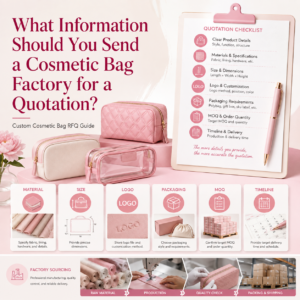
To get an accurate quotation, prepare a complete brief: bag style, size, material, patch type, patch size, patch artwork, patch colors, placement, attachment method, logo file, packaging method, quantity, target price, and delivery date. For broader quantity planning, see the Cosmetic Bag MOQ Explained guide.
Wholesale Buying Tips for Patch Cosmetic Bags
When sourcing patch cosmetic bags wholesale, buyers should compare more than the pouch shape and unit price. Patch quality can strongly affect the final product. A low-cost patch may look acceptable in photos but have poor edge finishing, dull colors, weak attachment, unclear text, or inconsistent sizing in bulk production.
First, define the brand effect. Do you want the pouch to look premium, casual, sporty, natural, luxury, playful, or promotional? Second, choose a patch type that supports that effect. Third, match the patch to the bag material. Fourth, test attachment on the physical sample. Fifth, approve both the patch sample and finished bag sample before mass production.
Buyers should ask for patch samples, not only digital artwork. A patch is a physical branding element, so texture, thickness, flexibility, edge quality, and color should be checked in person. If possible, approve a pre-production sample that includes the final bag material, final patch, final stitching, final lining, and final packaging.
For wholesale programs, consistency is important. The patch should be placed in the same position across all units. Stitching should not be crooked. Patch color should not vary too much between batches. Pouch shape, zipper color, lining, and packaging should match the approved sample.
If patch cosmetic bags are part of a broader product line, keep branding consistent across sizes and styles. The same patch design can be used on cosmetic pouches, mini pouches, travel wash bags, drawstring pouches, and cosmetic bag sets. Buyers planning broader sourcing can also review the Wholesale Cosmetic Bags Guide and the OEM Cosmetic Bag Manufacturer Guide.
Patch Cosmetic Bag Quality Control Checklist
Patch cosmetic bags require inspection of both the bag and the patch. A well-sewn pouch can still fail if the patch is crooked, unclear, weakly attached, or inconsistent. A beautiful patch can still lose value if the bag material, zipper, lining, or packaging is poor.
- Check bag material color, texture, thickness, softness, odor, stains, wrinkles, scratches, and surface consistency.
- Confirm pouch size, shape, gusset width, opening width, zipper position, and filled appearance.
- Inspect patch material, thickness, flexibility, edge finishing, color accuracy, logo clarity, and surface quality.
- Check patch size, shape, placement, alignment, spacing from seams, and consistency across units.
- Inspect patch attachment method, stitch quality, loose threads, heat bonding, adhesive strength, or backing security.
- Test whether the patch wrinkles, lifts, twists, cracks, fades, or pulls the bag panel out of shape.
- Check zipper smoothness, slider function, puller strength, zipper tape color, and zipper end finishing.
- Inspect lining cleanliness, inner seams, pockets, divider panels, and stitching quality.
- For clear PVC or TPU bags, check patch visibility, transparency, scratches, fingerprints, odor, and pressure marks.
- For PU or leather-like patches, check debossing depth, foil effect, edge cutting, color consistency, and scratch resistance.
- Test the pouch with real makeup, skincare, brushes, samples, travel bottles, or daily accessories.
- Confirm packaging, hangtags, belly bands, insert cards, barcode labels, carton marks, SKU separation, and packing quantity.
- Compare bulk production with the approved pre-production sample before shipment.
Patch inspection should be done under good lighting. Small issues such as crooked placement, uneven stitching, or unclear patch text can be highly visible on a finished cosmetic pouch. For a broader inspection framework, read the Cosmetic Bag Quality Control Guide.
How to Choose a Patch Cosmetic Bag Manufacturer
A reliable patch cosmetic bag manufacturer should understand both custom bag production and patch branding. The supplier needs to manage bag materials, patch design, patch sourcing, placement, attachment, sewing quality, packaging, MOQ, and bulk inspection. Patch cosmetic bags require coordination between branding and construction.
Buyers should ask whether the supplier has experience producing patch bags, mini pouches, custom makeup pouches, clear cosmetic bags, PU cosmetic bags, toiletry bags, travel cosmetic bags, drawstring bags, and cosmetic bag sets. Experience matters because different bag materials and patch types require different production methods.
A professional OEM/ODM supplier should provide material swatches, patch samples, sample support, logo recommendations, patch placement advice, packaging options, MOQ guidance, production updates, and final inspection support. The supplier should ask about product use, bag size, material, patch type, logo artwork, patch placement, packaging, quantity, target price, and delivery date before quoting.
Communication quality is important. If a supplier quotes without confirming patch type, patch size, attachment method, bag material, placement, and packaging, the quotation may not reflect the actual project. A good supplier helps buyers avoid problems such as patch color mismatch, weak attachment, crooked placement, poor stitch quality, or delayed patch production.
Buyers comparing sourcing models can also read the Cosmetic Bag Factory vs Trading Company Guide. For full customization support, submit the bag style, patch artwork, material preference, quantity, and target market through the Contact Us page.
FAQ: Patch Cosmetic Bags
What are patch cosmetic bags?
Patch cosmetic bags are makeup pouches or cosmetic bags customized with a logo patch. The patch can be woven, embroidered, PU leather, rubber, silicone, PVC, or fabric-based, depending on the brand style and bag material.
Why use logo patches on custom makeup pouches?
Logo patches add texture, dimension, durability, and stronger brand value. They can make a simple pouch feel more retail-ready and help brands create a more recognizable product line.
What patch type is best for cosmetic bags?
The best patch type depends on brand positioning and material. Woven patches are good for fine details, embroidered patches add texture, PU leather patches feel premium, and rubber or silicone patches work well for modern travel and lifestyle bags.
Can patches be used on clear cosmetic bags?
Yes. Clear PVC and TPU cosmetic bags can use rubber, silicone, PVC, woven, or fabric patches. Patch size and placement should be balanced so the patch does not block too much visibility.
Are patch cosmetic bags more expensive than printed bags?
Patch cosmetic bags may cost more than simple printed bags because patch production, patch attachment, sewing, and inspection add extra steps. However, patches can increase perceived value and support stronger retail positioning.
What materials work best for patch makeup bags?
Common bag materials include canvas, cotton, polyester, nylon, PU leather, clear PVC, TPU, velvet, satin, terry cloth, and quilted fabrics. The patch type should be matched to the bag material and target brand image.
What affects the MOQ of custom patch cosmetic bags?
MOQ is affected by bag material, patch type, patch size, color count, logo complexity, attachment method, pouch style, packaging, and whether the patch requires special tooling or setup.
How do I check patch cosmetic bag quality?
Check bag material, patch clarity, patch color, patch placement, stitch quality, attachment strength, zipper smoothness, lining, packaging, filled capacity, carton marks, and final quantity before shipment.
Can the same logo patch be used across a full cosmetic bag collection?
Yes. A brand can use the same patch style across mini pouches, travel cosmetic bags, toiletry bags, drawstring bags, vanity cases, and cosmetic bag sets to create a consistent product family.
Where can I request custom patch cosmetic bag samples?
You can contact Bling Accessory Co. through the Contact Us page and share your bag style, material preference, patch artwork, patch type, placement, packaging requirement, quantity, and target market.
Start Your Custom Patch Cosmetic Bag Project
Patch cosmetic bags help beauty and lifestyle brands create custom makeup pouches with stronger texture, clearer branding, higher perceived value, and better retail presentation. Whether you need woven patch pouches, embroidered patch makeup bags, PU leather patch cosmetic bags, rubber patch travel pouches, clear cosmetic bags with logo patches, or full cosmetic bag sets with consistent patch branding, the right manufacturer can support design, sampling, patch development, logo customization, packaging, quality control, and bulk production.
Share your patch cosmetic bag idea, target size, material preference, patch type, logo artwork, patch placement, packaging plan, quantity, target market, and launch timeline to discuss samples, MOQ, pricing, lead time, and wholesale production options.