Custom Vanity Cases: How Beauty Brands Build Structured Cosmetic Storage Products
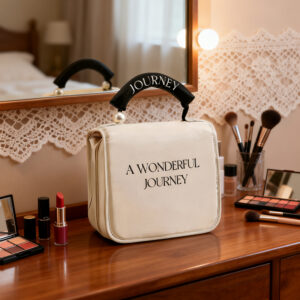
Custom vanity cases are one of the strongest product options for beauty brands that want to create premium, structured, and retail-ready cosmetic storage products. Unlike simple makeup pouches, vanity cases usually have a defined shape, stronger walls, a wide zipper opening, a stable base, a carry handle, organized interior space, and a more giftable appearance.
For skincare companies, makeup brands, beauty retailers, subscription box businesses, wholesalers, private label sellers, spas, hotels, and travel accessory brands, a vanity case can become more than a storage item. It can become a premium product container, a beauty organizer, a gift set component, a travel cosmetic case, a private label retail SKU, or a brand-building accessory that customers reuse repeatedly.
This guide explains how beauty brands develop structured cosmetic storage products from concept to bulk production. It covers vanity case styles, materials, structure, lining, zippers, handles, logo options, packaging, MOQ, pricing, quality control, wholesale sourcing, and supplier selection. Buyers can also explore our custom bag manufacturing services, browse the cosmetic bag collection, or contact us for sample and quotation support.
What Is a Custom Vanity Case?
A custom vanity case is a structured cosmetic storage product designed to hold makeup, skincare, beauty tools, toiletries, travel items, or gift set products. It is usually more shaped and protective than a soft makeup pouch. It may include padded panels, reinforced sides, a top handle, double zipper, inner pockets, brush slots, elastic loops, divider panels, wipe-clean lining, or branded hardware.
Vanity cases are often used when a brand wants a more premium cosmetic storage product. A soft pouch is convenient, but a vanity case offers stronger shelf presence, better shape retention, and a more organized user experience. This makes vanity cases popular for retail beauty collections, skincare gift sets, luxury cosmetic bags, travel beauty kits, hotel and spa amenities, influencer PR packages, and private label accessory lines.
A custom vanity case can be developed in many forms. It can be a small structured makeup case for daily cosmetics, a large travel case for skincare bottles, a clear TPU vanity pouch for visibility, a PU leather vanity case for luxury retail, a quilted case for fashion beauty brands, or a brush-and-makeup organizer with inner slots and compartments.
From a manufacturing perspective, vanity cases require more technical planning than simple pouches. The pattern, panel support, zipper curve, handle attachment, lining, and packing method must all work together. A beautiful sample must also be repeatable in bulk production. This is why brands should work with an experienced OEM/ODM supplier rather than choosing only by the lowest quotation.
Why Beauty Brands Build Structured Cosmetic Storage Products
Beauty brands use vanity cases because structured storage creates stronger perceived value. Customers often see a vanity case as more premium than a flat pouch because it looks stable, organized, and giftable. It can sit on a bathroom counter, vanity table, shelf, hotel room table, or travel suitcase while maintaining its shape.
For skincare brands, a vanity case can hold bottles, jars, tubes, serums, cleansers, and sample products in a more presentable way. For makeup brands, it can hold palettes, compacts, brushes, lipsticks, and beauty tools. For travel brands, it can organize personal care items and toiletries. For retailers, it can become a higher-value SKU compared with a simple pouch.
Vanity cases are also useful for gift sets. A skincare kit packed inside a structured cosmetic case can feel more valuable than the same products packed in a carton only. A holiday beauty set with a vanity case can become a reusable gift item, which increases brand exposure after the original products are used.
From a B2B perspective, vanity cases support product line expansion. A brand can start with a core makeup pouch, then add a structured vanity case as a premium item. It can also create matching sets that include a vanity case, mini pouch, brush bag, and clear travel pouch. This allows the brand to build a stronger category rather than relying on one basic product.
Vanity cases also photograph well for e-commerce and social media. Their shape, handle, zipper, hardware, and interior layout provide more visual detail than a flat pouch. When paired with beauty products, they can communicate organization, premium quality, and lifestyle value.
Popular Custom Vanity Case Styles
The best vanity case style depends on target customer, retail price, product capacity, material direction, and sales channel. Below are common vanity case structures used by beauty brands and wholesale buyers.
| Vanity Case Style | Best For | Main Features | Buyer Notes |
|---|---|---|---|
| PU Leather Vanity Case | Premium beauty retail, skincare gift sets, private label products | Structured body, smooth surface, branded hardware, giftable look | Good for debossing, metal logo plates, and luxury packaging. |
| Quilted Vanity Case | Fashion beauty brands, holiday collections, luxury cosmetic bags | Padded texture, premium stitching, soft structured shape | Quilting alignment and stitch consistency are important. |
| Clear Vanity Case | Travel beauty kits, transparent storage, retail visibility | PVC/TPU body, visible contents, colored trim, zipper closure | Scratch protection and material clarity need careful QC. |
| Travel Vanity Case | Skincare bottles, toiletries, travel cosmetics, hotel programs | Larger capacity, carry handle, wipe-clean lining, strong zipper | Test with real bottles and travel items before approval. |
| Brush Organizer Vanity Case | Makeup tool brands, professional beauty kits, retail sets | Brush slots, elastic loops, flap, pockets, organized interior | Brush head protection and slot spacing must be tested. |
| Mini Vanity Case | Gift-with-purchase, compact retail items, beauty samples | Small structure, premium look, easy daily use | Good for brands that want premium value in a compact size. |
A premium skincare brand may choose a PU leather vanity case with clean lines and subtle logo. A travel brand may choose a larger case with water-resistant lining and practical compartments. A makeup tool brand may choose an interior layout with brush slots and protective flaps. The best structure should match the real products the case will hold.
Structure, Shape, and Capacity Planning
Structure is the main reason buyers choose a vanity case instead of a soft cosmetic bag. A vanity case should hold its shape, protect the contents, open smoothly, and look presentable when empty or filled. This requires careful pattern design and material selection.
The most common vanity case structures include boxy cases, half-moon cases, dome-shaped cases, rectangular travel cases, wide-open cases, handle cases, and compartment cases. Each structure has different benefits. A boxy case offers strong capacity. A dome shape looks soft and elegant. A wide-open case improves access. A handle case is easier to carry. A compartment case creates better organization.
Capacity should be planned with real products. For skincare brands, test bottles, tubes, jars, droppers, sunscreen, sheet masks, and sample sachets. For makeup brands, test palettes, lipsticks, compacts, mascara, brushes, and sponges. For travel brands, test toiletry bottles, toothbrushes, razors, hair accessories, and personal care items.
The case should not be too tight. Structured cases need enough room for products and hand access. If the zipper opening is too small, customers may struggle to insert or remove items. If the case is too large, the product may feel bulky and shipping cost may increase. A balanced shape is critical.
Buyers should also think about how the case looks when displayed. A retail vanity case should stand neatly and keep its form. An e-commerce case should photograph well from the front, side, interior, and detail angles. A gift set case should fit the products and packaging without compression.
Best Materials for Custom Vanity Cases
Material selection defines the appearance, structure, cost, and durability of a vanity case. Because vanity cases are more structured than standard pouches, the outer material usually needs enough body to support shape or work with internal reinforcement.
PU Leather and Vegan Leather
PU leather is one of the most popular materials for custom vanity cases. It offers a polished surface, wide color options, good structure, and strong compatibility with premium logo methods such as debossing, embossing, foil stamping, metal plates, and custom zipper pullers. Smooth PU creates a clean modern look, while pebbled PU feels more leather-like. Quilted PU creates a soft luxury effect.
Quilted and Padded Materials
Quilted fabrics and padded PU can make vanity cases feel softer and more premium. They are useful for fashion beauty brands, holiday collections, and luxury cosmetic storage products. The key quality points are quilting alignment, padding consistency, stitch density, and shape control.
Clear PVC and TPU
Clear PVC and TPU are useful for transparent vanity cases. They make contents visible and can create a clean travel-friendly style. TPU often feels softer and more refined, while PVC can be more cost-effective. Transparent materials require careful handling because scratches, fingerprints, and dust are more visible.
Polyester and Nylon
Polyester and nylon are practical for travel vanity cases and larger cosmetic storage products. They can be lightweight, durable, and available in many colors. Coated versions can improve water resistance. These materials are useful for functional travel cases, hotel kits, and wholesale programs.
Velvet, Satin, and Specialty Fabrics
Velvet and satin can create a soft beauty feeling for gift-oriented cases. They can work well for smaller vanity cases and premium packaging-led products. However, they need careful packing and handling because surface marks, dust, and wrinkles may be visible.
Buyers should approve physical swatches before sampling and bulk production. Photos cannot fully show softness, thickness, texture, stiffness, odor, or scratch resistance. For deeper material planning, read the Cosmetic Bag Materials Guide and the PU Leather Cosmetic Bags Guide.
Lining and Interior Organization
The interior of a vanity case is just as important as the exterior. Customers open the case to organize products, so the inside must feel clean, practical, and well finished. A premium exterior with a poor lining can damage the customer’s perception of the whole product.
Common lining options include polyester lining, satin lining, printed lining, branded lining, waterproof lining, wipe-clean lining, mesh lining, and microfiber lining. For skincare and travel products, wipe-clean or water-resistant lining is highly practical. For luxury retail, satin or branded lining can improve perceived value. For brush organizer cases, the lining should protect tools and remain easy to clean.
Interior organization can include mesh pockets, zipper pockets, elastic loops, brush slots, divider panels, transparent compartments, removable pouches, and bottle holders. These details can increase functionality, but they also increase sewing complexity and cost. A good design uses only the features that match the real use case.
For example, a skincare vanity case may need upright bottle space and a wipe-clean base. A makeup vanity case may need pockets for palettes and lip products. A brush vanity case may need elastic loops and a protective flap. A travel vanity case may need a secure compartment and strong zipper opening.
Buyers should check lining attachment, pocket placement, seam finishing, cleanliness, odor, and color consistency. If the lining is printed, the print should be aligned and not easily rubbed off. If the lining is white or light-colored, stain resistance should be considered.
Zippers, Handles, and Hardware for Vanity Cases
Zippers are especially important for vanity cases because they often need to move around curves, corners, and structured panels. A vanity case with a rough zipper feels low quality, even if the material looks good. The zipper should open smoothly, close securely, and match the case’s structure.
Nylon zippers are often practical for vanity cases because they can move around curves more easily. Metal zippers can create a premium appearance, especially on PU leather or luxury cosmetic cases, but they should be tested for smoothness and weight. Waterproof zippers may be used for travel or toiletry vanity cases, but they can feel stiffer and require sample testing.
Handles are another important feature. A top handle can make the case more convenient and more premium. Handle strength should be tested because customers may carry the case with products inside. The handle should be aligned, reinforced, comfortable, and visually proportional to the case size.
Hardware color should be consistent. Gold, silver, rose gold, gunmetal, matte black, or custom-plated hardware can be used depending on brand style. Zipper teeth, sliders, pullers, logo plates, rings, rivets, and handle attachments should match or intentionally coordinate.
Custom zipper pullers can add a strong branding detail. A branded metal puller, PU pull tab, charm puller, or custom-shaped puller can make the vanity case feel more finished. For more zipper planning, read the Best Zipper for Custom Cosmetic Bags Guide.
Logo and Branding Options for Custom Vanity Cases
Vanity cases often have stronger branding opportunities than simple makeup pouches because they have more visible structure, panels, handles, and hardware. The logo method should match the material and price positioning.
For PU leather vanity cases, debossing, embossing, foil stamping, and metal logo plates are popular. Debossing creates a subtle premium effect. Foil stamping adds shine for gift sets and seasonal collections. Metal logo plates create a polished retail look and can match zipper hardware.
For fabric vanity cases, embroidery, woven labels, rubber patches, and screen printing may be suitable. Embroidery works well for canvas, velvet, terry cloth, and satin. Woven labels can create a boutique or fashion look. Rubber and silicone patches can work for travel or youth-focused products.
For clear PVC or TPU vanity cases, logo methods may include screen printing, heat transfer, rubber patches, woven labels, and custom zipper pullers. Since transparent cases show contents, branding should be balanced. A small logo may look cleaner than a large print that blocks visibility.
Buyers should approve the logo on the actual material and finished sample. Logo placement should be measured clearly from edges, zipper lines, seams, or center points. For a full method comparison, read the Cosmetic Bag Logo Printing Guide.
Packaging for Retail, E-Commerce, and Gift Sets
Packaging is critical for custom vanity cases because structured cases need shape protection and premium presentation. A vanity case may look excellent at the factory but arrive compressed, scratched, dusty, or misshaped if packaging is not planned correctly.
Basic packaging may include tissue paper, individual polybags, and master cartons. For premium products, buyers may use dust bags, gift boxes, belly bands, paper sleeves, insert cards, hangtags, branded stickers, or molded inserts. The best choice depends on retail price, sales channel, product material, and shipping method.
A PU leather vanity case may need tissue paper inside to support shape, a dust bag to protect the surface, and a gift box for retail presentation. A clear vanity case may need protective film or careful polybag packing to reduce scratches. A travel vanity case may need carton packing that prevents compression.
For gift sets, the packaging should show the value of the case and the products inside. A skincare set may place bottles inside the vanity case, then pack the case in a box or sleeve. A beauty retail set may use a belly band or insert card to explain the contents. A holiday set may use a premium gift box with foil stamping or special color.
Packaging also affects MOQ, cost, lead time, and shipping volume. A gift box can improve perceived value, but it increases carton space. A dust bag adds premium value, but it adds material and sewing cost. For full packaging planning, read the Cosmetic Bag Packaging Guide.
Wholesale Buying Tips for Custom Vanity Cases
When sourcing custom vanity cases wholesale, buyers should evaluate the full structure, not only the exterior appearance. A vanity case may look attractive in photos, but the real quality depends on shape stability, zipper smoothness, handle strength, lining, stitching, hardware, and packing.
First, define the use case. Is the vanity case for skincare bottles, daily makeup, travel toiletries, makeup brushes, gift sets, or retail display? Second, confirm the target size with real products. Third, review material and reinforcement. Fourth, test the zipper around corners. Fifth, check handle strength with products inside.
Buyers should also consider shipping volume. Vanity cases often take more space than flat pouches. A structured case may require internal support and careful packing. This can increase freight cost. Before placing a large order, ask for carton dimensions, packing quantity, gross weight, and estimated shipping volume.
Packaging should be confirmed early. If the case is a retail product, a gift box, dust bag, belly band, or hangtag may be required. If it is part of a beauty kit, product fit and set packing should be tested. If it is for e-commerce, the package should protect the case during parcel delivery.
For broader sourcing advice, read the Wholesale Cosmetic Bags Guide.
MOQ, Pricing, and Lead Time for Vanity Case Production
MOQ for custom vanity cases depends on material availability, structure, color, logo method, zipper, hardware, lining, packaging, and supplier setup. If the buyer uses an existing structure with available material and standard hardware, MOQ may be more flexible. If the buyer requires a new pattern, custom molded structure, custom color material, metal logo plate, custom pullers, printed lining, or gift box packaging, MOQ may increase.
Pricing is affected by material grade, panel reinforcement, case size, sewing complexity, zipper quality, handle construction, lining, pockets, dividers, logo method, packaging, inspection requirements, and carton volume. A small PU vanity case with standard lining is simpler than a large travel case with multiple compartments, custom hardware, branded lining, and retail box.
Lead time should include design confirmation, material sourcing, sample development, structure adjustment, logo testing, packaging proofing, sample revision, bulk production, inspection, packing, and shipping. Vanity cases may need more sample adjustment than soft pouches because the structure must be tested carefully.
Buyers can reduce risk by starting with an existing vanity case structure and customizing material, color, logo, lining, and packaging. This can shorten development time and make pricing more predictable. For quantity planning, read the Cosmetic Bag MOQ Explained guide.
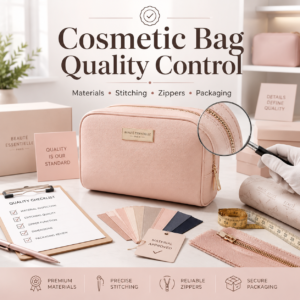
Custom Vanity Case Quality Control Checklist
Quality control is essential for structured vanity cases because customers expect them to look stable, open smoothly, and protect contents. Small problems such as crooked stitching, weak handles, rough zippers, poor lining, or unstable shape can reduce perceived value.
- Check outer material color, texture, thickness, softness, odor, scratches, wrinkles, and surface consistency.
- Confirm case size, shape, base stability, panel alignment, and structure recovery.
- Inspect reinforcement, padding, panel strength, corner finishing, and side wall balance.
- Test zipper smoothness around curves, zipper end finishing, slider function, and puller strength.
- Check handle alignment, handle reinforcement, attachment strength, comfort, and appearance.
- Inspect hardware color, plating consistency, edge smoothness, rust risk, and scratch marks.
- Check logo size, placement, clarity, debossing depth, foil quality, metal plate attachment, or patch sewing.
- Inspect lining cleanliness, inner pockets, dividers, elastic loops, brush slots, and seam finishing.
- Test filled capacity with real cosmetics, skincare bottles, brushes, or travel items.
- Confirm packaging fit, shape protection, dust bag, gift box, hangtag, barcode, carton mark, and quantity.
- Compare bulk production with the approved pre-production sample before shipment.
For vanity cases, inspectors should review both empty shape and filled shape. The case should not collapse, twist, or deform under normal use. The zipper should close smoothly when the case is filled with realistic contents. For broader inspection standards, read the Cosmetic Bag Quality Control Guide.
How to Choose a Custom Vanity Case Manufacturer
A good vanity case manufacturer should understand structured cosmetic storage, not only simple pouch sewing. Vanity cases require stronger pattern development, shape control, zipper curve management, handle reinforcement, interior organization, and protective packing.
Buyers should ask whether the supplier has experience producing PU vanity cases, quilted vanity cases, clear vanity pouches, travel cosmetic cases, cosmetic storage cases, brush organizer cases, and retail gift set cases. Experience matters because structured cases need more coordination than flat makeup pouches.
A reliable supplier should provide material swatches, sample support, structure recommendations, logo options, zipper and hardware choices, packaging suggestions, MOQ guidance, and production updates. The supplier should ask detailed questions about use case, size, products inside, material, logo, packaging, quantity, target price, and delivery schedule before quoting.
Communication quality is important. If a supplier quotes a vanity case without discussing structure, lining, zipper, handle, or packaging, the quotation may not reflect the real requirement. The best supplier helps the buyer balance design, function, cost, MOQ, and production feasibility.
Buyers comparing sourcing options can also read the Cosmetic Bag Factory vs Trading Company Guide.
FAQ: Custom Vanity Cases for Beauty Brands
What is a custom vanity case?
A custom vanity case is a structured cosmetic storage product designed to hold makeup, skincare, beauty tools, toiletries, travel items, or gift set products. It can be customized with material, size, lining, zipper, handle, logo, packaging, and private label details.
How is a vanity case different from a cosmetic bag?
A vanity case is usually more structured, protective, and premium. A cosmetic bag is usually softer, lighter, and more flexible. Vanity cases are often better for retail beauty storage, skincare sets, travel organization, and gift packaging.
What materials are best for custom vanity cases?
Popular materials include PU leather, vegan leather, quilted PU, padded fabric, clear PVC, TPU, polyester, nylon, velvet, satin, and specialty fabrics. The best choice depends on brand positioning, target cost, structure, and sales channel.
Can vanity cases be customized with a logo?
Yes. Vanity cases can use debossing, embossing, foil stamping, screen printing, embroidery, woven labels, rubber patches, silicone patches, metal logo plates, and custom zipper pullers depending on material and design.
What features can be added inside a vanity case?
Common interior features include mesh pockets, zipper pockets, elastic loops, brush slots, divider panels, bottle holders, transparent compartments, removable pouches, wipe-clean lining, and branded lining.
What packaging is suitable for custom vanity cases?
Packaging options include polybags, tissue paper, dust bags, belly bands, hangtags, insert cards, paper sleeves, rigid gift boxes, drawer boxes, magnetic boxes, and custom retail cartons.
What affects the MOQ of custom vanity cases?
MOQ is affected by material availability, case structure, size, custom color, logo method, zipper, hardware, lining, packaging, and whether the project uses an existing structure or fully custom development.
How do I check custom vanity case quality?
Check material surface, shape stability, panel alignment, stitching, zipper smoothness, handle strength, hardware finish, logo accuracy, lining cleanliness, interior function, packaging fit, and carton packing before shipment.
Where can I request custom vanity case samples?
You can contact Bling Accessory Co. through the Contact Us page and share your case style, target size, material preference, logo artwork, interior layout, packaging needs, quantity, and target market.
Start Your Custom Vanity Case Project
Custom vanity cases help beauty brands create structured, premium, and reusable cosmetic storage products for retail, travel, skincare sets, makeup collections, gift programs, and private label product lines. Whether you need PU leather vanity cases, quilted cosmetic cases, clear TPU vanity pouches, travel cosmetic cases, brush organizer cases, or luxury gift set cases, the right manufacturer can support design, sampling, material selection, logo customization, packaging, quality control, and bulk production.
Share your vanity case idea, target size, material preference, interior structure, logo file, packaging requirement, quantity, target market, and launch timeline to discuss samples, MOQ, pricing, lead time, and wholesale production options.
Request Custom Vanity Case Options