Cosmetic Bag Packaging Guide: Polybags, Belly Bands, Gift Boxes, and Retail-Ready Options
Cosmetic bag packaging is more than a protective layer around a finished product. For beauty brands, skincare companies, retailers, wholesalers, promotional buyers, and private label sellers, packaging influences first impression, retail presentation, logistics efficiency, product protection, customer experience, and brand value. A well-made cosmetic bag can lose its premium feeling if it arrives in poor packaging, while a simple makeup pouch can feel more valuable when it is packed with the right belly band, hangtag, insert card, dust bag, or gift box.
Many buyers spend most of their time choosing material, zipper, lining, and logo, then treat packaging as a final detail. In real production, packaging should be planned early. It affects quotation, MOQ, sample approval, barcode preparation, carton volume, warehouse receiving, e-commerce delivery, and retail shelf display. The right custom cosmetic bag packaging can help your product look more professional, protect the bag during shipping, and support stronger brand recognition.
This complete guide explains how to choose packaging for custom makeup bags, toiletry bags, vanity cases, brush bags, mini pouches, gift-with-purchase bags, and private label cosmetic bag collections. If you are developing a custom project, you can also explore our custom bag manufacturing services, browse the cosmetic bag collection, or review related packing and promo bag options.
Why Cosmetic Bag Packaging Matters for Beauty Brands
Cosmetic bags are tactile products. Customers touch the zipper, feel the material, open the lining, place products inside, and often reuse the bag many times. But before they experience the bag itself, they experience the packaging. Packaging creates the first physical contact between the buyer and the brand. It sets expectations before the product is fully opened. If the package looks clean, intentional, and brand-aligned, the cosmetic bag feels more valuable. If the packaging looks cheap, damaged, unclear, or poorly labeled, the product may feel less professional even when the bag quality is acceptable.
For beauty brands, packaging also helps communicate positioning. A minimalist belly band can create a clean retail look. A rigid gift box can support luxury pricing. A dust bag can make a vanity case feel more premium. A recycled paper sleeve can support an eco-conscious message. A clear polybag can protect products efficiently for wholesale distribution. A hangtag can explain material, logo story, care instructions, or product features. Packaging is not only about covering the bag; it is about shaping how customers understand the product.
Packaging is also important for B2B operations. Retail chains may require barcode labels, product names, SKU codes, country-of-origin labels, warning statements, carton marks, or display-ready packaging. E-commerce sellers may need packaging that reduces damage during parcel delivery. Subscription box companies may need compact packing to fit a fixed box size. Wholesalers may need clear SKU separation and carton-level identification. Promotional buyers may need fast packing, cost efficiency, and accurate quantity control.
A professional custom cosmetic bag manufacturer should help buyers think about packaging early, not only after production is completed. The bag design, packaging method, carton size, and shipping plan should work together. A structured vanity case, for example, may need shape protection. A clear TPU cosmetic bag may need anti-scratch packing. A velvet pouch may need dust protection. A gift set pouch may need a sleeve, belly band, or printed insert card to explain the collection.
Define Your Packaging Goals Before Choosing a Packaging Type
Before selecting polybags, belly bands, gift boxes, hangtags, or dust bags, buyers should define the purpose of the packaging. The right packaging depends on how the cosmetic bag will be sold, shipped, displayed, and used. A packaging method that works well for a wholesale shipment may not be strong enough for retail display. A luxury gift box may be unnecessary for a low-cost promotional pouch. A paper belly band may look elegant but may not provide enough protection for delicate materials during long-distance shipping.
The first packaging goal is product protection. Cosmetic bags can be damaged by dust, scratches, compression, moisture, friction, or poor handling. Packaging should protect the surface, zipper, shape, logo, and accessories. This is especially important for PU leather, velvet, satin, clear PVC, TPU, quilted materials, metallic finishes, and bags with metal logo plates.
The second goal is brand presentation. Packaging should match the beauty brand’s visual identity. A skincare brand with a clean clinical image may prefer white paper sleeves, simple labels, and minimal typography. A luxury makeup brand may prefer rigid boxes, tissue paper, foil stamping, or dust bags. A natural wellness brand may prefer kraft paper, recycled hangtags, cotton drawstring bags, and low-plastic packaging.
The third goal is channel readiness. A cosmetic bag sold in retail stores needs barcode labels, shelf-ready appearance, and clear product information. A cosmetic bag sold online needs packaging that survives shipping and looks good in unboxing photos. A promotional gift bag needs cost-effective packing and fast distribution. A subscription box pouch must fit within the box dimensions and should not create unnecessary volume.
The fourth goal is operational efficiency. Packaging affects carton quantity, warehouse receiving, SKU separation, packing labor, shipping cost, and lead time. A beautiful gift box may improve perceived value, but it also increases carton volume and cost. A polybag may be efficient, but it may not communicate enough brand value for a premium product. The best packaging balances protection, branding, cost, and logistics.
Polybag Packaging for Cosmetic Bags
Polybag packaging is one of the most common and cost-effective packaging methods for cosmetic bags. It is often used for wholesale orders, promotional pouches, simple makeup bags, travel toiletry bags, and products that will be repacked by the buyer later. A polybag protects the product from dust, surface contamination, light friction, and handling marks during packing and shipping.
Polybags can be transparent, frosted, printed, resealable, self-adhesive, biodegradable, recyclable, or customized with warning text and barcode labels. A basic transparent polybag is useful when warehouse teams need to identify the product quickly. A frosted polybag can look cleaner and more premium. A printed polybag can carry the brand logo, product name, care instructions, or campaign message.
The main advantage of polybag packaging is efficiency. It is lightweight, low-cost, easy to pack, and suitable for large production runs. It also reduces the risk of dust and minor dirt during shipping. For simple wholesale packaging, one bag per polybag with a carton label may be enough. For retail or e-commerce, buyers may add barcode stickers, hangtags, insert cards, or outer mailer packaging.
However, polybags also have limitations. They may not provide enough premium presentation for luxury beauty products. They do not protect structured bags from heavy compression. They may not match a brand’s sustainability positioning if conventional plastic is used. They can also wrinkle or look unattractive if the product is folded poorly. For premium cosmetic bags, polybag packaging may be used as a protective layer inside a gift box, sleeve, or dust bag rather than the only presentation method.
| Polybag Type | Best For | Main Advantage | Possible Limitation |
|---|---|---|---|
| Clear Polybag | Wholesale cosmetic bags, warehouse packing, basic protection | Low cost and easy product identification | Less premium presentation |
| Frosted Polybag | Mid-range beauty pouches and private label products | Cleaner appearance than standard clear plastic | Still limited as retail presentation |
| Printed Polybag | Branded cosmetic bags, campaign pouches, promotional items | Can show logo and product information | May require higher MOQ and printing setup |
| Resealable Polybag | E-commerce products, reusable accessory packaging | Better user experience and easier inspection | Higher cost than basic self-adhesive bags |
Belly Band Packaging for Cosmetic Bags
Belly band packaging is a simple but powerful way to make cosmetic bags look retail-ready. A belly band is a paper or cardboard strip wrapped around the product. It can show the brand logo, product name, material information, care instructions, barcode, product benefits, sustainability claims, or campaign message. For many beauty brands, belly bands offer a strong balance between cost, branding, and presentation.
Belly bands work especially well for makeup pouches, cosmetic bag sets, flat pouches, mini pouches, drawstring bags, and gift-with-purchase items. They hold the product neatly and create a branded face for retail display. Compared with a full gift box, a belly band is lighter, cheaper, easier to store, and more compact. Compared with a plain polybag, it gives the product more identity and shelf appeal.
The design of a belly band should match the product shape. A narrow band can create a minimal look, while a wider band gives more space for information. The paper thickness should be strong enough to hold shape but flexible enough to wrap around the product without cracking. The finish can be matte, glossy, textured, kraft, recycled, foil-stamped, embossed, or printed in full color depending on the brand style.
Buyers should confirm the belly band size after the cosmetic bag sample is approved. If the bag size changes, the belly band may not fit correctly. A band that is too tight can deform the bag, while a band that is too loose can slide off. For soft pouches, the folding method should also be tested. The belly band should hold the product neatly without creating wrinkles, pressure marks, or an uneven shape.
Belly bands are also useful for product sets. If a brand sells a three-piece cosmetic bag set, the belly band can group the items together and explain the set structure. It can show “3-Piece Makeup Bag Set,” color name, SKU code, barcode, or care instructions. For beauty gift sets, the band can connect the bag with skincare, makeup, or sample products inside.
Gift Box Packaging for Premium Cosmetic Bags
Gift box packaging is often used when the cosmetic bag needs to feel premium, giftable, or retail-ready. A box can protect the product, improve unboxing experience, support higher perceived value, and provide a strong surface for branding. It is especially suitable for luxury cosmetic bags, vanity cases, skincare gift sets, holiday collections, influencer PR packages, subscription box upgrades, and private label retail products.
Gift boxes can be rigid boxes, folding cartons, drawer boxes, magnetic closure boxes, sleeve boxes, window boxes, or mailer-style boxes. Rigid boxes create a luxury impression but cost more and take more space. Folding cartons are more economical and easier to ship flat before packing. Drawer boxes and magnetic boxes create a premium unboxing experience. Window boxes allow customers to see the cosmetic bag inside. Mailer boxes can be useful for e-commerce or PR kits.
A gift box can include tissue paper, printed paper, insert card, molded insert, paper tray, ribbon, sticker, dust bag, or thank-you card. These details can elevate the product, but they also affect cost and lead time. For a premium beauty brand, the extra investment may be justified. For a promotional order, a simpler packaging solution may be better.
Box size should be tested carefully. If the box is too small, it can compress the bag, damage the zipper, flatten the shape, or create wrinkles. If the box is too large, the bag may move during transport and look poorly presented. The internal support should match the product. A soft pouch may need tissue paper or a paper insert. A structured vanity case may need enough clearance to protect corners and hardware.
Gift box packaging also affects logistics. Boxes increase carton volume, shipping cost, and warehouse space. A buyer planning a large retail order should calculate not only the packaging cost per unit but also the total landed cost. A beautiful box may improve retail value, but the buyer must decide whether the added margin justifies the packaging investment.
Dust Bags and Premium Protective Packaging
Dust bags are often used for premium cosmetic bags, vanity cases, travel organizers, jewelry cases, and delicate material products. A dust bag protects the cosmetic bag from scratches, dust, and surface contamination. It also gives the product a more refined feeling. When a customer receives a cosmetic bag inside a soft branded dust bag, the unboxing experience feels more intentional and upscale.
Dust bags can be made from cotton, non-woven fabric, satin, velvet, microfiber, recycled fabric, or polyester. The closure can be drawstring, ribbon, flap, or simple open-top style. The logo can be printed, embroidered, woven, or applied as a small label. For beauty brands, dust bags can become reusable accessories, not just packaging. Customers may use them to store brushes, small products, jewelry, or travel items.
Dust bags are especially useful for materials that scratch easily, such as metallic PU, smooth PU, clear TPU, PVC, satin, velvet, and bags with metal plates or delicate hardware. They are also useful for retail products that need to stay clean during storage. For high-end gift boxes, a dust bag can sit inside the box and create a layered unboxing experience.
The main consideration is cost. A dust bag adds material, sewing, logo, and packing labor. It may not be necessary for every product. A low-cost mini pouch may only need a polybag, while a premium vanity case may benefit from a dust bag. Buyers should decide based on price point, target customer, and brand positioning.
Insert Cards, Thank-You Cards, and Brand Story Cards
Insert cards are an effective way to add storytelling and customer education to cosmetic bag packaging. They are commonly used in e-commerce, retail gift sets, subscription boxes, influencer kits, and premium private label products. An insert card can explain how to use the bag, how to clean it, what materials were used, why the design was created, or how the customer can connect with the brand.
For cosmetic bags, insert cards can include care instructions such as “wipe clean with a damp cloth,” “avoid direct heat,” “do not machine wash,” or “store in a dry place.” They can explain material benefits, such as water-resistant lining, recycled fabric, vegan leather, wide-open design, brush compartments, or travel-friendly structure. They can also include a QR code that links to product care, brand story, reorder page, social media, or customer review page.
Thank-you cards are useful for DTC beauty brands because they make the package feel personal. A short message can improve customer connection, especially when paired with attractive packaging. For wholesale or retail products, insert cards can also explain collection features or product benefits without overcrowding the outside packaging.
The design should be concise. A cosmetic bag insert card does not need too much text. It should be easy to read and visually aligned with the brand. Common sizes include postcard size, small square cards, folded cards, or slim cards inserted into the bag. The paper can be matte, textured, recycled, coated, or specialty stock depending on the desired effect.
Retail-Ready Cosmetic Bag Packaging
Retail-ready packaging is designed to make the product easy to display, scan, sell, and restock. For cosmetic bags sold in boutiques, department stores, beauty retailers, gift shops, pharmacies, or lifestyle stores, packaging must do more than protect the product. It must help the product look organized and attractive on a shelf, hook, table, or display unit.
Retail-ready packaging may include hangtags, header cards, belly bands, paper sleeves, gift boxes, barcode labels, product name labels, color labels, and display cartons. If a cosmetic bag needs to hang on a retail hook, the packaging may require a reinforced hang hole. If it sits on a table, a belly band or sleeve may be enough. If it is sold as a gift product, a box or set packaging may create better presentation.
Retail packaging should clearly show product identity. Customers should quickly understand what the product is, what it is used for, and why it is valuable. For example, a belly band can say “Travel Makeup Organizer,” “3-Piece Cosmetic Bag Set,” “Water-Resistant Toiletry Bag,” or “Reusable Beauty Pouch.” Clear product naming helps both customers and store staff.
Retail buyers may also have compliance and labeling requirements. These may include country of origin, material information, care instructions, barcode, SKU code, warning labels, language requirements, or retailer-specific carton labels. These details should be confirmed before packaging artwork is printed. Last-minute label changes can delay packing and shipment.
Buyers developing retail programs should request a packaging mockup or packaging sample before mass production. The sample should be reviewed for visual appearance, fit, barcode placement, product visibility, handling strength, and shelf presentation. If possible, brands should test the packaged product in a real retail display environment.
E-Commerce Packaging for Custom Cosmetic Bags
E-commerce packaging has different requirements from retail packaging. A product sold online must survive storage, picking, packing, parcel shipping, and customer unboxing. The package may travel through multiple handling points before reaching the final customer. If the cosmetic bag arrives crushed, dusty, scratched, or poorly presented, customer satisfaction can drop even if the product itself was good at the factory.
For e-commerce cosmetic bags, packaging should protect surface appearance and shape. Soft pouches can usually be packed in polybags or paper sleeves, then placed in a mailer or carton. Structured vanity cases may need tissue paper, inner support, a box, or more careful carton packing. Clear cosmetic bags may need anti-scratch protection because marks are visible. Velvet or satin products may need dust protection.
E-commerce buyers should also consider unboxing. Customers often judge online purchases by the moment they open the parcel. A thank-you card, tissue paper, branded sticker, insert card, or clean inner packaging can improve perceived value. However, packaging should not be excessive. Overpackaging can increase cost, waste, and shipping volume.
If the cosmetic bag will be sold through marketplaces or third-party logistics centers, packaging must follow operational requirements. This may include barcode placement, SKU labeling, polybag suffocation warning, carton labeling, bundle identification, or specific packaging dimensions. These requirements should be shared with the manufacturer before final packing.
For subscription boxes, size control is especially important. The cosmetic bag and its packaging must fit inside the subscription box along with other products. A bulky gift box may not work even if it looks beautiful. In that case, a folded pouch with a branded belly band or insert card may be a better choice.
Sustainable Packaging Options for Cosmetic Bags
Sustainability has become an important consideration for beauty and lifestyle brands. Many buyers want packaging that reduces plastic, improves recyclability, uses recycled paper, or supports a lower-waste brand message. For cosmetic bag packaging, sustainable options may include recycled paper belly bands, kraft paper sleeves, FSC paper boxes, reusable cotton dust bags, recycled polybags, biodegradable bags, paper hangtags, and minimal packaging designs.
Sustainable packaging should be practical and honest. A brand should not make claims that the packaging cannot support. If a belly band is made from recycled paper, the claim should match the material source. If a polybag is described as biodegradable or compostable, the buyer should understand what conditions are required. If a dust bag is reusable, the design should be strong enough for repeated use.
Minimal packaging can also be sustainable. Instead of adding multiple layers, brands can use one well-designed belly band, a recycled hangtag, or a compact paper sleeve. For some products, reducing material is better than adding more “eco-looking” packaging. The goal should be to protect the product, communicate the brand, and avoid unnecessary waste.
Sustainable packaging may affect MOQ, cost, and lead time. Specialty paper, recycled materials, custom printing, and certification requirements may need additional planning. Buyers should discuss these requirements early with their supplier. If sustainability is central to the brand, packaging should be planned together with material selection for the cosmetic bag itself. You can also review our eco-friendly cosmetic bags guide for more material and customization ideas.
Recommended Packaging by Cosmetic Bag Type
Different cosmetic bag styles need different packaging strategies. A one-size-fits-all approach can create problems because each bag has its own shape, material sensitivity, price point, and sales channel. Below are practical packaging recommendations by product type.
Makeup Pouches
Makeup pouches often work well with polybags, belly bands, hangtags, or paper sleeves. For retail, a belly band can improve shelf appeal. For wholesale, a clear polybag with barcode label may be enough.
Vanity Cases
Vanity cases need stronger shape protection. Recommended options include dust bags, tissue paper, inner support, gift boxes, or carefully sized cartons. Premium styles benefit from branded boxes.
Toiletry Bags
Toiletry bags may use polybags, hangtags, belly bands, or retail sleeves. For travel retail, product information should highlight water-resistant lining, capacity, and easy-clean features.
Brush Bags
Brush bags should protect internal brush slots and avoid deformation. Insert cards can explain usage, while polybags or boxes help keep the interior clean during transport.
Clear Cosmetic Bags
Clear PVC or TPU bags show scratches easily, so anti-scratch protection is important. Use clean polybags, tissue separation, and careful carton packing.
Cosmetic Bag Sets
Sets work well with belly bands, paper sleeves, gift boxes, or display packaging. The package should explain the number of pieces, sizes, and use cases clearly.
Packaging Cost, MOQ, and Lead Time Considerations
Packaging cost is affected by material, size, printing method, finishing, order quantity, structure, labor, and artwork complexity. A standard polybag is low-cost and easy to produce. A printed belly band costs more because it requires paper, printing, cutting, and wrapping labor. A rigid gift box costs significantly more because it requires thicker board, printing, assembly, and more shipping space. A dust bag adds fabric, sewing, logo work, and packing time.
MOQ can vary by packaging type. Basic polybags may have flexible quantities. Custom printed polybags, belly bands, boxes, hangtags, and dust bags may require higher MOQs because of printing setup and material purchasing. If a buyer needs multiple colors, sizes, or SKUs, packaging MOQ should be planned carefully. Sometimes one universal packaging design can be used across several bag colors to reduce cost and simplify inventory.
Lead time is another important factor. Packaging artwork approval, printing proof, material sourcing, die-cutting, box assembly, and label production can add time to the project. If packaging is finalized late, finished cosmetic bags may wait in the factory while packaging materials are still being produced. This can delay shipment. Packaging should be developed alongside the bag sample, not after mass production is already finished.
Buyers should request packaging samples when presentation matters. A digital mockup is useful for design review, but a physical packaging sample shows real paper texture, color, fit, size, closure strength, barcode readability, and product presentation. This is especially important for retail-ready packaging and premium gift box projects.
For order planning, buyers can also read the Cosmetic Bag MOQ Explained guide to better understand how quantity, customization, materials, and packaging choices influence production planning.
Cosmetic Bag Packaging Quality Control Checklist
Packaging quality control is essential before shipment. Even if the cosmetic bags are well made, packaging mistakes can create retail problems, warehouse delays, customer complaints, or repacking costs. A clear packaging QC checklist helps ensure that the finished order matches buyer requirements.
- Confirm packaging type: polybag, belly band, gift box, dust bag, hangtag, insert card, sleeve, or label.
- Check packaging size and fit against the approved cosmetic bag sample.
- Verify logo color, artwork placement, spelling, font, barcode, SKU, and product name.
- Check paper thickness, printing quality, finishing, folding lines, glue strength, and surface cleanliness.
- Confirm polybag thickness, seal strength, warning text, and label placement.
- Inspect belly band tightness, alignment, and product presentation.
- Check gift box structure, closure, corner strength, internal support, and product fit.
- Confirm dust bag stitching, drawstring function, logo quality, and cleanliness.
- Verify carton quantity, carton marks, SKU separation, gross weight, net weight, and shipping labels.
- Review final packed product photos before shipment.
Packaging inspection should not happen only at the final stage. Early packaging samples should be reviewed before bulk printing. First packed units should be checked before the factory continues full packing. If barcode labels or retailer labels are involved, scan testing should be completed before shipment. For large orders, third-party inspection can also be considered.
For a more complete product inspection system, review our Cosmetic Bag Quality Control guide, which explains material, stitching, zipper, logo, lining, packaging, and final inspection standards for custom cosmetic bags.
Common Cosmetic Bag Packaging Mistakes to Avoid
The first common mistake is choosing packaging too late. When packaging is not discussed until production is nearly finished, buyers may face delays, incorrect labels, missing barcodes, unavailable paper materials, or rushed artwork approval. Packaging should be included in the design brief from the beginning.
The second mistake is choosing packaging only by appearance. A beautiful gift box may not be practical if it increases shipping volume too much. A paper sleeve may look clean but may not protect a delicate bag during shipping. A transparent polybag may be efficient but may not support a premium beauty brand image. Packaging should be judged by appearance, protection, cost, logistics, and sales channel.
The third mistake is ignoring product fit. Packaging must be tested with the actual cosmetic bag sample. If the bag is soft, the packaging should control folding and shape. If the bag is structured, the package should prevent compression. If the bag has a metal logo or clear material, extra surface protection may be needed.
The fourth mistake is using unclear artwork files. Packaging artwork should include logo files, color references, fonts, barcode files, text content, placement instructions, and size specifications. Low-resolution files, missing fonts, incorrect colors, or last-minute text changes can create printing errors.
The fifth mistake is failing to check carton-level requirements. Product packaging is only one part of the shipment. Carton marks, SKU separation, carton quantity, pallet requirements, warehouse labels, and shipping labels also matter. If these details are wrong, the order may face receiving problems even when individual product packaging looks good.
Recommended Internal Linking Structure for This Article
Internal links help Google understand the relationship between cosmetic bag packaging, custom manufacturing, product development, quality control, MOQ, and buyer inquiry. They also guide readers from educational content to product pages and contact forms.
- Custom Cosmetic Bag Manufacturer — Use this link when discussing overall OEM/ODM manufacturing capability.
- Custom Bag Manufacturing Services — Use this link when discussing design, sample development, bulk production, and customization.
- Cosmetic Bag Collection — Use this link when readers need product inspiration for makeup pouches, vanity cases, toiletry bags, and mini pouches.
- Packing & Promo Bag — Use this link when discussing gift packaging, promotional pouches, retail-ready packaging, and branded packaging solutions.
- How to Customize Cosmetic Bags for Your Beauty Brand — Use this link for readers who want the full customization process from design to production.
- Cosmetic Bag Quality Control — Use this link when discussing inspection and shipment readiness.
- Cosmetic Bag MOQ Explained — Use this link when discussing packaging MOQ, quantity planning, and cost control.
- OEM Cosmetic Bag Manufacturer Guide — Use this link when readers are comparing OEM, ODM, private label, and wholesale sourcing options.
- Contact Us — Use this link as the final inquiry conversion path for packaging quotations, samples, MOQ, and lead time.
FAQ: Cosmetic Bag Packaging Guide
What is the best packaging for cosmetic bags?
The best packaging depends on the sales channel and product positioning. Polybags are practical for wholesale and basic protection. Belly bands are good for retail presentation and cost-effective branding. Gift boxes are best for premium beauty products and gift sets. Dust bags work well for luxury cosmetic bags and delicate materials.
Are polybags suitable for custom cosmetic bags?
Yes. Polybags are commonly used for custom cosmetic bags because they protect products from dust and handling marks. They are lightweight, affordable, and efficient for bulk production. For premium products, polybags can be combined with belly bands, hangtags, dust bags, or gift boxes.
What is a cosmetic bag belly band?
A belly band is a paper or cardboard strip wrapped around a cosmetic bag. It can show the brand logo, product name, barcode, material information, care instructions, or campaign message. Belly bands are popular because they provide retail presentation at a lower cost than full gift boxes.
Can cosmetic bags be packed in gift boxes?
Yes. Gift boxes are suitable for premium cosmetic bags, vanity cases, beauty gift sets, holiday collections, and influencer PR kits. The box size should be tested carefully to avoid product compression, movement, or deformation during shipping.
What packaging is best for beauty gift sets?
Beauty gift sets often use belly bands, gift boxes, insert cards, tissue paper, dust bags, or printed sleeves. The best choice depends on the value of the set, the number of items inside, and whether the product is sold online, in retail stores, or as a promotional gift.
Can I add my logo to cosmetic bag packaging?
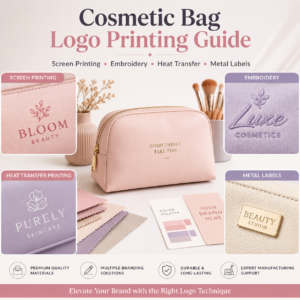
Yes. Logos can be added to polybags, belly bands, gift boxes, hangtags, dust bags, stickers, insert cards, and paper sleeves. Common logo methods include printing, foil stamping, embossing, debossing, woven labels, and embroidery depending on the packaging material.
Does packaging affect cosmetic bag MOQ?
Yes. Custom packaging can affect MOQ because printed polybags, belly bands, gift boxes, hangtags, and dust bags may require material purchasing and printing setup. Existing packaging options usually offer more flexibility than fully custom packaging.
How do I make cosmetic bag packaging more sustainable?
Sustainable options include recycled paper belly bands, kraft paper sleeves, FSC paper boxes, reusable dust bags, recycled polybags, paper hangtags, and reduced packaging designs. Claims should be accurate and supported by material information.
What should I check before approving packaging for production?
Check size, fit, artwork, logo color, spelling, barcode, paper thickness, printing quality, folding, label placement, carton marks, SKU information, and product presentation. A physical packaging sample is recommended for retail or premium projects.
Where can I request custom cosmetic bag packaging options?
You can contact Bling Accessory Co. through the Contact Us page and share your cosmetic bag style, packaging idea, logo artwork, target quantity, retail channel, and delivery plan.
Start Your Custom Cosmetic Bag Packaging Project
The right cosmetic bag packaging protects your product, improves brand presentation, supports retail and e-commerce sales, and creates a better customer experience. Whether you need polybags, belly bands, gift boxes, hangtags, dust bags, insert cards, retail-ready packaging, or promotional packaging, planning early can reduce cost, avoid delays, and improve final product value.
Share your cosmetic bag style, size, material, logo, packaging requirement, order quantity, target market, and sales channel to discuss packaging samples, MOQ, pricing, lead time, and bulk production.
Request Cosmetic Bag Packaging Options