<!doctype html>
Custom Cosmetic Bag Supplier in China: A Complete Guide to OEM/ODM Development, Materials, Pricing, and Wholesale Strategy
If you are looking for a custom cosmetic bag supplier that can support brand growth, product differentiation, and long-term wholesale purchasing, the sourcing decision is more strategic than it may first appear. A cosmetic bag is not only a pouch for makeup. It is a daily-use accessory, a retail shelf item, a gift-with-purchase item, a promotional product, and often a brand’s first tactile expression of quality. The right supplier helps you control the entire user experience, from the way a zipper feels in the hand to the way a logo appears after months of use. The wrong supplier creates delays, weak stitching, inconsistent samples, and unnecessary margin pressure.
At a practical level, the phrase “custom cosmetic bag supplier” can mean several different things. For some buyers it means a factory that can manufacture a bag from an existing sample while changing colors, hardware, logo placement, and packaging. For others it means a partner that can develop a bag from scratch, including pattern engineering, material sourcing, sampling, testing, and mass production. For B2B buyers, it often means a factory with stable capacity, consistent lead times, and the ability to manage both low-MOQ trial orders and larger replenishment programs. The best supplier is not simply the cheapest supplier. It is the supplier that matches your product goal, price target, market channel, and brand standards.
Table of Contents
- What a custom cosmetic bag supplier really does
- Why China remains a leading sourcing base
- Which cosmetic bag styles sell best
- Material selection and performance
- Customization options that matter
- Pricing, MOQ, and order planning
- How to evaluate a supplier
- Quality control and sample development
- Packaging, shipping, and logistics
- SEO and internal linking strategy
- FAQ
What a custom cosmetic bag supplier really does
A serious custom supplier is a production partner, not just a seller. The factory’s job begins before production and continues after the goods are packed. In the early stage, the supplier should help you interpret the reference product, confirm whether the structure is feasible, identify the likely material system, and explain where costs will rise or fall. During development, the supplier should create samples that are close enough to the target product to let you judge size, proportions, stitching, zipper quality, print clarity, and overall hand feel. During production, the supplier should manage cutting, sewing, finishing, inspection, and packaging according to the agreed specification. After production, the supplier should coordinate shipment documents, carton labeling, and export logistics.
That process matters because cosmetic bags are deceptively complex. A seemingly simple pouch may use multiple layers: outer fabric, lining, interlining, zipper tape, puller, thread, and sometimes padding, foam, or reinforcement. Once the bag includes features such as a structured bottom, a transparent window, a divider, a brush holder, a waterproof lining, or a printed logo, the production difficulty rises sharply. A supplier that only offers “stock products” often cannot explain these details well. A real custom cosmetic bag factory should be able to discuss construction logic, not only price quotes.
At the product level, custom cosmetic bags serve several user intents. Some buyers want compact, everyday makeup storage. Others want travel toiletry organization. Others need premium gift packaging for beauty brands. Others are designing seasonal promotional items. The best suppliers know how to map these use cases to different constructions. For example, a Mini Pouch category is suitable for compact carry items, while a cylindrical brush case or structured organizer may suit beauty tool storage. A supplier that understands these differences can recommend the right shape instead of pushing one universal style for every market.
Buyers should also understand the difference between a manufacturer and a trader. A manufacturer controls production. A trader may source from multiple factories and manage communication. Some traders are excellent and can help international buyers reduce friction. Still, for long-term development and stronger cost control, many brands prefer a factory-direct model or at least a hybrid arrangement where the sourcing partner has direct manufacturing access. On the Bling Accessory Co. site, the company presents itself as a Chinese OEM/ODM manufacturer with broad accessory capability, which is relevant when a buyer wants a custom cosmetic bag supplier that can also support adjacent categories such as Trend Bag, Hair Accessory, and Packing & Promo Bag.
Why China remains a leading sourcing base for custom cosmetic bags
China continues to dominate the global sourcing conversation for custom bags because the ecosystem is built for speed, material access, accessory integration, and scalable manufacturing. A buyer looking for a custom cosmetic bag supplier in China is not only buying labor. They are buying a supply chain. The supply chain includes fabric mills, coating vendors, zipper suppliers, printing shops, lining makers, hardware providers, packaging factories, and logistics channels. This depth matters because cosmetic bag projects often need many small parts to work together. If any one of those parts is late or inconsistent, the whole order can be delayed.
China also offers versatility. A brand can develop a low-cost PVC pouch for a promotion campaign, then move into a premium quilted nylon bag for retail, then later launch a PU leather travel organizer or a sustainable recycled-fabric collection. A capable supplier can transition between these products without rebuilding the sourcing model from zero. That flexibility is especially important for fast-moving beauty, travel, and lifestyle brands that need to test trends quickly and reorder winners without losing momentum.
Another advantage is customization depth. Some factories can only print a logo. Others can change the size, structure, zipper style, lining, piping, handle, pocket configuration, and packaging format. The stronger the supplier, the more your cosmetic bag can become a brand asset rather than a generic commodity. This is one reason it is helpful to build content clusters around product use cases and material education. A page like the Cosmetic Bag Materials Guide helps buyers understand how fabric choice changes value perception, durability, and unit economics. That kind of educational content not only improves buyer trust but also strengthens the site’s topical authority.
That said, sourcing in China is not automatically easy. The market is broad, which means quality variation is broad too. Some factories excel at high-volume execution; others are more suitable for design-heavy boutique projects. Some suppliers are responsive on chat but weak on documentation. Some can quote quickly but cannot maintain stable color matching across repeated production runs. Buyers need a system for filtering options. The strongest system starts with clarity on product purpose, target price, expected order volume, and customization scope.
China is also highly competitive on pricing because the ecosystem is mature. Competitive pricing should not be mistaken for low value. The better lens is total landed value. A factory with slightly higher ex-factory pricing may still be more cost-effective if it reduces defect rates, communication errors, packaging mistakes, and freight rework. In custom cosmetic bags, the cheapest first quote can become the most expensive final result.
Which cosmetic bag styles sell best and how to choose the right one
Not every cosmetic bag should be developed the same way. Style selection should begin with the end user, the sales channel, and the product’s price point. A compact mini pouch works well for daily carry and low-friction gift programs. A structured zip case supports better shelf presence in retail environments. A brush holder suits beauty-tool-focused customers. A transparent bag can serve travel and airport rules use cases. A quilted tote-style makeup bag may work better for premium or fashion-oriented buyers. The right style choice is a commercial decision, not just an aesthetic one.
For example, if your audience includes beauty consumers who carry lipstick, compact powder, cards, or small personal items, a mini pouch format may be ideal. The Mini Pouch category on the site shows how that form can be positioned as a compact everyday accessory. If your audience needs something more trend-led, the Trend Bag category gives you inspiration for shapes that sit at the intersection of fashion and utility. If you are building promotional kits, the Packing & Promo Bag category is useful because it reflects how a bag can function as both product and brand carrier.
Two product examples on the site illustrate the range of cosmetic bag constructions that a buyer may want to custom-develop. The Flat-Grain Barrel Pouch shows how a cylindrical or barrel shape can serve makeup or brush storage with a more premium silhouette. The Lychee Texture Cylindrical Makeup Case demonstrates how surface texture, shape, and functionality can create a distinctive retail-friendly product story. These examples matter because good sourcing begins with defining the architecture of the bag before discussing logo decoration.
Here is a practical way to think about best-selling cosmetic bag structures. Flat pouches are efficient, light, and cost-effective. Boxy cases hold their shape better and protect contents. Barrel or cylindrical designs create a premium or specialized look. Drawstring or open-top formats can support quick access or promotional use. Double-layer and multi-compartment designs support travel and organization. Each style carries a different manufacturing profile. The more structure a bag has, the more control the supplier needs over pattern accuracy and assembly. A supplier that understands these tradeoffs will help you choose a structure that fits your target market rather than forcing a design that is too expensive for your channel.
When you are defining product-market fit, ask three questions. First, what problem does the bag solve? Second, how will the consumer discover and use it? Third, how much room do you have for branding, packaging, and margin? Those questions will guide whether your bag should be minimalist, luxurious, colorful, durable, sustainable, or promotional. Many brands make the mistake of over-customizing too early. A better approach is to create one clear base model, then build variants by changing material, size, color, lining, closure, or logo application. That approach reduces development risk and improves reorder efficiency.
Material selection and performance: what buyers need to know
Materials are where perception and durability meet. In cosmetic bags, material choice affects texture, cost, print quality, cleaning behavior, appearance, and shipping weight. A custom cosmetic bag supplier should be able to explain not only what a fabric is called, but how it performs in production and in consumer use. That is why material education is one of the most valuable components of a sourcing strategy. The Cosmetic Bag Materials Guide on the site should sit near the center of your internal-link structure because it helps buyers move from product idea to informed specification.
Common options include cotton canvas, polyester, nylon, PU, PVC, EVA, recycled fabrics, terry cloth, quilted fabric, woven texture fabrics, and specialized coated textiles. Cotton canvas usually conveys a natural or artisanal feeling. Polyester often offers better budget control and easier printing. Nylon is a strong choice when lightweight durability matters. PU can support a more premium look. PVC and EVA are useful when transparency, easy cleaning, or travel convenience is important. Recycled materials are increasingly relevant for sustainability-conscious brands, but the supplier must verify that the recycled content and finish still match the target market’s expectations.
The buyer should also think beyond the outer shell. Lining material can affect product feel and internal protection. Interlining or foam can affect structure and puffiness. Zippers can influence whether the bag feels premium or cheap. Pullers, sliders, and stitching thread all contribute to the tactile experience. This is why sourcing samples is essential. A sample that looks good in a photo may feel weak in hand if the lining is too thin or the zipper teeth are poor. A great supplier will know how to balance these elements for the intended use case.
Cleaning and maintenance should also be part of the decision. Some consumers want bags they can wipe clean after makeup spills. Others prioritize softness or visual warmth over wipeability. For travel and promotional use, easy-clean surfaces often outperform delicate materials. For premium retail use, visual identity may matter more than absolute utility. This is a decision tree, not a single answer. The supplier’s job is to help you choose the right answer for your market, not the most generic answer for all markets.
Material choice also affects printing and decoration. Screen print, heat transfer, embossing, debossing, embroidery, woven labels, rubber patches, metal logos, and printed hang tags all interact differently with fabric texture. For example, textured surfaces may make certain print methods less crisp. Smooth surfaces may better suit fine detail, while plush or quilted materials may look stronger with a patch or woven label. The buyer should not finalize decoration before confirming that the substrate can support the intended result.
Customization options that matter most in a custom cosmetic bag project
Customization is where a cosmetic bag becomes a branded product rather than a generic item. However, not every customization decision has equal value. The most effective approach is to prioritize features that influence sellability, usability, and brand perception. Common high-impact customization elements include size, shape, material, color, zipper type, puller design, pocket layout, lining color, logo method, packaging format, and hangtag design.
Size is fundamental. A bag that is too small frustrates the user. A bag that is too large may feel bulky or expensive to ship. Good size planning should be based on actual contents: daily makeup, travel essentials, brushes, skincare bottles, or promotional kits. The supplier should be able to confirm capacity and proportions before sampling. Shape matters just as much because a flat bag and a gusseted bag may hold the same theoretical volume but create very different user experiences.
Logo application deserves careful attention. Embroidery communicates craft and works well on fabric surfaces. Screen printing is flexible and cost-efficient for simpler graphics. Foil or metallic effects can create premium shine but may not be appropriate for every material. Debossed or embossed logos work better on PU-like surfaces. Woven labels can be elegant and durable. Silicone or rubber patches create a modern, sport-fashion feel. Your choice should reflect the brand identity and the product category. If the logo is an afterthought, the product will often look generic even when the bag itself is well made.
Hardware and finishing details also matter. Zipper pullers can be custom-shaped. Side tabs can be reinforced. Stitching color can match or contrast. Interior pockets can be added for organization. Mesh compartments can make a travel bag more functional. Clear panels can improve visibility. Double zippers can improve access. Each of these design choices affects production complexity and final price. A good supplier should not simply agree to every feature. Instead, the supplier should tell you which features add real value and which features may raise cost without meaningful customer benefit.
Packaging is another strong customization lever. A cosmetic bag placed in a simple polybag may be suitable for low-cost wholesale. A bag inserted into a printed box, kraft sleeve, or custom hangtag system may be more suitable for retail or gift positioning. Packaging can also affect perceived quality on a product page. If your brand is aiming for a premium look, packaging should be part of the development brief from the start, not added later.
Finally, product naming can influence sales. Consumers respond to clear, benefit-oriented naming. A “water-resistant travel makeup organizer” communicates more value than a generic “zip bag.” For content strategy, that means product pages and blog posts should be structured around use cases and buyer intent. This article itself is designed to support that logic by connecting sourcing language to practical product categories and educational pages. That is one reason internal links matter so much: they help readers and search engines understand how your site’s content pieces support each other.
Pricing, MOQ, and order planning: how to protect margin without damaging quality
Pricing in custom bag manufacturing is never just a number. It is the result of materials, labor, printing, structure, accessories, packaging, order quantity, and production risk. A buyer who wants a serious custom cosmetic bag supplier must understand the relationship between those variables. The lowest unit price often requires compromises that are not obvious in the quote. A small change in material thickness or zipper quality can alter the final consumer experience dramatically.
MOQ, or minimum order quantity, is often a major point of negotiation. Some suppliers can support smaller trial orders, especially when the project uses existing patterns or standard materials. Others require higher quantities because they are running a custom process from scratch. Buyers should use MOQ strategically. Early-stage product validation may justify a smaller run. A proven, reorder-ready product should be optimized for better unit economics at larger scale. The best supplier is one that can support both phases: a lower-risk launch and a scalable replenishment plan.
Order planning should begin with channel strategy. Are you selling through wholesale, DTC, Amazon, retail boutiques, gift sets, or promotional campaigns? Each channel has different expectations for margin, packaging, and lead time. A wholesale buyer may care most about cost stability and carton efficiency. A retail buyer may care more about shelf appeal and packaging. An Amazon seller may care about dimensions, weight, and listing visuals. A promotional buyer may care about speed and imprint clarity. The same cosmetic bag can be produced differently depending on the channel. The supplier should understand that context.
Lead time also affects pricing. Urgent orders may incur extra cost because of material allocation, scheduling priority, and overtime labor. A supplier that promises fast delivery at unusually low prices may be overcommitting. A better supplier gives realistic timing and identifies the critical path early. When you compare quotations, do not compare only ex-factory pricing. Compare sample cost, production time, customization scope, packaging, shipping options, and the likelihood of revisions. The real cost of an order includes the cost of mistakes and delays.
For buyers seeking stronger margins, design simplification is often more powerful than aggressive negotiation. Reducing unnecessary compartments, choosing an efficient shape, simplifying decoration, and standardizing packaging can lower total cost while preserving consumer appeal. A strong supplier can make those tradeoffs visible. That is the difference between a factory that merely manufactures and a factory that helps you build a profitable product.
How to evaluate a custom cosmetic bag supplier in China
Selecting the right supplier is a process of verification. Start with product fit. Does the factory actually produce the type of cosmetic bag you need? A factory that handles fashion pouches may not be the best choice for structured travel cases. Next, assess communication. Does the supplier ask intelligent questions about target market, use case, and quantity? Or does the supplier only reply with a short price? Good suppliers clarify requirements because they know that unclear briefs cause expensive errors later.
Then check sampling capability. Can the supplier produce a sample that reflects your intended size, material, logo method, and internal structure? Are the sample photos clear and accurate? Does the supplier explain the differences between a reference sample and the current prototype? If the supplier cannot communicate sample development well, production risks will rise. Sampling is not a formality. It is the main proof of manufacturing understanding.
Also examine quality control. Ask how the factory inspects sewing lines, zippers, dimensions, and finishing details. Ask whether they conduct pre-production checks, in-process checks, and final checks. Ask how they handle defect prevention and corrective action. A strong supplier will have a repeatable process rather than a vague assurance of “good quality.”
Factory transparency matters too. Buyers should know whether the supplier is a real manufacturer, a trade company, or a hybrid structure. Each model can work, but each has different implications for cost, speed, and accountability. A direct manufacturer may offer stronger production control. A trade company may offer broader sourcing flexibility. What matters is clarity. You need to know who owns the production decision and who is responsible when a problem appears.
In the case of Bling Accessory Co., the company positions itself on its homepage as a Chinese OEM/ODM manufacturer with over 15 years of experience, which is the kind of positioning buyers usually want to see when evaluating a custom sourcing partner. The broader site structure, including product categories such as Mini Pouch, Trend Bag, and Packing & Promo Bag, shows the benefit of using a supplier that works across adjacent accessory categories. That usually improves design flexibility and helps with cross-sell potential.
Finally, ask for evidence. Good evidence includes real product photos, production details, packaging examples, and category breadth. Site content such as the Makeup Bag vs Cosmetic Bag guide and the Cosmetic Bag Materials Guide helps demonstrate how the supplier thinks about product selection, not just manufacturing. That matters because your supplier should understand how the product will be marketed, not only how it will be sewn.
Quality control and sample development: where projects succeed or fail
Quality control should begin before the first sample is made. The buyer must provide a clear brief including target dimensions, reference images, logo files, material preferences, color references, packaging requirements, and expected use scenarios. The supplier should translate that brief into a sampling plan. When the sample arrives, the buyer should evaluate it systematically. Measure the dimensions. Check opening and closing smoothness. Inspect the zipper track. Feel the lining. Examine the logo placement. Confirm the stitching is straight and even. Verify whether the bag stands, folds, or compresses as expected. Test whether the shape matches the intended user scenario.
One of the most common sourcing mistakes is treating the sample as a final object instead of an iterative prototype. In custom bag work, multiple sample rounds are normal. The first sample may validate the structure. The second may refine the material or logo. The third may finalize the mass-production version. This is not a sign of failure. It is a standard part of development. A good supplier will treat iterations as part of the process and will clearly label what has changed between versions.
Production QC should be divided into stages. Pre-production confirmation ensures the final sample and production spec align. In-process inspection catches issues before a whole batch is completed. Final inspection verifies stitch quality, accessory placement, cleanliness, and packing accuracy. For export orders, carton marking and quantity checks are also important. Cosmetic bag buyers often underestimate how much can go wrong in packaging. Wrong carton counts, mixed colors, or mislabeled SKUs can damage a launch even when the bags themselves are acceptable.
Color consistency is another key issue. The same color can look different under different materials or lighting conditions. If your brand depends on a specific shade, confirm the reference in person or under standardized lighting. For repeated orders, keep a master sample. That sample becomes the benchmark against which future production should be measured. Without a master sample, quality drift is harder to detect.
Quality control also extends to user experience. Ask whether the bag feels stable in a handbag, suitcase, or vanity environment. Ask whether the zipper is comfortable to grip. Ask whether the inside is easy to clean. Ask whether the bag will keep its appearance after repeated use. A cosmetic bag is a repeated-use product, not a one-time display item. The best suppliers understand the difference and build for durability as well as aesthetics.
Packaging and shipping can change both cost and customer perception. A cosmetic bag shipped in a plain opp bag is suitable for some wholesale contexts. A bag shipped in a branded sleeve or printed insert may be better for retail or gifting. Packaging also affects storage and freight efficiency. A supplier should be able to advise whether your packaging choices will increase carton volume, weight, and shipping cost. This matters because a bag that is cheap to make can become expensive to move if the packing format is inefficient.
Logistics planning should begin early. Decide whether you will ship by air, sea, courier, or a consolidated method. Confirm the delivery terms, carton specifications, and incoterms. Make sure the supplier understands the destination requirements and any labeling standards. If the bags are going into a retail or e-commerce channel, the outer packing should support rapid receiving and inventory handling.
For buyers building a broader product line, logistics and packaging consistency across categories can be a real advantage. For example, if the same buyer sources cosmetic bags, hair accessories, and promotional pouches from the same partner, standardized packaging rules can reduce operational complexity. That is part of the reason the site’s category architecture matters. The presence of categories like Hair Accessory and School Supply indicates that the sourcing relationship may extend beyond a single product line, which can simplify future bundle or gift-set planning.
Another hidden issue is damage prevention. Certain cosmetic bags are more susceptible to deformation, crush marks, or surface scuffing. If a product has a soft or textured exterior, the packaging should protect the finish. If the bag includes a structured base, the carton should preserve the shape. If the bag is sold as a premium item, unboxing experience becomes part of the product itself. Good logistics planning protects both margin and brand image.
Buyers should also ask about replenishment strategy. If an item performs well, can the factory reserve materials or maintain repeatability? Can the supplier keep pattern consistency over time? Can the same color and logo method be repeated for the next season? Those questions are vital for brands that want to scale beyond one-off orders. A custom cosmetic bag supplier should support not only the first order, but also the second, third, and tenth.
Common mistakes buyers make when sourcing custom cosmetic bags
The first common mistake is starting with decoration before function. Buyers often ask for logo placement before confirming dimensions, contents, and structure. That sequence increases revision cycles. The second mistake is choosing a sample based on photo appeal rather than production realism. A sample can look attractive in a photo but still be inefficient to mass-produce. The third mistake is underestimating material behavior. Some materials stretch, crease, or reflect light differently than expected. The fourth mistake is ignoring packaging and logistics until the end. The fifth mistake is selecting a supplier only on price and then discovering that communication, lead time, or QC are weak.
Another mistake is failing to define what “custom” means for the project. Does custom mean a new pattern, or simply a logo print? Does it mean new packaging, or a fully unique shape? Without clarity, the buyer may receive a quote that appears attractive but does not actually cover the intended scope. A good supplier will define the project in writing. The buyer should do the same. The clearer the brief, the fewer surprises later.
Buyers also sometimes choose a product that is too complicated for the target channel. For example, a highly structured, multi-compartment bag may be beautiful but too expensive for a promotional campaign. A buyer must always balance product ambition with channel economics. This is where factory guidance matters. A seasoned custom cosmetic bag supplier will often simplify a concept while preserving the important brand cues. That is good manufacturing, not compromise.
Finally, many buyers fail to build a long-term sourcing plan. They place a first order, then do not document the approved sample, the final specifications, or the packaging details. When the reorder comes, everyone loses time reconstructing the project. The professional solution is to keep a master file that includes technical specs, approved images, color references, and purchase history. A supplier that supports documentation is a major asset.
Use cases: where custom cosmetic bags create the most value
Custom cosmetic bags create value in multiple commercial settings. In beauty retail, they can serve as standalone SKUs, gift-with-purchase items, or bundle additions. In e-commerce, they can create upsell opportunities and drive average order value. In promotional marketing, they can carry brand visibility beyond the primary purchase. In hospitality or event gifting, they can support curated kits. In corporate gifting, they can deliver a useful branded item that is more likely to be kept and reused than a generic flyer or disposable gift.
For travel brands, a cosmetic bag can become a highly practical organizer for toiletries, chargers, skincare, and small accessories. For fashion brands, it can complement seasonal color stories and fabric trends. For beauty brands, it can reinforce product identity and consumer loyalty. For wholesalers, it can function as a dependable volume item with repeated ordering potential. Each use case suggests a different design emphasis. That is why a custom cosmetic bag supplier should not only build the bag but also understand the market story behind it.
In some cases, the bag itself is the brand experience. A premium cosmetics bag in a box may be the first physical touchpoint a consumer has with the brand. In such cases, material feel, zipper action, and packaging detail can be as important as the product inside. In other cases, the bag is a functional accessory added to support a broader campaign. In that case, cost efficiency and speed may matter more. The supplier’s role is to adapt to the business model.
How to brief a supplier for the best results
A strong brief should include product purpose, target customer, target price, quantity, dimensions, reference images, material preferences, logo files, packaging needs, and deadlines. It should also explain whether the bag is meant for retail, wholesale, promotional, or private label use. The more context the supplier has, the better they can recommend structure and materials. Good buyers do not simply send a photo and ask for a price. They describe the job.
It is also wise to send examples of what you like and what you do not like. For instance, you may like a compact zipper shape but dislike a shiny surface. You may want a premium silhouette but a mid-range cost target. Those boundaries help the supplier make more relevant recommendations. If the project includes multiple SKUs or colorways, define how the variations should be managed. Clarity in the brief usually leads to clearer sampling, faster approval, and fewer production errors.
When the supplier responds, evaluate not just the quote but the quality of the questions. A supplier that asks about use scenario, order volume, and target price is usually thinking like a manufacturer. A supplier that ignores those questions may be less capable of solving the real problem. This is one of the simplest ways to distinguish a real partner from a superficial sales contact.
FAQ
What is the difference between a custom cosmetic bag supplier and a regular bag supplier?
A custom cosmetic bag supplier focuses on the size, shape, structure, decoration, and user behavior specific to beauty and personal-care storage. Regular bag suppliers may understand general bags, but cosmetic bags often require finer attention to lining, zipper feel, compactness, and premium visual presentation.
Is China a good place to source custom cosmetic bags?
Yes, because China offers a mature supply chain, strong customization depth, and scalable manufacturing. The key is to choose a supplier with experience in the specific bag type, not only a supplier with a low price.
What is the best material for a custom makeup bag?
It depends on the target market. Polyester and nylon are often practical and cost-effective. PU can support a more premium look. Cotton canvas feels natural. PVC or EVA may suit travel and easy-clean applications. The right choice depends on channel, price point, and brand positioning.
How do I reduce risk when ordering custom cosmetic bags?
Use a clear brief, request samples, confirm a master sample, define inspection criteria, and document all specifications before mass production. Work with a supplier that can explain construction and quality control in detail.
How can I make my cosmetic bag product more SEO-friendly on my website?
Build a topical cluster. Use a central article like this one, then connect it to supporting guides, category pages, and product pages. Use descriptive anchor text, not generic links, and keep terminology consistent across the site.
Conclusion: building a stronger sourcing system
Choosing a custom cosmetic bag supplier is not a one-time purchase decision. It is the beginning of a supply relationship that affects product quality, profit margin, speed to market, and brand perception. The strongest supplier is the one that understands product function, material behavior, customization logic, and commercial reality. In China, that often means choosing a factory with both OEM and ODM capability, stable production systems, and the flexibility to support multiple product directions over time.
Buyer checklist before requesting a quote
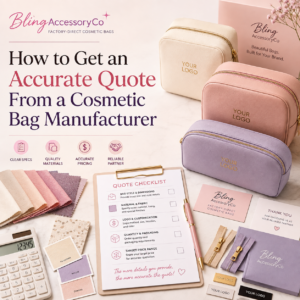
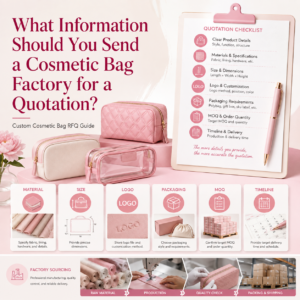
Before you ask a supplier for pricing, confirm the target use case, target market, desired material, logo method, package format, estimated quantity, and launch timing. This prevents the most common quoting errors. A supplier can only quote accurately when the scope is clear. Even a simple bag can have many cost variables, and a vague brief usually produces a vague quote. If you want a quote that is useful, you need to ask a useful question.
The most efficient brief usually includes a reference image, a rough size target, a description of the contents the bag will hold, and the intended price band. That combination helps the supplier recommend the right structure. It also helps the supplier determine whether the product should be lightweight, premium, durable, or promotional. A good supplier will respond with recommendations, not just a number.
Final commercial takeaway
In sourcing, the best supplier is the one that reduces uncertainty. A strong custom cosmetic bag supplier gives you clearer samples, better production control, more relevant recommendations, and fewer surprises. That is the real value buyers are purchasing. Price matters, but predictability matters more. Quality matters, but repeatability matters more. Design matters, but manufacturability matters more. When those priorities are balanced well, the result is a bag that sells, scales, and supports your brand over time.