Cosmetic Bag Manufacturer China: The Complete B2B Buying Guide for Brands, Wholesalers, and Private Label Buyers
Table of Contents
- Why China remains the strongest sourcing base
- What a real cosmetic bag manufacturer should provide
- Cosmetic bag product types and use cases
- Materials, linings, and construction choices
- OEM, ODM, and private label development
- How to evaluate quality control
- Pricing, MOQ, lead time, and shipping
- Branding and packaging strategy
- SEO cluster and internal-link structure
- FAQ
Why China remains the strongest sourcing base for cosmetic bags
China continues to dominate cosmetic bag production for a simple reason: it combines manufacturing scale, material access, supply-chain density, and customization depth in a way that is difficult to replicate elsewhere. Cosmetic bags may seem simple on the surface, but a well-made bag depends on several layered capabilities. A factory needs stable stitching, controlled cutting, precise logo application, reliable zipper sourcing, consistent lining quality, and packaging discipline. China’s manufacturing ecosystem is built for exactly this kind of multi-component production.
Another advantage is development speed. A buyer can move from sketch to sample quickly when the factory already has experienced pattern teams, a broad fabric library, and established production lines. That matters because cosmetic bag trends move fast. Retail buyers often need new silhouettes every season, while private label brands need enough speed to respond to market signals without losing quality control. In practical terms, the ability to sample fast is often as valuable as a lower unit price.
China is also unusually strong in the middle of the market, which is where most cosmetic bag programs live. These products must feel modern and functional, but they also need to survive cost pressure. A manufacturer with access to multiple material options can help you choose between PU, nylon, polyester, canvas, terry cloth, quilted fabric, transparent PVC, EVA, mesh, and recycled systems depending on your target customer and price point. That flexibility is what turns sourcing from a simple purchase into a strategic decision.
The best factories also support a broader product ecosystem. A cosmetic bag line often expands into travel accessories, toiletry bags, brush bags, pouches, personal care items, and even gift sets. That means the manufacturer must be able to think beyond a single SKU. In a strong OEM/ODM environment, you are not buying one bag; you are building a family of related products that can be bundled, cross-sold, and expanded later.
What a real cosmetic bag manufacturer should provide
A true cosmetic bag manufacturer is not the same thing as a trading company, a reseller, or a generic bag supplier. The difference is not only operational; it is commercial. A real factory can usually offer more stable pricing, better process control, more direct customization, and clearer accountability when issues arise. That does not mean intermediaries have no role, but it does mean you should understand what you are actually buying.
The minimum capabilities you should expect include pattern development, sample making, material sourcing, stitching and assembly, printing or embroidery, packaging support, and final inspection. A stronger factory will also provide design guidance, style optimization, and market feedback. For example, a factory with broad category knowledge can tell you whether a cylindrical brush bag, a boxy puffer pouch, or a flat mini pouch is more likely to fit your target consumer and your shipping cost structure.
At the commercial level, you should ask whether the supplier supports both OEM and ODM. OEM is important when your design is already defined and you want it produced faithfully. ODM matters when you want a factory-developed base style that can be adapted quickly with your brand colors, logos, sizes, and packaging. For many brands, the best model is a hybrid: a supplier-proposed style with custom details layered on top. That approach shortens the development cycle while still protecting brand identity.
You should also ask how the factory handles communication. In cosmetic bag sourcing, small details matter: zipper color, piping width, lining print, logo placement, puller shape, seam finish, and handle strength can all change the final impression. A capable manufacturer will document requirements clearly, confirm drawings or mockups, and maintain stable communication across sampling and bulk production. If the supplier cannot manage these details, the risk of revision cycles increases sharply.
Cosmetic bag product types and use cases
Cosmetic bags are not one category in practice. They are a product system with multiple silhouettes and functional purposes. The right manufacturer should be able to produce a range of styles because different customers buy for different reasons. Some bags are built for travel. Some are designed for vanity organization. Others are giftable, fashion-driven, or highly practical.
1. Mini pouches
Mini pouches are ideal for daily carry, handbag organization, lip products, compact tools, and small beauty essentials. They are usually low-complexity items, but they can still feel premium when the material, zipper, and logo are carefully chosen. For many brands, mini pouches work as entry-level products, add-on items, or bundle components.
2. Boxy cosmetic bags
Boxy silhouettes are among the most commercially useful because they hold shape, improve packing efficiency, and create a more premium visual profile. This style is especially effective for travel and retail gifting because customers can instantly understand how the bag will function. The category also photographs well, which matters for ecommerce conversion.
3. Brush bags and brush holders
Brush-oriented designs are useful for makeup artists, beauty enthusiasts, and travelers who need protective storage for slender tools. These products benefit from structured compartments, easy cleaning surfaces, and form retention. A brush bag is often a specialist product, but it can perform extremely well in niche assortments when positioned properly.
4. Toiletry and travel cosmetic bags
These bags serve a broader purpose. They may carry skincare, hygiene products, grooming items, and makeup together. Because travel buyers value convenience and spill control, this category often requires water-resistant materials, wipeable linings, and compartments that reduce clutter. The best execution balances capacity with portability.
5. Gift set and promotional bags
Promo bags are a powerful tool for beauty brands, retail promotions, and launch campaigns. They do not need to be the most expensive construction, but they must match the brand story and feel intentional. The product should support the marketing objective. For example, a gift-with-purchase cosmetic bag should reinforce the premium nature of the campaign, not weaken it.
6. Fashion-forward trend bags
Some bags are not only functional but also style statements. Quilted finishes, teddy textures, terry cloth, corduroy, transparent panels, and decorative handles can all move a cosmetic bag into the fashion space. This is where a manufacturer’s trend awareness becomes valuable. A factory that tracks popular silhouettes can help your line feel current rather than generic.
For more examples of style-led development, see the Top 10 Cosmetic Bag Styles in 2026 guide and the Luxury Cosmetic Bag Market 2026 article. Both support broader topical authority around style, positioning, and buyer intent.
Materials, linings, and construction choices
Material selection is one of the most important decisions in cosmetic bag sourcing. It affects appearance, cost, durability, cleaning, brand perception, and shipping weight. It also affects how the bag feels in the hand, how it behaves on a shelf, and how well it can be customized. Because of that, smart buyers do not ask “Which material is best?” in the abstract. They ask “Which material is best for this customer, this margin target, and this use case?”
For a broader material breakdown, link to the Cosmetic Bag Materials Guide. That article supports depth on fabrics, finishes, quality considerations, and wholesale options. In this page, the goal is to connect those material choices to sourcing decisions.
PU leather and synthetic leather
PU is often chosen when the brand wants a polished look at a controllable cost. It can create a refined surface that photographs well and supports debossed or embossed logo treatments. PU is popular for premium-looking cosmetic bags, vanity cases, and gift items because it signals structure and cleanliness. However, buyers should evaluate coating quality, surface consistency, and odor control carefully.
Nylon and polyester
Nylon and polyester are core materials for mass-market cosmetic bags because they balance performance and price. They are lightweight, versatile, and easy to customize across colorways. These fabrics are a strong fit for travel organizers, casual beauty pouches, and broad wholesale programs. They also support repeatable production, which helps when you are scaling a proven style.
Canvas and cotton
Canvas and cotton support a softer, more lifestyle-oriented story. They are useful for brands with eco-conscious positioning, natural aesthetics, or custom print programs. These fabrics can feel approachable and giftable, though they may require more thought around stain resistance and cleaning. If your target customer values tactile authenticity, canvas can be a strong choice.
Quilted, puffer, terry, plush, and corduroy textures
Textured fabrics are increasingly important in cosmetic bag design because they add perceived value. Quilted and puffer styles feel fashion-led and contemporary. Terry cloth and plush materials create a casual, soft, and trendy look. Corduroy can bridge retro and fashion-forward styling. These textures are not only aesthetic choices; they also help a product stand out in a crowded marketplace.
Transparent PVC, TPU, and EVA
Clear or semi-clear materials are useful when visibility and compliance matter. Travel buyers often appreciate the ability to see contents immediately, while retailers may use transparent bags to create a modern look. The key is not just transparency but structure. Clean edges, quality seams, and thoughtful trims prevent a transparent bag from feeling cheap or fragile.
Linings and internal surfaces
A cosmetic bag is often judged by its interior more than the exterior after the first few weeks of use. Linings should be durable, easy to clean, and suitable for the intended product. Waterproof or wipeable linings are often preferred for beauty bags because spills are part of the use case. A bag with a weak lining can undermine an otherwise strong outer design.
Zippers, pullers, and hardware
Zippers are one of the most underestimated components in bag manufacturing. A bag can look great in photos and still fail in daily use because of a sticky zipper, weak puller, or misaligned opening. The right supplier should let you choose zipper type, puller shape, length, color, and finish. These details influence both function and branding.
If your strategy depends on water resistance, your next internal read should be the Waterproof Cosmetic Bags Guide. That article expands on how functional protection and product positioning work together in travel and beauty categories.
OEM, ODM, and private label development
Many buyers use the terms OEM, ODM, and private label interchangeably, but they are not identical. Understanding the difference matters because it shapes cost, lead time, customization depth, and ownership of the final product direction.
OEM is the best fit when you already know the structure, dimensions, material, and visual direction. You provide the design input, and the factory produces the item. This model is common for brands with a defined assortment or a strong brand standard.
ODM is valuable when the factory already has a base product or reusable development framework. You can modify the base style rather than starting from zero. This shortens development time and often reduces friction during sampling.
Private label usually sits between these two. You take an existing or semi-existing product and make it yours through branding, packaging, sizing, material choice, color palette, and surface detail. For many brands, private label is the most efficient route because it combines speed, commercial viability, and visible differentiation.
A serious cosmetic bag manufacturer should help you think through this selection. For a narrow launch, private label may be more efficient than full OEM development. For a high-volume retail program, OEM may be the better long-term strategy because it gives you more control over fit, function, and brand positioning. The best factories will not push one model blindly. They will recommend the model that fits your buying objective.
One smart strategy is to start with a proven silhouette, then build a recognizable brand code around it. That code may be a signature zipper pull, a recurring quilting pattern, a preferred logo position, a specific lining color, or a recurring trim treatment. Consistency helps customers recognize your line and simplifies future product launches.
How to evaluate quality control before you place an order
Quality control is not a final inspection stage only. It is a design and manufacturing discipline that begins before sample approval and continues through packaging. In cosmetic bags, quality failures are often visible in stitching irregularity, broken seams, uneven cuts, weak handles, poor zipper alignment, sloppy branding, or inconsistent color matching.
Check the sample like a product developer
Do not evaluate a sample only by visual impression. Open and close the zipper repeatedly. Check the bag when empty and when loaded. Look for tension points at corners and handle attachments. Verify logo clarity, seam alignment, lining neatness, and finishing consistency. A good sample should demonstrate both appearance and usability.
Ask about inspection standards
Factories vary widely in their QC approach. Some rely on final inspection only. Better manufacturers inspect at multiple stages: incoming materials, cutting, sewing, finishing, and packing. Ask whether the supplier performs full inspection, spot inspection, or a mixed system. The more transparent the process, the more predictable your production outcome will be.
Review material consistency
Even if the design is fixed, the material batch can vary. This is especially important for textured surfaces, printed patterns, and color-sensitive programs. Ask how the factory manages material consistency across repeat orders. A professional supplier should understand that commercial buyers need continuity, not just one-time novelty.
Test packaging and shipping readiness
Cosmetic bags are often sold in ecommerce, retail, or gift contexts, which means packaging matters more than many buyers expect. A bag should arrive clean, protected, and presentation-ready. Confirm whether the supplier can use polybags, hang tags, inserts, cartons, or custom printed packaging as part of the production plan.
For brands that want broader source-level confidence, the site’s home page indicates strong production capability, quality control processes, and factory-level scale. That context is important when you are comparing factories rather than just products. You can also use the Contact Us page to request sampling and confirm production details.
Pricing, MOQ, lead time, and shipping
Price is important, but price alone can be misleading. A cosmetic bag that is slightly more expensive but has better structure, lower defect risk, and stronger branding potential may be a better commercial investment than a cheaper bag with weak execution. In sourcing, unit price should always be evaluated alongside quality, lead time, and conversion potential.
MOQ, or minimum order quantity, is another critical factor. A lower MOQ reduces risk during launch, but very low MOQs can increase unit cost or limit customization. A supplier with flexible MOQ support is valuable because it allows you to test the market before scaling. However, make sure the manufacturer is honest about the tradeoff. Lower MOQ usually means less negotiation room on cost or a narrower range of customization.
Lead time should be broken into sampling time and bulk production time. Sample development may take longer if your project requires complex materials, special logo treatments, or new tooling. Bulk production should be considered in the context of seasonality, shipping congestion, and sales deadlines. Good buyers plan backwards from launch dates, not forwards from the PO date.
Shipping strategy matters too. The cosmetic bag is a relatively compact product, but the final landed cost still depends on packing density, carton design, and shipping mode. A thoughtful factory can help optimize packing to reduce wasted cube and protect the product in transit. That can have a major impact on profitability, especially in ecommerce or wholesale distribution.
When evaluating total cost, use a simple framework: unit price, sampling cost, tooling or setup fees, packaging cost, freight, duties, inspection cost, and expected defect risk. The cheapest quote is not the best quote if it creates hidden costs later. A reliable factory partner protects margin by reducing avoidable problems.
Branding and packaging strategy that makes the bag sell
Cosmetic bags are highly visual products. That means branding should be treated as a product feature, not an afterthought. A well-designed logo application can increase perceived value dramatically. A weak one can make the bag feel generic even if the structure is good.
Logo options may include print, embroidery, debossing, woven labels, silicone badges, TPU, hot-fix embellishment, or custom zipper pull branding. The right method depends on the material and the brand story. For example, embroidery can feel premium and tactile on fabric bags. Debossing may suit PU. Print may be ideal for canvas or polyester. The factory should help you match the branding method to the material rather than forcing a one-size-fits-all solution.
Color strategy is just as important. A cosmetic bag line should have a consistent color logic across seasons, especially if you want customers to recognize the range as part of one family. Neutral shades often sell well in premium segments, while brighter colors can work in youth, trend, or promotional lines. The best approach depends on whether your assortment is retail-led, gifting-led, or function-led.
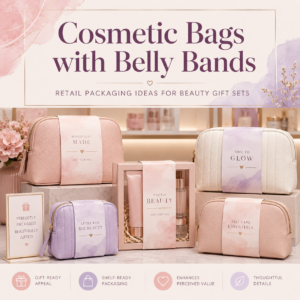
Packaging should support the brand promise. If the bag is luxury-oriented, the packaging should feel considered. If the bag is a wholesale or promotional item, packaging should still be neat and efficient. In every case, the unboxing experience should match the price point and use case. Packaging is part of the first impression and often determines whether a buyer sees the item as a commodity or a brand product.
For category expansion, keep related products close together. For example, a cosmetic bag can naturally link to a brush pouch, travel bag, mini pouch, or toiletry bag. That makes the assortment easier to navigate and improves cross-sell behavior. On the site, the category hub and blog cluster should support that logic. The article should therefore link not only to the main Cosmetic Bag page but also to the broader Custom Bag Manufacturing Services page so readers can move from education to action.
How to choose the right cosmetic bag manufacturer in China
Choosing the right manufacturer is not just about comparing quotations. A better process is to build a scoring framework. Ask each supplier the same set of questions, compare the answers side by side, and judge the factory on execution rather than presentation alone. A polished response is not enough; you need evidence of production reliability.
First, evaluate the supplier’s category focus. Does the factory specialize in cosmetic bags and closely related accessories, or is it trying to sell every kind of bag under the sun? A focused manufacturer often has better process knowledge and more relevant examples. Second, evaluate customization depth. Can they handle materials, logo methods, structure changes, packaging, and sizing variations? Third, evaluate communication. Clear documentation, prompt responses, and practical recommendations are signs of a mature operation.
Next, review proof of production. Ask for sample photos, video, inspection details, or client case studies. Ask about certifications, quality systems, and factory capacity. If you need repeatable bulk production, capacity is not optional. The factory must be able to support your growth without constant rework.
Finally, assess whether the supplier thinks like a brand partner. The best manufacturers do not just accept your order. They help you shape the product so it sells better. They ask questions about target market, retail channel, and use case. They understand that cosmetic bag sourcing is part design, part manufacturing, and part commercial strategy.
From sourcing to sales: how to turn a cosmetic bag into a revenue product
A cosmetic bag becomes a strong revenue product when it is positioned correctly. The product should be tied to a use case, a customer identity, and a clear purchasing motivation. For example, a travel cosmetic bag can target frequent travelers, gifting shoppers, and organized beauty users. A luxury cosmetic pouch can target premium lifestyle buyers, while a practical water-resistant case can target functional buyers who care about convenience first.
Marketing should mirror the product logic. If the product is travel-led, the content should emphasize packing efficiency, leak protection, and compact organization. If the product is fashion-led, the content should emphasize texture, color, and styling. If the product is eco-led, the content should emphasize lower-impact materials, responsible sourcing, and durable use. The product story must be consistent from factory to website to advertisement.
This is why internal linking matters so much. A buyer who lands on this article should be able to move seamlessly from broad education to relevant product pages and supporting blog content. That path creates a clearer shopping journey and supports stronger conversion. In other words, the article should not stand alone; it should function as the center of a cluster.
For direct sourcing conversations, link to Contact Us. For broader commercial development, link to Custom Bag Manufacturing Services. For product browsing, link to Cosmetic Bag. That combination gives the page both informational and transactional strength.
FAQ
Should I use cosmetic bag or makeup bag on my website?
Use both when appropriate. “Cosmetic bag” is broader and better for manufacturing, wholesale, and catalog pages. “Makeup bag” often works better when the content is focused on beauty tools or consumer-facing use cases. A strong site can rank for both through a good topical structure.
What materials are most common for custom cosmetic bags?
PU, nylon, polyester, canvas, cotton, terry cloth, quilted fabrics, transparent PVC, TPU, and EVA are common. The best material depends on the price point, branding goal, and customer use case.
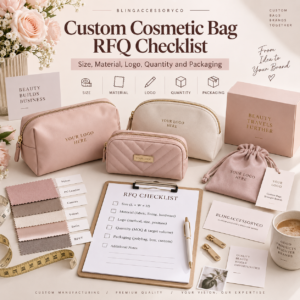
What should I ask a Chinese cosmetic bag manufacturer before ordering?
Ask about MOQ, sample time, lead time, customization options, logo methods, inspection process, packaging, shipping terms, and whether they support OEM or ODM development. You should also ask for product examples that match your target market.
How can I reduce risk when sourcing from China?
Start with samples, clarify specifications in writing, confirm material details, request photos or videos at key stages, and work with a supplier that has a clear inspection process. A smaller pilot order can also reduce launch risk before scaling.
Why does internal linking matter for SEO on a cosmetic bag site?
Internal links help search engines understand topical relationships and help users navigate from education to product pages. A strong link structure improves crawl depth, spreads authority across related pages, and supports better indexation for long-tail keywords.
Final CTA
If you are building a cosmetic bag line and need a factory partner in China, start with the service page, review the product category, and then reach out with your material, size, logo, and packaging requirements. A good project begins with clear specifications and a manufacturer that can turn those specs into a consistent product line.
Explore Custom Bag Manufacturing Services | Browse Cosmetic Bag Products | Request a Quote
Tags
Cosmetic Bags OEM/ODM Private Label Wholesale Custom Bags Beauty Accessories China Manufacturer Bag Sourcing