Luxury Cosmetic Bags for Beauty Brands: Design Details That Make a Makeup Bag Feel Premium
Luxury cosmetic bags are not created by one expensive material or one shiny logo. A makeup bag feels premium when every design detail works together: material texture, structure, stitching, lining, zipper movement, hardware finish, logo placement, packaging, and quality control. For beauty brands, skincare companies, retailers, wholesalers, boutique brands, and private label sellers, a premium makeup bag can become more than a storage accessory. It can become a brand experience.
Customers often judge beauty products by the small details around them. A soft PU leather vanity case, a quilted makeup pouch, a smooth zipper, a clean lining, a subtle metal logo plate, and an elegant gift box can make the entire product feel more valuable. A poorly made cosmetic bag, even with a nice design, can weaken the customer’s impression of the brand.
This guide explains how to design custom luxury cosmetic bags for beauty brands, including premium materials, structure, logo methods, trims, lining, packaging, quality control, wholesale buying tips, and supplier selection. If you are planning a custom project, you can explore our custom bag manufacturing services, browse the cosmetic bag collection, or contact us for sample and quotation support.
What Makes a Cosmetic Bag Feel Luxury?
A luxury cosmetic bag feels premium because of controlled details. The product does not need to be complicated, but it must feel intentional. The material should look refined. The zipper should move smoothly. The stitching should be clean. The shape should look balanced. The lining should feel finished. The logo should be positioned carefully. The packaging should protect the product and reinforce the brand story.
Many buyers think luxury means “use expensive material.” Material is important, but it is only one part of the experience. A cosmetic bag made from premium PU leather can still look cheap if the seams are crooked, the zipper is rough, the logo plate is loose, or the packaging is poor. A simple pouch can feel premium if the proportions are correct, the logo is subtle, the lining is clean, and the finishing is consistent.
Luxury also depends on the target market. A luxury skincare brand may prefer a soft neutral pouch with debossed logo and matte finish. A makeup brand may prefer quilted PU, gold hardware, and a metal plate. A spa brand may choose velvet, satin lining, and embroidery. A travel beauty brand may choose a structured vanity case with strong zipper, handle, and wipe-clean lining.
The strongest luxury cosmetic bags usually combine three things: visual beauty, functional convenience, and reliable quality. If the bag only looks beautiful but does not open well, hold products properly, or survive daily use, the premium impression will not last. For B2B buyers, the goal is not only to create a beautiful sample; the goal is to produce consistent bulk goods that match the approved sample.
Start with Brand Positioning Before Designing the Bag
Before choosing material, logo, zipper, or packaging, a beauty brand should define what “luxury” means for its own customer. Luxury can mean minimal, soft, clean, elegant, glamorous, sustainable, functional, or giftable. A cosmetic bag for a clinical skincare brand should not look the same as a holiday makeup gift pouch. A luxury travel vanity case should not be designed like a small promotional mini pouch.
Start with the sales purpose. Is the cosmetic bag a retail product, a gift-with-purchase item, a holiday gift set accessory, an influencer PR kit, a subscription box upgrade, or a private label collection? If the bag is sold directly, it needs stronger perceived value and better packaging. If it is used as a gift, it should support the main product and create excitement. If it is part of a skincare set, it should fit bottles, jars, and tubes neatly.
Next, define the target customer. A young beauty customer may respond to trendy colors, shiny hardware, and playful shapes. A premium skincare customer may prefer calm colors, smooth texture, and understated branding. A professional makeup customer may value compartments, brush protection, and easy-clean lining. A travel customer may prioritize capacity, durability, and structure.
Clear positioning helps the manufacturer recommend realistic design solutions. It also prevents overdesign. Adding too many premium elements can make the bag expensive and visually crowded. Sometimes one high-quality material, one clean logo method, and one elegant packaging solution are enough to create a luxury impression.
Shape, Structure, and Proportion
Luxury cosmetic bags often feel premium because their shape is balanced and intentional. A simple pouch can look elegant if the corners, height, width, zipper position, and side gusset are proportioned correctly. A structured vanity case can look expensive when it holds its form, opens smoothly, and sits neatly on a table.
Structure should be designed around real use. A makeup pouch may need a soft body for daily carry. A vanity case may need padding and panels to keep shape. A toiletry bag may need a wide opening and wipe-clean lining. A brush bag may need internal slots and a protective flap. A luxury cosmetic bag should look attractive, but it must also be practical.
Proportion is especially important for premium design. If a bag is too tall, it may look bulky. If it is too flat, it may not hold enough products. If the zipper opening is too narrow, customers may struggle to access items. If the handle is too thin, it may look weak. If the logo is too large, it may overpower the product.
Buyers should test the sample with real products before approving production. Place skincare bottles, makeup brushes, palettes, lipsticks, compact powder, travel bottles, or sample kits inside the bag. Check whether the bag closes easily, holds shape, stands properly, and feels comfortable to use.
For buyers planning multiple sizes, the set should feel balanced. A large vanity case, medium makeup pouch, and mini pouch should look like one collection. Color, logo, hardware, zipper, and packaging should be consistent across the set.
Stitching and Construction Details That Signal Quality
Stitching is one of the fastest ways customers judge quality. On a luxury cosmetic bag, stitch lines should be straight, clean, secure, and balanced. Corners should be smooth. Zipper ends should be finished neatly. Threads should be trimmed. Stress points should be reinforced. If the stitching looks careless, the bag will not feel premium.
For PU leather and structured cosmetic bags, seam control is especially important. Uneven seam allowance can distort the shape. Poor corner sewing can make a vanity case look cheap. Quilted materials require careful alignment because the pattern is visible. Transparent bags require clean internal finishing because everything can be seen.
Stitch density should match the material. Thick materials may require stronger stitching, while soft fabrics may need finer control to avoid puckering. Thread color should either match the material or create a deliberate contrast. Random thread color or inconsistent stitching can damage the luxury impression.
Reinforcement matters for handles, zipper ends, pull tabs, side seams, and bottom corners. A luxury product should not only look good in photos; it should survive normal use. Weak stress points can cause customer complaints, returns, and negative reviews.
A professional manufacturer should inspect stitching during production, not only at the final stage. For more details, review our Cosmetic Bag Quality Control Guide.
Premium Lining and Interior Design
The inside of a luxury cosmetic bag should feel as intentional as the outside. Customers notice the lining when they open the bag. A clean lining makes the product feel finished, while a loose, dirty, thin, or poorly sewn lining reduces perceived value.
Premium lining options include satin lining, polyester lining, printed lining, branded lining, wipe-clean lining, waterproof lining, microfiber lining, or contrast-color lining. The right choice depends on the product use. A skincare travel pouch may need wipe-clean lining. A vanity case may use satin or branded lining. A brush bag may need a smooth lining that protects bristles.
Interior organization can also create a premium feeling. Elastic loops, brush slots, mesh pockets, divider panels, zipper pockets, and removable pouches can make the bag more functional. However, too many compartments can increase cost and complexity. A luxury interior should be useful, not crowded.
The lining color should match the brand story. Tone-on-tone lining creates a subtle look. Contrast lining can add surprise. Printed lining can reinforce brand identity. A small inner woven label can also create a premium private label feeling.
Buyers should check lining attachment, pocket placement, seam finishing, cleanliness, and odor before approving samples. The interior should not feel like an afterthought.
Zippers, Pullers, and Hardware
Hardware is a major part of premium cosmetic bag design. A smooth zipper, high-quality puller, clean metal finish, and consistent hardware color can make a makeup bag feel more valuable. A rough zipper or cheap-looking puller can weaken the entire design.
Zipper movement should be smooth and reliable. Customers open and close cosmetic bags repeatedly, so zipper quality has direct impact on user experience. A luxury bag should not require force to open. The slider should move evenly. The zipper teeth should be aligned. The zipper ends should be clean and secure.
Hardware color should match the brand direction. Gold hardware feels warm and premium. Silver feels clean and modern. Rose gold works well for soft beauty brands. Matte black can create a minimalist or fashion-forward look. Antique brass may suit vintage or lifestyle products.
Custom zipper pullers are a strong branding detail. A metal puller with logo, PU pull tab, pearl charm, ribbon puller, or custom-shaped puller can elevate the product. The puller should be comfortable to use, secure, and proportional to the bag size.
Metal logo plates, rivets, rings, handle attachments, and decorative hardware should be inspected for plating consistency, scratches, edge smoothness, rust risk, and attachment strength.
Luxury Logo and Branding Methods
Luxury cosmetic bags usually need branding that feels refined rather than aggressive. A premium logo does not need to be large. In many cases, subtle branding creates a more expensive impression than oversized printing. The best method depends on material, budget, MOQ, and brand style.
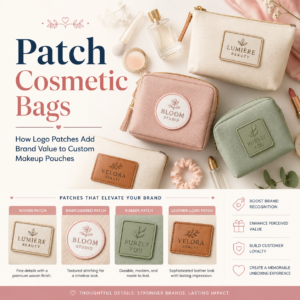
Debossing is a strong option for PU leather cosmetic bags because it creates a quiet, recessed logo. It works well for minimalist skincare brands and premium private label pouches. Embossing creates a raised effect and may be used when the brand wants more dimension. Foil stamping can add metallic shine for gift sets, holiday launches, and luxury beauty campaigns.
Metal logo plates are popular for vanity cases and structured cosmetic bags. A small gold, silver, rose gold, or matte black plate can make the product look more polished. The logo plate should be secure, smooth, and correctly aligned.
Embroidery works well on velvet, canvas, terry cloth, satin, and lifestyle pouches. It adds texture and a boutique feeling. Woven labels can create a fashion-oriented identity. Custom zipper pullers can add branding without overcrowding the front panel.
For full comparison of logo techniques, read the Cosmetic Bag Logo Printing Guide.
Premium Packaging for Luxury Cosmetic Bags
Packaging is essential for luxury cosmetic bags because the first impression often happens before the customer touches the product. A premium cosmetic bag packed in a basic wrinkled polybag may lose value. The same product packed in a clean dust bag, belly band, tissue paper, insert card, or gift box can feel much more desirable.
Common premium packaging options include dust bags, rigid gift boxes, drawer boxes, magnetic boxes, paper sleeves, belly bands, tissue paper, hangtags, thank-you cards, product care cards, and printed insert cards. Each option has a different cost and brand effect.
A dust bag can protect PU leather, velvet, satin, metallic finishes, and metal logo plates from scratches and dust. A gift box can increase perceived value for holiday sets, PR kits, and retail collections. A belly band can create a clean retail look at lower cost than a full box. An insert card can explain material, care instructions, brand story, or sustainability claims.
Packaging should be designed with logistics in mind. A rigid box improves presentation but increases carton volume and shipping cost. A dust bag adds perceived value but also adds sewing and logo cost. A paper sleeve is compact but may not protect structured bags. Buyers should balance presentation, cost, protection, and sales channel.
For a deeper packaging strategy, read the Cosmetic Bag Packaging Guide.
Color Palettes and Seasonal Luxury Collections
Color is one of the strongest signals of premium design. Luxury cosmetic bags often use controlled color palettes rather than random bright colors. Popular premium directions include ivory, beige, champagne, blush pink, dusty rose, taupe, chocolate brown, sage green, soft lavender, matte black, cream, pearl white, and metallic gold.
A skincare brand may prefer calm neutrals. A makeup brand may choose richer colors or metallic accents. A spa brand may use soft natural tones. A holiday collection may use gold, burgundy, emerald, champagne, or pearl finishes. A travel beauty collection may use practical colors with premium hardware.
Color matching should be confirmed with Pantone references or physical swatches. Digital screens are unreliable for final approval. Bulk material should be compared against the approved swatch before cutting. If the product is part of a set, all pieces should match or intentionally coordinate.
Seasonal collections are useful for beauty brands because the same bag structure can be refreshed with new colors, trims, logo finishes, or packaging. A core PU makeup pouch can become a holiday gift item with metallic hardware and gift box packaging. A vanity case can become a limited edition through quilted material and foil-stamped logo.
Wholesale Buying Tips for Luxury Cosmetic Bags
When sourcing luxury cosmetic bags wholesale, buyers should evaluate total product value instead of only comparing unit price. A premium cosmetic bag requires better material, cleaner workmanship, stronger hardware, more refined logo application, and more careful packaging. Cutting too much cost can damage the luxury impression.
First, approve real material swatches. Check surface texture, thickness, softness, backing, smell, color, scratch resistance, and handfeel. Second, approve a physical sample. Check size, structure, zipper, lining, logo, stitching, hardware, and packaging. Third, define quality standards clearly. The approved sample should become the benchmark for mass production.
Fourth, review packaging before production ends. Luxury products often need custom packaging, and packaging development can add lead time. Fifth, check carton packing. Premium materials can be scratched or compressed if packed poorly.
Buyers should also think about reorder strategy. If the first luxury cosmetic bag sells well, the brand may want new colors, limited editions, sets, or seasonal packaging. Keeping material codes, logo molds, hardware references, and approved samples helps future orders remain consistent.
For broader wholesale sourcing advice, visit the Wholesale Cosmetic Bags Guide.
MOQ, Pricing, and Lead Time for Luxury Cosmetic Bags
Luxury cosmetic bags usually require more planning than basic promotional pouches. MOQ can be affected by material type, custom color, logo method, hardware, lining, structure, packaging, and supplier setup. A simple existing PU pouch with a debossed logo may be easier to produce than a new vanity case with custom mold, special hardware, printed lining, metal plate, dust bag, and rigid gift box.
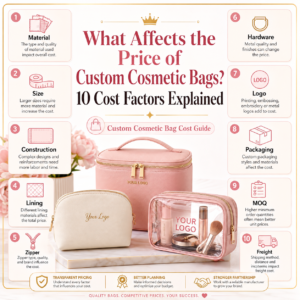
Pricing is influenced by material grade, bag size, cutting complexity, sewing labor, zipper quality, hardware finish, logo process, packaging method, inspection requirements, and shipping volume. A luxury bag may cost more per piece, but it can support higher perceived value and stronger brand positioning.
Lead time should include design confirmation, material sourcing, sample development, logo testing, packaging proofing, sample revision, bulk material preparation, production, inspection, packing, and shipping. Buyers should plan early for seasonal launches, holiday gift sets, and retail delivery deadlines.
To understand quantity planning in custom cosmetic bag production, review the Cosmetic Bag MOQ Explained guide.
Luxury Cosmetic Bag Quality Control Checklist
Quality control is essential for luxury cosmetic bags because customers expect premium products to look and feel consistent. Small defects are more noticeable when the product is positioned as high-end.
- Check material color, texture, thickness, softness, odor, scratches, and surface consistency.
- Confirm size, proportion, shape stability, corner finishing, and structure balance.
- Inspect stitching, seam allowance, loose threads, stitch density, and reinforcement points.
- Test zipper smoothness, puller strength, hardware color, plating, and edge safety.
- Check logo placement, debossing depth, foil quality, embroidery clarity, or metal plate attachment.
- Inspect lining cleanliness, pocket placement, inner seams, branded lining, and functional details.
- Confirm packaging fit, dust bag quality, gift box structure, insert card, barcode, and carton marks.
- Compare bulk production with the approved pre-production sample.
For luxury projects, the factory should inspect both product and packaging carefully before shipment. Premium materials may need additional surface protection during packing. Structured bags should not be compressed too tightly. Metal hardware should not scratch the bag surface.
Recommended Internal Linking Structure for This Article
Internal links help Google understand the relationship between luxury cosmetic bags, premium materials, custom manufacturing, logo printing, packaging, MOQ, wholesale sourcing, and quality control. They also help buyers move from education to product browsing and inquiry.
- Custom Cosmetic Bag Manufacturer — Use this link when discussing OEM/ODM manufacturing capability.
- Custom Bag Manufacturing Services — Use this link when discussing design, material, logo, sampling, and bulk production support.
- Cosmetic Bag Collection — Use this link for product inspiration such as makeup pouches, vanity cases, mini pouches, and toiletry bags.
- PU Leather Cosmetic Bags Guide — Use this link when discussing premium PU materials and custom options.
- Cosmetic Bag Logo Printing Guide — Use this link for debossing, embroidery, foil stamping, metal labels, and custom pullers.
- Cosmetic Bag Packaging Guide — Use this link for dust bags, gift boxes, belly bands, insert cards, and retail-ready packaging.
- Cosmetic Bag Quality Control Guide — Use this link for inspection standards and final shipment checks.
- Cosmetic Bag MOQ Explained — Use this link when discussing MOQ, cost, and production setup.
- Contact Us — Use this link as the final conversion path for luxury cosmetic bag samples, MOQ, pricing, and lead time.
FAQ: Luxury Cosmetic Bags for Beauty Brands
What makes a cosmetic bag look luxury?
A cosmetic bag feels luxury when material, shape, stitching, zipper, lining, hardware, logo, packaging, and quality control work together. Premium design is created by consistent details, not only expensive material.
What materials are best for luxury cosmetic bags?
Popular luxury materials include smooth PU leather, quilted PU leather, velvet, satin, terry cloth, jacquard fabric, coated canvas, microfiber, and premium clear TPU. The best option depends on brand positioning and product use.
Yes. PU leather is widely used for premium cosmetic bags because it offers a polished surface, flexible colors, good structure, and compatibility with debossing, metal plates, foil stamping, and other logo methods.
What logo method is best for luxury makeup bags?
Debossing, embossing, foil stamping, embroidery, woven labels, metal logo plates, and custom zipper pullers are all suitable for luxury makeup bags. The best method depends on material, MOQ, and brand style.
What packaging works best for luxury cosmetic bags?
Premium packaging options include dust bags, rigid gift boxes, drawer boxes, magnetic boxes, belly bands, tissue paper, hangtags, insert cards, and care cards. The best option depends on retail channel and target price.
How do I control the cost of luxury cosmetic bags?
Control cost by choosing a strong base structure, limiting unnecessary compartments, selecting one or two premium details, using efficient packaging, and confirming MOQ before developing custom hardware or molds.
What should I check in a luxury cosmetic bag sample?
Check material handfeel, surface quality, shape, stitching, zipper smoothness, hardware finish, logo placement, lining, packaging, odor, size, and practical usability before approving mass production.
Can luxury cosmetic bags be ordered wholesale?
Yes. Luxury cosmetic bags can be produced for wholesale buyers, beauty brands, skincare companies, retailers, private label sellers, subscription boxes, influencer kits, spas, hotels, and gift programs.
Where can I request custom luxury cosmetic bag samples?
You can contact Bling Accessory Co. through the Contact Us page and share your bag style, material preference, logo artwork, packaging requirement, quantity, and target market.
Start Your Custom Luxury Cosmetic Bag Project
Luxury cosmetic bags help beauty brands create a stronger product experience through premium materials, refined structure, smooth zippers, elegant logos, clean lining, quality hardware, and retail-ready packaging. Whether you need PU makeup pouches, quilted vanity cases, premium toiletry bags, gift set pouches, or private label cosmetic bag collections, careful design details can make your product feel more valuable.
Share your product idea, material preference, size, logo artwork, packaging requirement, order quantity, target market, and launch timeline to discuss samples, MOQ, pricing, lead time, and bulk production options.
Request Luxury Cosmetic Bag Options