Cosmetic Case vs Cosmetic Bag: Which Style Is Better for Your Product Line?
When beauty brands develop a new accessory collection, one common question is whether to choose a cosmetic case or a cosmetic bag. At first, the difference may seem simple: a cosmetic case is usually more structured, while a cosmetic bag is usually softer and more flexible. In real product development, the decision is more strategic. It affects material choice, retail positioning, packaging, MOQ, production cost, shipping volume, customer use, and long-term product line planning.
A soft cosmetic bag may be ideal for daily makeup, subscription boxes, promotional gifts, and travel pouches. A structured cosmetic case may be better for premium beauty collections, vanity storage, skincare sets, and retail gift products. Both styles can be customized with logo, zipper, lining, packaging, and private label details, but they serve different business goals.
This guide compares cosmetic case vs cosmetic bag from a B2B product development perspective. It explains the differences in structure, materials, user experience, cost, MOQ, packaging, quality control, and wholesale sourcing. If you are preparing a custom beauty accessory project, you can explore our custom bag manufacturing services, browse the cosmetic bag collection, or contact us for sample and quotation support.
Cosmetic Case vs Cosmetic Bag: Basic Difference
The basic difference between a cosmetic case and a cosmetic bag is structure. A cosmetic case usually has more shape, support, and protection. It may include padding, panels, a molded form, a wide-opening zipper, a top handle, inner pockets, dividers, or a stronger bottom. It often looks more premium and is commonly used for vanity storage, travel beauty kits, skincare sets, and retail gift products.
A cosmetic bag is usually softer, lighter, and more flexible. It may be a makeup pouch, zipper pouch, mini pouch, toiletry bag, drawstring bag, brush bag, or flat organizer. It can be folded or packed more easily, and it is often more cost-effective for wholesale, promotional, subscription box, and everyday beauty accessory programs.
However, the two categories overlap. A soft vanity pouch can be called a cosmetic case by some brands, while a structured makeup case may still be listed under cosmetic bag categories. From an OEM/ODM development point of view, the most important question is not the name. The important question is what the product must do for the customer and how it should support the brand’s product line.
If your brand needs a premium-looking organizer that can hold shape on a vanity table, a cosmetic case may be better. If your brand needs a lightweight, flexible, and cost-controlled pouch for daily makeup or gifts, a cosmetic bag may be better. If your brand wants a complete retail collection, you may need both styles in one product line.
What Is a Cosmetic Case?
A cosmetic case is a more structured beauty storage product designed to protect, organize, and present cosmetics, skincare products, tools, or travel essentials. It often has a defined shape and may use reinforced panels, padding, molded EVA, PU leather, quilted fabric, hard shell material, or structured stitching. A cosmetic case is often associated with higher perceived value because it looks more stable and giftable than a simple pouch.
Common cosmetic case styles include vanity cases, travel makeup cases, wide-open makeup cases, mini structured cases, brush cases, clear PVC vanity pouches, hard-shell beauty cases, and PU leather cosmetic cases. These products often include handles, double zippers, inner pockets, brush slots, dividers, or protective linings.
Cosmetic cases are suitable for brands that want stronger retail presence. A structured case photographs well, sits neatly on shelves, and can feel more like a finished product than an accessory giveaway. It can be used as a standalone SKU, a premium gift set container, a travel organizer, or a private label beauty product.
The tradeoff is cost and shipping volume. A cosmetic case usually requires more material, more labor, more quality control, and more careful packaging than a soft pouch. It may also take more carton space. For brands targeting premium retail, this investment can be worthwhile. For low-cost promotional campaigns, a simpler cosmetic bag may be more practical.
What Is a Cosmetic Bag?
A cosmetic bag is a flexible storage pouch used for makeup, skincare, toiletries, brushes, travel products, daily essentials, and small accessories. It can be flat, gusseted, cylindrical, quilted, transparent, drawstring, mini, wide-opening, or travel-oriented. Compared with a cosmetic case, a cosmetic bag usually has less rigid structure and more flexibility.
Cosmetic bags are popular because they are practical, easy to customize, and suitable for many price points. They can be used for retail products, gift-with-purchase programs, promotional campaigns, subscription boxes, skincare kits, hotel amenities, travel accessories, and wholesale beauty accessory collections.
Soft cosmetic bags can be made from PU leather, polyester, nylon, cotton canvas, velvet, satin, terry cloth, clear PVC, TPU, mesh, denim, or recycled materials. They can support many logo methods, including screen printing, embroidery, woven labels, heat transfer, debossing, rubber patches, metal labels, and custom zipper pullers.
A cosmetic bag is usually the better choice when the project needs lower cost, lighter weight, flexible packing, fast customization, or higher volume. It is also a good starting point for new brands because sampling and production are generally simpler than fully structured cases. Buyers can browse related examples in the Mini Pouch and Brush Bag categories.
Cosmetic Case vs Cosmetic Bag: Quick Comparison Table
The table below gives a practical comparison for beauty brands, retailers, wholesalers, and private label sellers choosing between a cosmetic case and a cosmetic bag.
| Factor | Cosmetic Case | Cosmetic Bag | Best Choice |
|---|---|---|---|
| Structure | More structured, shaped, protective | Softer, flexible, lightweight | Case for premium structure; bag for flexible use |
| Perceived Value | Higher retail and gift value | Good for everyday and promotional value | Case for premium retail; bag for broader volume |
| Cost | Usually higher due to structure and labor | Usually more cost-efficient | Bag for lower budget; case for higher price point |
| Shipping Volume | Takes more carton space | Packs more efficiently | Bag for shipping efficiency |
| Customization | Strong options for hardware, lining, dividers, handles | Strong options for materials, prints, logo, trim, size | Both can be customized |
| Best Sales Channel | Premium retail, gift sets, travel beauty kits | Wholesale, subscription boxes, promotions, daily use | Depends on target market |
| MOQ Complexity | May require higher MOQ for structure and components | Often more flexible with existing styles | Bag for easier entry-level development |
| Customer Use | Vanity storage, travel organization, product protection | Daily carry, makeup storage, gifts, travel pouching | Case for organization; bag for portability |
Retail Positioning and Brand Image
The choice between a cosmetic case and a cosmetic bag should begin with positioning. If your brand wants to create a premium beauty accessory that can be sold as a standalone retail product, a cosmetic case may help communicate value more clearly. A structured case with PU leather, gold zipper, smooth lining, and gift packaging can support a higher retail price and stronger shelf presence.
If your brand needs a practical pouch for daily makeup, gift-with-purchase campaigns, subscription boxes, or lower-cost wholesale programs, a cosmetic bag may be more appropriate. It can still look attractive and brand-aligned, but it usually requires less structure and lower production cost.
Cosmetic cases are often better for brands that want a polished, giftable, and long-lasting product. They are suitable for premium skincare brands, beauty retailers, holiday gift sets, influencer PR kits, travel beauty collections, and vanity storage products. A case can become part of the customer’s home or travel routine, which gives the brand repeated visibility.
Cosmetic bags are often better for brands that want versatility and scale. They can be produced in many materials, sizes, and colors. They are easier to adapt for seasonal campaigns, promotional gifts, sample kits, travel pouches, and multi-piece sets. A soft pouch may not feel as premium as a structured case, but it can reach more customers at a lower cost.
For many product lines, the strongest strategy is not choosing one or the other. A brand can use cosmetic cases for premium SKUs and cosmetic bags for entry-level or promotional SKUs. This creates a more complete price ladder and gives retailers more options.
Materials and Surface Finishes
Material choice is different for cosmetic cases and cosmetic bags. A cosmetic case often needs materials that can hold shape or support structure. Common options include PU leather, quilted PU, EVA, padded polyester, coated fabric, clear TPU, hard shell material, jacquard fabric, and reinforced nylon. A cosmetic bag can use a wider range of soft materials, including cotton canvas, satin, velvet, terry cloth, polyester, nylon, mesh, PVC, TPU, and recycled fabrics.
PU leather is popular for both styles. For cosmetic cases, PU leather can create a premium surface and stable shape. For cosmetic bags, PU leather can create a polished pouch with good logo compatibility. Smooth PU, pebbled PU, quilted PU, metallic PU, and matte PU all create different visual effects. Buyers can read the PU Leather Cosmetic Bags Guide for deeper material details.
Clear PVC and TPU are useful for both transparent cosmetic bags and clear vanity cases. A clear cosmetic bag may be simple and travel-friendly. A clear cosmetic case may be more structured, with a handle, colored trim, or double zipper. Buyers can compare transparent material options in the Clear Cosmetic Bags Guide.
Fabric materials such as canvas, velvet, satin, terry cloth, and nylon are more common for soft cosmetic bags, but they can also be used in padded or semi-structured cases. The material should match the brand’s market position. A luxury skincare brand may prefer smooth PU or quilted fabric. A spa brand may prefer terry cloth or satin. A travel brand may prefer nylon, TPU, or coated polyester.
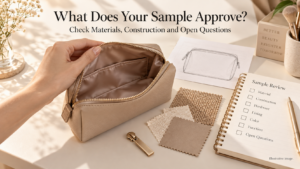
Buyers should always approve real material swatches. Material photos cannot fully show thickness, softness, stiffness, texture, color, smell, or scratch resistance. For a broader comparison of material options, review the Cosmetic Bag Materials Guide.
Structure, Shape, and Capacity
Structure is the biggest functional difference between a cosmetic case and a cosmetic bag. A cosmetic case usually has more defined shape. It may include a flat base, padded walls, reinforced panels, molded corners, a handle, double zipper, divider, brush slots, or inner compartments. This makes it better for protecting products and organizing items clearly.
A cosmetic bag is usually more flexible. It may have a flat pouch shape, gusseted bottom, barrel shape, drawstring closure, mesh panel, or soft zipper opening. It can be easier to carry in a handbag, suitcase, gym bag, or subscription box. It may not protect bottles and compacts as strongly as a case, but it can be more convenient for everyday use.
Capacity planning should be based on real products. A skincare case may need to hold bottles, tubes, jars, and sample sachets. A makeup pouch may need to hold lipstick, mascara, compact powder, eyeliner, and brushes. A brush case may need slots and a protective flap. A travel toiletry bag may need height, gusset, and water-resistant lining.
For structured cases, buyers should test whether the case stands properly, opens wide enough, and closes smoothly when filled. For soft bags, buyers should test whether the pouch looks attractive when empty and when filled. Some soft pouches look good in flat photos but lose shape in use. Some structured cases look premium but become too bulky for shipping.
Logo and Branding Options
Both cosmetic cases and cosmetic bags can be customized with brand logos, but the best method depends on material, structure, and positioning. A cosmetic case often has more premium branding opportunities because it may include structured panels, metal hardware, handles, and packaging. A cosmetic bag may offer more flexible print and fabric logo options.
For cosmetic cases, popular logo methods include metal logo plates, debossing, embossing, foil stamping, custom zipper pullers, woven labels, rubber patches, and embroidery. A PU vanity case with a small metal logo plate can feel premium. A structured travel case with a custom puller can feel more finished. A clear case with a rubber patch can look modern and functional.
For cosmetic bags, popular logo methods include screen printing, heat transfer, embroidery, woven labels, debossing, patches, and custom zipper pullers. A canvas pouch may use embroidery. A promotional pouch may use screen printing. A velvet pouch may use woven labels. A transparent pouch may use a printed logo or rubber patch.
Branding should be proportionate. A small structured case may look more premium with subtle logo placement, while a promotional pouch may need a larger visible logo. A retail collection should keep logo position and size consistent across different styles. For a full comparison of methods, read the Cosmetic Bag Logo Printing Guide.
Packaging and Display Strategy
Packaging decisions differ between cosmetic cases and cosmetic bags. A cosmetic case often needs stronger shape protection during shipping. A structured case may require tissue paper, inner support, dust bag, gift box, or carefully sized carton packing. If the case has a metal logo plate, smooth PU surface, clear TPU panel, or delicate fabric, packaging should prevent scratches and pressure marks.
A soft cosmetic bag is easier to pack but still needs good presentation. For wholesale orders, individual polybags may be enough. For retail, belly bands, hangtags, paper sleeves, insert cards, or gift boxes can improve perceived value. If the bag is part of a set, packaging should clearly show the number of pieces and use cases.
Cosmetic cases are usually better for premium gift packaging. They can sit inside a rigid box or dust bag and create a stronger unboxing experience. Cosmetic bags are usually better for compact packaging, high-volume shipping, subscription boxes, and promotional programs. A soft pouch can be packed flat or nested with other items, reducing carton volume.
Retail display should also be considered. A structured case may stand on a shelf or table more easily. A soft bag may need a hangtag, header card, belly band, or display box to look organized in retail. E-commerce sellers should photograph both exterior and interior details to show size and value clearly.
For packaging planning, read the Cosmetic Bag Packaging Guide, which covers polybags, belly bands, gift boxes, hangtags, dust bags, insert cards, and retail-ready packaging.
Cost, MOQ, and Lead Time
Cosmetic cases usually cost more than soft cosmetic bags because they often require more material, more structure, stronger zipper, reinforced panels, lining, handle, hardware, and more careful packaging. The sewing process may also be more complex, especially for wide-opening vanity cases, hard-shell cases, or multi-compartment cases.
Cosmetic bags are usually more cost-efficient and easier to scale. A simple makeup pouch using existing material and standard zipper can often be sampled and produced faster than a fully structured case. This makes soft cosmetic bags a practical choice for first orders, promotional campaigns, subscription boxes, and price-sensitive wholesale programs.
MOQ can also differ. A standard cosmetic bag using existing materials may have more flexible MOQ. A custom case may require higher MOQ if it needs special panels, molds, custom hardware, special zipper, custom lining, or gift box packaging. If the project includes multiple colors, MOQ may apply per color.
Lead time should include material sourcing, sample development, pattern adjustment, logo testing, packaging proofing, bulk production, inspection, packing, and shipping. Cosmetic cases may require more sample revisions because structure and shape must be tested carefully. Cosmetic bags may move faster if the buyer uses an existing pouch style.
For quantity planning and cost control, review the Cosmetic Bag MOQ Explained guide.
Best Use Cases by Product Line
The right choice depends on how the product will be sold and used. Below are practical recommendations for different beauty product lines.
Premium Skincare Sets
Choose a cosmetic case if the set includes bottles, jars, and tubes that need better protection and presentation. A structured PU vanity case can make skincare products feel giftable and high-value.
Daily Makeup Collections
Choose a soft cosmetic bag if the product is designed for everyday carry, handbags, or casual makeup storage. It is lightweight, practical, and easy to customize in multiple colors.
Travel Beauty Kits
Choose based on capacity. A structured case works for organized travel storage, while a soft toiletry bag or clear pouch works for compact packing and easier visibility.
Gift-with-Purchase Programs
Choose a cosmetic bag for cost efficiency and higher volume. A soft pouch with logo and belly band can deliver good perceived value without high production cost.
Luxury Retail Products
Choose a cosmetic case when the product must support a higher retail price. Use premium material, smooth zipper, branded lining, logo plate, and gift packaging.
Subscription Boxes
Choose a cosmetic bag or mini pouch if box space and shipping cost are important. Soft pouches are easier to pack with other beauty products.
Quality Control Checklist for Cosmetic Cases and Cosmetic Bags
Quality control should match the product style. A cosmetic case and a cosmetic bag share many inspection points, but structured cases require extra checks for shape, panel alignment, handle strength, and opening performance.
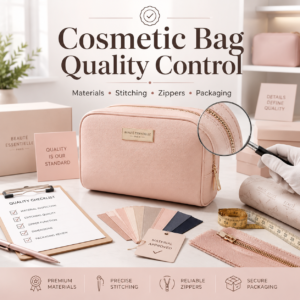
- Check material color, texture, thickness, odor, scratches, stains, wrinkles, and surface consistency.
- Confirm size, shape, structure, panel alignment, gusset width, and base stability.
- Inspect stitching, seam allowance, loose threads, corner finishing, and reinforcement points.
- Test zipper smoothness, zipper curve performance, puller strength, and zipper end finishing.
- Check lining cleanliness, pocket placement, dividers, brush slots, and inner seam finishing.
- Inspect logo size, placement, color, clarity, metal plate attachment, embroidery, or debossing depth.
- For cosmetic cases, test handle strength, structure recovery, opening width, and shape protection.
- For cosmetic bags, test flexibility, folding, filled shape, and packing efficiency.
- Confirm packaging, hangtags, barcode labels, insert cards, dust bags, gift boxes, carton marks, and quantity.
- Compare bulk production with the approved pre-production sample before shipment.
The approved sample should become the production standard. For premium cases, inspect both the case and packaging together. For high-volume cosmetic bags, inspect consistency across the batch. For a more complete framework, read the Cosmetic Bag Quality Control Guide.
How to Choose a Cosmetic Case or Cosmetic Bag Manufacturer
The right manufacturer should understand the difference between soft pouch production and structured case production. A supplier that can produce simple flat pouches may not automatically be strong at vanity cases, molded cases, wide-opening structures, or multi-compartment organizers. Buyers should review product experience before confirming a project.
Ask whether the manufacturer has produced cosmetic cases, makeup pouches, vanity cases, mini pouches, brush bags, toiletry bags, clear pouches, and cosmetic bag sets. A stronger supplier can help you select the right style based on brand positioning, target price, MOQ, packaging, and sales channel.
A reliable supplier should provide material swatches, sample support, logo recommendations, packaging options, production updates, and quality inspection. The supplier should ask detailed questions before quoting, including product use, size, material, color, logo method, packaging, quantity, target price, and delivery date.
Communication is important. If the supplier quotes too quickly without asking about structure, lining, zipper, and packaging, the quotation may not reflect the real product requirement. A professional OEM/ODM supplier should help buyers balance appearance, function, cost, and production feasibility.
Buyers comparing sourcing options can also read the Cosmetic Bag Factory vs Trading Company Guide.
FAQ: Cosmetic Case vs Cosmetic Bag
What is the difference between a cosmetic case and a cosmetic bag?
A cosmetic case is usually more structured, protective, and premium. A cosmetic bag is usually softer, lighter, and more flexible. The best choice depends on product use, retail positioning, cost, packaging, and target customer.
Which is better for a beauty brand: cosmetic case or cosmetic bag?
A cosmetic case is better for premium retail, skincare sets, vanity storage, and travel organization. A cosmetic bag is better for daily makeup storage, promotional gifts, subscription boxes, and cost-effective wholesale programs.
Are cosmetic cases more expensive than cosmetic bags?
In most cases, yes. Cosmetic cases usually require more structure, material, lining, zipper quality, hardware, labor, and packaging. Soft cosmetic bags are usually more cost-efficient and easier to produce in higher volumes.
Can both cosmetic cases and cosmetic bags be customized with a logo?
Yes. Both can be customized with screen printing, embroidery, heat transfer, woven labels, debossing, embossing, metal plates, rubber patches, and custom zipper pullers depending on material and design.
Which style is better for gift-with-purchase campaigns?
A soft cosmetic bag is often better for gift-with-purchase campaigns because it is usually more cost-effective, lighter, easier to pack, and suitable for higher-volume promotional use.
Which style is better for luxury beauty retail?
A structured cosmetic case is often better for luxury beauty retail because it supports higher perceived value, stronger shape, premium hardware, branded lining, and gift packaging.
What materials are suitable for cosmetic cases and cosmetic bags?
Common materials include PU leather, quilted PU, polyester, nylon, cotton canvas, satin, velvet, terry cloth, clear PVC, TPU, EVA, jacquard fabric, and coated fabric. The best material depends on product style and market position.
Where can I request custom cosmetic case or cosmetic bag samples?
You can contact Bling Accessory Co. through the Contact Us page and share your product style, size, material preference, logo artwork, packaging requirement, quantity, and target market.
Start Your Custom Cosmetic Case or Cosmetic Bag Project
The best choice between a cosmetic case and a cosmetic bag depends on your product line strategy. A cosmetic case can create premium structure, stronger protection, and higher retail value. A cosmetic bag can provide flexibility, cost efficiency, easy customization, and broader campaign use. Many beauty brands use both styles to create a complete product range.
Share your product idea, target size, material preference, logo file, packaging requirement, quantity, target market, and launch timeline to discuss samples, MOQ, pricing, lead time, and wholesale production options.
Request Cosmetic Case or Cosmetic Bag Options