OEM / ODM Low MOQ Cosmetic Bag Sourcing Guide
Low MOQ Cosmetic Bag Manufacturer: What Buyers Should Know Before Ordering
Many beauty startups, skincare brands, boutique retailers, subscription box buyers, promotional product teams, and private label sellers search for a low MOQ cosmetic bag manufacturer because they want to test a custom product without committing to a very large first order. MOQ means Minimum Order Quantity, and in custom cosmetic bag manufacturing it refers to the minimum number of pieces a factory can produce for one style, color, material, logo version, or packaging version under practical production conditions.
Low MOQ can be useful, but it must be understood correctly. A lower minimum order can reduce inventory risk and help brands test demand. However, very low MOQ may also limit customization options, increase unit cost, reduce color flexibility, and make premium packaging harder to achieve. Buyers should not only ask, “What is your lowest MOQ?” The better question is, “What low MOQ plan is realistic for my design, material, logo, packaging, budget, and launch timeline?”
This guide explains what buyers should know before ordering low MOQ cosmetic bags. It covers realistic MOQ expectations, why MOQ changes, how existing ODM styles differ from custom OEM designs, what customization is possible at lower quantities, how unit cost works, what to send for a quotation, and how to choose a reliable supplier. If you are preparing a project, you can explore Custom Bag Manufacturing Services, browse the Cosmetic Bag Collection, or request support through Contact Us.
What Low MOQ Means in Cosmetic Bag Manufacturing
Low MOQ means the factory can support a smaller starting order than a standard bulk production run. In custom cosmetic bag manufacturing, MOQ may apply per style, per color, per material, per size, per logo version, or per packaging version. This is important because a “500 pcs MOQ” may not mean the buyer can order five colors of 100 pieces each.
A cosmetic bag is not only one piece of fabric. Even a simple makeup pouch can include outer fabric, lining, zipper, zipper puller, thread, label, logo application, polybag, carton, and inspection. More complex bags may include inner pockets, clear panels, brush slots, mesh compartments, handle, padding, custom zipper pullers, metal logo plates, patches, hangtags, belly bands, insert cards, or gift boxes.
MOQ exists because factories need to set up materials, cutting, sewing, logo production, packaging, labor scheduling, inspection, and carton packing. When the quantity is too small, these steps become less efficient. A reliable manufacturer will explain what can be done at low MOQ and what will increase MOQ.
Buyers should treat low MOQ as a production strategy, not only a supplier promise. A good low MOQ project is usually simple, focused, and practical. It uses available materials, a proven bag structure, a clear logo method, limited color versions, and packaging that does not overcomplicate the first order.
Why Buyers Search for Low MOQ Cosmetic Bags
Buyers search for low MOQ cosmetic bags for several reasons. The most common reason is market testing. A startup beauty brand may want to test whether customers like a new pouch before ordering thousands of units. An e-commerce seller may need a small batch for product photography, influencer seeding, or a soft launch. A subscription box buyer may need a limited campaign quantity. A promotional buyer may need a one-time gift-with-purchase item.
Low MOQ also helps reduce cash flow pressure. Large orders can create inventory risk, storage cost, and pressure to sell through quickly. A smaller order allows buyers to validate product-market fit, retail price, color preference, packaging style, and customer feedback before scaling.
For private label buyers, low MOQ can support product line testing. A brand may start with one mini pouch, one travel cosmetic bag, or one toiletry pouch before expanding into cosmetic bag sets, brush bags, clear pouches, or vanity cases. This phased approach can be smarter than launching too many SKUs at once.
However, low MOQ should not be used to demand every premium feature at a very small quantity. Buyers who want custom-dyed material, multiple colorways, molded silicone patch, printed lining, custom zipper pullers, premium gift boxes, and very low MOQ at the same time may face higher pricing or production limitations.
What Is a Realistic Low MOQ?
A realistic low MOQ depends on the design. Existing ODM cosmetic bags with available materials and simple logo customization are usually more flexible. Fully custom OEM cosmetic bags with new patterns, custom materials, custom hardware, special logo components, and retail packaging usually need higher minimum quantities.
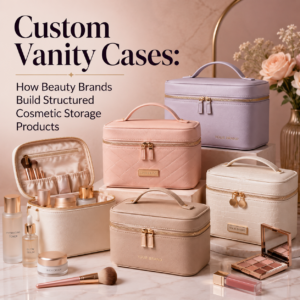
Buyers should understand that MOQ is not fixed across all products. A flat polyester pouch, mini pouch, drawstring cosmetic bag, or simple zipper makeup bag may be easier to support at lower quantities. A structured vanity case, multi-compartment toiletry bag, brush bag with elastic slots, or clear TPU pouch with special trimming may require a higher order quantity because production is more complex.
| Project Type | Low MOQ Feasibility | Buyer Notes |
|---|---|---|
| Existing pouch with logo | High | Best option for startups, quick tests, and lower-risk first orders. |
| Standard custom bag using available material | Moderate | Good when the design is not too complex and color split is limited. |
| Fully custom OEM structure | Lower | New patterns, special structure, and custom components can increase MOQ. |
| Multi-color retail program | Depends on SKU split | MOQ may apply per color, SKU, logo version, or packaging version. |
For a deeper explanation of minimum order quantity, read Cosmetic Bag MOQ Explained and What Is the MOQ for Custom Cosmetic Bags?.
ODM vs OEM: Which Is Better for Low MOQ?
ODM and OEM are two different approaches to custom cosmetic bag manufacturing. ODM usually means the factory already has an existing style or base design that the buyer can customize with material, color, logo, or packaging. OEM usually means the buyer wants a more original product developed from drawings, reference images, special dimensions, or custom structure.
For low MOQ buyers, ODM is often the better starting point. Existing styles reduce development risk because the pattern and structure are already known. The factory can use available materials and proven production methods. This can make sampling faster, quotation clearer, and production easier to manage.
OEM can create stronger differentiation, but it usually requires more commitment. A fully custom bag may need new patterns, extra sample revisions, special materials, custom hardware, and more production setup. These steps may increase MOQ and cost. OEM is better when the buyer already has strong demand, a defined retail price, and enough budget for product development.
A practical low MOQ strategy is to begin with ODM, collect market feedback, and then upgrade into OEM after the product proves demand. For example, a brand may start with an existing PU cosmetic pouch with debossed logo. After the first order sells well, the brand can develop a custom shape, custom lining, special zipper puller, and retail packaging.
Buyers planning OEM or ODM projects can also review the OEM Cosmetic Bag Manufacturer Guide and the How to Customize Cosmetic Bags for Your Beauty Brand guide.
Customization Limits at Low MOQ
Low MOQ does not mean no customization. Buyers can still customize many details, but the scope must be realistic. Common low MOQ customization options may include logo printing, simple embroidery, woven labels, available material colors, standard zipper colors, basic hangtags, polybag packaging, and simple belly bands.
More complex customization may require higher quantities. Custom-dyed fabrics, exclusive prints, special PVC or TPU thickness, molded rubber patches, silicone labels, metal logo plates, custom zipper pullers, custom hardware colors, printed lining, and custom gift boxes often have their own supplier MOQs or setup costs.
Color split is another common limitation. A buyer may want 1,000 pieces split into five colors, but the factory may require a minimum quantity per color. Each color creates separate material preparation, cutting, sewing, inspection, labeling, and packing. The more colors and versions a buyer wants, the harder it becomes to keep MOQ low.
Packaging can also limit low MOQ. A plain polybag is usually easier than a custom printed box. A belly band may be more flexible than a rigid gift box. A hangtag may be easier than a full retail sleeve. For low MOQ projects, packaging should support the sales goal without creating unnecessary cost and delay.
The best rule is simple: customize the details that customers notice most. For first orders, focus on material feel, useful size, clean logo, smooth zipper, and reliable packaging. Upgrade more complex details after the product proves demand.
Materials That Work Better for Low MOQ Orders
Material choice is one of the biggest factors in low MOQ feasibility. Materials that are already available in the factory or from regular suppliers are usually easier for low MOQ production. Special materials that require custom dyeing, special weaving, exclusive printing, unique coating, or rare texture are harder to support at lower quantities.
Polyester, nylon, cotton canvas, standard PU leather, standard PVC, and some basic satin materials can be more practical for low MOQ cosmetic bag orders. These materials are common in makeup pouches, mini pouches, toiletry bags, clear cosmetic bags, travel pouches, and promotional cosmetic bags.
PU leather can work for low MOQ if the buyer chooses available colors and textures. Clear PVC may work if the material thickness and color are standard. Canvas can work well for simple pouches and natural-style brands. Polyester is often practical for promotional cosmetic bags and GWP projects. Nylon is useful for travel-oriented pouches and toiletry bags.
Custom material requests can increase MOQ. For example, a custom Pantone-dyed fabric, exclusive print, unusual metallic PU, quilted pattern, specialty velvet, high-end TPU, or recycled material with specific documentation may require a larger order. Buyers should decide whether the material is essential for the first order or whether a standard alternative can test the market first.
To compare material options, review the Cosmetic Bag Materials Guide, PU Leather Cosmetic Bags Guide, and Clear Cosmetic Bags Guide.
Logo Options for Low MOQ Cosmetic Bags
Logo customization is usually possible at low MOQ, but the best method depends on the material, logo complexity, budget, and order quantity. Some logo methods are more flexible, while others require molds, setup, or higher supplier minimums.
Screen printing is often practical for simple logos on polyester, canvas, cotton, PVC, and some PU surfaces. Heat transfer can support more detailed artwork, but it must be tested for adhesion and handfeel. Embroidery works well on canvas and fabric pouches, but small letters may not remain clear. Woven labels can create a boutique effect and may work across several bag styles.
Debossing is suitable for PU leather cosmetic bags and can create a premium look. Rubber patches, silicone patches, metal plates, and custom zipper pullers can add strong brand value, but they may require higher MOQ or tooling cost. If the first order is small, a simpler logo method may be more efficient.
Buyers should send vector logo files whenever possible. AI, EPS, SVG, or PDF files are preferred. Also provide logo size, placement, color reference, and preferred method if known. If you are unsure, ask the factory to recommend the most practical low MOQ method for your chosen material.
For a full comparison of branding options, read the Cosmetic Bag Logo Printing Guide and the Patch Cosmetic Bags Guide.
Packaging Options for Low MOQ Projects
Packaging should be planned early because it affects price, MOQ, lead time, carton volume, and retail presentation. For low MOQ projects, buyers should choose packaging that improves perceived value without creating unnecessary complexity.
Basic polybag packaging is usually the simplest option. It protects the cosmetic bag during shipping and keeps packing cost lower. Hangtags can add brand information, barcode, care instructions, and product naming without too much packaging weight. Belly bands are useful because they make the bag look more retail-ready while keeping the product visible.
Insert cards can explain product features, brand story, or care instructions. Dust bags can improve premium value for PU leather cosmetic bags or vanity cases. Gift boxes can create strong presentation, but they usually increase cost, packaging MOQ, packing labor, and shipping volume.
Low MOQ buyers should avoid too many packaging versions. Different languages, SKUs, barcodes, box designs, and paper colors can complicate a small order. If the product is still in testing stage, start with one packaging format. After sales data confirms demand, upgrade packaging for the reorder.
For packaging inspiration, review the Cosmetic Bag Packaging Guide and Cosmetic Bags with Belly Bands.
Why Low MOQ Usually Means Higher Unit Cost
Low MOQ can reduce total order investment, but it usually increases unit cost. This is because many factory costs exist even when the order is small: communication, sample development, artwork setup, material preparation, cutting setup, sewing line arrangement, logo application, inspection, packaging preparation, and carton packing.
When the order quantity is small, those setup costs are spread across fewer pieces. When the quantity is larger, the factory can purchase materials more efficiently and run production with better line efficiency. That is why a 500-piece order may have a higher unit price than a 3,000-piece order for the same product.
Low MOQ buyers should compare total business risk, not only unit price. A smaller order may be more expensive per piece, but it protects the buyer from overstock. A larger order may reduce unit price, but it requires more cash, storage, and sales confidence.
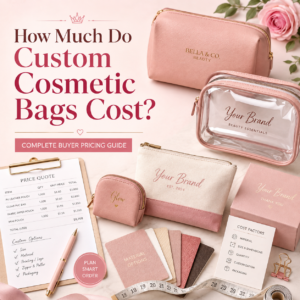
The right decision depends on your business stage. If you are testing a new product, low MOQ may be worth the higher unit cost. If you already have confirmed retail demand, a larger quantity may improve margin. For cost planning, review How Much Do Custom Cosmetic Bags Cost?.
Sampling Before Low MOQ Production
Sampling is essential before any low MOQ cosmetic bag order. Some buyers try to skip sampling to save cost, but this creates risk. A sample helps confirm size, material, color, zipper, lining, logo placement, stitching, packaging, and overall appearance before bulk production.
A low MOQ sample should represent the intended production as closely as possible. If the sample uses a different material, different zipper, or different logo method, it may not accurately show the final product. Buyers should approve a final pre-production sample before the factory begins mass production.
Sampling can also help identify whether the MOQ plan is realistic. If the buyer wants a complex feature that is difficult to produce consistently at small quantity, the factory can suggest simplification. For example, replacing a custom metal plate with debossing, choosing an available fabric instead of custom-dyed fabric, or using a belly band instead of a rigid gift box.
A good sample review should include practical testing. Put real products inside the bag. Open and close the zipper. Check whether the lining wrinkles. Inspect the logo. Test the packaging. Compare the sample with your target customer and price point.
What to Send for a Low MOQ Quote
A complete inquiry helps the factory confirm whether low MOQ is possible and which specification is most efficient. Send clear details instead of asking only for the lowest quantity.
- Bag type: makeup pouch, mini pouch, clear pouch, toiletry bag, brush bag, vanity case, drawstring bag, or cosmetic bag set.
- Reference images: product photos, sketches, links, or mood board examples.
- Target size: length, height, depth, or products the bag must hold.
- Material preference: polyester, nylon, PU leather, canvas, cotton, PVC, TPU, satin, velvet, or available alternatives.
- Color plan: one color, two colors, Pantone reference, standard color, or custom color.
- Logo file: AI, PDF, SVG, EPS, or high-resolution PNG.
- Logo method: screen print, embroidery, woven label, debossing, patch, heat transfer, or factory recommendation.
- Packaging: polybag, hangtag, belly band, insert card, barcode label, dust bag, paper sleeve, or gift box.
- Target quantity: first order quantity and possible reorder quantity.
- Sales channel: e-commerce, retail, wholesale, subscription box, gift-with-purchase, promotion, or private label.
- Target price: optional but helpful for material and structure recommendations.
- Timeline: sample deadline, bulk delivery deadline, and destination country.
For a full inquiry format, see What Information Should You Send a Cosmetic Bag Factory for a Quotation?.
Low MOQ Strategy by Buyer Type
Beauty Startups
Startups should keep the first order simple. Choose one strong style, one practical material, one or two colors, one clean logo method, and simple packaging. The goal is to test the market, collect feedback, and avoid unnecessary inventory risk.
Skincare Brands
Skincare brands can use low MOQ cosmetic bags for travel kits, routine sets, sample bundles, and gift-with-purchase campaigns. The bag should fit the actual skincare products. Send bottle dimensions to the factory before quotation.
Subscription Box Buyers
Subscription box buyers usually need useful, lightweight, and attractive products that fit into outer boxes. Low MOQ cosmetic pouches, mini pouches, satin pouches, and drawstring bags can work well if the size and packing method are confirmed early.
Retailers and Boutique Shops
Boutique retailers may want low MOQ to test colors or seasonal collections. Retail packaging and barcode labels should be planned carefully. A simple hangtag or belly band may be more realistic than a custom box for a first order.
Private Label Sellers
Private label sellers should use low MOQ to validate the hero product. After sales data confirms demand, they can improve materials, add more colors, upgrade packaging, or create matching cosmetic bag sets. For broader planning, review the Wholesale Cosmetic Bags Guide and Private Label Cosmetic Bag Guide.
Low MOQ Cosmetic Bag Quality Control
Low MOQ does not mean low quality. Even a small order should be checked carefully because the products represent your brand. Quality control should cover materials, size, stitching, zipper function, lining, logo accuracy, packaging, carton marks, and final quantity.
Buyers should inspect the approved sample first. Then bulk production should be compared against that sample. Check whether the material color is consistent, whether the zipper opens smoothly, whether the logo is centered, whether stitching is clean, whether the lining is neat, and whether packaging matches the approved format.
Low MOQ orders can sometimes have more variation risk because materials may be sourced in smaller lots or production may not be as efficient as large runs. This makes sample approval and final inspection especially important.
- Check material color, texture, thickness, odor, stains, scratches, and surface consistency.
- Confirm size, shape, capacity, zipper opening, and filled appearance.
- Inspect stitching, loose threads, seam alignment, edge finishing, and reinforcement points.
- Test zipper smoothness, puller strength, slider movement, and zipper tape color.
- Check logo size, placement, clarity, color, print adhesion, embroidery quality, debossing depth, or patch attachment.
- Inspect lining, inner pockets, mesh areas, brush slots, handles, and compartments if included.
- Check packaging, hangtags, belly bands, barcode labels, insert cards, polybags, carton marks, and SKU separation.
- Compare bulk goods with the approved sample before shipment.
For a complete inspection framework, review the Cosmetic Bag Quality Control Guide.
How to Choose a Low MOQ Cosmetic Bag Manufacturer
A reliable low MOQ cosmetic bag manufacturer should be honest about what is possible. If a supplier promises every custom detail at a very low quantity without discussing material, logo method, packaging, and cost, buyers should be careful. Low MOQ production requires practical planning.
Look for a supplier that can explain the difference between ODM and OEM, recommend available materials, provide logo method options, discuss packaging tradeoffs, support sampling, and clearly state MOQ by style, color, logo version, and packaging version. The supplier should also explain how low MOQ affects unit cost and lead time.
Communication quality matters. A good manufacturer asks questions before quoting: What bag type do you need? What size? What material? What logo method? What quantity? What packaging? What deadline? What sales channel? This information helps create a realistic low MOQ production plan.
Buyers should also check whether the factory can support future scaling. A good low MOQ supplier should not only handle a small first order; it should also help you reorder consistently, maintain material color, improve packaging, and develop more styles as your brand grows.
For supplier evaluation, review the Cosmetic Bag Manufacturer Guide and the Cosmetic Bag Factory vs Trading Company Guide.
FAQ: Low MOQ Cosmetic Bag Manufacturer
What is a low MOQ cosmetic bag manufacturer?
A low MOQ cosmetic bag manufacturer is a supplier that can support smaller starting orders for custom makeup bags, cosmetic pouches, toiletry bags, mini pouches, clear bags, brush bags, or related beauty storage products.
Can I customize cosmetic bags with low MOQ?
Yes, but customization should be realistic. Logo printing, simple embroidery, woven labels, available materials, and basic packaging are usually easier than custom-dyed fabric, custom hardware, molded patches, or gift boxes.
Is low MOQ better for startups?
Low MOQ can be helpful for startups because it reduces inventory risk and allows market testing. However, unit cost may be higher than larger bulk orders.
Why is low MOQ unit price higher?
Low MOQ unit price is often higher because sample setup, material preparation, cutting, sewing, logo application, inspection, and packaging are spread across fewer units.
Does each color have its own MOQ?
Often, yes. Each color may require separate material preparation, cutting, sewing, inspection, labeling, and packing. Always confirm whether MOQ applies per color or per total order.
Which bag styles are better for low MOQ?
Existing ODM pouches, flat makeup pouches, mini pouches, simple polyester bags, drawstring cosmetic bags, and standard PU pouches are usually more flexible than complex fully custom designs.
Can low MOQ cosmetic bags use retail packaging?
Yes, but packaging should be practical. Polybags, hangtags, insert cards, and belly bands are often easier than fully custom rigid gift boxes for low MOQ projects.
Should I order a sample before low MOQ production?
Yes. Sampling helps confirm size, material, zipper, logo, lining, packaging, and quality before bulk production.
How can I reduce MOQ risk?
Use an existing style, available material, one or two colors, a simple logo method, basic packaging, and a clear reorder plan. Avoid over-customizing the first order.
Where can I request low MOQ custom cosmetic bags?
You can contact Bling Accessory Co. through the Contact Us page and share your bag type, size, material, logo, packaging, quantity, and timeline.
Request Low MOQ Custom Cosmetic Bag Options
Low MOQ cosmetic bags can help beauty startups, skincare brands, boutique retailers, subscription box buyers, promotional teams, and private label sellers test products with lower inventory risk. The key is to build a realistic production plan: choose the right bag style, available material, practical logo method, simple packaging, clear quantity, and reliable sampling process.
Share your bag type, target size, reference images, material preference, logo artwork, packaging requirement, quantity, sales channel, destination, and launch timeline to discuss low MOQ options, sample cost, unit price, production lead time, quality control, and reorder planning.