Cosmetic Bag Manufacturer Guide: How to Choose the Right OEM/ODM Partner, Verify Quality, and Build a Better Product Line
If you are sourcing cosmetic bags for retail, private label, wholesale, gifting, or e-commerce, the manufacturer you choose will shape nearly every business outcome that follows. The wrong partner can create quality complaints, inconsistent sizing, poor packaging presentation, delayed shipments, and weak margins. The right partner can help you develop a better product line, launch faster, protect your brand reputation, and build a repeatable sourcing system that works across seasons and sales channels.
- What a cosmetic bag manufacturer actually does
- Why manufacturer choice affects product success
- OEM vs ODM: which model fits your project
- Core capabilities to evaluate in a factory
- Material and construction choices
- Sampling, prototyping, and approval
- Quality control and inspection standards
- MOQ, price, and lead time
- Branding, packaging, and retail readiness
- How to match the factory to your use case
- Supplier evaluation checklist
- Internal link structure
- FAQ
What a cosmetic bag manufacturer actually does
A cosmetic bag manufacturer does far more than sew fabric together. A capable factory turns a concept into a sellable product. That means translating brand requirements into a usable silhouette, specifying materials, confirming structure, making samples, testing construction, adjusting details, preparing packaging, and producing at scale with consistency. In practice, the manufacturer is part designer, part engineer, part operations partner, and part quality control system.
For many buyers, the manufacturer also becomes the source of market intelligence. A good factory can advise on what materials are trending, what shapes sell in different markets, what logo methods work best on specific surfaces, and what dimensions are realistic for a target audience. That is especially valuable when a buyer is launching a new collection or trying to create a more premium version of an existing style.
On the Bling Accessory Co. homepage, the company positions itself as a Chinese OEM/ODM manufacturer specializing in custom cosmetic bags with extended expertise in fashion beauty accessories and more than 15 years of experience. The site also highlights factory strength, trend-driven design, strict quality control, and global experience with brands and platforms such as Sephora, Walmart, Amazon, and TJ-MAXX. That positioning is important because it shows the difference between a simple trading company and a factory partner with a production system behind it.
For a buyer, the real question is not just “Can this factory make a bag?” but “Can this factory make my bag, at the right quality, in the right volume, with the right branding, and on time?” That is the standard this guide uses throughout.
Why manufacturer choice affects product success
Cosmetic bags are deceptively simple products. A small pouch can seem easy to source because it uses familiar components: exterior material, lining, zipper, puller, stitching, and branding. But the apparent simplicity hides many variables. Shape retention, zipper smoothness, edge finishing, interior usability, color consistency, packaging fit, and retail presentation all influence whether the product feels generic or premium.
A weak manufacturer may offer a low unit price but create hidden costs later. For example, poor stitching can increase returns. Inaccurate size control can make packaging unusable. Weak material sourcing can cause odor, peeling, wrinkling, or inconsistent color. Poor logo application can reduce perceived value. Delayed sampling can push back a launch window. A buyer may save a few cents per unit and lose much more through rework or lost sales.
A strong manufacturer reduces that risk. It helps the buyer move from idea to launch with fewer revision cycles and more predictable output. It also allows the brand to build long-term product families rather than one-off SKUs. That matters in a category like cosmetic bags, where assortment depth often drives repeat purchase behavior and cross-sell opportunities.
This is why internal linking between a manufacturer guide and product/category pages is useful. Educational content answers the sourcing questions, while category pages and product examples help the reader picture real outcomes. The Cosmetic Bag category is the central hub for that transition, and the Travel Accessories page broadens the use-case context from beauty storage to trip-ready organizers.
OEM vs ODM: which model fits your project
When buyers search for a cosmetic bag manufacturer, they are often really asking which production model they need. In practical sourcing, the two most common models are OEM and ODM.
OEM: original equipment manufacturing
OEM means the manufacturer produces a bag according to the buyer’s custom requirements. This may include original dimensions, unique shapes, specific materials, custom lining, branded zipper pullers, unique packaging, and a logo treatment designed for one brand only. OEM is the right model when the buyer wants more differentiation and stronger control over product identity.
OEM is especially useful for established brands, private label programs, retail chains, and companies with a clear creative direction. It typically requires more communication, more sampling, and more detailed product development, but it can produce a product that is much more aligned with the brand story.
ODM: original design manufacturing
ODM means the manufacturer offers pre-existing or semi-developed designs that the buyer can customize in selected ways. This may include changing the color, adding a logo, adjusting materials, or tweaking a detail while keeping the core shape and construction similar to an existing factory design. ODM is useful when speed matters, when the buyer wants lower development friction, or when the customer only needs moderate differentiation.
ODM is often a good fit for new sellers, seasonal promotions, fast-moving e-commerce programs, or buyers who want to test the market before investing in a fully unique product. It can shorten the launch timeline and lower development cost while still allowing meaningful customization.
How to choose between them
Choose OEM if you need stronger brand identity, exclusive appearance, or exact fit and functionality. Choose ODM if you need speed, lower development complexity, or a starting point for market testing. Many successful companies use both. They begin with ODM to validate demand, then move into OEM once they understand what their customers respond to best.
The Bling Accessory Co. site is structured around custom bag manufacturing and category-level product support, which makes it suitable for both OEM and ODM-style development conversations. The homepage and custom manufacturing page emphasize flexible customization and direct factory supply, which are the core promises buyers typically want in this sourcing model.
Core capabilities to evaluate in a factory
When reviewing a cosmetic bag manufacturer, do not stop at the product photos. Evaluate the factory’s ability to execute the entire order lifecycle. Below are the most important capability areas to inspect.
1) Product development capability
Can the factory turn references into production-ready samples? Can it suggest improvements to structure, durability, or usability? Can it revise patterns quickly when you change the size, zipper layout, or logo placement? Strong product development capability is often the difference between a one-off sample and a scalable product family.
2) Material sourcing breadth
A good manufacturer should offer a wide range of materials and be able to source additional options as needed. On the Bling Accessory Co. custom services page, the factory shows broad material coverage including canvas, polyester, nylon, cotton, terry cloth, velvet, teddy fleece, corduroy, plush, straw weaving, puff/quilted materials, mesh, neoprene, Tyvek, and eco-friendly options, along with PU, PVC, TPU, EVA, and patterned materials. That breadth is useful because different bag styles require different performance profiles.
3) Logo application methods
Cosmetic bag branding should match the material and the market. Screen print, digital print, embroidery, silicone patches, woven labels, heat transfer, debossing, and embossing all communicate different levels of quality and different aesthetic cues. The factory should be able to recommend the right method based on your target retail price and product surface.
4) Sewing and assembly consistency
Look at stitching density, edge finishing, zipper alignment, seam symmetry, reinforcement at stress points, and how the bag holds its shape after filling. Cosmetic bags fail more often in details than in headline design. Clean sewing is essential for both function and perceived quality.
5) Packaging capability
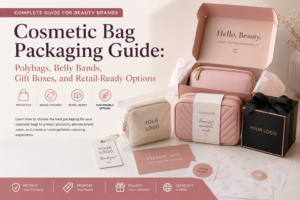
Packaging matters because cosmetic bags are often sold as gifts, retail accessories, promo items, or part of a branded collection. Ask whether the factory can provide polybags, hang tags, inserts, barcode labels, tissue wrap, printed boxes, or custom packaging instructions. The right packaging can materially improve shelf appeal.
6) Scalability and lead-time discipline
Even a well-made sample is not enough if the factory cannot produce reliably at scale. Ask about production capacity, sample lead time, mass production lead time, and how the factory handles peak season planning. A vendor that works well at sample stage but falls apart in mass production is not a dependable partner.
Material and construction choices
Material selection is one of the highest-impact decisions in cosmetic bag sourcing because material influences look, feel, durability, cleanability, weight, structure, and even the story the brand tells. A cosmetic bag can appear sporty, premium, eco-conscious, playful, or luxurious depending on what it is made from and how that material is finished.
Common exterior materials
Canvas is durable, casual, and easy to brand. It works well for everyday utility, lifestyle collections, and eco-friendly positioning when paired with appropriate finishes. Polyester is versatile, cost-effective, and available in many textures and colors. Nylon is light, practical, and often associated with travel utility. PU and PVC are popular when buyers want a wipeable, polished, or semi-luxury look. Quilted materials create a softer, more fashion-forward perception and often improve shelf appeal.
The manufacturer should be able to explain not just what materials are available, but why each one is appropriate for a specific use case. A premium makeup organizer for gifting may need a different construction than a travel toiletry bag or a promotional pouch.
Interior lining matters more than many buyers realize
Interior lining affects how easy the bag is to clean, how the products inside are protected, and how premium the bag feels when opened. A simple cosmetic pouch might use a lightweight lining, while a higher-end organizer might use a waterproof or reinforced lining. On the custom services page, Bling Accessory Co. lists lining materials such as 210T, waterproof lining, peach skin, velvet, suede, organic cotton, mesh, and satin. This range is useful because the interior feel should match the intended market segment and product function.
Construction choices that change performance
Shape retention, piping, base reinforcement, zipper width, edge binding, and seam allowance all affect the finished product. A cylindrical case may require different reinforcement than a flat pouch. A drawstring organizer has different stress points than a structured box. A puffer-style pouch may require a different approach to compression, padding, and stitching stability than a smooth-grain case.
That is why product examples on the site are useful. The Flat-Grain Barrel Pouch demonstrates a structured barrel silhouette, while the Lychee Texture Cylindrical Makeup Case shows how texture and reinforced structure can shape the product identity. The Drawstring Bucket Bag illustrates how a soft, open, easy-access form can still feel intentional when the proportions are right.
How materials interact with brand positioning
Materials are not only functional; they are strategic. A buyer sourcing for a mass retail channel may prefer a material that photographs cleanly, ships efficiently, and supports an accessible price point. A luxury or premium brand may prefer materials that immediately communicate texture, density, and refinement. A sustainability-driven brand may prioritize recycled content, organic fiber, or lower-impact material choices. A travel brand may focus on water resistance, wipe-clean performance, and lightweight construction.
The manufacturer should be able to translate those positioning goals into actual material specifications. If the brand wants “premium,” the factory should be able to explain what that means in terms of texture, trim, lining, zipper quality, and packaging. If the brand wants “eco-friendly,” the factory should be able to identify which materials, processes, and packaging options support that promise. If the brand wants “travel-ready,” the factory should explain what makes the bag practical in transit rather than merely attractive in a photo.
Sampling, prototyping, and approval
Sampling is where many sourcing projects succeed or fail. A strong sample process reduces ambiguity, aligns expectations, and prevents production surprises. A weak sample process creates endless revisions and unstable quotations. Treat the sample as a prototype, not a formality.
What a good sample should prove
The sample should confirm the bag’s size, silhouette, opening, zipper action, stitching quality, logo placement, material feel, lining behavior, and packaging compatibility. It should also prove that the product can be filled, handled, photographed, stored, and transported in the way the buyer intends.
What to send the factory
The more precise the brief, the better the sample. Send reference images, target dimensions, material preferences, logo files, packaging requirements, intended use case, target market, and price point. If possible, include competitor examples and notes on what you like or dislike about them. The factory can use that information to remove guesswork.
How many revisions are normal
One sample revision is common. Two may be needed for more complex structures or premium positioning. If the project keeps changing because the buyer has not defined the target use case, the problem is usually strategy, not sewing. A good manufacturer can guide the process, but the buyer must still decide what the product is supposed to do.
Sample approval should be documented
Always keep a written record of sample approval, including photos, dimensions, material codes, logo method, zipper type, and packaging details. This reduces disputes later. The approved sample should become the standard for bulk production unless both parties agree to change it. That simple discipline can prevent major problems.
Quality control and inspection standards
Quality control is one of the strongest indicators of whether a cosmetic bag manufacturer is reliable. Cosmetic bags may seem simple, but they involve many details that can fail in production. Good QC is not only about rejecting defective units; it is about building a process that catches problems before they become shipment-level issues.
What to inspect
- Material consistency across batches
- Color accuracy against approved references
- Stitching strength and seam cleanliness
- Zipper smoothness and alignment
- Logo placement and print durability
- Shape retention after filling
- Lining cleanliness and odor control
- Packaging accuracy and labeling
- Carton packing consistency
Why 100% inspection is valuable
The homepage of Bling Accessory Co. highlights strict quality control and 100% inspection before packing. That is an important signal because buyers want a factory that does not rely only on random checks when the product category is sensitive to visual defects. Cosmetic bags are often sold by appearance as much as by function, so visual consistency is essential.
Why factories should inspect at multiple stages
Inspection should happen during material receipt, cutting, sewing, finishing, logo application, and packing. The earlier a defect is caught, the less expensive it is to fix. Final inspection alone is not enough because a flawed batch may already have consumed time and labor. Strong factories build QC into the process rather than trying to rescue products at the end.
MOQ, price, and lead time
MOQ, pricing, and production lead time are usually the practical limits that determine whether a project is viable. They also shape the strategy behind the project. A small MOQ can help a new brand test the market. A larger MOQ can lower unit price but requires more confidence in demand. Lead time affects seasonal launches, retail resets, and marketing campaigns.
MOQ is not just a number
MOQ should be understood in context. A lower MOQ may cost more per unit because the factory must still set up materials, labor, cutting, and QC. A higher MOQ may justify a better unit price but increase inventory risk. The right MOQ is the one that fits your channel, launch plan, and cash flow. For a test launch, flexibility matters. For a recurring bestseller, scale matters more.
Why lead time matters
If you are launching for a holiday season, trade event, retail reset, or online campaign, time becomes a strategic asset. Ask the manufacturer how long sampling takes, how long mass production takes, and what could delay the schedule. A factory with stable lead times can be more valuable than a slightly cheaper factory with unpredictable delays.
How to compare price correctly
Do not compare only base unit price. Compare material quality, logo method, zipper type, packaging, inspection standard, and shipment readiness. Two suppliers can quote similar numbers while offering very different value. One may include better construction and better QC. The other may simply be cheaper on paper. The real landed value matters more than the sticker price.
Branding, packaging, and retail readiness
Cosmetic bags are visual products. That means branding and packaging are not add-ons; they are part of the product. The same bag can feel basic or premium depending on how it is branded and presented. For wholesale and retail buyers, this can strongly affect sell-through.
Logo methods should match material
Embroidery may work beautifully on fabric, but it may not be ideal for smoother surfaces. A printed logo may work well on canvas or polyester but look weak on a glossy exterior if not handled properly. Silicone patches, woven labels, and embossed logos all communicate different brand tones. The factory should guide you toward the method that fits both the material and the desired retail price.
Packaging creates perceived value
Good packaging makes the product easier to merchandise, easier to gift, and easier to ship. Even a simple cosmetic bag can feel more premium when presented in a well-designed package. If your product will be sold in retail, ask about hang tags, insert cards, barcodes, tissue wrap, and custom cartons. If it is a promo item, ask how the bag can be packaged efficiently without losing presentation value.
Retail-ready means more than a logo
Retail-ready products need a complete presentation system. That includes a coherent size, durable construction, attractive logo placement, and packaging that fits the channel. It also includes a back-of-house reality: cartons must be efficient, barcodes must be correct, and the product must survive distribution without cosmetic damage. The manufacturer should help you think through all of that.
The Packing&Promo bag category is relevant here because promotional and packaging-focused products often live at the intersection of retail appeal and practical logistics. Likewise, the Trend Bag category can support more lifestyle-oriented branding that benefits from fashion-forward presentation.
How to match the factory to your use case
The right manufacturer for a luxury beauty brand may not be the right manufacturer for a discount retail chain. A factory that excels at trend-driven products may not be the best choice for highly technical organizer bags. The key is to match the manufacturer to the use case.
For beauty brands
Beauty brands usually need strong visual consistency, premium surface finish, and packaging that supports brand storytelling. The manufacturer should be comfortable with refined details and branded presentation.
For travel brands
Travel brands care about usability, durability, and practical organization. The factory should be able to make bags that open wide, clean easily, and hold their shape in transit. The Travel Accessories page is a useful internal bridge for this segment because the site already frames organizers, pouches, and trip-oriented carry items in a broader travel context.
For promotional buyers
Promotional buyers need efficiency, price control, and reliable branding space. The product often has to look good, pack easily, and reproduce consistently at scale. Speed and consistency matter more than extreme customization.
For e-commerce sellers
E-commerce sellers need strong photography appeal, manageable shipping volume, and low defect rates. A product that looks good online but arrives bent, wrinkled, or poorly finished will not perform. The manufacturer must understand distribution realities as well as aesthetics.
For private label brands
Private label brands usually need the best balance of customization, margin, and repeatable quality. They should prioritize manufacturers that can support seasonal updates, new colors, alternate sizes, and coherent product families.
How to create a better product family, not just one bag
The smartest sourcing strategy is often to think in product families. Instead of creating one generic bag, create a connected line of sizes and silhouettes. For example, a brand could launch a mini pouch, a medium everyday bag, and a structured travel case. That allows customers to buy based on need and budget. It also increases the odds of repeat purchase.
A manufacturer with category breadth makes that easier. The Bling Accessory Co. menu covers Cosmetic Bag, Travel Accessories, Trend Bag, Packing&Promo bag, and Mini Pouch, which supports exactly this kind of family-building approach.
Supplier evaluation checklist
Before you approve a manufacturer, use this practical checklist.
- Does the factory have a clear cosmetic bag focus or relevant adjacent category experience?
- Can it show real product examples rather than only generic mockups?
- Can it explain material options in a way that matches your channel and price point?
- Can it support the logo method you need?
- Can it provide a sample quickly and revise accurately?
- Can it document dimensions, materials, and approval details clearly?
- Does it have a visible QC process?
- Can it scale to your forecast volume?
- Can it help with packaging and retail readiness?
- Can you communicate clearly with the team and get fast answers?
If the answer to most of these questions is yes, the manufacturer is probably worth moving forward with. If the answers are vague, inconsistent, or delayed, the project may become expensive later even if the first quote looks good.
How to brief the factory for a successful custom cosmetic bag project
The quality of the brief often determines the quality of the sample. A strong brief should include the target customer, expected use case, dimensions, preferred materials, color direction, logo method, budget range, packaging requirements, and target delivery date. It should also explain what the bag is supposed to achieve commercially. That might mean better shelf appeal, better e-commerce photography, better travel usability, or a stronger gift-with-purchase program.
When buyers give only vague instructions, factories have to guess. Guessing leads to iteration. Iteration costs time. A clear brief saves both time and money, and it makes the eventual product more predictable.
Final buying perspective
Choosing a cosmetic bag manufacturer is ultimately a business decision about risk, quality, and long-term repeatability. The best supplier is not just the one with a low quote. It is the one that can reliably translate your concept into a product that fits your market, supports your brand, and performs in the real world.
If you are building a cosmetic bag line from scratch, start with the manufacturer, then work outward to size, material, logo, and packaging. If you are improving an existing line, start with the customer feedback and identify where the current factory is falling short. In both cases, the right manufacturing partner can make the difference between a product that merely exists and a product that actually sells.
FAQ
What should I look for in a cosmetic bag manufacturer?
Look for product development ability, material breadth, consistent stitching, sample responsiveness, QC discipline, packaging support, and the ability to scale production reliably.
Is OEM or ODM better for cosmetic bags?
OEM is better when you need a highly custom product with stronger brand differentiation. ODM is better when you need speed, lower development friction, and a proven starting point.
What materials are common for custom cosmetic bags?
Common materials include canvas, polyester, nylon, PU, PVC, quilted fabrics, and eco-friendly options, with many lining and zipper variations depending on the application.
How can I reduce risk when working with a new factory?
Start with a detailed brief, request a sample, document approval carefully, ask for QC process details, and compare landed value rather than unit price alone.
Can a manufacturer help with packaging and branding?
Yes. A good manufacturer should be able to support logo methods, packaging formats, labeling, and retail-ready presentation as part of the custom process.