OEM / ODM Cosmetic Bag Cost Reduction Guide
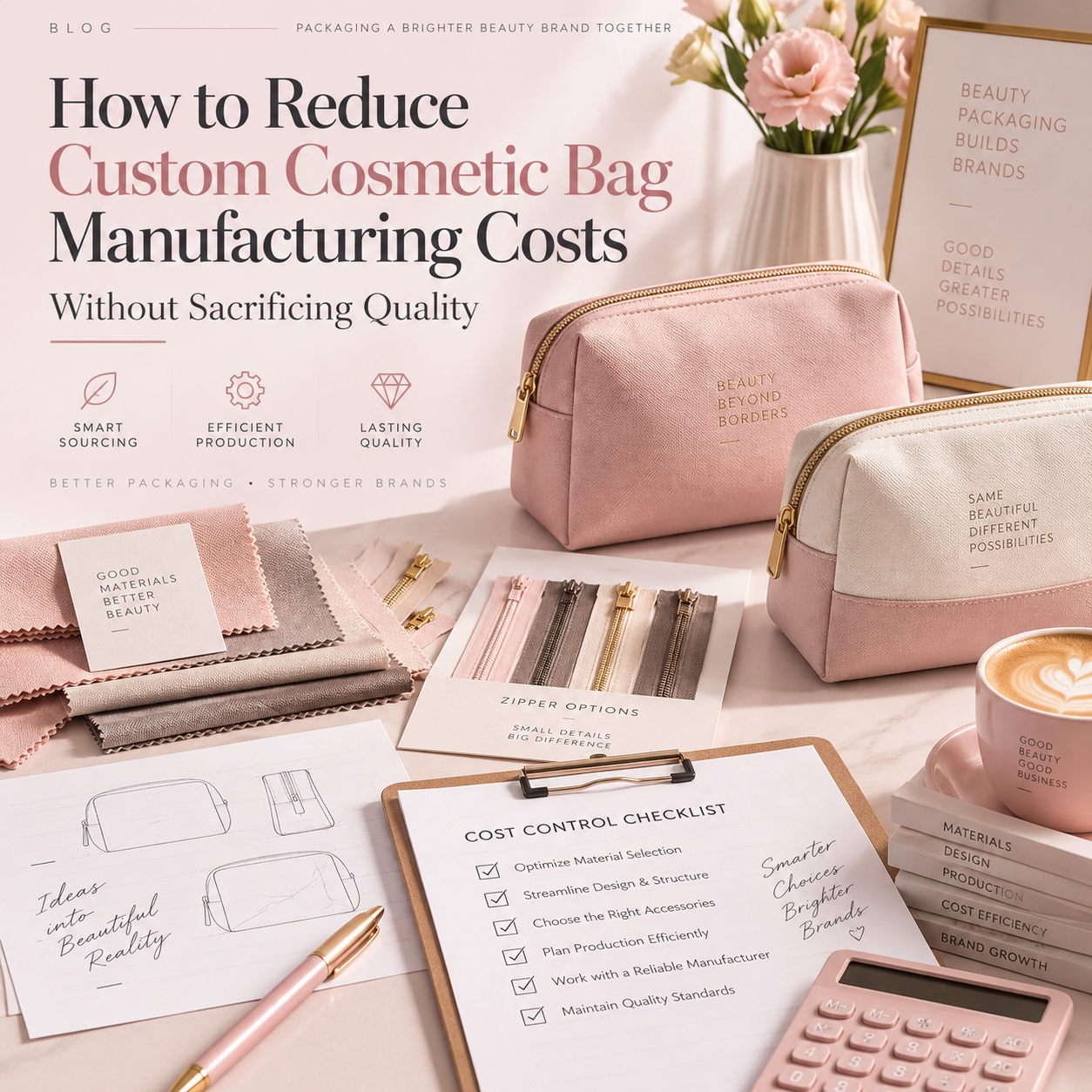
How to Reduce Custom Cosmetic Bag Manufacturing Costs Without Sacrificing Quality
For beauty brands, skincare companies, retailers, subscription box buyers, promotional teams, and private label sellers, controlling custom cosmetic bag manufacturing costs is important. A custom makeup bag must fit the budget, but it also needs to look good, function well, protect the brand image, and meet customer expectations. The challenge is not simply finding the cheapest factory price. The real goal is to reduce unnecessary cost while keeping the right level of material quality, stitching, zipper performance, logo accuracy, packaging presentation, and quality control.
Many buyers try to lower cost by choosing thinner materials, cheaper zippers, basic packaging, or the lowest quote. That approach can create hidden problems: weak structure, poor stitching, zipper complaints, logo defects, color inconsistency, packaging damage, delayed shipments, and negative customer reviews. A low unit price is not useful if the final product damages the brand or cannot pass retail inspection.
This guide explains how to reduce cosmetic bag manufacturing costs without sacrificing quality. It covers product specification control, material selection, bag structure, MOQ planning, logo methods, packaging choices, sampling, supplier communication, quality control, shipping, and reorder strategy. If you are preparing a custom project, you can explore Custom Bag Manufacturing Services, browse the Cosmetic Bag Collection, or request a quote through Contact Us.
The Real Goal: Lower Cost Without Lowering Brand Value
Cost reduction should not mean quality reduction. A custom cosmetic bag is a customer-facing product. It may be sold directly, included in a beauty gift set, used as a promotional item, packed into a subscription box, or offered as a private label retail accessory. In every case, the bag represents the brand. If the material feels weak, the zipper fails, the logo looks unclear, or the packaging arrives damaged, the buyer may save money on the order but lose value in the market.
The smarter approach is to identify which details truly affect customer experience and which details can be simplified. Customers usually notice the outer material, color, zipper smoothness, logo placement, stitching, shape, and packaging presentation. They may not notice an overly complex inner pocket layout, expensive hidden trim, custom hardware that does not improve function, or packaging layers that increase shipping volume.
Good cost reduction is strategic. It removes unnecessary complexity, chooses materials wisely, reduces SKU fragmentation, selects practical logo methods, plans MOQ correctly, and avoids rework. It does not cut the parts that protect brand trust: stable stitching, usable size, smooth zipper, clean logo, reliable packaging, and final inspection.
Main Cost Drivers in Custom Cosmetic Bag Manufacturing
Before reducing cost, buyers need to understand what creates the cost. A custom cosmetic bag quote usually includes material cost, cutting, sewing labor, lining, zipper, accessories, logo application, packaging, sampling, quality inspection, packing, and shipping. The final price changes when any of these parts change.
| Cost Area | What Increases Cost | Smart Cost Reduction Method |
|---|---|---|
| Material | Custom-dyed fabric, rare textures, thick PU, premium TPU, specialty recycled material | Use available quality materials that match brand positioning. |
| Structure | Too many panels, pockets, elastic loops, special shapes, padding, complicated interiors | Simplify hidden details while keeping the exterior attractive. |
| Logo | Metal plates, molded patches, custom pullers, multi-color embroidery, foil molds | Choose the most suitable logo method for material and order quantity. |
| Packaging | Rigid boxes, multiple inserts, custom sleeves, many barcode versions, oversized cartons | Use retail-ready but efficient packaging such as belly bands, hangtags, or insert cards. |
| MOQ | Small quantities, too many colors, too many SKUs, special materials | Focus the first order and use quantity breaks wisely. |
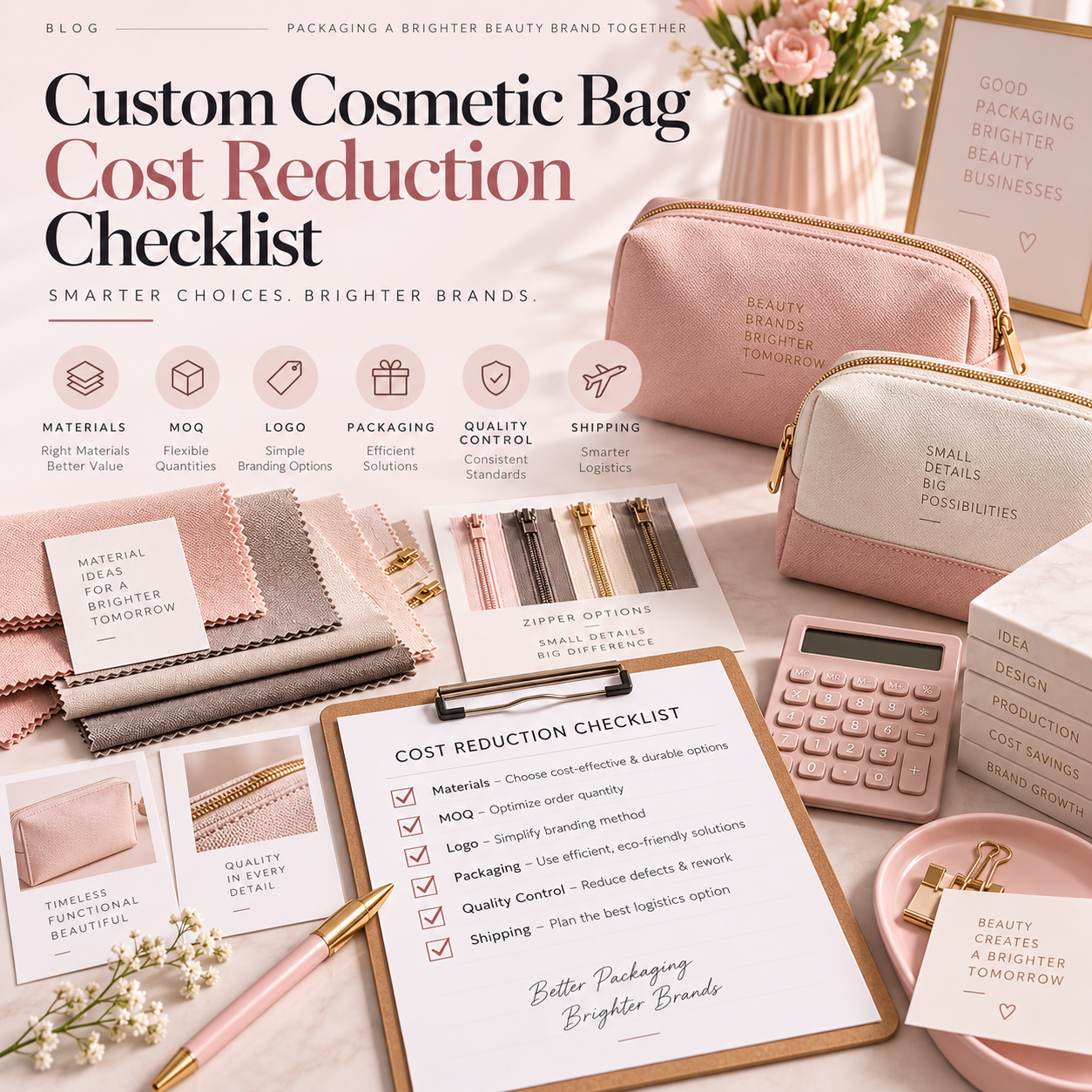
1. Start With a Clear Product Specification
One of the easiest ways to reduce cost is to reduce uncertainty. When a buyer sends an incomplete request, the manufacturer must guess the material, size, lining, logo method, packaging, quantity, and quality level. That can lead to inaccurate pricing, repeated sample revisions, delays, and changes after the project begins.
A clear specification helps the factory quote correctly from the beginning. It should include bag type, target size, reference image, material, lining, zipper, pockets, logo artwork, logo method, packaging requirement, quantity, color split, target price, sales channel, and delivery timeline. This information allows the supplier to recommend the most cost-effective construction instead of quoting a vague or overbuilt product.
For example, instead of asking, “How much for custom makeup bags?” send a detailed request: “We need a 20 x 12 x 7 cm PU leather makeup pouch with polyester lining, one nylon zipper, debossed logo on the front, individual polybag, 1,000 pieces in one color, for e-commerce beauty gift sets.” This gives the manufacturer enough detail to calculate cost and suggest improvements.
A strong RFQ also helps compare suppliers fairly. A low quote may not be low if it excludes packaging, logo setup, sample revision, or quality inspection. To prepare a better request, review What Information Should You Send a Cosmetic Bag Factory for a Quotation? and How to Prepare an RFQ for a Custom Cosmetic Bag Manufacturer.
2. Choose Cost-Effective Materials, Not the Cheapest Materials
Material selection is one of the biggest cost decisions. The cheapest material may lower the quote, but it can make the product feel weak, wrinkle easily, smell unpleasant, scratch quickly, or fail customer expectations. A cost-effective material is different. It gives the right appearance and performance at a practical price.
Polyester and nylon are often useful for promotional cosmetic bags, lightweight pouches, toiletry bags, and travel cosmetic bags. PU leather can create a premium look without using genuine leather. Canvas and cotton can support natural or boutique positioning. PVC and TPU are useful for clear cosmetic bags. Satin, velvet, terry cloth, and plush materials can support gift and seasonal products.
Buyers can reduce cost by choosing available materials instead of custom-dyed or rare materials. If the factory already has a suitable PU texture, polyester color, nylon fabric, or PVC thickness, using it may reduce MOQ, shorten lead time, and lower sourcing risk. Custom Pantone dyeing, exclusive prints, special coatings, unusual fabric thickness, or rare recycled materials may increase MOQ and cost.
Another method is to use premium material only where customers notice it most. For example, a cosmetic bag can use attractive PU leather outside and standard polyester lining inside. A canvas pouch can use a woven label instead of a complex metal plate. A clear pouch can use colored trim for brand identity instead of fully custom material.
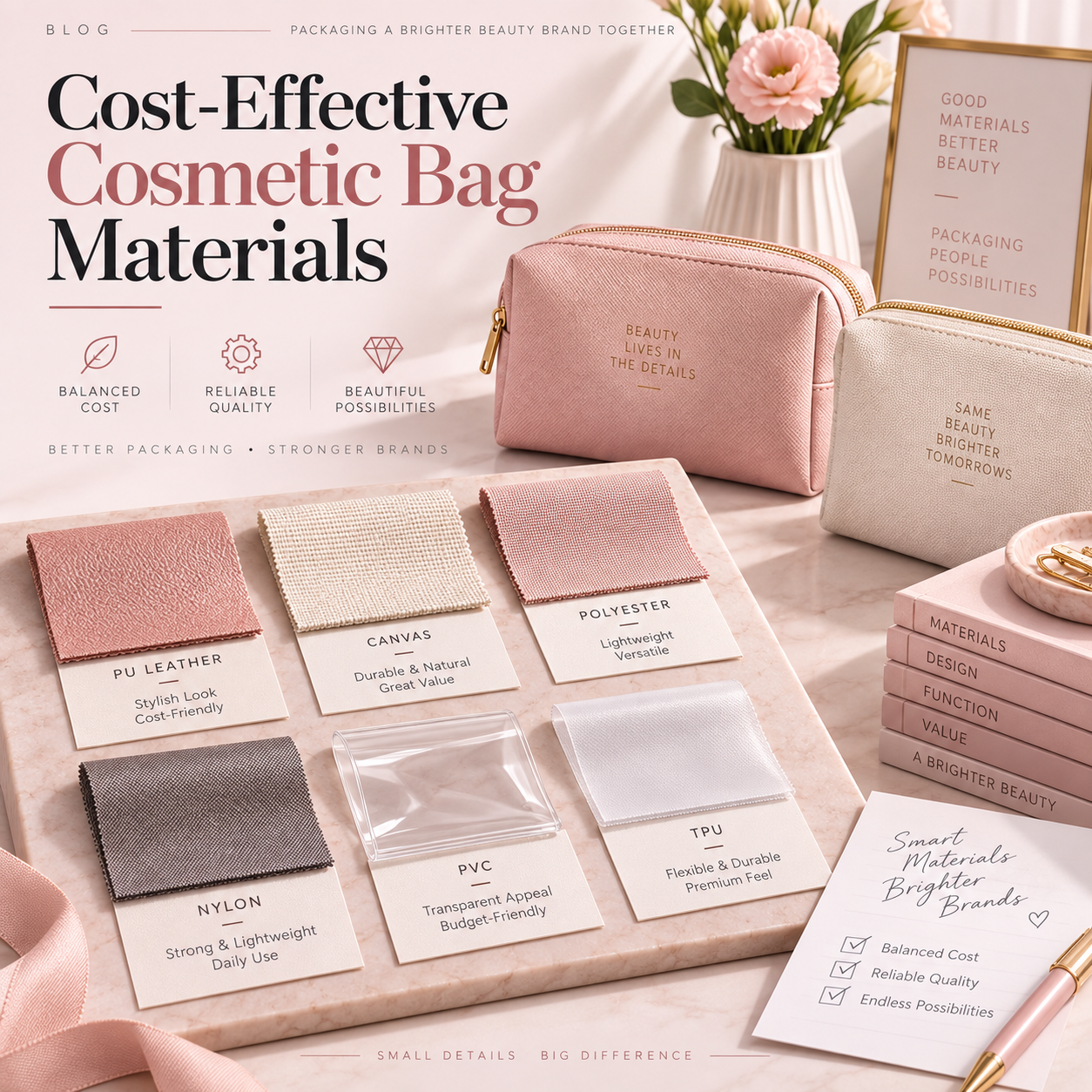
For deeper material planning, review the Cosmetic Bag Materials Guide, PU Leather Cosmetic Bags Guide, and Clear Cosmetic Bags Guide.
3. Simplify Bag Structure Without Making It Look Cheap
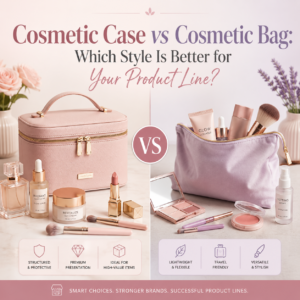
Bag structure affects labor cost. A simple flat pouch usually costs less than a structured vanity case, multi-compartment toiletry bag, brush organizer, or wide-opening cosmetic case. Extra pockets, elastic loops, mesh panels, divider boards, padding, handles, special curves, and reinforced bottoms all add material and sewing time.
The best cost reduction strategy is not to remove all structure. Instead, remove features that do not improve the buyer’s product goal. If customers need a simple pouch for lipstick, mascara, and compact powder, a clean zipper pouch may be enough. If the product is a skincare travel kit, capacity and wipe-clean lining may matter more than multiple hidden pockets. If the bag is for makeup brushes, slots and a protective flap may be essential and should not be removed.
Buyers should separate “must-have” features from “nice-to-have” features. Must-have features affect function, safety, usability, or brand identity. Nice-to-have features may add cost but little customer value. Removing two unnecessary inner pockets may reduce labor without changing the exterior appearance. Keeping a smooth zipper and clean logo is usually more important than adding a complex interior that customers rarely use.
A good manufacturer can suggest structure changes that keep the product attractive. For example, it may recommend using one main compartment instead of three, replacing thick padding with medium interlining, using a standard zipper length, simplifying the gusset shape, or keeping the premium exterior while reducing hidden interior complexity.
4. Use MOQ Planning to Improve Unit Cost
MOQ planning is one of the most powerful cost-control tools. Lower MOQ reduces total investment but often increases unit price. Higher quantity can reduce unit cost because setup, material sourcing, cutting, sewing, logo application, inspection, and packing become more efficient. However, ordering too much can create inventory risk.
The right quantity depends on sales channel, launch confidence, budget, storage, and reorder plan. A new beauty brand may start with a low MOQ test order. A retailer with confirmed demand may benefit from a higher quantity. A subscription box buyer may order based on subscriber count. A promotional buyer may order based on campaign volume.
To reduce cost without increasing risk too much, ask the manufacturer for price breaks. For example, compare 500 pieces, 1,000 pieces, 3,000 pieces, and 5,000 pieces. This helps you see when unit price improves meaningfully. Sometimes a modest increase in quantity creates a better price. Other times, the price difference may not justify extra inventory.
Avoid splitting the first order into too many colors or SKUs. A 1,000-piece order in one color may be more efficient than 1,000 pieces split into five colors. Each color may require separate material sourcing, cutting, sewing, labels, packaging, carton marks, and inspection. For MOQ planning, review What Is the MOQ for Custom Cosmetic Bags?, Cosmetic Bag MOQ Explained, and Low MOQ Cosmetic Bag Manufacturer.
5. Select the Right Logo Method for the Budget
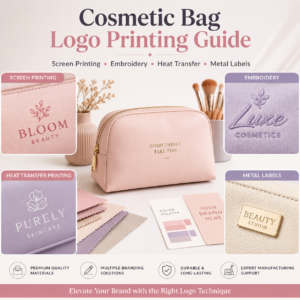
Logo method has a major effect on cost and perceived value. A cosmetic bag can use screen printing, heat transfer, embroidery, woven labels, PU patches, rubber patches, silicone patches, debossing, embossing, foil stamping, metal logo plates, custom zipper pullers, printed lining, or branded packaging. Each method has different setup cost, MOQ, durability, and visual impact.
The most expensive logo method is not always the best. A simple screen print may be perfect for a promotional polyester pouch. A debossed logo may be better for a PU leather pouch because it looks clean and premium. A woven label may create strong boutique value at a practical cost. A metal plate can look premium, but it adds component cost and attachment labor. A custom zipper puller can improve brand recognition, but it may require tooling and higher MOQ.
To reduce cost, match the logo method to the material and order quantity. Do not add a metal plate to a low-cost pouch if the target customer will not value it. Do not choose complex embroidery for very small letters. Do not request several logo positions if one clean front logo can do the job.
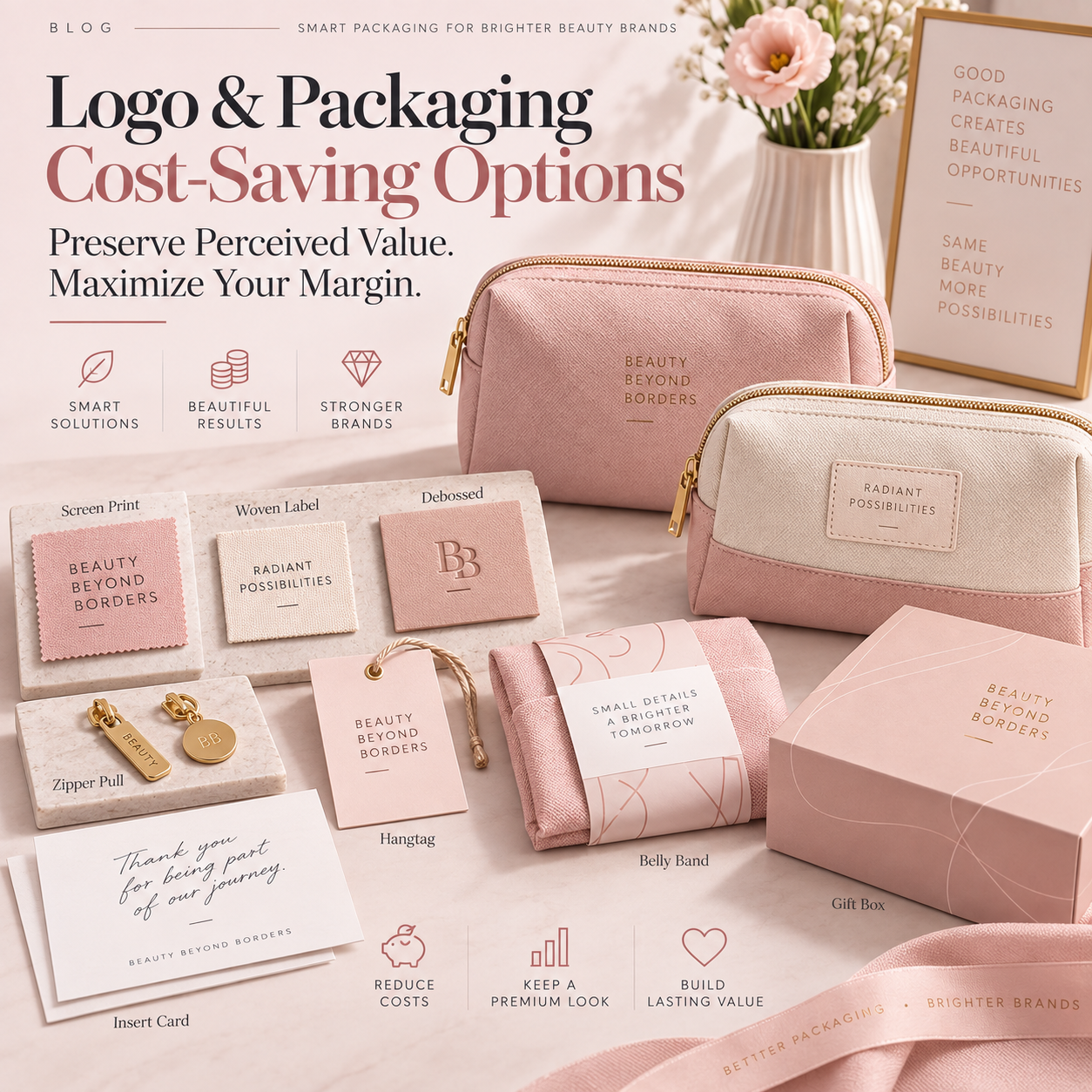
For logo planning, review the Cosmetic Bag Logo Printing Guide and Patch Cosmetic Bags Guide.
6. Reduce Packaging Cost While Keeping Retail Value
Packaging can raise both unit cost and shipping cost. A rigid gift box, dust bag, printed insert card, belly band, barcode label, tissue paper, and outer carton all create cost. But packaging also affects presentation, unboxing, retail readiness, and perceived value. The best strategy is to keep packaging efficient while still supporting the sales channel.
For wholesale or promotional orders, a simple polybag with carton marks may be enough. For retail or e-commerce, a hangtag, belly band, or insert card can add branding without the cost and volume of a rigid box. For premium gift sets, a box may be worthwhile if it supports a higher selling price.
To reduce packaging cost, avoid unnecessary layers. A cosmetic bag does not always need a dust bag and a gift box. A belly band can display the brand while keeping the product visible. A hangtag can carry barcode, care instructions, and product information. A small insert card can tell the brand story without increasing carton size too much.
Packaging versions also affect cost. If each color has a different barcode, insert card, language version, or box design, packaging becomes more complex. For first orders, use one packaging format where possible. For packaging strategy, review the Cosmetic Bag Packaging Guide and Cosmetic Bags with Belly Bands.
7. Reduce Color Split and SKU Complexity
Color split is a common hidden cost. Buyers often want many colors to give customers more choices, but too many colors can increase material sourcing, cutting, sewing, inspection, labeling, photography, inventory management, and packaging complexity. This is especially risky for new brands.
A more cost-effective approach is to start with one hero color and one secondary color. The hero color should match the brand identity and have the strongest commercial appeal. The secondary color can test another customer preference. After sales data is available, the brand can expand into seasonal shades, limited editions, or additional SKUs.
SKU discipline also improves quality control. When the order has fewer variations, the factory can manage material matching, logo placement, packaging, barcode labels, and carton separation more easily. This reduces the risk of packing mistakes and inconsistent production.
For private label brands, fewer SKUs in the first order can improve cash flow and simplify marketing. One strong product with clear positioning is usually easier to sell than five weakly stocked colors that each have limited inventory.
8. Use Sampling to Prevent Expensive Mistakes
Sampling may look like an extra cost, but it is one of the best ways to protect the budget. A sample helps confirm size, material, color, zipper, lining, logo placement, stitching, packaging, and overall product feel before bulk production. Fixing problems during sampling is much cheaper than fixing problems after thousands of units are produced.
A sample can reveal that the bag is too small, too soft, too stiff, too expensive, or not aligned with the brand. The zipper may not open smoothly. The logo may be too small. The lining may wrinkle. The packaging may not fit. The material may look different from the screen. These issues can be corrected before bulk production begins.
Buyers should use sampling to simplify cost intelligently. Ask the factory to provide two or three cost options when possible: a budget version, a balanced version, and a premium version. Compare material, zipper, logo, packaging, and construction. The balanced version often gives the best result because it protects quality while removing unnecessary upgrades.
After final approval, keep a written record of the approved sample: dimensions, material, color, logo method, zipper, lining, packaging, and photos. This record helps prevent misunderstanding and supports future reorders.
9. Keep Quality Control Where It Matters Most
Quality control should not be removed to save cost. Poor quality creates returns, customer complaints, replacement cost, delayed launches, and brand damage. However, QC can be focused intelligently. Buyers should identify the most important quality checkpoints for their specific cosmetic bag.
For most custom cosmetic bags, key inspection points include material appearance, size tolerance, stitching, zipper smoothness, logo accuracy, lining cleanliness, pocket placement, packaging, barcode labels, carton marks, and final quantity. For clear PVC or TPU bags, check scratches, odor, transparency, and pressure marks. For PU leather bags, check surface marks, edge finishing, and logo placement. For brush bags, check slots and flap protection. For vanity cases, check structure, handle strength, and zipper performance.
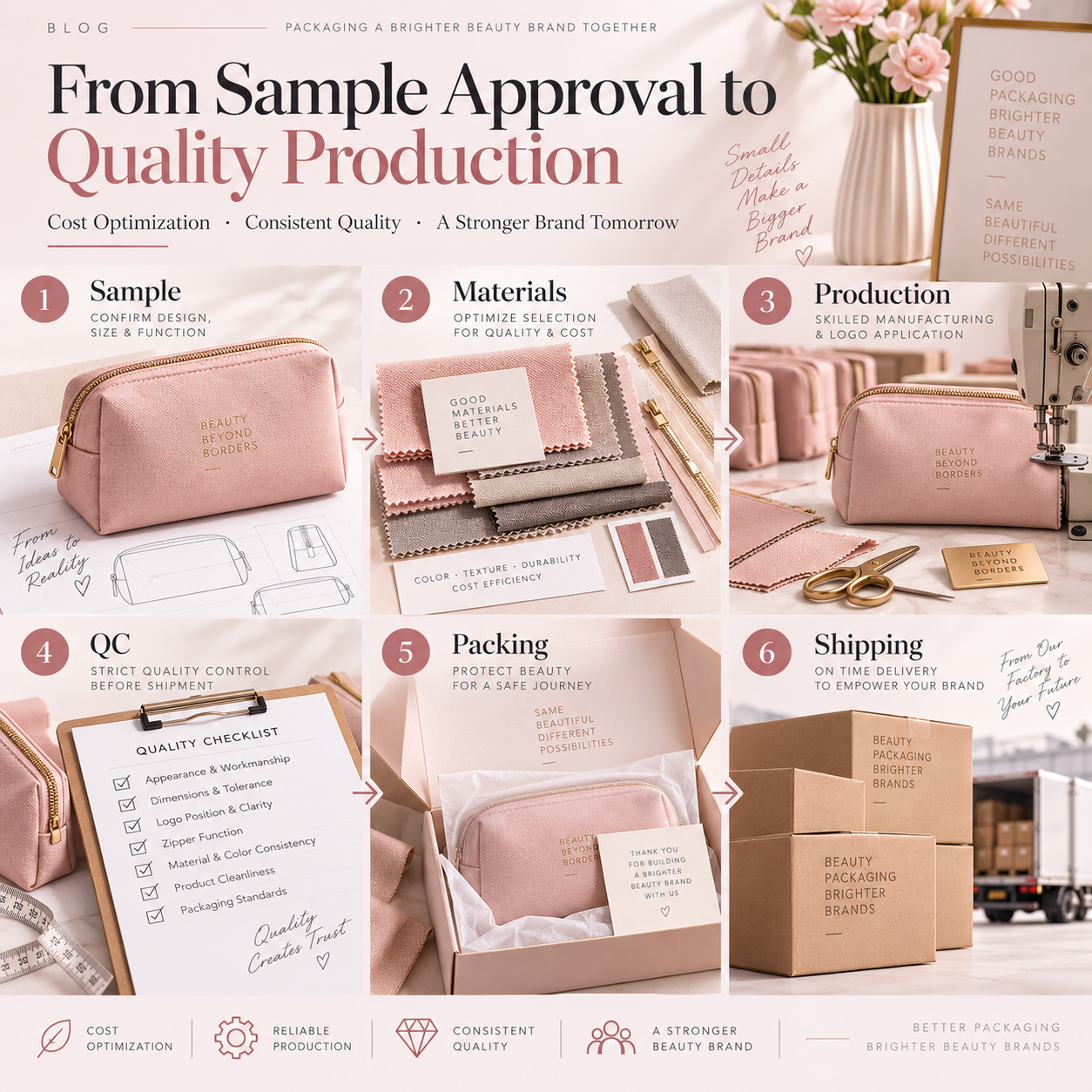
Strong QC also supports cost reduction over time. When a supplier produces consistent goods, buyers spend less time on rework, complaints, replacements, and urgent problem solving. For detailed inspection planning, review the Cosmetic Bag Quality Control Guide.
10. Control Shipping and Landed Cost
Factory unit price is not the full cost. Buyers also need to consider packaging volume, carton size, gross weight, shipping method, duties, taxes, customs clearance, warehousing, and local delivery. A lower factory price may not be the best total cost if the product is bulky, overpacked, or shipped inefficiently.
Flat pouches usually pack more efficiently than structured vanity cases. Gift boxes increase carton volume. Thick padding, rigid shapes, and excessive protective packaging can raise freight cost. This does not mean packaging should always be minimized. It means packaging should be matched to the product value and shipping plan.
Ask the manufacturer for carton size, packing quantity, gross weight, estimated shipping method, and trade terms. Compare air, sea, and express options based on timeline and quantity. If the product launch is not urgent, planning production earlier can reduce the need for expensive rush shipping.
11. Work With a Manufacturer That Gives Cost Options
A reliable cosmetic bag manufacturer should help buyers understand cost tradeoffs. Instead of only giving one price, a good supplier can explain how material, size, logo method, packaging, MOQ, and lead time affect the quote. This helps the buyer choose the best value option.
Look for a manufacturer that can provide material swatches, sample support, logo recommendations, packaging suggestions, MOQ guidance, production updates, and quality inspection. The supplier should ask questions before quoting. If a factory gives a very low price without discussing specifications, packaging, quality standard, and shipping, the quote may not reflect the real project.
Buyers should also consider long-term cooperation. Reorders are often where cost control improves. Once the supplier understands the approved material, pattern, logo, packaging, and inspection standard, future production may become smoother. A stable manufacturer can help maintain consistency while optimizing cost over multiple orders.
For supplier evaluation, review the Cosmetic Bag Manufacturer Guide, OEM Cosmetic Bag Manufacturer Guide, and Cosmetic Bag Factory vs Trading Company Guide.
Buyer Cost Reduction Checklist
Use this checklist before requesting a quote or approving a sample:
- Define the bag type, size, material, lining, logo, packaging, and quantity clearly.
- Ask the manufacturer for cost options instead of only one quote.
- Use available quality materials when custom materials are not necessary.
- Reduce unnecessary inner pockets, complex panels, and hidden details.
- Choose a logo method that matches material, order quantity, and brand level.
- Use efficient packaging such as hangtags, belly bands, or insert cards when appropriate.
- Limit the first order to one or two strong colors instead of many small SKUs.
- Compare MOQ price breaks before confirming quantity.
- Approve a physical sample before bulk production.
- Do not remove quality control to save a small amount of cost.
- Ask for carton size, packing quantity, and shipping options before calculating landed cost.
- Keep approved sample records for future reorders and consistency.
FAQ: Reducing Custom Cosmetic Bag Manufacturing Costs
How can I reduce custom cosmetic bag manufacturing costs?
You can reduce cost by using clear specifications, choosing available quality materials, simplifying structure, limiting color split, selecting practical logo methods, using efficient packaging, planning MOQ carefully, and approving samples before bulk production.
Does cheaper material always reduce cost?
Cheaper material may reduce the unit quote, but it can lower perceived value and create quality complaints. A cost-effective material should balance price, durability, appearance, handfeel, and brand positioning.
What is the biggest cost driver in cosmetic bag manufacturing?
Material, structure, logo method, MOQ, packaging, labor complexity, and shipping are usually the biggest cost drivers. The exact impact depends on the product design and sales channel.
Can I lower cost without changing the outside appearance?
Yes. In many cases, buyers can simplify hidden interior details, reduce packaging layers, use standard zipper options, or choose available materials while keeping the exterior design attractive.
How does MOQ affect cosmetic bag cost?
Higher quantities often reduce unit cost because setup, material sourcing, cutting, sewing, logo application, inspection, and packing become more efficient. Very low MOQ usually has higher unit cost.
Which logo method is most cost-effective?
Screen printing, heat transfer, woven labels, and debossing can be cost-effective depending on the material. Metal plates, molded patches, and custom zipper pullers may cost more but can increase perceived value.
How can packaging cost be reduced?
Use packaging that matches the sales channel. Polybags, hangtags, belly bands, and insert cards are often more efficient than rigid gift boxes. Avoid too many packaging versions in the first order.
Should I skip sampling to save money?
No. Sampling helps prevent expensive bulk production mistakes. It allows buyers to confirm size, material, zipper, logo, lining, stitching, and packaging before mass production.
Is the lowest quote the best option?
Not always. The lowest quote may exclude packaging, inspection, logo setup, freight, or use weaker materials. Compare full specifications, quality standard, and landed cost before choosing a supplier.
Where can I request cost-saving options for custom cosmetic bags?
You can contact Bling Accessory Co. through the Contact Us page and share your bag type, material, logo, packaging, quantity, target price, and timeline.
Request Cost-Effective Custom Cosmetic Bag Options
Reducing custom cosmetic bag manufacturing costs does not require sacrificing quality. The right approach is to simplify unnecessary complexity, choose suitable materials, plan MOQ wisely, select practical logo methods, use efficient packaging, approve samples, and keep quality control focused on the details customers actually notice.
Whether you need custom makeup pouches, mini pouches, toiletry bags, brush bags, clear cosmetic bags, PU leather vanity cases, drawstring cosmetic bags, cosmetic bag sets, or private label beauty packaging, a clear project brief can help your manufacturer recommend cost-effective options.