What Should Buyers Check During a Cosmetic Bag Factory Audit?
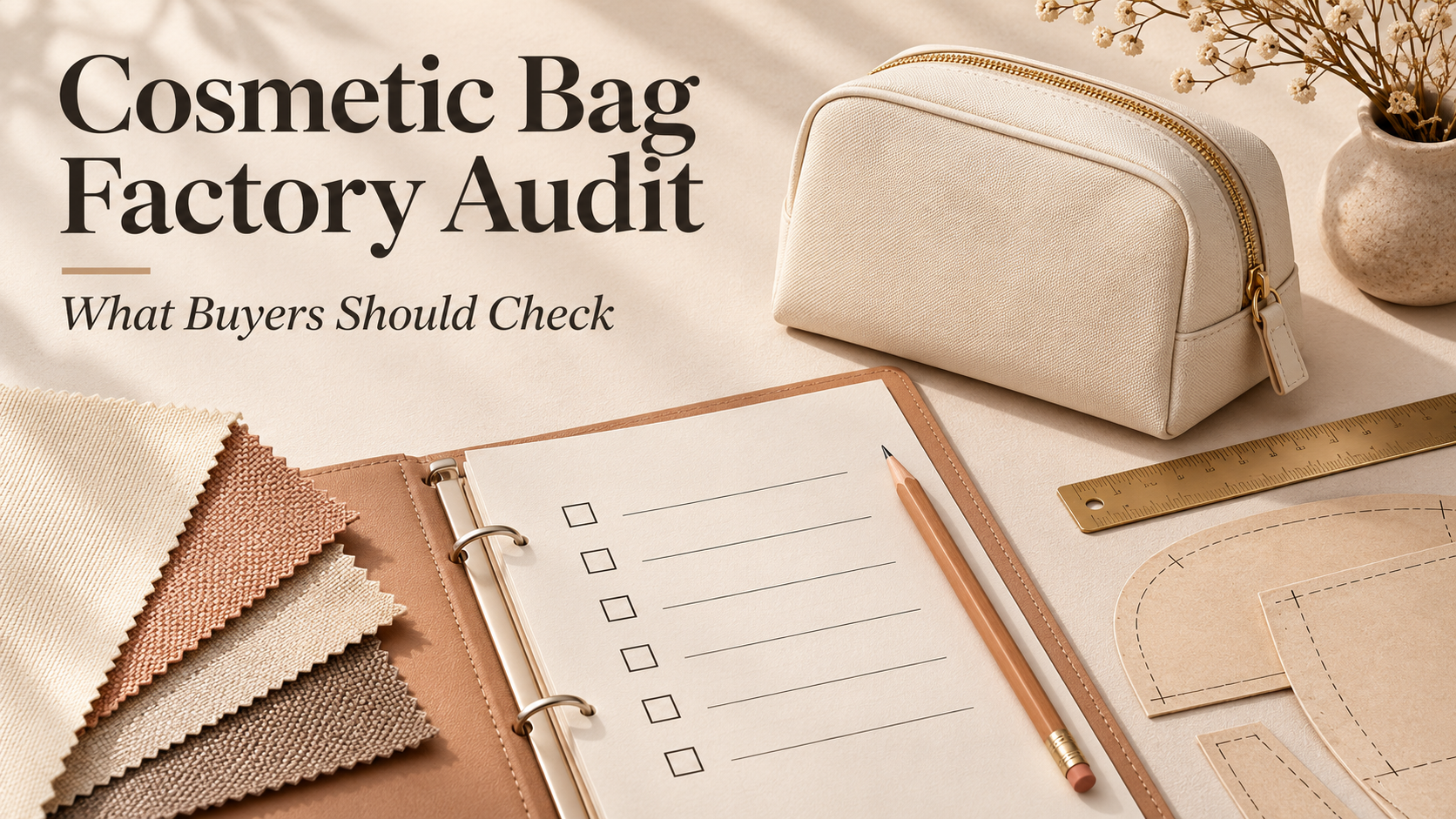
During a cosmetic bag factory audit, buyers should verify whether the supplier can repeatedly manufacture the agreed product, control materials and subcontractors, identify defects and correct problems before shipment. A tidy showroom or an attractive sample is useful context, but neither establishes how a bulk order will be managed.
This guide is for beauty brands, private label businesses, importers and wholesale sourcing teams evaluating a new manufacturer or reassessing an existing supplier. It explains what to observe on the production floor, which records to request and how to connect the evidence to your own bag specification. The objective is a documented supplier decision: approve a defined scope, require corrective action or postpone the order until important uncertainties are resolved.
Quick Answer
A cosmetic bag factory audit should check the operating site, production responsibilities, product-specific capability, material traceability, quality records, capacity planning and corrective-action process. Buyers should compare what managers say with what operators do and what recent records show. Follow a selected order through material receipt, cutting, logo application, sewing, inspection and packing, including any outsourced steps. Verify certificates against their actual scope and location, and distinguish a factory capability audit from product testing or shipment inspection. Approve the supplier only for the activities supported by evidence, with clear conditions for unresolved findings.
Buyer Snapshot: What Evidence Matters?
| Audit area | Evidence to request | Decision it supports |
|---|---|---|
| Identity and production scope | Operating address, entity details and process ownership | Who will actually make the order? |
| Product capability | Relevant work in progress, instructions and sample-transfer records | Can the factory reproduce your design? |
| Materials and traceability | Material identification, receipt checks and order links | Can substitutions and affected batches be controlled? |
| QC and corrective action | Inspection records, defect disposition and verified corrections | Do controls work beyond written procedures? |
| Capacity and scheduling | Current workload, bottlenecks and material dependencies | Is the proposed schedule supported? |
| Certificates and workplace controls | Relevant documents, scope checks and observed conditions | Are buyer requirements adequately addressed? |
| Audit closure | Finding, responsible person, deadline and closure evidence | What must happen before approval? |
Table of Contents
- Define the audit scope
- Verify the factory and subcontractors
- Assess product-specific capability
- Check materials and traceability
- Review quality-control evidence
- Assess capacity and scheduling
- Review certificates and workplace conditions
- Decide how to handle findings
- Example scenario
- Buyer checklist
- Frequently asked questions
What Should a Cosmetic Bag Factory Audit Actually Verify?
The audit should verify whether the supplier’s processes are suitable for your intended order. Define the product, production site, activities and acceptance requirements before arranging the visit.
A capability audit evaluates how work is managed. Sample approval evaluates a particular sample, while pre-shipment inspection evaluates an identified production lot. These activities answer different questions and should not be treated as interchangeable.
For example, experience making flat promotional pouches does not by itself demonstrate control of a structured vanity case with internal dividers. Match the audit scope to the relevant cosmetic bag construction, materials and branding process.
Buyer action: Share your specification and audit agenda beforehand. The custom cosmetic bag RFQ checklist can help organize the project information. ISO’s management-system auditing guidelines provide a broader framework for audit planning and execution; they do not themselves confer certification.
How Can Buyers Verify the Factory and Its Subcontractors?
Match the supplier’s identity to the operating site and identify who performs each manufacturing step. Ask which entity signs the contract, which site handles production and which processes leave that site.
A sales company and production company may have different names. That difference needs an explanation and supporting records, rather than an automatic rejection. Outsourced printing, embroidery or hardware production also needs clear responsibility and approval controls.
Compare the process map with the floor walkthrough and selected purchasing or transfer records. If logo printing is described as internal but no relevant activity or records are available, record the gap and request clarification.
Buyer action: Document approved production locations, subcontracted activities, inspection responsibilities and notification requirements for changes. Accept redacted records where necessary to protect other customers, provided the relevant evidence remains verifiable.
Can the Factory Make Your Specific Bag Consistently?
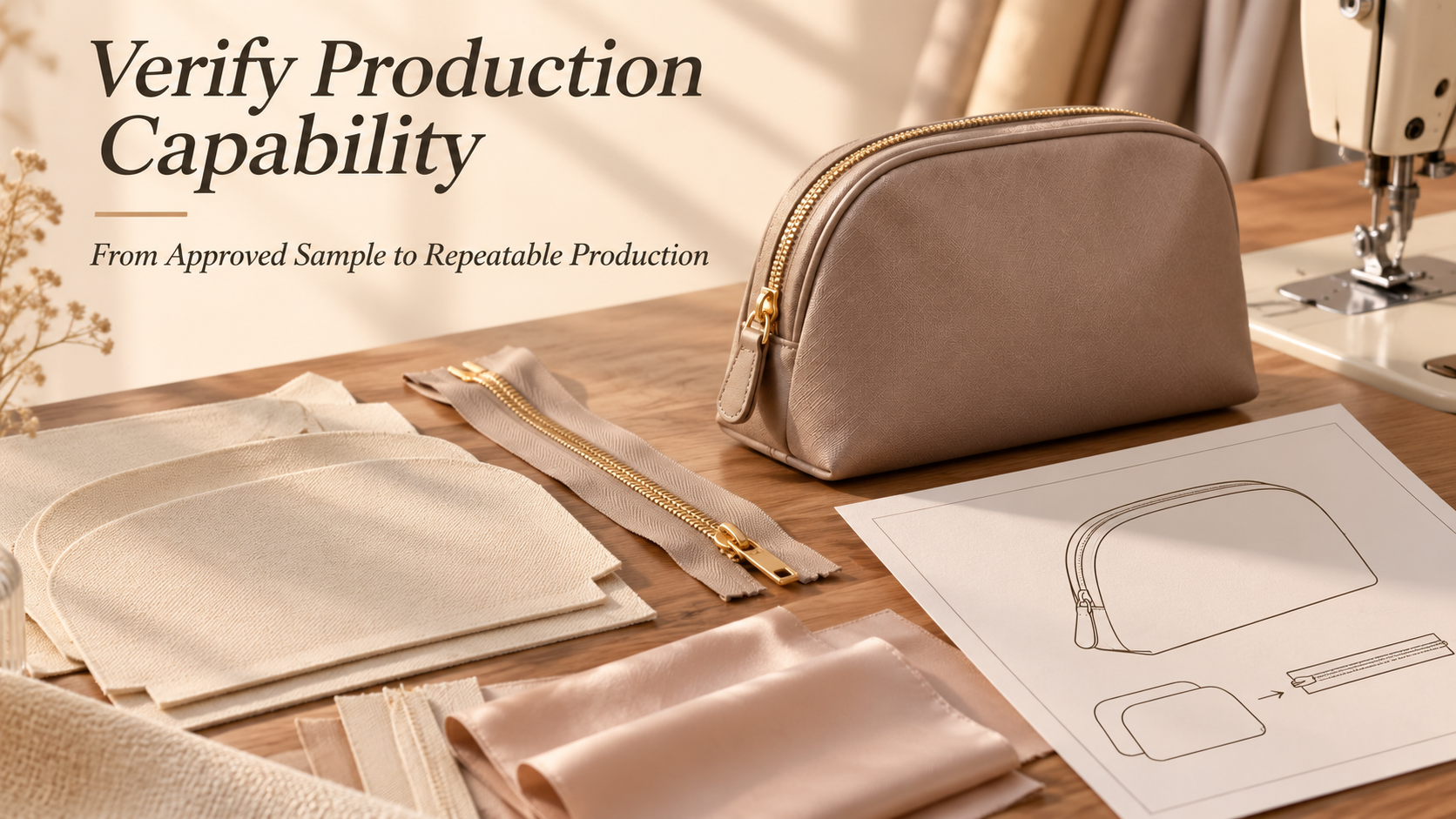
Look for a repeatable method of turning an approved design into controlled production instructions. Relevant machines matter, but so do operator skills, pattern control, work sequence and supervision.
Ask how the sample room transfers approved dimensions, seam details, lining construction and logo placement to production. Check whether the work area uses the current specification and whether obsolete versions are removed or clearly blocked from use.
Manufacturing insight: inspect the process handoffs
Some problems emerge between operations. A zipper may function before assembly but catch the lining after sewing; a logo positioned correctly on a flat panel may appear off-center after the seam allowance is consumed. Audit how the factory checks these transitions.
For example, ask how a revised lining pattern reaches cutting and sewing, and how the first assembled pieces are checked against that revision.
Buyer action: Select a comparable product and trace its specification through the actual workstations. If relevant production is unavailable, record the limitation and arrange a targeted demonstration or follow-up assessment.
How Should Buyers Check Materials and Traceability?
Verify that approved materials can be distinguished from unapproved materials and connected to the orders that use them. The required detail should reflect the product’s risks and buyer requirements.
Review identification and receipt checks for the outer fabric, lining, zipper, trims and packaging. Ask how the factory records rejected materials, handles leftovers and authorizes substitutions. Similar-looking materials should not become interchangeable merely because they share a color.
A coating, backing or thickness change can affect sewing, appearance and logo application. If a replacement material is proposed, the approval process should address the affected characteristics before it reaches production.
Buyer action: Choose a material lot and ask which orders used it. Then choose an order and ask which material records support it. This practical exercise reveals more than a blank traceability form.
What Evidence Shows That Quality Control Works?
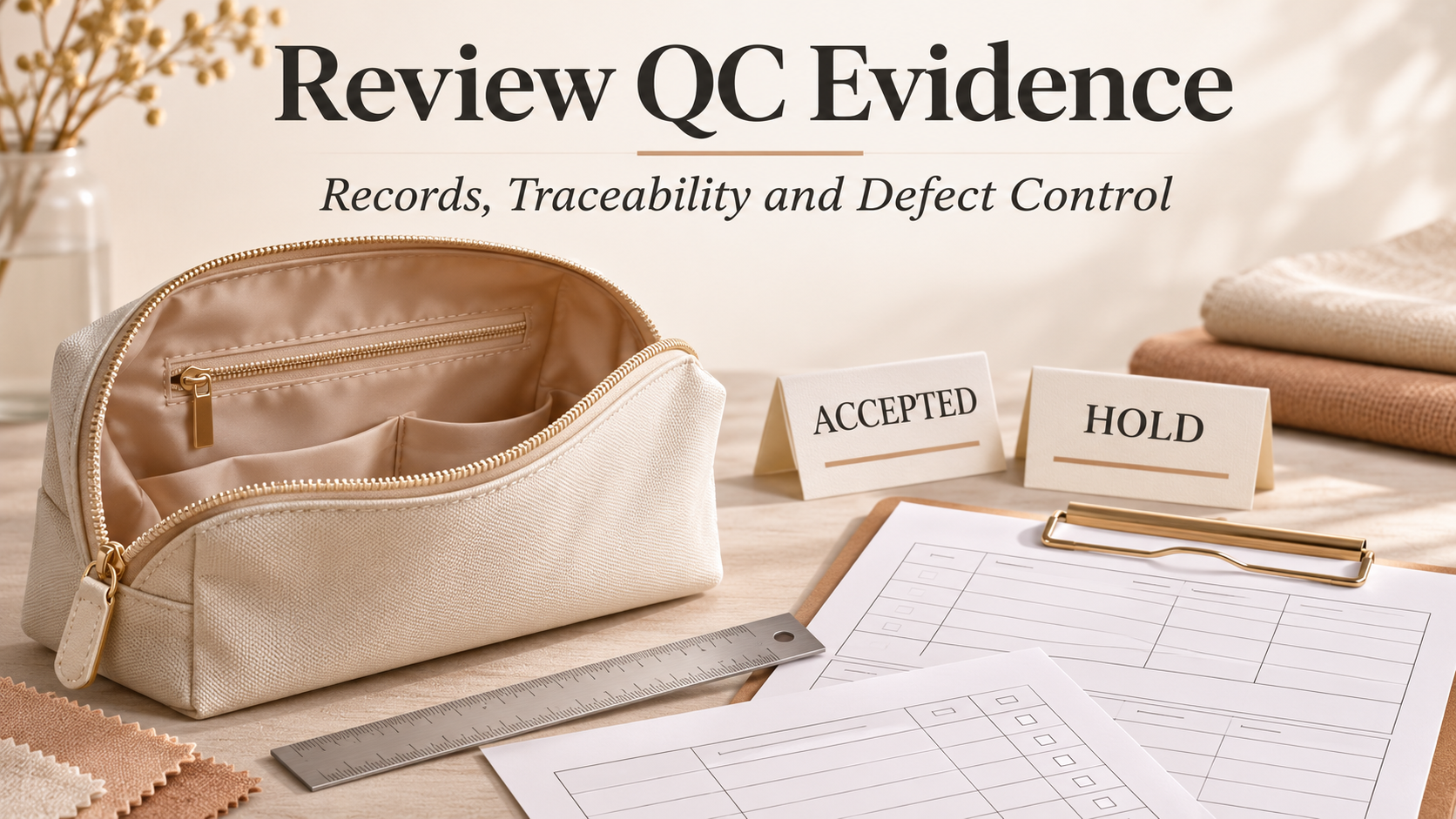
Ask for completed records that show what was checked, what failed and what happened next. A written procedure alone does not demonstrate that the process is consistently applied.
Review incoming, in-process and final inspection records for relevant orders. Confirm the inspection criteria, instrument suitability, identification of held goods and authority to stop or release work. Where measurement accuracy matters, ask how the measuring equipment is checked or calibrated.
Follow a recent defect through its resolution. For a recurring zipper problem, the evidence should explain how affected goods were contained, what caused the issue and how the correction was verified. Repairing the visible sample does not establish that the underlying problem was resolved.
Buyer action: Compare the record with the physical process and ask the responsible operator to explain it. Use the cosmetic bag quality control guide for product-check details; the audit should establish whether those checks are managed and documented.
How Can Buyers Assess Capacity and Delivery Planning?
Evaluate capacity against your construction, current workload and the slowest relevant operation. A general monthly output claim does not establish that your order fits the proposed schedule.
Ask how the plan accounts for material availability, sample approval, logo processing, sewing, inspection, rework and packing. Review how existing commitments affect the production slot and what happens when a prerequisite is delayed.
For example, available sewing capacity may not help if the selected logo process depends on an external provider’s schedule. Similarly, an upstream material MOQ can affect purchasing even when the factory is willing to assemble a smaller order.
Buyer action: Request a project-specific sequence with dependencies and responsible contacts. Ask which assumptions support the quoted lead time and which changes would require a revised schedule.
Which Certificates and Workplace Conditions Need Review?
Review documents relevant to the buyer’s requirements and verify that they cover the correct entity, location and activities. A certificate image should not replace a scope check or a site assessment.
For management-system certification, compare the company name, certified location, scope and current status. IAF CertSearch provides these types of verification information. Unresolved discrepancies should be checked with the issuing body rather than treated as settled.
A capability visit can also flag visible concerns such as obstructed exits, unsafe storage or inadequate machine safeguards. However, a brief walkthrough is not a substitute for a properly scoped social, environmental or occupational-safety assessment by competent personnel.
Buyer action: Separate management-system evidence, workplace assessments and product-specific test reports in your supplier file. The manufacturer certification guide explains why these documents answer different questions.
How Should Audit Findings Affect Supplier Approval?
Base approval on the significance of the findings and the evidence available, not only an overall score. A high average score can conceal a serious gap in production identity, material control or required workplace conditions.
Each finding should state the agreed requirement, observed evidence, affected scope and required response. Distinguish a demonstrated failure from an item that could not be verified. Both need follow-up, but they are different conclusions.
| Audit result | Suggested buyer response | Evidence needed next |
|---|---|---|
| Relevant controls demonstrated | Approve the assessed scope | Recorded limitations and ongoing monitoring plan |
| Limited gap with manageable risk | Consider conditional approval | Agreed containment, owner, deadline and closure criteria |
| Important process not observed or supported | Defer approval for that process | Targeted records, demonstration or follow-up visit |
| Serious unresolved integrity, safety or control concern | Hold supplier approval and escalate | Competent assessment and verified resolution |
For example, issuing a revised procedure may address missing instructions, but it does not prove that employees use them. Follow-up evidence should include implementation and, where appropriate, results from subsequent work.
Buyer action: Agree who verifies closure and who authorizes supplier approval. A factory audit approval does not automatically authorize shipment of a future order.
Example Scenario: An Undocumented Logo Process
This is a hypothetical example, not a reported customer project.
A private label buyer is evaluating a structured cosmetic pouch with an applied logo. During the audit, the team discovers that logo application is outsourced, but the production documents do not identify the approved artwork revision or the acceptance criteria for returned panels.
The issue is not outsourcing itself. The gap is the missing control between the approved design and the panels entering sewing. A visually acceptable showroom sample does not resolve that gap.
The buyer requests a documented subcontracting workflow, artwork revision control, incoming checks and a demonstration using the intended materials. Approval for that process remains pending until the evidence shows that the controls are implemented.
Buyer Checklist: Before Closing the Audit
- Confirm the legal entity, operating site and assessed production scope.
- Identify outsourced processes and their approval and inspection controls.
- Trace an approved specification into current production instructions.
- Demonstrate material identification and order-level traceability.
- Review completed QC records and a recent defect-resolution example.
- Check capacity assumptions against workload and process bottlenecks.
- Verify relevant certificate details and record unresolved workplace concerns.
- Record evidence gaps, unavailable activities and audit limitations.
- Assign corrective-action owners, deadlines, closure evidence and approval authority.
Frequently Asked Questions
Can a remote factory audit replace an on-site visit?
A remote audit can support supplier screening, document review and selected process checks, but its suitability depends on the audit objectives and evidence access. Live video, auditor-selected records and traceable follow-up improve its usefulness. Where important conditions cannot be verified remotely, record the limitation and arrange an on-site assessment or another appropriate verification method before approving the affected scope.
Should buyers use an independent auditor?
An independent auditor can be useful when the buyer lacks manufacturing expertise, local access or resources for an impartial assessment. The auditor still needs a clear brief covering the bag construction, relevant processes and buyer requirements. Check competence and reporting methods before appointment. Independence alone does not ensure that the audit examines the risks that matter to your particular order.
Does a certified factory still need a buyer audit?
It may, because management-system certification and buyer-specific production capability are different questions. Review the certificate’s scope and location, then decide what additional evidence your order requires. A buyer may still need to evaluate a particular material, construction or outsourced operation. ISO explains that certification is performed by external certification bodies, rather than by ISO itself.
What if the supplier cannot show other customers’ records?
Confidentiality is a legitimate concern, so request redacted records or another controlled way to verify the process. Customer names and commercial details may be concealed while dates, process steps and relevant results remain visible. If no adequate evidence can be provided, describe the item as unverified and agree an alternative demonstration. Do not assume either compliance or misconduct from confidentiality alone.
How often should a cosmetic bag factory be audited?
The frequency should reflect supplier risk, performance, buyer requirements and changes in production. A site move, significant subcontractor change, repeated quality problems or a materially different product may justify reassessment. Stable performance may support a different monitoring approach. Set the review schedule and change-notification requirements in the supplier approval process rather than assuming a universal audit interval.
Does passing an audit guarantee the quality of a future order?
No. An audit evaluates selected evidence within a defined scope and period; it does not inspect every future product. Maintain sample approval, production controls, relevant testing and shipment inspection as appropriate for the order. If materials, production sites or processes change after approval, assess whether the original audit evidence still supports the intended work before relying on it.
Accuracy Note
This article provides a buyer’s assessment framework, not a claim that every factory follows the same procedures or that Bling Accessory Co. holds a particular certification. Audit criteria, product testing and regulatory requirements must be confirmed for the materials, intended users, destination market and current requirements. Prices, MOQ, sample time and production lead time require project-specific confirmation. Technical observations should be evaluated by appropriately competent personnel.
Define Your Supplier Requirements Before the Next Order
Share your bag specification, intended market, quantity plan and supplier qualification requirements with Bling Accessory Co. Identify the production steps and supporting information you need to discuss before moving forward.
Author: Website Operations & Digital Marketing Manager
Last Updated: November 5, 2026