PU vs Nylon vs Polyester Cosmetic Bags: Which Should a Brand Choose?
When comparing PU vs nylon vs polyester cosmetic bags, start with the customer experience your brand needs to deliver. A leather-look beauty pouch, a packable travel organizer and a printed promotional bag can require different surfaces, structures and manufacturing choices. No material name, by itself, establishes the finished bag’s quality.
For beauty brands, private label retailers, wholesalers and sourcing teams, the useful comparison is between complete material specifications. PU describes a polymer commonly used in a coating, while nylon and polyester describe fiber families; a nylon or polyester fabric can also have a PU coating. This guide explains how to compare the options without confusing those categories, where each can fit a product brief, and what to check in samples before authorizing bulk production.
Quick Answer
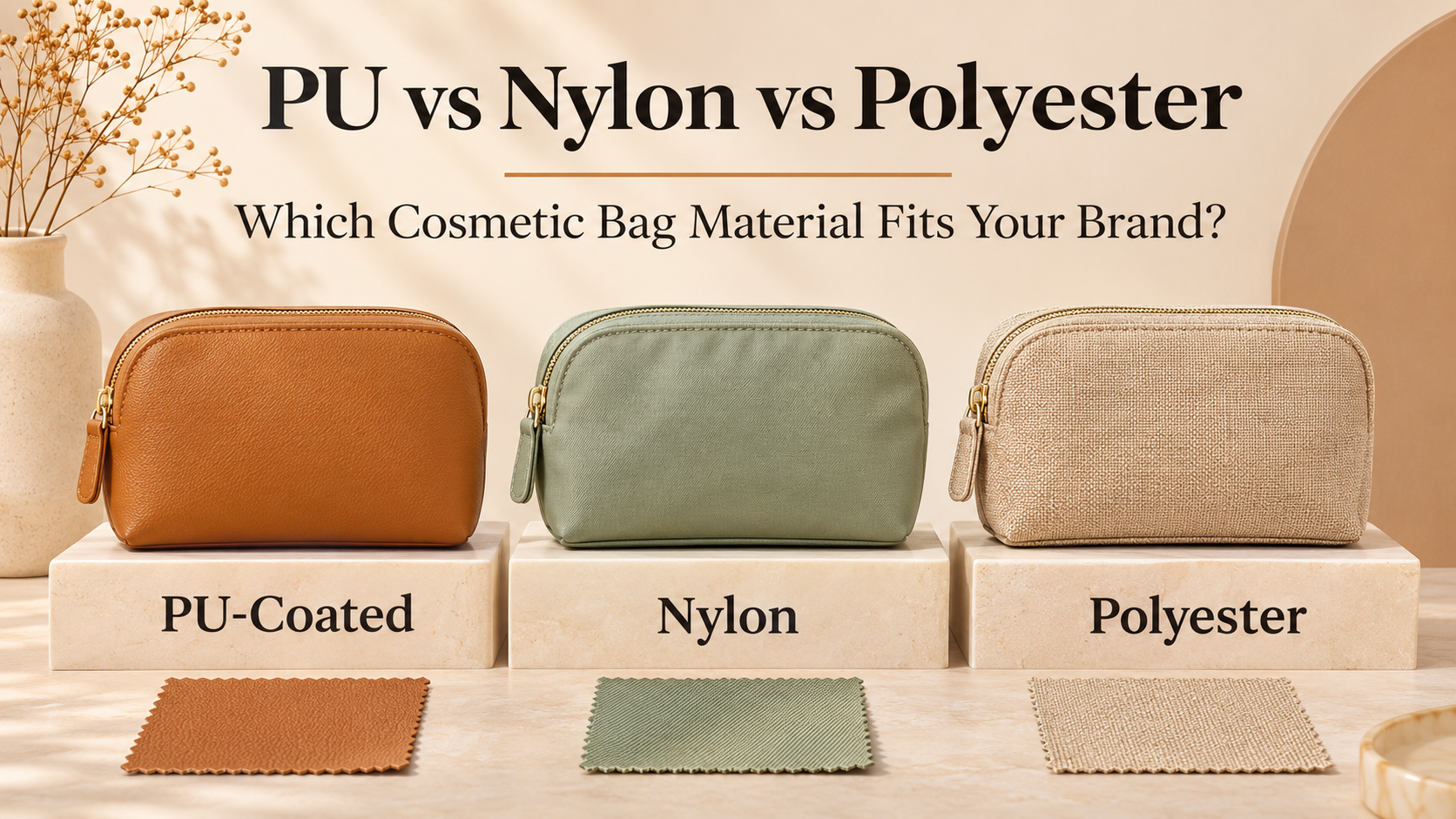
Shortlist PU-coated leather-look fabric when a smooth or textured coated appearance is central to the brand. Consider nylon for a textile pouch where flexible handling and a travel-oriented feel matter. Consider polyester for woven constructions and print-led projects, subject to the actual fabric and decoration process. None automatically wins on durability, cleaning, price or water resistance. Compare the backing or fiber composition, coating, weight or thickness, construction, lining and logo method. Approve the material through representative samples and relevant performance evidence, then require authorization before the supplier changes the specification.
Buyer Snapshot: What Should Drive the Choice?
| Decision factor | What to compare | Evidence to request |
|---|---|---|
| Brand appearance | Grain, weave, sheen, color and hand feel | Identified physical swatches |
| Function and structure | Flexibility, shape retention and usable capacity | Assembled sample with intended contents |
| Cleaning | Residue removal and cleaner compatibility | Agreed cleaning evaluation and care instructions |
| Durability | Relevant abrasion, flexing, seam and coating behavior | Results for the specified material and construction |
| Branding | Artwork detail, adhesion, distortion and placement | Decoration trial on the selected material |
| Order economics | Material, assembly, logo, packaging and variant costs | Comparable finished-bag quotations |
| Claims and documentation | Composition, performance and any recycled-content claims | Documents linked to the actual supplied material |
Table of Contents
PU vs Nylon vs Polyester Cosmetic Bags: What Are You Actually Comparing?
Compare complete material constructions, because PU, nylon and polyester are not mutually exclusive categories. In this guide, “PU” refers to a leather-look polyurethane-coated fabric. The nylon and polyester options refer to textile shells that may themselves be coated or laminated.
A description such as “PU bag” leaves the backing, coating formulation and thickness unresolved. Similarly, “nylon” or “polyester” does not specify the weave, yarn, finish or reinforcement.
| Option | Why shortlist it? | What needs verification? | Do not assume |
|---|---|---|---|
| PU-coated leather-look fabric | A smooth or grained coated finish | Backing, coating durability, cleaning and crease behavior | Every grade resists peeling or supports embossing |
| Nylon textile | Flexible woven designs and travel-oriented styling | Fabric weight, weave, finish, seams and decoration | All nylon is stronger than all polyester |
| Polyester textile | Woven designs and compatible print applications | Construction, print process, coating and color behavior | It is always the cheapest or automatically recyclable |
For example, a PU-coated polyester fabric may be described using either its coating or its fiber content. Those descriptions do not identify separate products.
Buyer action: Request composition and construction details for each option. For a broader shortlist that includes other materials, see the custom cosmetic bag material guide.
When Should a Brand Choose PU?
Shortlist PU-coated leather-look fabric when the coated surface is an important part of the product’s visual identity. Evaluate the actual grain, sheen, softness and finished shape rather than treating “PU” as a single quality grade.
The backing and coating influence how the material folds, handles seams and responds to cleaning. Inspect high-flex areas, corners and contact points where appearance changes would be noticeable.
The Association for Contract Textiles explains that polyurethane-coated fabrics can be vulnerable to heat and humidity, with hydrolysis resistance varying by composition and manufacturing. Its guidance concerns coated textiles; it is not a cosmetic bag pass/fail standard.
For example, a structured retail pouch may suit a grained PU finish, but the selected material still needs assessment for folding, surface marks and the proposed care method.
Buyer action: Request the coating and backing specification, suitable care instructions and relevant durability evidence. Do not convert an accelerated test result into a guaranteed service life.
When Should a Brand Choose Nylon?
Consider nylon when a woven, flexible shell fits the intended travel or everyday-use design. The selected fabric must still deliver the required appearance and assembled performance.
Nylon fabrics vary in weight, texture, yarn construction and finish. A lightweight shell may suit a packable pouch, while a different construction may be needed for a bag expected to retain its shape. Lining and reinforcement also contribute to the result.
Do not select nylon solely because it is described as “strong.” Ask which property matters: abrasion resistance, tearing, seam performance or another defined requirement. A generic fiber comparison cannot settle all of those questions.
For example, a soft travel pouch may feel appropriate in a fine nylon fabric, but a heavily decorated panel could need additional support.
Buyer action: Review the finished sample both empty and filled. Check drape, seam appearance, lining interaction and branding before approving the shell.
When Should a Brand Choose Polyester?
Consider polyester when the available woven construction and decoration options fit the brief. It is a candidate for both restrained textile designs and print-led collections, provided the selected grade supports the intended process.
Polyester is commonly associated with dye-sublimation printing, but that does not make every finished polyester fabric suitable. Base color, surface treatments, coatings and heat tolerance can affect the achievable result.
A custom print also needs evaluation after cutting and assembly. Motifs can fall into seams, shift across curved panels or appear inconsistent between separate bag sections.
For example, a seasonal printed pouch may use polyester successfully when the fabric, print process and panel layout are developed together.
Buyer action: Approve a print trial on the specified fabric and review an assembled sample. Request a separate quotation for the complete printed version rather than estimating it from an undecorated pouch.
Which Material Is Easier to Clean and More Water-Resistant?
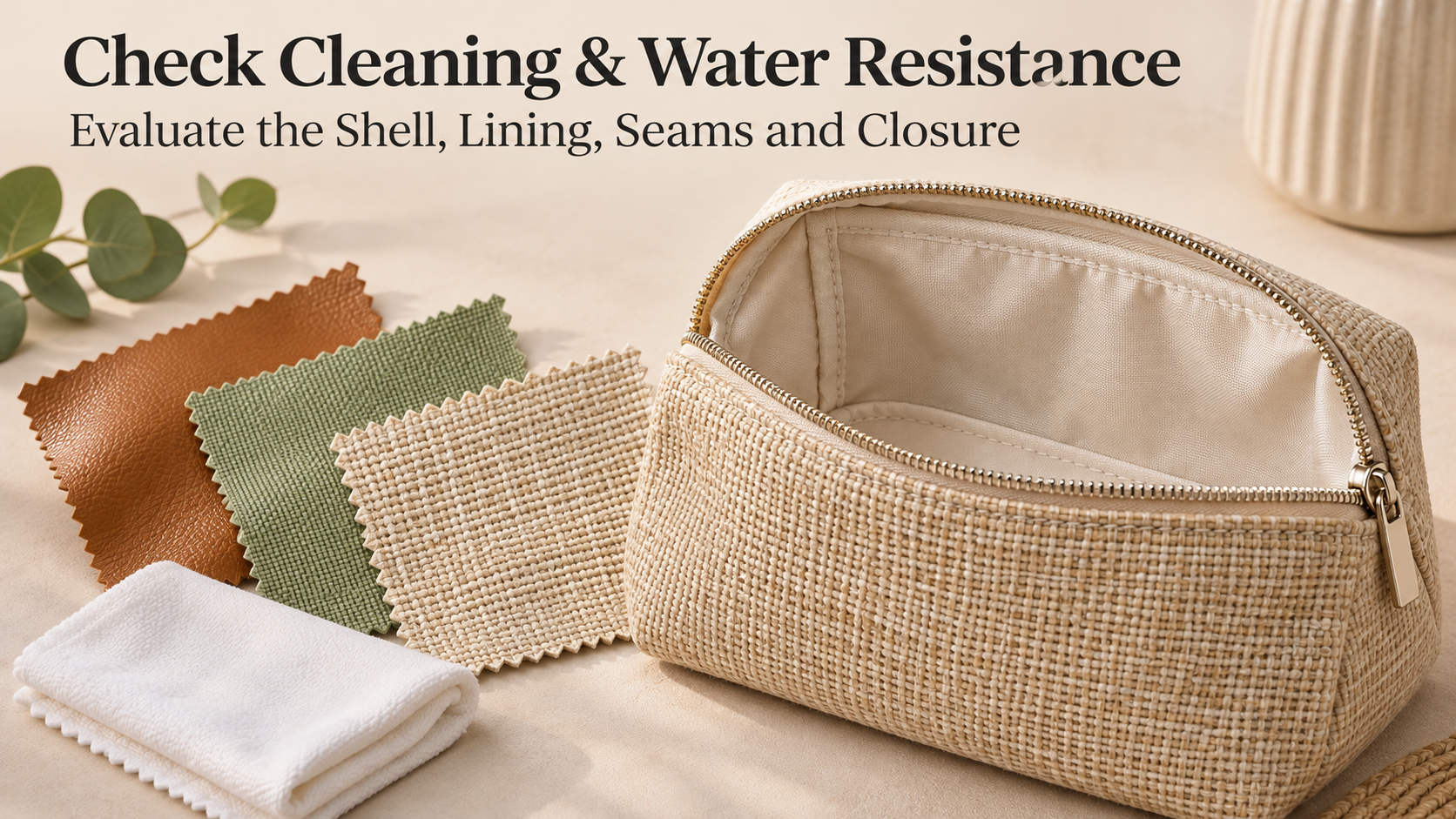
There is no reliable cleaning or waterproofness ranking based only on these material names. Surface finish, lining, seams, closures and the substances involved all affect the finished bag.
A smooth coated surface may make some residue easier to wipe away, but compatibility with makeup removers, oils or cleaning products must be checked. A woven shell with an appropriate finish may behave differently from an untreated fabric of the same fiber.
Water repellency and resistance to water penetration are also different properties. AATCC TM22 evaluates fabric surface wetting, while AATCC TM127 evaluates water penetration under hydrostatic pressure. Neither fabric result alone establishes the performance of a sewn pouch.
For example, water may bead on the shell while entering through a conventional zipper or seam. Resistance to outside splashes also does not prove that an internal spill will remain contained.
Buyer action: Define the intended claim and cleaning method, then agree an appropriate evaluation with competent technical personnel. Inspect the complete bag as well as its materials.
How Do Logo Methods and Construction Change the Decision?
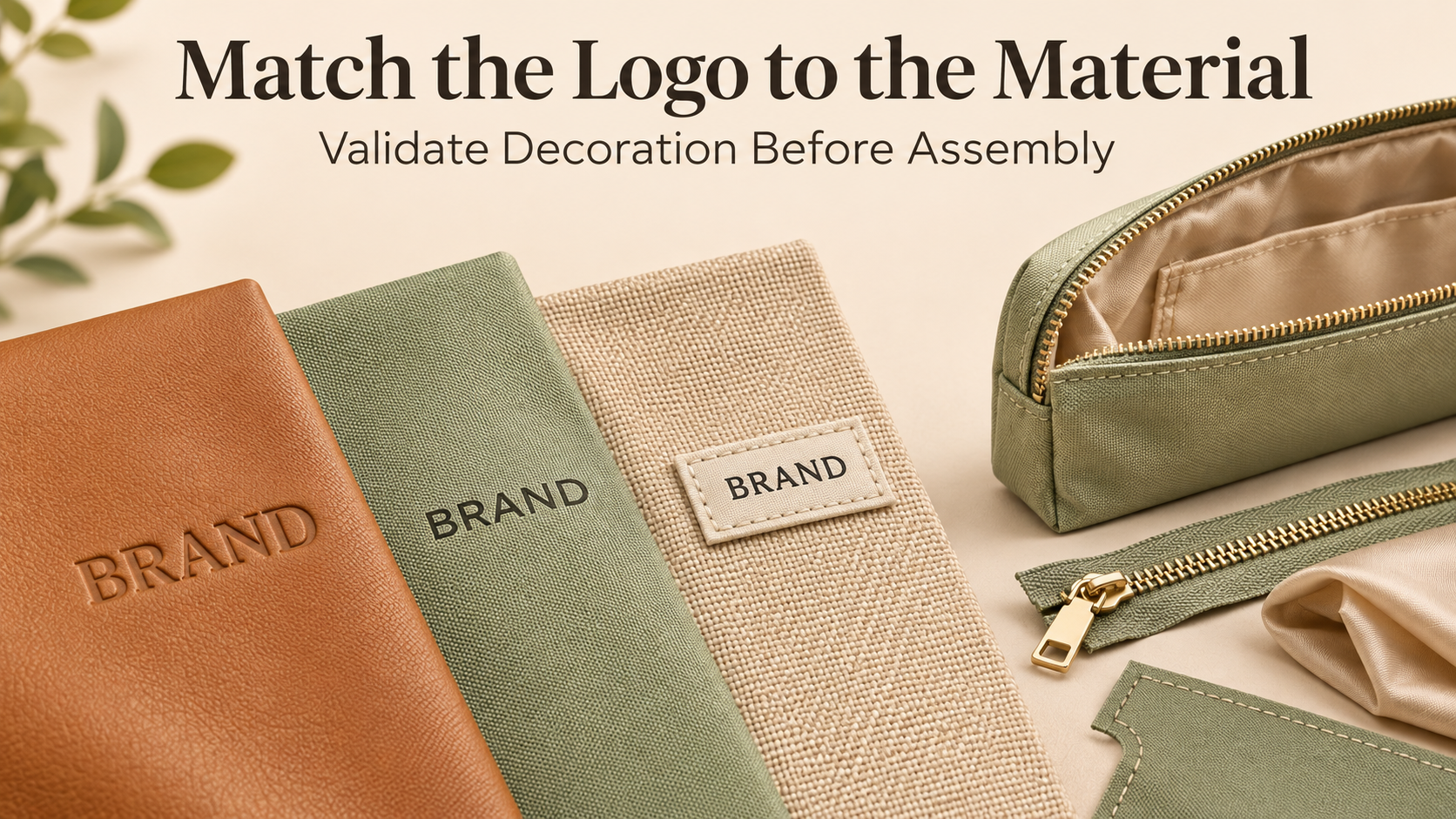
Select the shell, decoration and construction as a connected system. A suitable fabric can become unsuitable for the project if the required branding damages, distorts or adheres poorly to it.
Debossing may be considered for compatible PU constructions, while printing, embroidery or sewn labels may suit selected textile shells. These are development options, not blanket guarantees of compatibility.
Manufacturing Insight: Changing the Shell Can Change the Assembly
A replacement material can alter seam bulk, flexibility and how the bag turns or folds during assembly. A pattern validated with a thin textile may behave differently when made with a thicker coated composite.
For example, a dense embroidered mark can pucker a lightweight panel, while a logo that looks centered before sewing can sit differently once the pouch is shaped.
Buyer action: Approve decorated, assembled samples rather than relying only on artwork or loose swatches. Review the relevant format in the cosmetic bag category when defining the construction.
Which Option Offers Better Value for the Order?
The better-value option is the one that meets the agreed requirements at an acceptable total project cost. There is no dependable universal price order for PU, nylon and polyester cosmetic bags.
Compare finished-bag quotations that use the same dimensions, lining, closure, quality expectations, logo scope and packaging. Where the constructions must differ, identify those differences rather than hiding them inside the unit price.
Available colors, dedicated fabric purchases, custom finishes, printing and packaging can affect MOQ and scheduling. Material cutting, reinforcement and assembly requirements can also change the cost beyond the shell purchase price.
For example, an available higher-priced fabric may lead to a more practical first order than a lower-priced custom material with an unsuitable purchasing minimum.
Buyer action: Use a consistent cosmetic bag RFQ and request clearly identified alternatives. Compare total commitment, specification and approval work together.
What Should Buyers Verify Before Approving a Material?
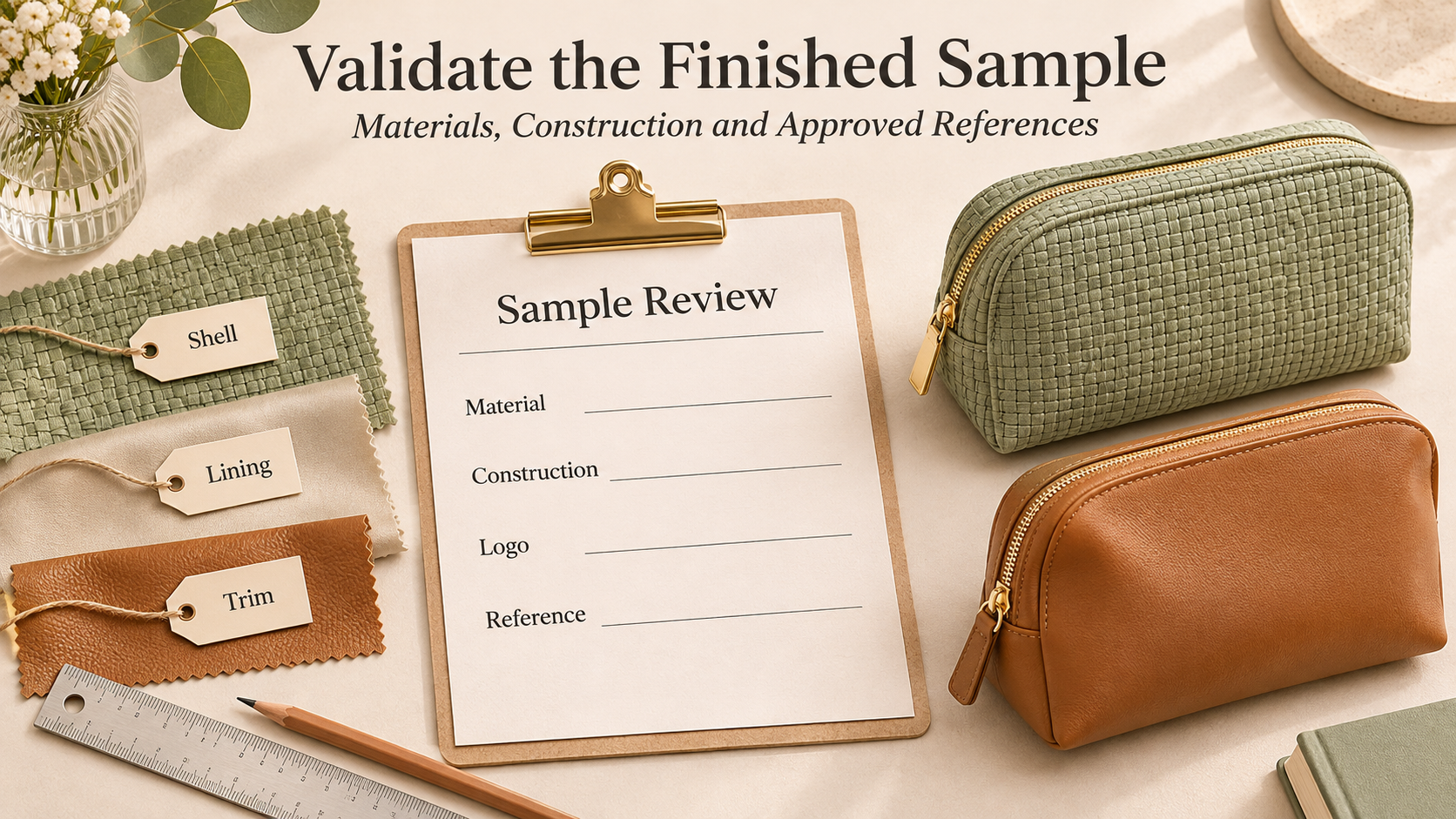
Approve the specified material in the intended construction, with evidence appropriate to the product’s risks. A fabric’s color and feel are useful observations, but they do not establish all durability or care claims.
Request the material reference, composition, backing or coating details, weight or thickness and proposed care instructions. Compare samples under consistent conditions and record how the shell, lining, logo and closure perform together.
Where test reports are used, check the tested material identity, method, conditions and relevance to the offered version. A report for another coating or construction should not silently cover your order.
For example, a nylon sample made with a temporary lining can help assess the shell, but it does not settle the final cleaning or internal-fit decision.
Buyer action: Record limitations and outstanding checks using the sample approval checklist. Require review before any material substitution.
Example Scenario: Choosing a Bag for a Travel Skincare Set
This is a hypothetical purchasing example, not a customer case study.
A beauty brand is considering a grained PU pouch, a soft nylon pouch and a printed polyester pouch. Its priorities are convenient access, compact packing and cleaning after ordinary cosmetic residue.
The buyer requests samples using the intended contents and proposed lining. The review separates appearance preferences from functional checks: how the opening works, whether the closure is obstructed, how the packed bag holds its shape and whether the proposed care method changes the surface.
The brand does not select a winner from the material names alone. It shortlists the versions that meet its functional requirements, then compares branding, supporting evidence and complete quotations.
This process can also reveal that the lining or opening needs revision regardless of the shell selected. No cost saving, delivery improvement or test result is assumed.
Buyer Checklist Before Material Approval
- Define intended contents, use, destination market and desired appearance.
- Identify the fiber or backing, coating and material reference for each option.
- Specify weight or thickness and the relevant construction details.
- Evaluate the shell and lining separately for cleaning requirements.
- Approve the logo process on the actual selected material.
- Review an assembled sample with representative contents.
- Check that performance evidence matches the supplied material and intended claim.
- Compare finished-bag quotations, purchasing minimums and variant assumptions.
- Document the approved version and require authorization for substitutions.
Frequently Asked Questions
Does a higher denier mean a better cosmetic bag?
Not by itself. Denier describes yarn linear density, not a complete measure of fabric or finished-bag quality. Weave, yarn characteristics, coating, seam design and other components still matter. Ask which performance requirement the proposed construction meets and request relevant evidence. Avoid treating a larger denier number as proof that a bag will resist every type of wear better.
Does “PU leather” mean genuine leather?
No. The phrase is commonly used for a leather-look coated material, but it does not identify the full construction. Ask the supplier to state the coating and backing composition clearly. Use that confirmed information in product descriptions. If avoiding animal-derived components is part of the brief, verify the relevant components rather than assuming that a PU surface establishes the status of the whole bag.
Can I use the same lining with all three shell options?
Possibly, provided it works with each construction and the intended cleaning requirements. The lining should be assessed for fit, sewing behavior, color transfer and interaction with the closure. Reusing it can simplify development, but it should not override functional needs. Check the assembled versions because a different shell can change how the lining sits inside the finished pouch.
Can the same brand color look different across these materials?
Yes. Texture, sheen and the material’s surface can affect how a color appears, even when the same target reference is used. Review physical samples under agreed lighting and decide what variation is acceptable across the range. A screen image is useful for communication but should not be the only reference for final color approval across different material constructions.
Does recycled polyester make the entire bag recycled?
No. A recycled-content claim for the shell does not automatically cover the lining, zipper, thread, coating or packaging. Request evidence that identifies the component and the claimed content. Keep the scope clear in product copy and verify any certification or logo-use conditions separately. The use of recycled material also does not remove the need for product-performance checks.
Can I switch from nylon to polyester after approving the sample?
Only through an agreed change review. Even when the replacement looks similar, differences in construction, finish and handling may affect seams, decoration, shape or care. Identify the proposed material precisely and decide which checks must be repeated. Update the approved specification and reference sample as needed before the changed material is purchased or used for the affected production.
Accuracy Note
This comparison provides a purchasing framework, not a universal ranking or a claim that any particular product has passed testing. Material performance varies by grade, coating, backing, construction and use. Prices, MOQ, sample time and lead time require confirmation for the actual order. Testing, certification, labeling and regulatory requirements should be assessed for the materials, intended users, destination market and current requirements.
Compare Materials Against Your Brand’s Product Brief
Share your intended use, dimensions, preferred appearance, cleaning expectations, logo, quantity plan and destination market with Bling Accessory Co. Identify the priorities that are fixed and the details that can change so the material discussion can focus on suitable project options.
Author: Website Operations & Digital Marketing Manager
Last Updated: November 13, 2026