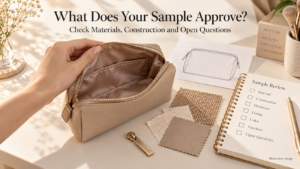
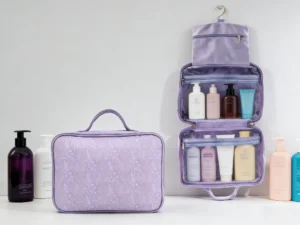
Once you approve a cosmetic bag sample, the project moves from reviewing a physical reference to controlling how that reference is used in bulk. A sample can look right while the final zipper finish, retail sleeve, or material allocation is still open. If your team says “approved” without identifying what that approval covers, purchasing, production, and quality control can make different assumptions about the same order.
This guide is for beauty brands, private-label product teams, retail buyers, and promotional buyers managing that handoff. It explains what the manufacturer should acknowledge, how to release specific work, which changes need a fresh decision, and what evidence to request once bulk production begins. You can use the examples and checklist to send a sign-off that the supplier can act on.
Quick Answer
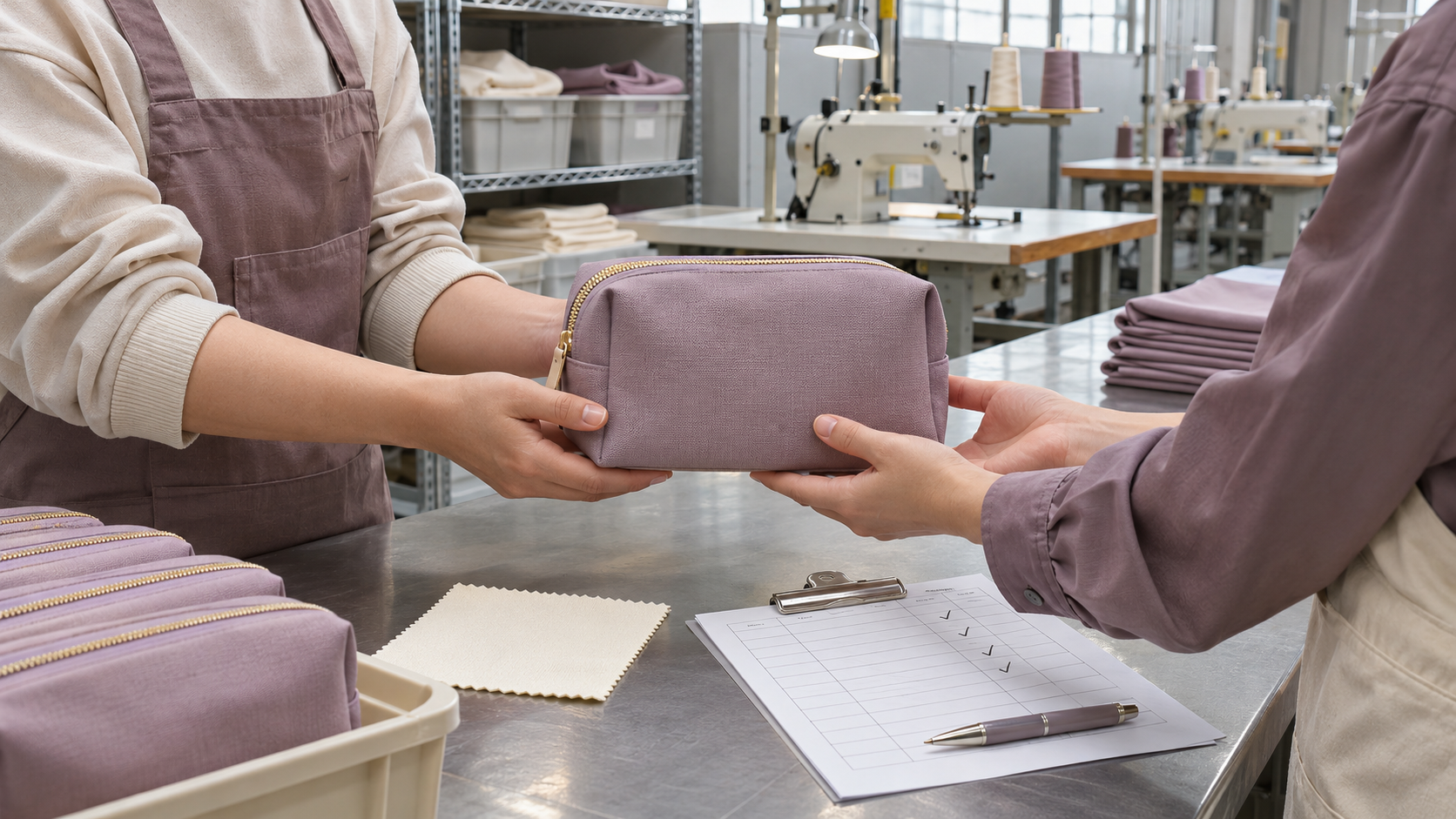
After you approve a cosmetic bag sample, the manufacturer should confirm the approved revision, list any open items, and establish which work is authorized. A sample approval can clear the design or a specific component. Bulk production starts when the supplier accepts the production release and any agreed prerequisites are met, such as the purchase order, payment, material allocation, or a confirmed line slot. The manufacturer then works from the current specification, approved references, and inspection criteria. Ask for written acknowledgment, first-off evidence from the bulk run, and a named contact who can resolve deviations.
Buyer Snapshot
| Decision factor | What to record |
|---|---|
| Approval scope | Style, sample revision, approved features, and any excluded attributes. |
| Production reference | Current specification, component list, artwork, and references for any differences by SKU. |
| Release authority | Who can release work and what the supplier is allowed to do next. |
| Open items | Owner, due date, required evidence, and the operation each item can hold. |
| First-off evidence | Which early bulk units the factory checks, against what criteria, and who must respond. |
| Change control | How substitutions and deviations are approved and traced to affected lots. |
| Release to ship | Who reviews the inspection outcome and authorizes dispatch under the order terms. |
What Changes When I Approve a Cosmetic Bag Sample?
Sample approval confirms the attributes the buyer accepts for the identified sample revision. A production release authorizes specified work under the agreed order conditions. If the order documents combine those decisions, the supplier can act within the combined instruction. If approvals are separate, the factory should acknowledge both before starting the work covered by the release.
State what the sample represents. A development sample may establish size, capacity, and pocket layout using a temporary lining. Approval of that sample can confirm the construction while leaving the lining material open. A pre-production sample made with the agreed components may cover more attributes, but the approval record still needs to identify any exceptions.
If your internal team is still deciding whether the physical sample meets its brief, use the cosmetic bag sample approval checklist. Once the decision is made, give the supplier the revision, date, approved scope, excluded items, and the name of the person who can authorize the next step.
What Should Be in the Production Handoff Pack?
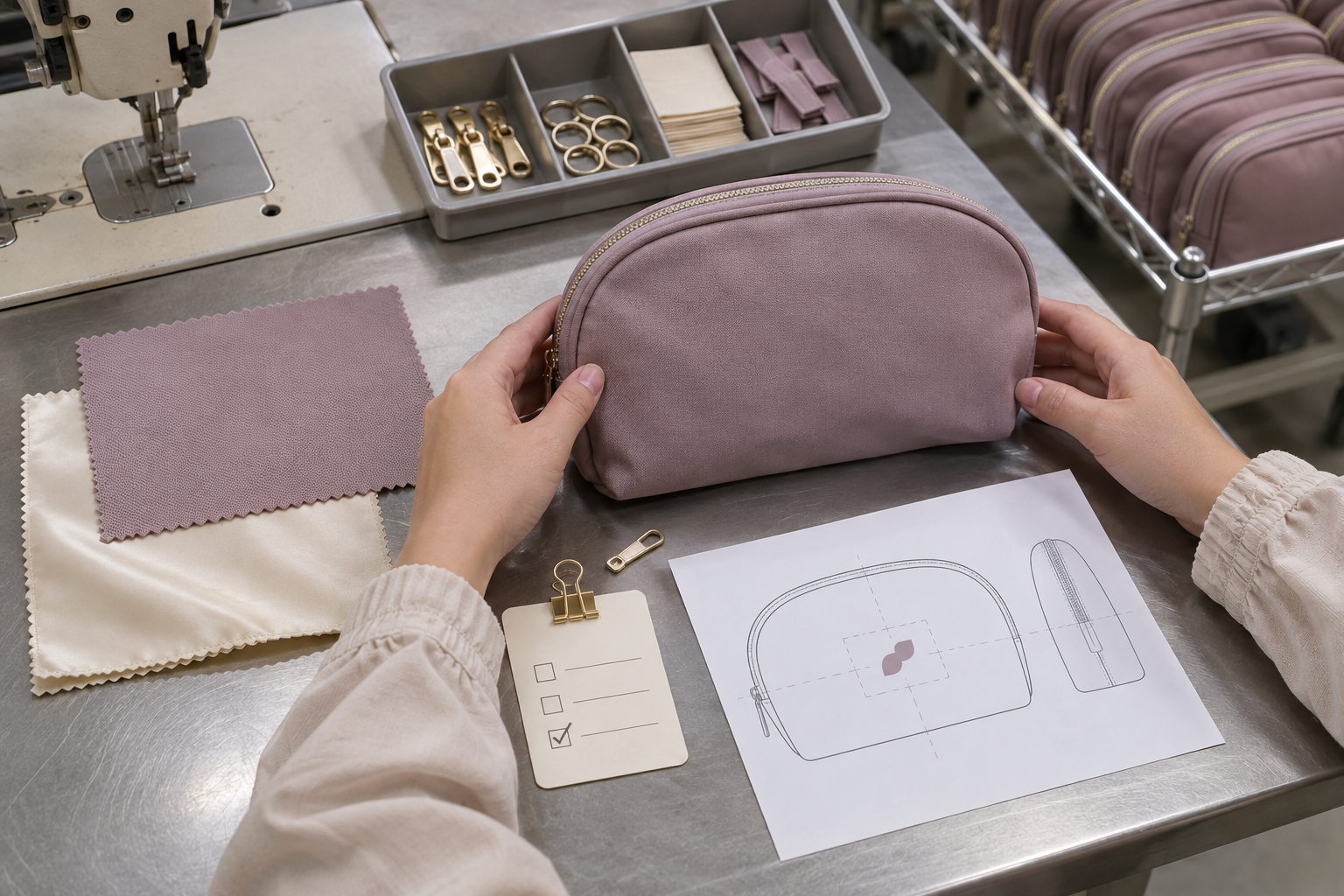
A cosmetic bag production handoff pack should let a person who never attended the sample review identify the exact product, build it, and inspect it. Start with the sample identifier, current specification, component list, approved artwork, packaging instructions, and purchase order reference. Add an exception list wherever the physical sample differs from the intended bulk product.
Use a reference appropriate to each attribute. The signed sample can show shape and workmanship. An approved swatch can define shell color, the dimension sheet can specify measurement points and tolerances, and an artwork file or approved panel can define logo placement. Give production and QC the same released files and record which source takes precedence if two references disagree.
Sample revision C is approved for dimensions, construction, and lining. Zipper finish approval is pending. Please acknowledge the current specification and confirm which work is authorized before you allocate materials or cut panels.
For projects with several versions, list the SKU, colorway, and packaging version on the same release sheet. A sample tagged only with the style name can be difficult to match to the correct zipper finish or barcode when more than one version is in progress.
What Work Can the Manufacturer Start After Sign-Off?
The manufacturer can start the operations named in the release once their prerequisites are met. It may be possible to reserve capacity or prepare documentation while decisions remain open. Cutting, decoration, stocking custom parts, and assembly each commit different resources, so identify what can proceed and what needs to wait.
| Status | Supplier action | Buyer instruction to record |
|---|---|---|
| Sample accepted | Record the approved reference and flag remaining decisions. | State whether planning or sourcing inquiries can begin. |
| Limited release | Proceed with named activities only, such as reserving stock lining. | List allowed items or quantities, any cost commitment, and held operations. |
| Production released | Start released work against the approved specification and order conditions. | Identify the approved PO and revision, prerequisites, and first-off checkpoint. |
| Work placed on hold | Pause affected operations and identify materials or work already committed. | Name the unresolved issue, response owner, and evidence required to resume. |
Ask the supplier to reply with the start condition and the next dated milestone. If the sample is approved but the line has not been assigned or a required component has not been allocated, the useful response is a list of dependencies and dates. The private-label cosmetic bag launch guide covers the broader planning sequence before and after that decision.
For an order with a pending logo proof, the factory might reserve stock fabric without printing any panels. Decide in writing whether it can buy materials, what quantities it can commit, and which actions must wait for the proof. If the buyer requests early procurement, agree who bears the cost if the pending approval changes the specification.
How Should a Buyer Handle a Change After Sample Approval?
Record any proposed substitution or deviation before the affected work proceeds. Ask what changed, why it changed, which SKUs or lots are affected, and what it does to the fit, appearance, function, cost, and delivery plan. A component change can affect pieces already cut or decorated, so ask how the factory will handle those units.
Match the evidence to the change. A supplier proposing a different zipper pull finish could provide a physical finish reference or a clearly identified comparison for review. A change to zipper tape width could require a sewn assembly check because it can affect seam allowance and opening dimensions. State which evidence is sufficient for the buyer and who has authority to approve it.
Mark whether permission applies to a particular lot or revises the standard specification. A one-time allowance should name the affected quantity or batch and expire with that scope. A permanent change should update the controlled documents, the production reference, and the QC criteria for future orders.
What Quality Evidence Should I Request Once Bulk Work Begins?
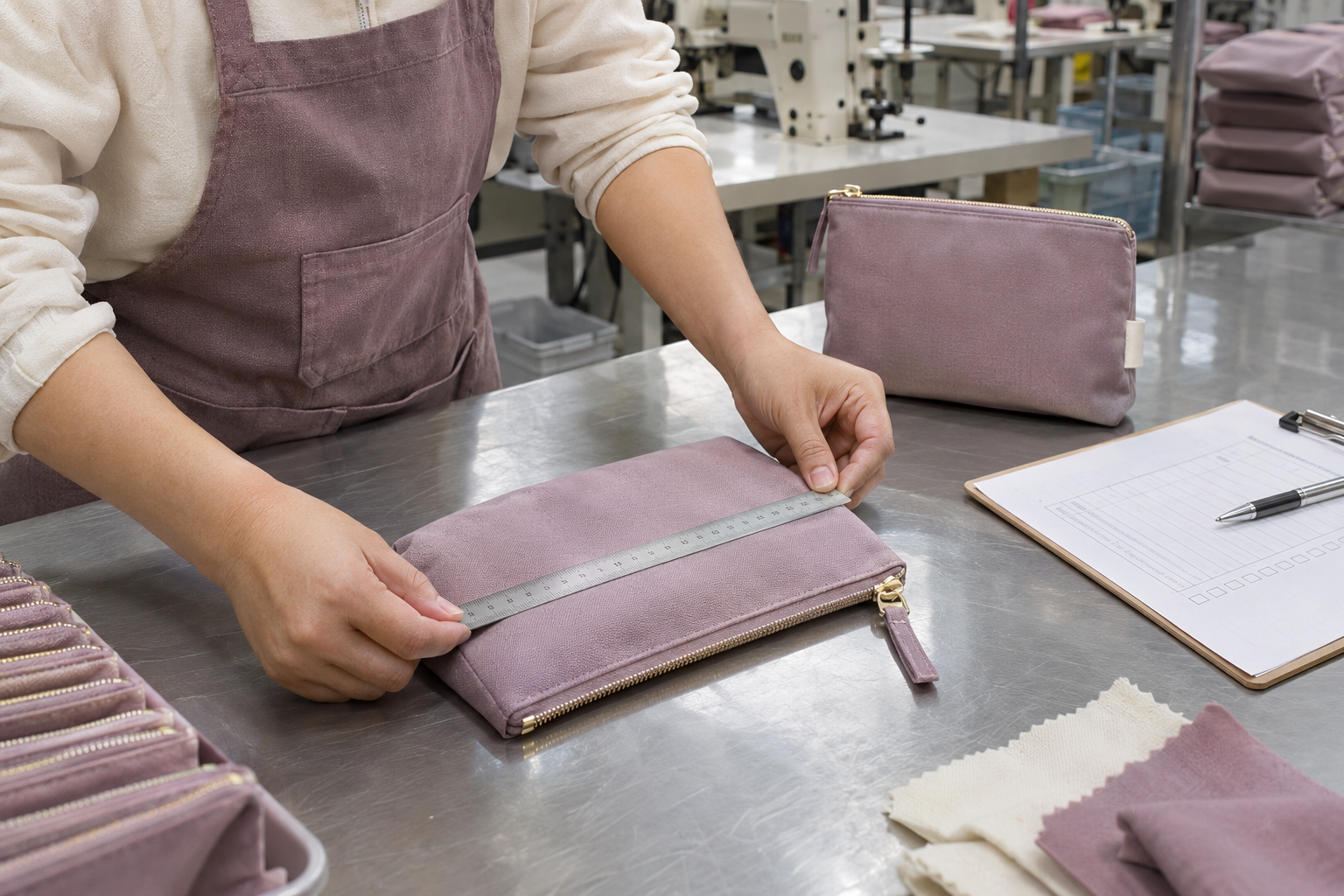
Ask for evidence at the first operation where the agreed design can be observed in real production, and again at the agreed inspection stage. A first-off unit is an early output from the bulk setup. Depending on the operation, it might be a printed panel, an assembled pouch, or a packed unit. It gives the buyer and factory a chance to compare actual line output with the approved references while there is still time to correct the setup.
Choose checks that reveal consequential differences. For a pouch with a centered logo, ask for an image showing the placement measured from the agreed reference points. If fit and access matter, request evidence using the agreed dimensions or the intended contents. Identify the SKU and revision in the report and specify whether the supplier should wait for a response before continuing.
Define the final lot inspection and shipment release in the order. The NIST Engineering Statistics Handbook explains that acceptance sampling uses a sample from a lot to inform a decision about that lot. If your order uses this approach, agree the lot definition, inspection plan, reporting, and who can release shipment. The cosmetic bag pre-shipment quality control guide gives more detail on inspection readiness.
Manufacturing Insight: Why Can a Logo Change Reopen Production Release?
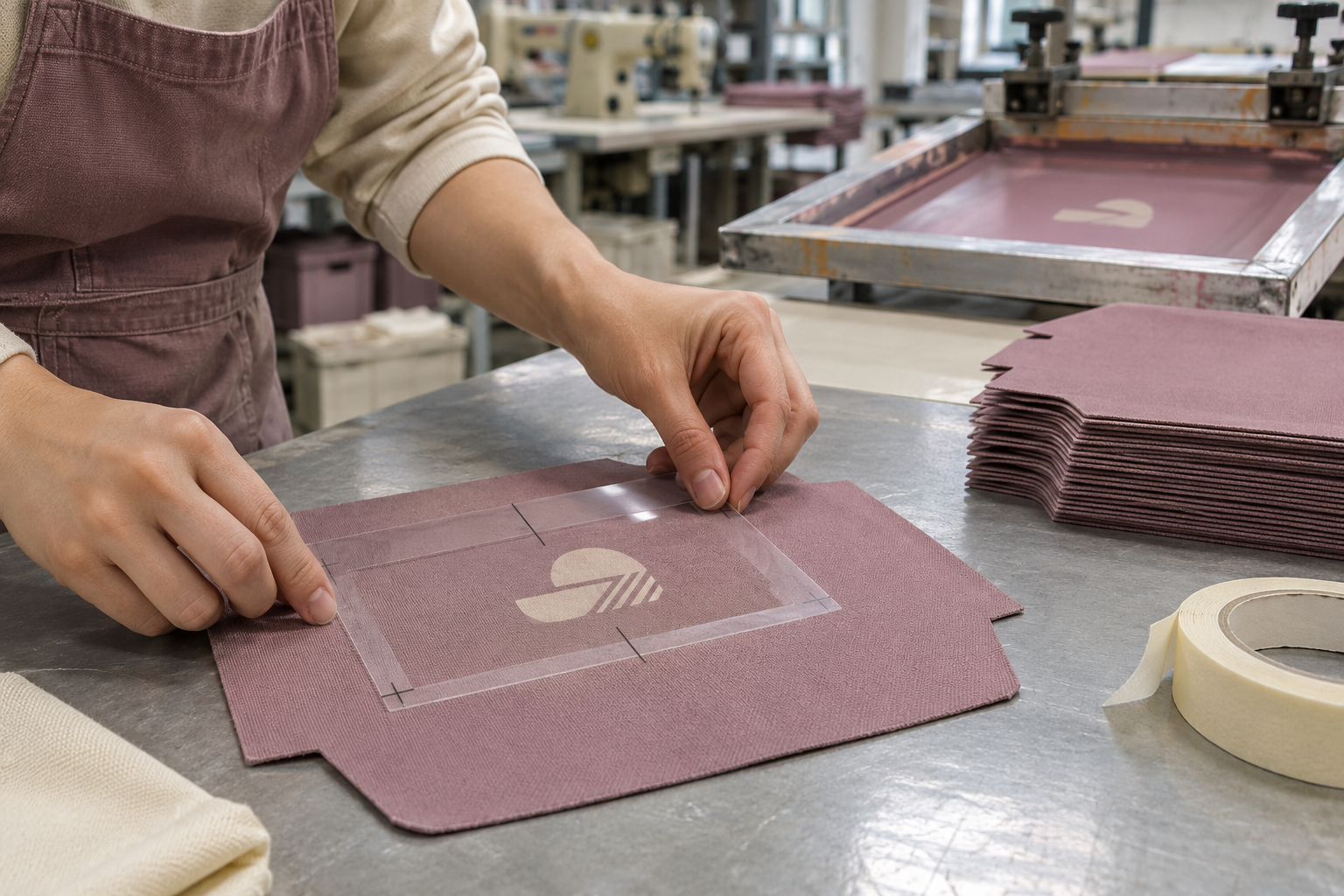
When the chosen logo method is applied to a flat shell panel before sewing, the panel can become specific to that artwork and placement. A new logo file after printing may require fresh panels, even when the pouch pattern, lining, and zipper stay the same. A change in logo size or position can also affect visual clearance from seams, pockets, or trim.
Ask which decoration step is irreversible for your material and what reference the operator uses. For a printed flat panel, the relevant checkpoint may be the decorated panel before assembly. For a badge positioned after sewing, the practical check may be a finished unit showing alignment against the seam. Include the artwork revision and placement method in the release record so the factory and QC team compare the same thing.
Example Scenario: A Pouch Approved With a Temporary Zipper Pull
Hypothetical example. A skincare brand approves a private-label pouch for size, shape, and lining. The submitted sample uses a temporary zipper pull, and the buyer has yet to choose the final finish for one of the colorways.
The buyer releases stock fabric reservation only and asks the manufacturer to identify the earliest operation that requires the final pull decision. The supplier confirms which activities can proceed and sends a labeled finish comparison. Once the brand signs off, it updates the component list for that SKU and releases the remaining work in writing.
The buyer then asks for a first-off assembly image showing the correct pull and matching colorway. The approved finish reference is entered in the inspection record. If the reference changes later, the factory can identify which units were made before the change and which instructions apply to the next lot.
Buyer Checklist After Cosmetic Bag Sample Approval
- Record the signed-off sample ID, revision, SKU scope, and approval date.
- List every temporary or pending component and the work it can hold.
- Send the current specification, component list, artwork, packing instructions, and purchase order reference together.
- State whether the factory may plan, reserve materials, buy components, or begin bulk operations.
- Ask for the supplier’s written acknowledgment and the prerequisites for the next milestone.
- Agree which first-off items to check, which criteria to use, and whether work pauses during review.
- Require written approval for substitutions and record the affected SKU, lot, or quantity.
- Confirm the inspection plan, evidence deadline, and person authorized to release shipment.
Frequently Asked Questions
Can I use an email thread as the approval record?
Yes, if the parties agree to use email and the message identifies the approved revision, scope, and sender’s authority. Attach or reference documents by version so the manufacturer can match the message to the right files. If several people have provided comments, send a single consolidated instruction and ask the supplier to acknowledge it before acting.
Who should keep the physical reference sample?
Give the supplier and quality team access to an agreed reference, and retain a buyer-side counterpart when practical. If only one sample exists, record its custodian, identifier, and how it can be consulted during production and inspection. Photos can help identify the reference, while physical access matters for characteristics such as hand feel, zipper action, or loaded fit.
Can one sample approval cover several colorways?
Yes, a shared sample can cover the same pattern and construction across colorways if the release says so. Approve any color-specific materials, decoration, hardware, or packaging through clearly identified references. Ask the supplier to flag differences in coating or thickness that may call for a separate check, especially if those differences could change fit, appearance, or logo placement.
What happens if two people send conflicting approval messages?
Ask the supplier to hold the affected work and have the authorized buyer send one consolidated instruction. Identify which earlier message is superseded and whether any material was ordered or processed before the correction. Request a written acknowledgment with the new revision and release scope, so production, purchasing, and quality control have the same instruction.
Do I need another sample if the retailer changes only the barcode?
A new bag sample may be unnecessary when the change is limited to the barcode and the pouch specification stays the same. Depending on the program, review the updated proof, SKU mapping, scan result, label placement, and any affected carton marks. Request a packed reference if placement or scan access depends on the final sleeve or wrap.
Can I let the factory continue while the buyer reviews first-off photos?
Only if the release allows it. Where the operation is costly to reverse, agree on a hold point and a response deadline before the run begins. For lower-risk operations, you can permit a limited quantity to proceed while photos are reviewed. Specify that quantity and how work already completed will be handled if the evidence reveals a deviation.
Accuracy Note
Confirm pricing, minimum order quantities (MOQs), lead times, certification scope, and applicable regulatory or retailer requirements for the specified materials, quantities, destination market, and current project conditions. Use the order documents to confirm when payment, production authorization, inspection, and shipment release apply to your project.
Ready to Confirm Your Cosmetic Bag Production Handoff?
Send your approved sample revision, quantities by SKU, and open decisions. Ask the manufacturing team to confirm the next release milestone and the evidence needed before work begins. You can also review the custom bag manufacturing services to see which stages apply to your project.