Why Do Cosmetic Bag Quotes Vary So Much Between Suppliers?
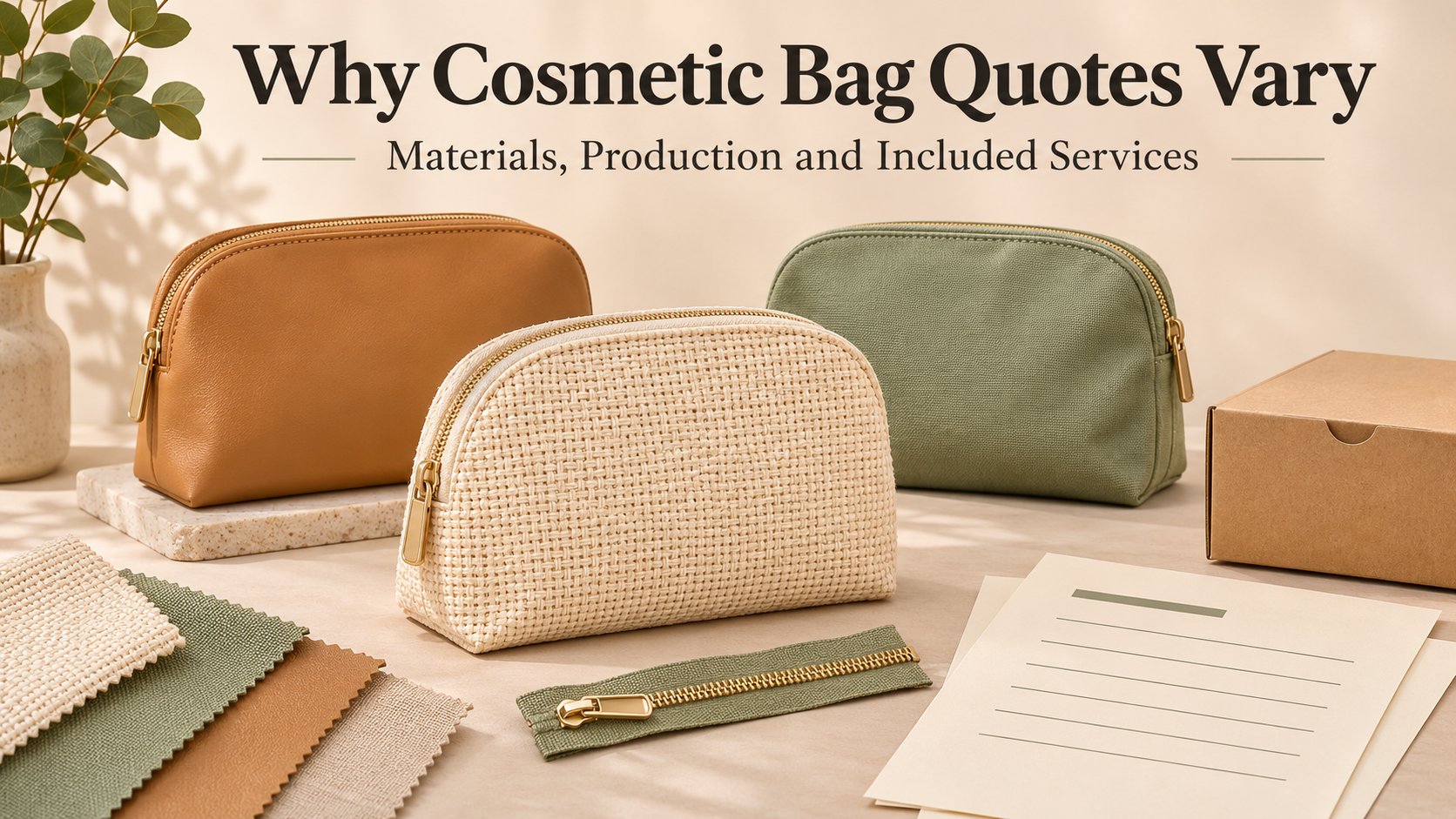
Cosmetic bag quotes vary because suppliers may be pricing different products, different order conditions or different levels of included service. Even when they receive the same reference photograph, they may assume different shell materials, linings, closures, logo methods and packaging. Suppliers can also have different sourcing costs, production arrangements and commercial margins for an otherwise equivalent project.
For beauty brands, private label teams, retailers and importers, the first task is to explain the gap before negotiating it. A lower price can reflect a practical manufacturing advantage, but it can also leave required work outside the quotation. This guide separates those possibilities and shows what evidence to request. The aim is to understand what you are paying for without assuming that the cheapest offer is unsuitable or the highest offer guarantees better quality.
Quick Answer
Cosmetic bag quotes differ mainly because of specification assumptions, quantity and color allocation, production setup, included services and delivery responsibilities. Similar photographs do not prove that suppliers have priced equivalent bags. Even after the specification is aligned, differences can remain because suppliers buy materials differently, use different production methods or apply different margins. Ask each supplier to identify the assumptions behind its price and explain the main cost drivers. Verify material and construction differences through relevant samples, and separate confirmed inclusions from unresolved charges. A price gap becomes meaningful only when you know what creates it.
Buyer Snapshot: What Can Explain the Price Gap?
| Possible cause | What may differ | Evidence to request |
|---|---|---|
| Product specification | Materials, dimensions, lining, reinforcement and closures | Component descriptions and representative samples |
| Order allocation | Quantity per color, size, logo or packaging version | Written quantity and variant breakdown |
| Production setup | Existing patterns, tooling, material availability and assembly methods | Explanation of the proposed production route |
| Branding | Artwork coverage, decoration process and custom components | Artwork assumptions and setup-charge details |
| Packaging | Individual packing, inserts, labels and carton arrangement | Packing specification and exclusions |
| Verification scope | Inspection, testing, documentation and corrective work | Named activities, responsibilities and acceptance criteria |
| Commercial basis | Delivery scope, payment conditions and quote validity | Written terms and named delivery location |
Table of Contents
What Are the Main Reasons Cosmetic Bag Quotes Differ?
Start by separating differences in the bag, differences in the offer and differences in the supplier’s own costs. These explanations require different responses. A material mismatch needs clarification; an omitted service needs a scope decision; an efficiency advantage needs verification rather than automatic rejection.
A useful diagnostic question is: “If this supplier made exactly the bag we require and included exactly the work we need, would this still be its price?” The answer helps distinguish a genuine commercial difference from an incomplete comparison.
For example, a supplier may quote an existing ODM pouch with your logo while another assumes a new OEM pattern and revised interior. Both responses may be reasonable, but they are not yet offers for the same development scope.
Buyer action: ask suppliers to name the main reasons behind their quotation. For a broader explanation of individual manufacturing expenses, see the cosmetic bag cost breakdown.
Can Similar-Looking Bags Have Different Material and Construction Costs?
Yes. Similar appearance can hide differences in the material specification, internal layers and assembly work. A photograph may communicate style without showing the components needed to reproduce the intended feel and function.
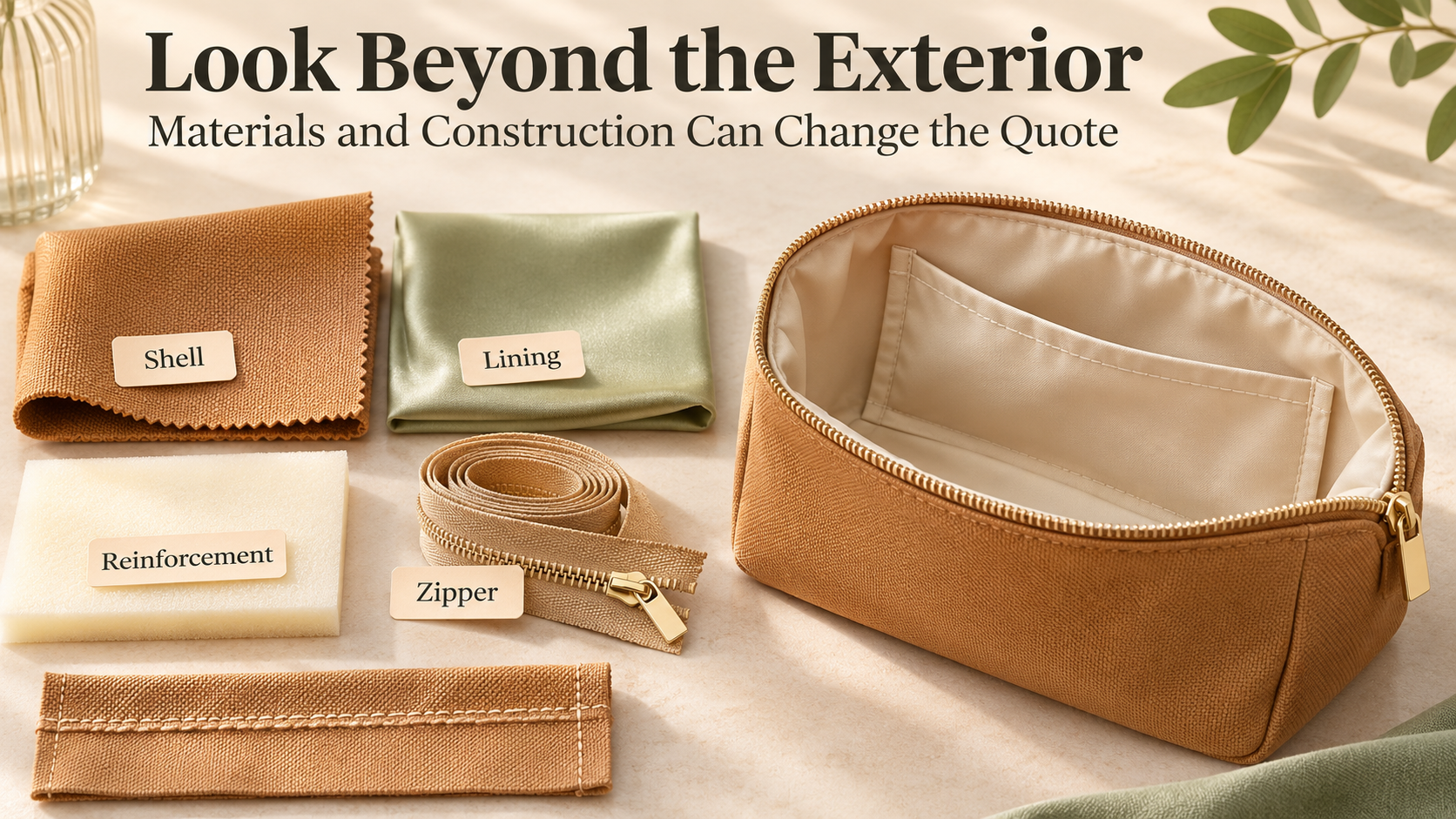
Broad descriptions such as PU, nylon or polyester leave room for different constructions, coatings, backing materials and finishes. A named material family does not identify every characteristic that affects purchasing cost or manufacturing suitability.
The interior can create another gap. A floating lining, attached lining, internal pocket, padded layer or reinforced base changes the work required. The relevant question is whether the proposed construction meets your use case, not whether additional layers automatically make a better bag.
Manufacturing Insight: Material Consumption Is Not Just Finished Size
Cutting layouts must accommodate panel shapes, seam allowances and any required print or texture direction. A directional pattern or precisely positioned print can restrict how pieces are arranged on the material. Suppliers using different usable fabric widths or cutting assumptions may therefore estimate different consumption for the same finished dimensions.
For example, an all-over print that can be cut freely is a different instruction from requiring a motif to sit centrally on every front panel. The second instruction may affect both cutting and inspection work.
Buyer action: request the quoted component references and confirm any pattern-placement requirements. Use the cosmetic bag collection to describe the format, then document the specific construction you want priced.
Why Does the Same Order Quantity Produce Different Prices?
Total quantity does not describe how the order is divided into production batches. Color, material, artwork and packaging variations can introduce separate purchasing requirements and setup work even when the total number of bags stays unchanged.
A supplier may assume a consolidated run using one available material, while another prices separate material purchases for each color. Minimum purchases from upstream suppliers can also differ from the minimum quantity of finished bags the buyer wants.
Setup costs may be spread across the quoted quantity or charged separately. A unit price that assumes a future reorder is also different from a price based only on the order being placed now.
For example, assorted colors made from existing stock may have different sourcing conditions from the same assortment requiring custom-dyed material. Neither approach should be assumed without written confirmation.
Buyer action: confirm quantity by variant and ask whether excess materials or components must be purchased. Clarify who owns any paid-for balance, whether storage is available and what conditions apply to later use.
How Do Logo and Packaging Assumptions Create Price Gaps?
Suppliers can interpret “with our logo and packaging” as very different scopes of work. Decoration method, artwork coverage, application location and retail presentation need to be defined before their costs can be meaningfully discussed.
A supplier might assume a simple printed mark while another includes a custom metal plate or embroidered patch. Depending on the method, artwork preparation, tooling, application and attachment can involve different activities.
Packaging also includes more than the visible outer box. Inserts, individual protective wrapping, barcode application, hang tags and the labor of assembling a gift presentation may be included, excluded or left for later confirmation.
For example, a quote for an empty pouch in basic protective packing does not cover the same work as a pouch shaped with an insert and presented in a retail box. The finished bag may be identical while the packed product is not.
Buyer action: provide the artwork and a packing description. Ask which setup charges are separate and which activities are already included in the unit price. The custom cosmetic bag RFQ checklist helps organize these inputs.
Why Can Suppliers Charge Different Prices for the Same Specification?
Suppliers can have different purchasing conditions, process efficiency, overhead and margin expectations even after the product requirements match. A remaining price difference is not automatically evidence of a hidden downgrade.
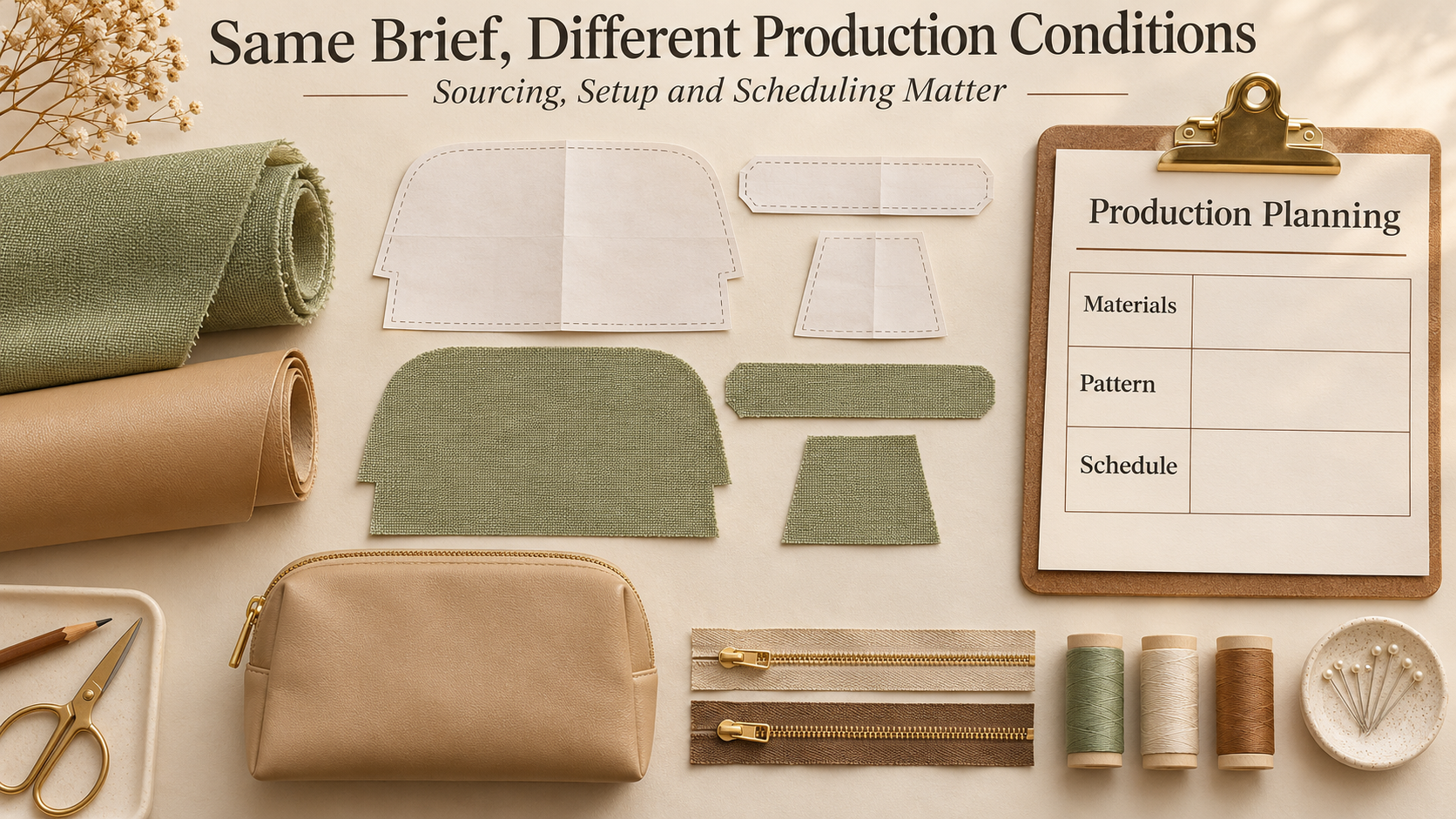
A manufacturer already buying a suitable material may have a different purchasing basis from one sourcing it specifically for your project. A team familiar with the bag structure may also require a different development effort from a team adapting an unfamiliar design.
Available production capacity and schedule flexibility can affect the proposed commercial terms. An urgent request may require a different production arrangement from an order that fits an available slot. The direction and size of that effect must be confirmed with the supplier.
Supplier type alone does not settle the issue. A factory may add outsourced processes, while a trading company may coordinate production and sourcing. Ask who performs the relevant work and who is responsible for the result.
For example, an existing pattern may reduce development work only if it meets your required dimensions and construction. A low quote based on changing your design is an alternative proposal, not an unchanged baseline offer.
Buyer action: ask whether the price depends on existing tooling, stock materials, design changes or schedule flexibility. Suppliers do not need to disclose confidential profit margins to explain these conditions.
Can Quality Requirements and Delivery Terms Explain a Higher Quote?
Yes, when the higher offer includes clearly defined work or responsibilities that the other offer excludes. A general promise of “better quality” is not enough to establish why the difference is justified.
Distinguish routine production checks from separately commissioned testing, independent inspection or additional reporting. Identify the required characteristics, inspection method, acceptance criteria and responsibility for corrective work. A higher price does not itself prove that these activities will occur.
For example, one supplier might include a specified inspection report, while another offers a bag-only price with third-party inspection arranged by the buyer. The buyer needs to identify the actual service difference before judging the price gap.
Delivery scope can create a separate difference. The U.S. International Trade Administration’s Incoterms guidance explains that trade terms allocate logistics tasks, costs and risks between buyers and sellers. Record the agreed rule, version and named location; do not treat a delivery label as a complete description of every project charge.
Buyer action: confirm what is included through the selected delivery point. Keep freight estimates, required testing and other unresolved charges visible instead of treating them as zero.
How Can I Tell Whether a Price Gap Is Reasonable?
A reasonable explanation links the price difference to a specific requirement, production condition or commercial decision that you can examine. There is no universal percentage gap that proves an offer is fair, inflated or unsafe.
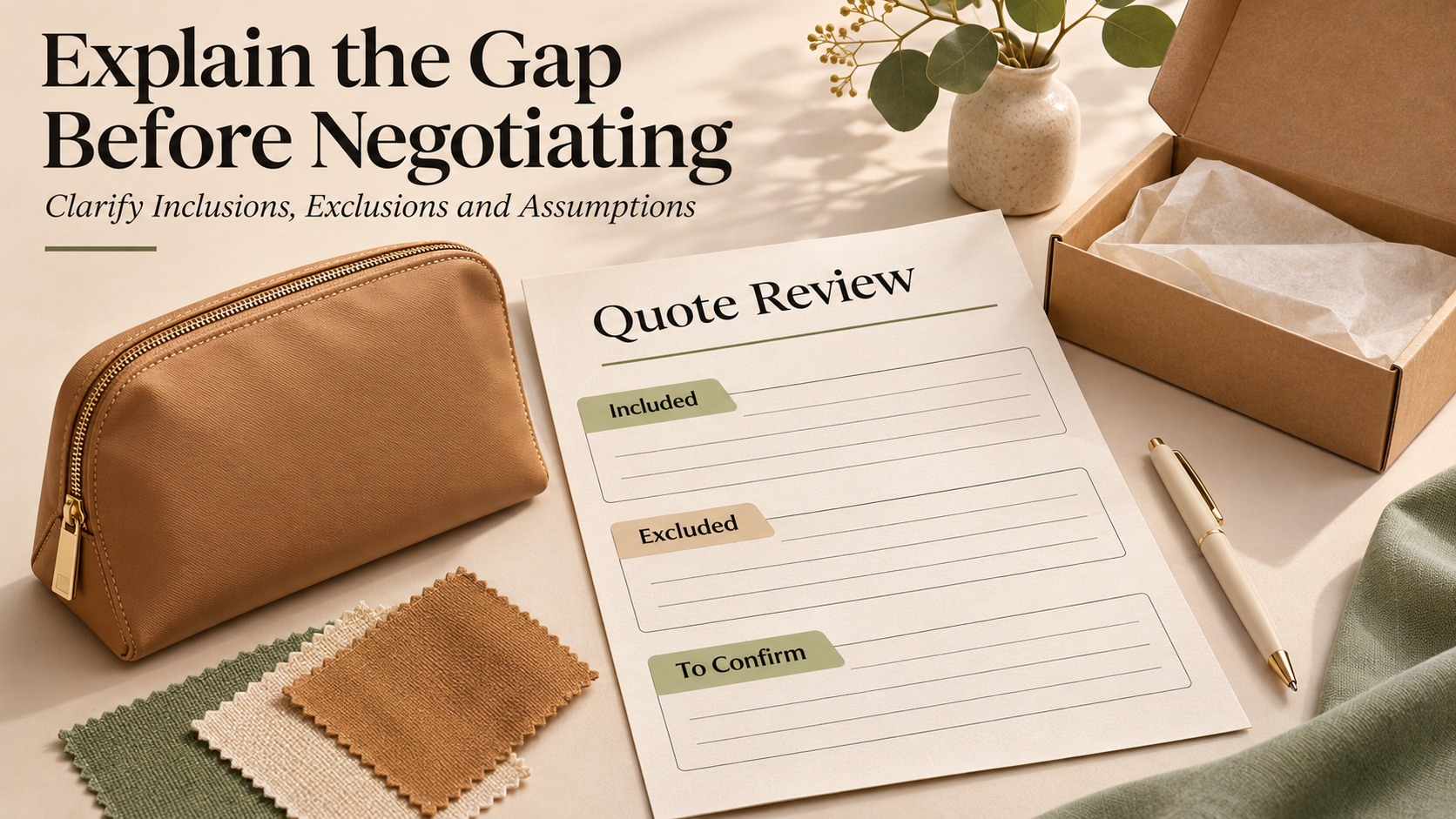
Ask the supplier to distinguish confirmed requirements from assumptions. Then request a revised price for the agreed baseline and keep cost-saving alternatives separate. This makes it easier to see whether the gap narrows when the underlying conditions match.
| Supplier explanation | What would support it? | Next buyer action |
|---|---|---|
| “We priced a different material.” | Identifiable material details and a relevant swatch | Confirm the required material and request a revised offer |
| “Our price uses an existing pattern.” | Drawing or sample showing the proposed structure | Check whether the pattern meets the brief |
| “This includes retail packing.” | Component list and packing arrangement | Match the packaging scope |
| “The color split changes the cost.” | Variant-level purchasing or setup explanation | Review feasible assortment options |
| “Inspection and testing are included.” | Named activities, scope and responsible parties | Confirm relevance and avoid duplicated charges |
| “Our quality is better.” | Specific differences supported by samples or agreed evidence | Request measurable clarification before accepting the premium |
Missing detail is a reason to clarify, not proof of misconduct. However, repeated refusal to identify the quoted materials or major exclusions leaves the offer difficult to evaluate.
Buyer action: resolve the major causes before negotiating the remaining difference. For the full selection workflow, use the guide to comparing cosmetic bag manufacturer quotes.
Example Scenario: Similar Pouches, Different Quotation Assumptions
This is a hypothetical illustration, not a reported customer project. A beauty brand sends a pouch photograph to several suppliers and receives noticeably different quotations.
One offer assumes a stock exterior material, a simple lining and basic protective packing. Another includes a specified exterior finish, an internal pocket and a retail insert. A further offer assumes new development work because the supplier cannot use an existing pattern for the requested shape.
The buyer separates the differences into product requirements, packing scope and development assumptions. Each supplier is then asked to quote the same confirmed brief, with optional alternatives listed separately.
The revised prices may still differ because sourcing and production conditions are not identical. The value of the exercise is that the buyer can now investigate the remaining gap without mistaking an omitted pocket or unquoted insert for a manufacturing saving.
Buyer Checklist Before Negotiating a Price Difference
- Confirm which specification revision each supplier priced.
- Identify differences in shell, lining, reinforcement, zipper and construction.
- Check whether total quantity and variant allocation match.
- Clarify stock-material assumptions and upstream purchasing obligations.
- Separate development and setup charges from recurring unit costs.
- Confirm the logo method, artwork assumptions and packing activities.
- Identify the inspection, testing and documentation actually included.
- Align delivery scope, currency, payment conditions and quote validity.
- Ask for an explanation of the remaining gap before requesting a discount.
Frequently Asked Questions
Is a very low cosmetic bag quote a warning sign?
It is a reason to investigate the assumptions, not an automatic reason to reject the supplier. The price may reflect an existing pattern, suitable stock material or a production advantage. It may also exclude required work. Ask what supports the price, whether it applies to your complete specification and which conditions could cause it to change.
Does a higher quote mean the supplier uses better materials?
No. A higher quote can reflect material differences, but it can also reflect overhead, development work, service scope or margin. Ask the supplier to identify the proposed material and explain how it differs from the baseline. Assess the relevant sample and performance evidence rather than using price as a substitute for a material specification.
Why can a quote increase after the supplier sees my artwork?
The initial offer may have assumed a different decoration scope. Final artwork can reveal additional colors, greater coverage, fine details, difficult placement or a need for a different application method. Ask which assumption changed and request the revised decoration specification. Confirm setup charges and recurring costs separately before accepting the revised quotation.
Can I request a lower price without changing the bag?
Yes, but the available reduction depends on the supplier’s costs and commercial flexibility. Ask about scheduling, order consolidation, payment conditions or reusable development work while keeping the product requirements fixed. Any change should be documented. If a lower offer depends on a different material or construction, treat it as an alternative version rather than an unchanged discount.
Why can the same supplier quote a different price for a reorder?
A reorder can face different material availability, purchasing costs, quantities, color allocation or delivery conditions. Previous tooling and development work may remain usable, but that does not guarantee the same total cost. Ask the supplier to identify the changes from the earlier order and confirm whether the original approved components are still available without substitution.
Should I ask suppliers to disclose their complete internal cost sheets?
You can request a useful breakdown without requiring confidential factory accounting. Ask for the main cost drivers, included services, separate charges and the effect of proposed alternatives. A supplier may protect its labor rates or margins while still explaining the offer clearly. Focus on whether you can verify the product commitment and understand the purchasing conditions.
Accuracy Note
This guide explains possible quotation differences; it does not establish a standard price range or a universal supplier margin. Pricing, MOQ, material availability, sample timing and production lead time must be confirmed for the actual specification, quantity, variants and schedule. Testing, certification and market requirements should be checked for the intended product and destination. Confirm logistics charges and delivery responsibilities for the current shipment.
Request a Quote With Clear Assumptions
Send Bling Accessory Co. your bag reference, material requirements, quantity by variant, artwork, packaging needs and delivery destination. Identify mandatory features and any alternatives you are willing to consider so the quotation can address a defined project.