How Do Zippers, Linings and Hardware Affect Cosmetic Bag Quality?
Zippers, linings and hardware affect cosmetic bag quality by determining how the bag opens, protects its contents, responds to cleaning and holds together during use. These components also influence how the finished bag feels. A polished exterior can hide a lining that catches in the slider, an awkward puller or an attachment that strains the surrounding fabric.
For beauty brands, private label buyers and sourcing teams, component selection should start with the intended use rather than appearance alone. A lightweight promotional pouch and a structured travel organizer may need different solutions. This guide explains what to specify, how components interact with construction, and which sample checks help reveal problems before production. It also distinguishes useful buyer screening from formal testing, so an attractive sample is not mistaken for proof of long-term performance.
Quick Answer
Zippers control access and closure, linings influence interior wear and cleaning, and hardware provides grip, attachment and visual finish. Their effect on cosmetic bag quality depends on both the component specification and how each part is installed. Check zipper movement with the intended contents, lining clearance around the opening, seam condition, hardware edges and attachment security. Identify materials and finishes in writing, then evaluate them on the assembled sample. Neither a metal zipper, a thicker lining nor heavier hardware automatically means better quality. Choose components that suit the bag’s function and verify any performance claims using agreed methods and acceptance criteria.
Buyer Snapshot: What Should Be Evaluated?
| Decision factor | What to confirm | What to examine |
|---|---|---|
| Zipper system | Chain type, size designation, slider, stops and usable length | Movement, engagement and behavior around the opening |
| Pull tab | Shape, grip, attachment and intended use | Comfort, clearance and secure connection |
| Lining material | Composition, construction, finish and material reference | Surface condition, cleaning response and color transfer |
| Lining installation | Pattern fit, attachment and pocket arrangement | Loose fabric, seam strain and slider interference |
| Hardware finish | Base material, surface treatment and approved appearance | Rough edges, inconsistent finish and contact marking |
| Attachment points | Fixing method and supporting construction | Movement, distortion and stress on adjacent materials |
| Verification | Relevant checks, test methods and acceptance criteria | Evidence for the actual component and assembled bag |
Table of Contents
Why Do Small Components Have Such a Large Effect on Cosmetic Bag Quality?
Small components sit at frequent contact points and can limit the usefulness of the whole bag. A pouch may have suitable exterior fabric but still be inconvenient if the opening catches or the interior makes contents difficult to remove.
The importance of each component changes with the use case. A travel organizer may need accessible compartments and comfortable operation when filled. A retail gift pouch may place greater emphasis on presentation, while still needing dependable closure and clean finishing.
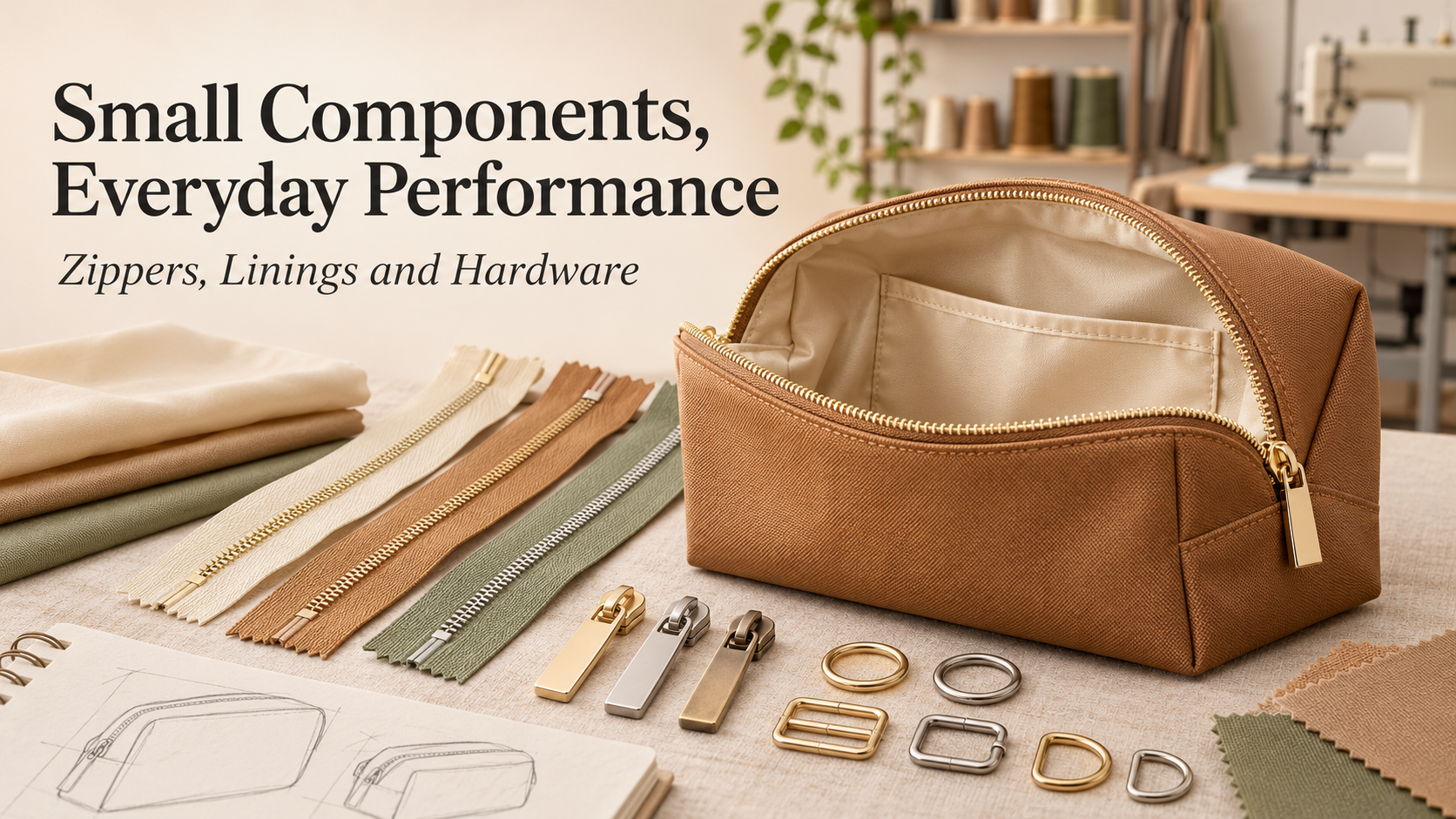
For example, adding a decorative metal puller can change the grip and appearance, but it should not obstruct the opening or scrape adjacent surfaces. Evaluate the benefit in the assembled design.
Buyer action: define the contents, handling conditions and expected care before selecting trims. The cosmetic bag category can help identify a suitable format, but the component specification should remain project-specific.
What Makes a Zipper Suitable for a Cosmetic Bag?
A suitable zipper opens and closes consistently in the intended bag shape without catching fabric or requiring the user to force the opening into alignment. Evaluate the chain, slider, tape, stops and pull tab as a system.
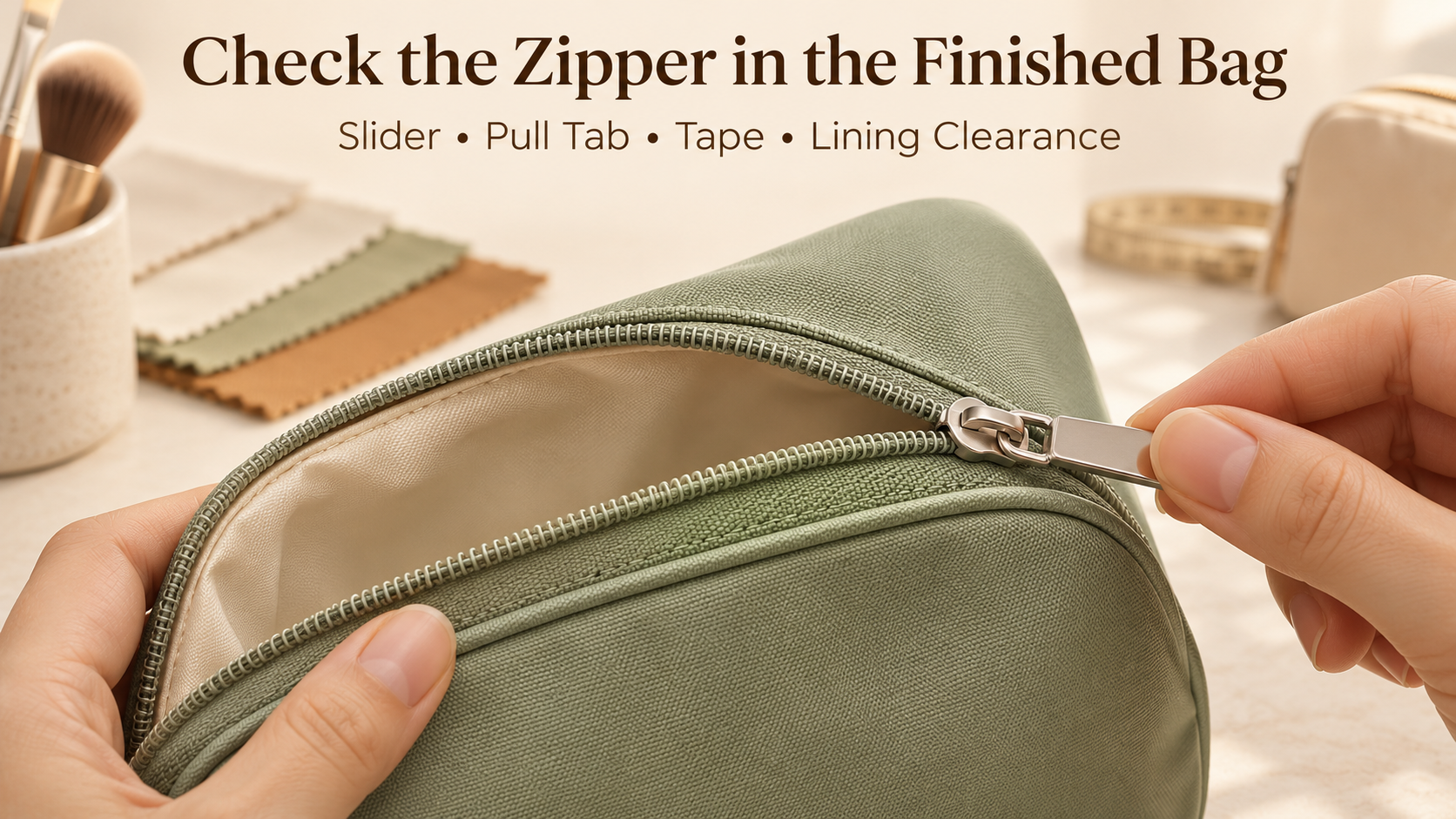
The slider is the part that brings the zipper elements together or separates them. The pull tab provides the grip used to move it. A decorative pull tab does not establish the suitability of the slider or chain underneath it.
YKK’s explanation of sliders and pullers describes these functions and discusses fabric-catching problems. For buyers, the practical implication is to inspect the operating path as well as the visible trim.
Coil, molded plastic and metal zippers should not be ranked by appearance alone. The appropriate choice depends on the opening geometry, material thickness, operating requirements and selected component specification.
For example, a zipper may move freely on a loose sample strip but resist movement after being sewn into a tight curve. That result calls for investigation of both component selection and installation.
Buyer action: request an identifiable zipper specification and operate the finished sample empty and with representative contents. Record where resistance occurs and whether the lining or shell moves into the slider’s path.
How Does the Lining Affect Function and Cleaning?
The lining affects how the interior wears, how contents move inside the bag and how spills or marks can be managed. Its fit and attachment matter alongside the material itself.
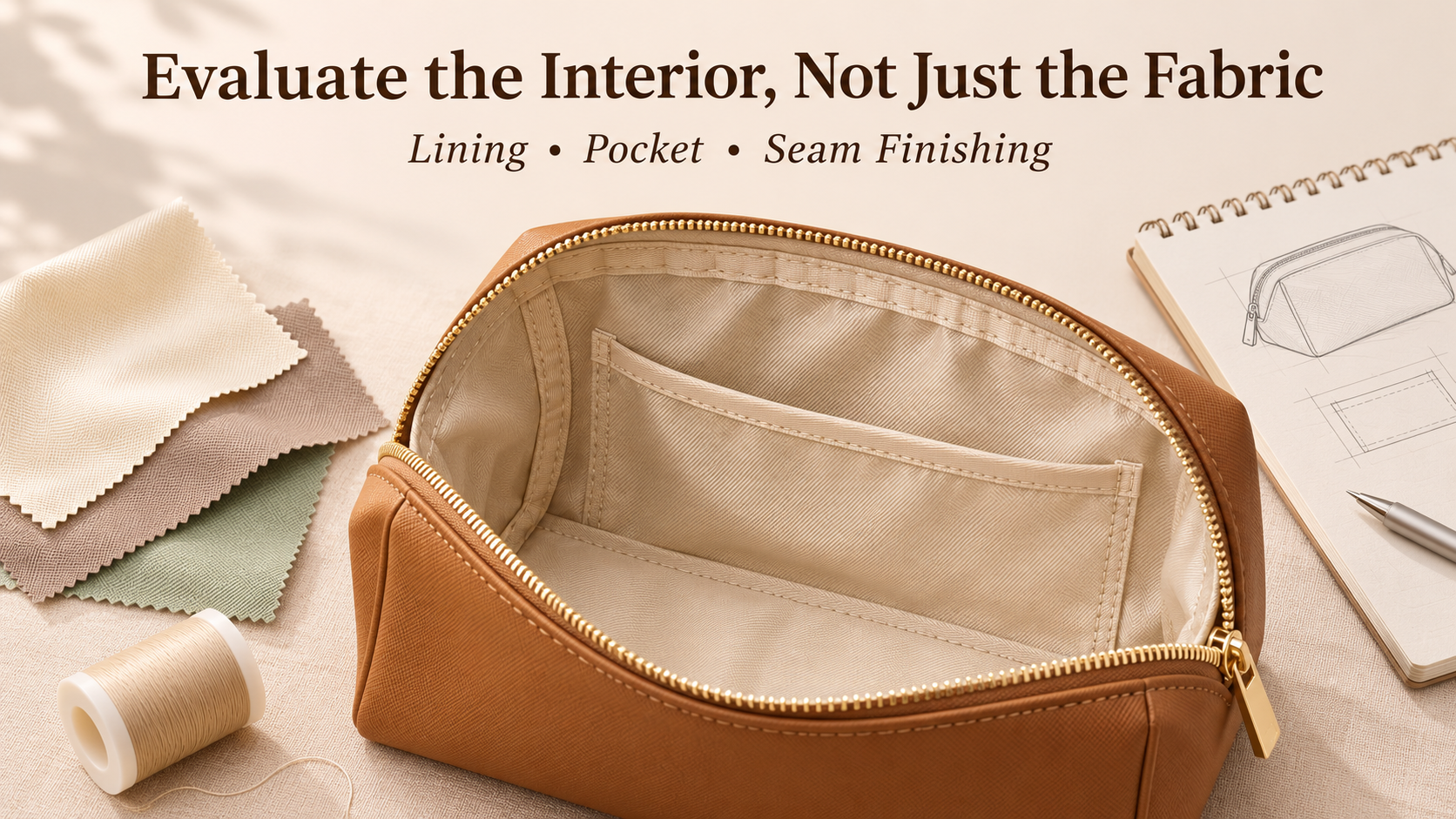
A broad description such as “polyester lining” does not establish its weave, finish, thickness or cleaning suitability. Ask for the material reference and relevant properties, including any coating or backing.
A lining with excess loose fabric may interfere with the closure or pull outward when contents are removed. A lining that is too tight can restrict the compartment or place strain on its seams. Neither problem is solved simply by choosing a heavier fabric.
Cleaning requirements should reflect the likely contents and intended care method. A wipe-clean surface claim needs verification on the selected material and finish. It does not establish that the complete bag can be washed, disinfected or used to contain leaks.
For example, a lining may release a powder mark but respond differently to an oily cosmetic residue. Agree which representative substances and cleaning method should be evaluated rather than treating one successful wipe as universal proof.
Buyer action: review the interior after loading, unloading and the agreed cleaning check. Look for exposed seam edges, loose threads, distortion, coating changes or visible color transfer.
What Should Buyers Check About Metal and Other Hardware?
Check the hardware’s function, surface condition and attachment to the bag. Weight, shine and a metallic appearance do not independently establish strength or finish durability.

Hardware may include pull tabs, rings, clips, rivets, feet or logo plates. Identify whether each item is decorative or intended to carry load. A decorative pull tab should not automatically be treated as a carrying handle.
Inspect accessible edges for roughness and examine the surfaces that contact hands, contents and adjacent fabric. Confirm the base material and finish instead of relying only on descriptions such as “gold hardware” or “premium metal.”
Material compatibility also matters. YKK’s metal-fastener guidance explains that certain metal components can discolor in contact with residual chemicals, with heat and moisture increasing the likelihood of reactions. This supports checking the selected metal with adjacent materials and the intended packing conditions; it does not predict identical behavior for every finish.
For example, a logo plate can look satisfactory by itself yet mark a soft exterior when the bag is compressed in packaging. Attachment position and protective packing may need review.
Buyer action: examine both sides of attachments where accessible. Ask how the surrounding material is supported and request relevant finish or attachment testing when those properties are important to the product.
How Can Assembly Undermine Otherwise Suitable Components?
Assembly can introduce tension, misalignment or interference that is absent when components are evaluated separately. Component approval therefore needs to be followed by evaluation of the complete bag.
The zipper opening brings together tape, shell material, lining, stitching and sometimes reinforcement. The pattern and sewing method must leave the intended operating clearance while maintaining the required shape.
Manufacturing Insight: More Than One Cause Can Produce the Same Symptom
A wavy seam does not identify its cause by appearance alone. Coats’ guidance on seam puckering describes mechanisms including excessive sewing tension and differences in dimensional behavior between layers. The appropriate correction depends on which mechanism is present.
Similarly, zipper resistance might involve fabric interference, opening geometry or component suitability. Replacing the pull tab because it is the part the user touches may leave the actual problem unchanged.
For example, increasing lining stiffness could alter how fabric sits near the opening but also change the interior feel and usable space. Any proposed correction should be checked against the complete specification.
Buyer action: describe the observed symptom and its conditions. Ask the manufacturer to identify the cause, propose the correction and provide a revised sample where necessary.
What Should Be Written Into the Component Specification?
Record identifiable parts, installation requirements and the evidence needed for approval. Terms such as “strong zipper,” “good lining” and “high-quality hardware” leave too much interpretation to support consistent purchasing.
| Component | Useful specification details | Approval focus |
|---|---|---|
| Zipper | Supplier reference, chain type and size designation, slider, tape color, length and stops | Operation in the intended opening and configuration |
| Pull tab | Material, shape, dimensions, finish and connection method | Grip, clearance and secure attachment |
| Lining | Material code, composition, construction, finish, color and pocket layout | Fit, seam condition and agreed care response |
| Hardware | Base material, finish reference, dimensions and decorative or load-bearing function | Edges, appearance, compatibility and relevant performance |
| Attachments | Location, fixing method, reinforcement and assembly details | Behavior of the complete attachment and surrounding material |
| Packing | Product orientation and protection of contact surfaces | Marks, abrasion or deformation after agreed handling checks |
Use a dated revision and link the approved swatches, component references and finished sample. If a supplier proposes an alternative after approval, record the change and decide what must be rechecked.
For example, replacing a pull tab with a visually similar version may alter its connection or clearance. A photograph alone may not establish equivalence.
Buyer action: include component requirements in the custom cosmetic bag RFQ and require written confirmation of substitutions before they are used.
Which Sample Checks Reveal Component Problems?
Use realistic operating checks to find visible problems, then commission defined testing where evidence of performance is required. A buyer’s sample review is useful screening, but it is not a substitute for a durability or compliance test.
- Check the empty bag: examine alignment, lining clearance, seam condition and accessible hardware edges.
- Load representative contents: confirm access and closure without forcing an overloaded bag shut.
- Operate the closure: note resistance, snagging or distortion and where each occurs.
- Remove the contents: check whether the lining or pockets pull outward or interfere with use.
- Review the agreed care method: inspect any changes to the lining, finish or adjacent components.
- Check the packed arrangement: look for hardware contact points that could mark the bag or contents.
For formal testing, agree the method, conditions, sample selection and acceptance criteria. Relevant work may address zipper cycling, attachment strength, rubbing or finish resistance, depending on the intended use. There is no single universal test schedule for every cosmetic bag.
Record findings against the sample identity and specification revision. The cosmetic bag sample approval checklist can support the wider approval decision.
Buyer action: distinguish accepted features, required corrections and unverified claims. A pass on appearance should not silently become approval of every performance requirement.
Example Scenario: A Pouch That Works Empty but Snags When Filled
This is a hypothetical illustration, not a reported customer project. A private label buyer reviews a cosmetic pouch that opens smoothly when empty. With the intended contents inside, the lining moves toward the zipper and occasionally catches.
The buyer records the loading arrangement and the location of the snag. Instead of requesting a heavier zipper immediately, the buyer asks the manufacturer to review lining fit, attachment, opening tension and zipper suitability.
A revised sample would need to demonstrate the proposed correction under the same conditions. The component list and construction notes would then be updated to reflect the approved solution.
The lesson is that an operating problem may originate at the interface between parts. Changing a component without understanding that interaction may add cost without resolving the issue.
Buyer Checklist Before Component Approval
- Define intended contents, loading conditions and care expectations.
- Identify the zipper system, slider and pull tab separately.
- Check operation in the assembled sample, both empty and appropriately filled.
- Confirm lining material, fit, pocket construction and opening clearance.
- Inspect hardware edges, finishes and contact with adjacent surfaces.
- Distinguish decorative parts from load-bearing attachments.
- Agree relevant test methods and acceptance criteria for performance claims.
- Link approved components to the current specification and sample.
- Require review of substitutions and inspect the proposed packing arrangement.
Frequently Asked Questions
Are metal zippers always better than coil zippers?
No. Material alone does not establish which zipper is appropriate. Opening geometry, flexibility, component specification, finish and intended use all affect the decision. Compare the proposed systems on an assembled sample with representative contents. A metal appearance may support a brand’s visual direction, but it should not replace checks of movement, clearance and compatibility with nearby materials.
Does a thicker lining automatically make a bag more durable?
No. Thickness is only one characteristic. Material construction, finish, seam performance and installation also affect the result. A heavier lining may add bulk or change the way the bag opens without solving a weak seam or poor fit. Define the required function first, then evaluate the selected lining and its attachment in the complete sample.
Does a coated lining make the whole cosmetic bag waterproof?
No. A coating on the lining does not establish the water resistance of seams, openings, zipper paths or the complete bag. It also does not prove leak containment from inside. Specify whether the requirement concerns wipe cleaning, incidental splashes or another exposure, and agree an appropriate verification method before using a whole-product waterproof claim.
Can I approve hardware color from a photograph?
A photograph can help narrow the choice, but it is a limited final reference for color, gloss and texture. Lighting, reflections and screens affect the appearance. Where finish matching matters, retain an identified physical reference and agree how it will be compared. Also check the hardware alongside the actual shell, zipper and other visible trims.
Will a branded zipper guarantee cosmetic bag quality?
No. A specified brand or component reference can help identify what is being purchased, but the chosen product must still suit the design and be installed correctly. Confirm the actual model and sourcing evidence where relevant. Evaluate the complete bag rather than assuming that one recognizable component proves the quality of the lining, stitching or attachments.
Can I reduce component costs without lowering quality?
Sometimes. A simpler decorative pull tab or an available standard component may meet the same functional requirements with less customization. The saving depends on sourcing, quantities, finish and tooling. Keep essential performance requirements fixed and evaluate each alternative on the assembled sample. Do not accept an unspecified substitution merely because its appearance is similar.
Accuracy Note
This guide provides component-selection and review principles, not universal test limits or a certification claim. Requirements should be confirmed for the actual materials, design, intended use and destination market. Component availability, MOQ, prices, sampling schedules and production lead times vary by project. Any testing, certification or regulatory claim requires evidence relevant to the supplied product and current requirements.
Define the Components Before Confirming the Quote
Send Bling Accessory Co. your bag reference, intended contents, zipper and lining preferences, hardware requirements and quantity breakdown. Identify the features that are mandatory and the areas where you would like suitable alternatives proposed.
Author: Website Operations & Digital Marketing Manager
Last Updated: November 26, 2026