OEM / ODM Cosmetic Bag Cost & Quotation Guide
Cosmetic Bag Pricing Guide: A Complete Cost Breakdown for Custom Makeup Bags, Private Label Pouches, and Wholesale Orders
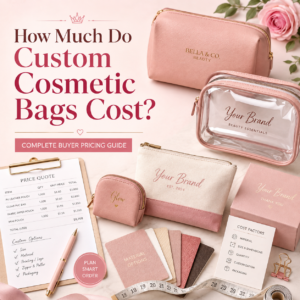
When brands, retailers, wholesalers, and private label sellers start a custom cosmetic bag project, one of the first questions is usually simple: How much does a cosmetic bag cost? The real answer is more complex. Cosmetic bag pricing depends on material, size, structure, lining, zipper quality, logo method, MOQ, packaging, quality control, sampling, labor complexity, and shipping requirements.
A small polyester promotional pouch, a quilted PU makeup bag, a clear TPU travel cosmetic bag, a structured vanity case, and a retail-ready private label cosmetic bag set may all belong to the same product category, but their costs can be very different. This is why buyers should not ask only for “the cheapest price.” A better approach is to understand what creates cost, what improves value, and which details are worth paying for.
This cosmetic bag pricing guide explains how custom makeup bag cost is calculated from a factory perspective. It will help you compare quotations, understand supplier pricing, control unnecessary cost, and build a product that matches your target market without sacrificing quality.
If you are preparing a project, you can also visit our Custom Bag Manufacturing Services, browse our Cosmetic Bag category, or send your details through Contact Us for a custom quotation.
Why Cosmetic Bag Pricing Is Not One Fixed Number
Cosmetic bag pricing is not fixed because a cosmetic bag is not a single standard product. It is a custom manufactured item made from many components and production steps. Even two bags that look similar in a photo may have different cost structures if one uses better PU leather, stronger lining, smoother zipper, custom metal puller, retail packaging, or more detailed stitching.
For example, a simple flat pouch made from standard polyester may be designed for promotional giveaways. The buyer may care mostly about low cost, logo visibility, and fast delivery. A private label beauty brand, however, may want a soft PU cosmetic bag with debossed logo, satin lining, gold zipper, custom hang tag, and retail-ready packaging. Both are “cosmetic bags,” but the manufacturing logic is completely different.
Price also changes according to order quantity. A small order often has a higher unit cost because sampling, material sourcing, cutting setup, printing setup, QC, and communication time are spread across fewer pieces. A larger order can often reduce unit cost because production becomes more efficient and materials may be purchased in better quantities.
Another reason pricing varies is customization. A standard ODM design with available material and a simple printed logo is usually more cost-efficient than a fully custom OEM design requiring a new pattern, custom-dyed fabric, special zipper puller, custom lining, and gift box packaging. The more unique the product becomes, the more production planning is required.
Buyers should treat price as a result of product decisions. If you change the material, logo method, lining, size, zipper, packaging, or quantity, the price can change. A reliable cosmetic bag factory should help you understand these trade-offs and recommend a production solution that fits your brand position, budget, and target market.
Main Cost Factors in Cosmetic Bag Manufacturing
A cosmetic bag quotation is usually built from several cost elements. Understanding these elements helps buyers compare suppliers more accurately and avoid choosing a low price that hides weak quality.
| Cost Factor | What It Includes | How It Affects Price |
|---|---|---|
| Material | Outer fabric, lining, reinforcement, clear panels, padding, recycled fabric, specialty finishes | Premium, custom, recycled, or thicker materials usually increase cost |
| Size | Length, width, height, capacity, panel area, fabric consumption | Larger bags use more material and may require stronger structure |
| Structure | Flat pouch, box pouch, vanity case, brush bag, toiletry organizer, multi-pocket design | More complex structure increases labor and production time |
| Logo | Printing, embroidery, woven label, debossing, hot stamping, metal plate, TPU patch | Simple methods cost less; hardware or molded details cost more |
| Zipper & Hardware | Zipper tape, slider, puller, metal parts, hooks, handles, buckles, decorative trim | Premium hardware improves perceived value but increases cost |
| Packaging | Polybag, hang tag, belly band, barcode label, gift box, carton, insert card | Retail-ready packaging adds cost but can improve presentation |
| MOQ | Minimum order quantity per style, color, or logo version | Higher MOQ usually supports better unit cost |
| Quality Control | Material checks, in-line inspection, final inspection, trimming, cleaning, packing check | Better QC reduces risk and protects brand reputation |
| Shipping | Carton size, weight, packing method, air/sea/express delivery, destination | Bulky or structured bags can increase landed cost |
The most important point is that cosmetic bag pricing should be compared by specification, not only by unit price. A supplier may quote a lower number by using thinner material, cheaper lining, weaker zipper, simpler packaging, or less inspection. Another supplier may quote higher but include better material, stronger construction, cleaner logo execution, and more reliable quality control.
For B2B buyers, the best quote is not always the lowest quote. The best quote is the one that matches the product’s target customer, retail price, sales channel, quality expectation, and delivery plan.
Material Cost: PU, Polyester, Nylon, Canvas, PVC, TPU, RPET
Material is usually one of the largest cost drivers in custom cosmetic bag manufacturing. The outer material affects not only price, but also appearance, durability, structure, cleaning, logo method, packaging style, and customer perception.
PU Leather
PU leather is widely used for private label cosmetic bags, vanity cases, gift-ready makeup pouches, and premium beauty packaging. It can look smooth, pebbled, quilted, metallic, glossy, matte, embossed, or padded. PU usually creates a more polished retail look than basic polyester, but the cost depends heavily on thickness, surface finish, backing, softness, color, and whether the material is standard or custom.
PU bags often pair well with debossed logos, hot stamping, metal logo plates, custom zipper pullers, and premium lining. These details can increase the final cost, but they can also make the product feel more valuable. For beauty brands selling gift sets or higher-end accessories, PU can be a strong option when the product needs a refined appearance.
Polyester
Polyester is a practical and cost-effective material for promotional cosmetic bags, wholesale pouches, travel organizers, drawstring bags, and high-volume orders. It is lightweight, easy to source, and suitable for many logo methods such as screen printing, heat transfer, embroidery, and woven labels.
Polyester is often a good choice when the buyer needs cost control, clear logo visibility, and stable production. However, not all polyester is the same. Fabric density, coating, lining, print quality, and stitching still affect the final result.
Nylon
Nylon is often used for travel cosmetic bags, toiletry organizers, and functional pouches. It can feel more technical and durable than basic polyester. Depending on the finish, nylon can be sporty, premium, lightweight, or water-resistant. Nylon cost depends on denier, coating, texture, softness, color, and supply availability.
For travel-oriented products, nylon may justify a higher cost because it supports durability and performance. It also works well with compartments, mesh pockets, and wipeable linings.
Canvas and Cotton
Canvas and cotton are common for natural, lifestyle, wellness, clean beauty, and eco-conscious positioning. They provide a softer and more casual appearance. They work well with screen printing, embroidery, woven labels, and simple retail packaging.
The price depends on fabric weight, dyeing method, finishing, certification requirements, and color. Heavy canvas may look more premium but uses more material and can increase shipping weight.
PVC and TPU
PVC and TPU are used for clear cosmetic bags, travel pouches, waterproof-style organizers, and retail visibility bags. Clear bags may look simple, but the cost can vary based on thickness, softness, clarity, odor control, edge finishing, zipper quality, and printing method.
TPU is often selected when buyers want a softer or more flexible clear material. PVC may be more cost-efficient in some cases, but buyers should always check material feel, transparency, and finish before approving production.
RPET and Recycled Materials
RPET and recycled fabrics are popular for brands that want sustainability-related positioning. These materials may increase cost depending on supply, color options, certification requirements, and order quantity. Buyers should avoid choosing recycled materials only for marketing language. The material still needs to meet performance requirements for wear, cleaning, structure, and appearance.
For deeper material selection, read our Cosmetic Bag Materials Guide.
How Size and Capacity Affect Price
Size has a direct effect on cosmetic bag pricing because larger bags use more material, more lining, longer zippers, more thread, larger packaging, and more carton space. However, size is not only about length and width. Capacity, depth, structure, and shape also matter.
A small flat makeup pouch may use limited material and simple construction. It may be suitable for lipsticks, compact powder, small skincare minis, travel perfume, or touch-up items. A medium cosmetic bag may need more structure to hold makeup products, brushes, or daily skincare. A large toiletry bag or vanity case may require reinforcement, stronger zipper, handles, compartments, and more careful shaping.
Buyers should think about product fit before choosing size. If the bag will be used in a skincare gift set, measure the bottles, jars, tubes, or boxes that must fit inside. If the bag is for travel, consider whether it needs to hold full-size toiletries or only mini items. If the bag is for e-commerce, the size should photograph well and be easy to explain in product listings.
A common pricing mistake is making the bag larger than necessary. Extra size may seem like added value, but it can increase material cost, packaging volume, shipping cost, and storage space. A bag that is too large for its purpose may also feel less refined. The best size is not the biggest size; it is the size that fits the customer’s real use.
If you are still planning dimensions, review our Cosmetic Bag Size Guide to connect bag size with travel, storage, and custom order planning.
Structure, Compartments, Lining, and Labor Cost
Structure is one of the most underestimated pricing factors. A cosmetic bag may look like a simple pouch, but its construction can change labor cost dramatically. A flat pouch is usually easier to produce than a box pouch. A box pouch is usually easier than a structured vanity case. A vanity case is usually easier than a multi-compartment toiletry organizer with mesh pockets, elastic loops, and reinforced panels.
Flat Pouches
Flat pouches are usually cost-efficient because they require fewer panels, less sewing, and simpler zipper installation. They are suitable for promotional giveaways, small beauty kits, minimalist brands, and low-complexity private label products.
Box Pouches
Box pouches provide more capacity and shape. They usually require more accurate cutting and sewing because the corners and panels must align cleanly. They are popular for daily makeup storage, skincare minis, and travel essentials.
Vanity Cases
Vanity cases often feel more premium because they are structured and giftable. They may include handles, padding, reinforcement, double zippers, custom lining, and harder shaping. These details increase labor and material cost, but they also raise perceived value.
Brush Bags
Brush bags require internal organization. Elastic loops, protective flaps, dividers, and wipeable lining can make the bag more useful but also more labor-intensive. The price depends on how many brush slots are needed and how the interior is finished.
Toiletry Bags
Toiletry bags may require waterproof lining, mesh pockets, hanging hooks, handles, reinforced seams, and larger capacity. They often cost more than simple makeup pouches because they need stronger functional construction.
Lining
Lining affects cost and user experience. Basic polyester lining may be cost-efficient. Wipeable lining, satin lining, printed lining, mesh lining, or waterproof lining can increase price. However, lining is one of the details customers touch and notice. A cheap lining can reduce the perceived quality of an otherwise attractive cosmetic bag.
When controlling cost, buyers should simplify structure before reducing material quality too aggressively. A clean, well-made simple pouch often performs better than an overcomplicated bag made with weak components.
Zippers, Hardware, Pullers, and Trim Cost
Zippers and hardware can make or break the user experience. Customers open and close cosmetic bags repeatedly, so zipper quality is one of the most noticeable details. A cheap zipper may reduce cost slightly, but it can create complaints, returns, and poor brand perception.
Zipper Type
Nylon zippers are common and practical for many cosmetic bags. Metal zippers can create a premium look but may increase cost and weight. Waterproof-style zippers or special zipper tapes may be used for travel and toiletry bags but can also increase price.
Zipper Length
Larger bags require longer zippers. A wide-opening cosmetic bag or vanity case may need a longer zipper path than a simple flat pouch. Longer zippers increase material use and may require more careful sewing.
Zipper Pullers
A standard puller is usually cost-efficient. A custom metal puller, branded PU puller, molded TPU puller, tassel puller, or decorative charm increases cost but can improve brand identity. For premium beauty brands, a custom puller can be a valuable detail. For promotional bags, a standard puller may be more practical.
Metal Plates and Decorative Hardware
Metal logo plates, buckles, hooks, rings, and decorative trims can raise the perceived value of a cosmetic bag. However, they may require molds, plating, attachment labor, and additional inspection. They are better suited for higher-MOQ or premium projects.
Handles and Straps
Handles and straps add function but also add cost. They require material, sewing reinforcement, and stress-point inspection. A toiletry bag or vanity case may need a handle, but a small makeup pouch may not.
The best hardware decision depends on the product’s price point. A premium retail pouch may justify branded hardware. A basic promotional pouch may not. Buyers should spend money where the customer will notice it.
Logo Customization Cost
Logo customization turns a generic bag into a brand asset. It is one of the most important reasons buyers choose OEM or ODM cosmetic bag manufacturing. However, logo method affects both cost and MOQ.
Screen Printing
Screen printing is often cost-effective for simple logos and larger quantities. It works well on many fabric surfaces, including polyester, canvas, cotton, and some coated materials. It is suitable for promotional pouches, wholesale cosmetic bags, and clean private label designs.
Heat Transfer and Digital Printing
Heat transfer and digital printing are useful for colorful graphics, patterns, gradients, or seasonal designs. They can create stronger visual impact but may cost more than simple one-color screen printing depending on artwork and material.
Embroidery
Embroidery provides a textured and premium feel. It works well on stable fabrics such as canvas, cotton, terry cloth, velvet, and some polyester materials. Cost depends on stitch count, logo size, thread colors, and placement.
Woven Labels
Woven labels are flexible and professional. They can be sewn onto the side seam, front panel, inner lining, or packaging. They are useful for private label cosmetic bags because they look clean and can be applied across different styles.
Debossing and Hot Stamping
Debossing and hot stamping are common on PU cosmetic bags. Debossing creates a subtle premium impression, while hot stamping can add metallic branding. These methods may require tooling and are best matched with suitable PU surfaces.
Metal Logo Plates and TPU Patches
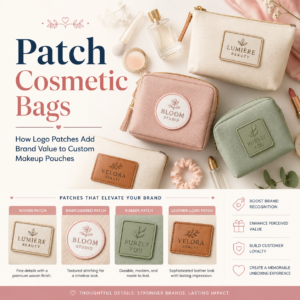
Metal plates and TPU patches create a more branded appearance. They are useful for premium cosmetic bags, vanity cases, and retail collections. They may require mold fees, accessory MOQ, plating, attachment labor, and inspection.
A smart pricing strategy is to choose a logo method that matches both material and market level. Do not choose the most expensive logo method only because it looks premium. Choose the method that makes the bag feel consistent with your brand and your target retail price.
Packaging Cost: Polybag, Hang Tag, Belly Band, Gift Box
Packaging is part of the product cost. Many buyers focus on bag price but forget packaging until the end. This can create budget surprises because retail-ready packaging, barcode labels, hang tags, belly bands, gift boxes, and custom cartons all add cost and sometimes require separate MOQs.
Basic Polybag
Basic individual polybag packaging is usually the most cost-efficient option. It protects the bag during shipping and is suitable for wholesale, promotional orders, simple e-commerce fulfillment, and some private label projects.
Hang Tags
Hang tags help communicate brand identity, material, care instructions, barcode, and product story. They are useful for retail and boutique channels. The cost depends on paper type, printing, string, size, finish, and quantity.
Paper Belly Bands
Belly bands are common for cosmetic pouches, makeup bag sets, and gift-with-purchase packaging. They add brand presentation without the cost and volume of a full box. They are especially useful for flat pouches and sets.
Gift Boxes
Gift boxes create a premium presentation but increase cost, volume, and shipping space. They are suitable for holiday beauty sets, luxury gift packaging, and retail programs where presentation supports a higher selling price.
Barcode Labels and Retail Requirements
Retail buyers may need barcode labels, carton marks, compliance tags, care labels, or special packaging instructions. These details should be included in the quotation request because they require time, materials, and quality checking.
Packaging should be matched to the sales channel. A promotional buyer may need simple packaging. A private label beauty brand may need elegant presentation. A retail chain may need barcode and carton compliance. The right packaging is not always the most expensive packaging; it is the packaging that supports the selling environment.
How MOQ Changes Unit Price
MOQ has a major effect on cosmetic bag pricing. A lower MOQ can reduce inventory risk, but it usually increases unit cost. A higher MOQ can improve factory efficiency and reduce unit cost, but it requires more upfront investment and stronger demand planning.
The reason is simple. Every custom project has setup work. The factory must review the design, confirm materials, prepare patterns, arrange sampling, purchase components, set up logo application, organize production, inspect finished goods, and pack the order. These tasks exist whether the order is small or large. When the quantity is small, the cost per piece is higher.
A low MOQ order may also limit customization. The factory may suggest available materials, standard colors, existing patterns, simple logos, and basic packaging to keep the order practical. A higher MOQ may support custom-dyed materials, better accessory pricing, custom zipper pullers, more detailed packaging, and improved cost control.
Buyers should ask for quotation breaks at several quantities. For example, request pricing for 1,000 pcs, 3,000 pcs, 5,000 pcs, and 10,000 pcs if those quantities are realistic for your business. This allows you to see whether increasing quantity creates meaningful cost savings.
Do not increase MOQ only because the unit price is lower. Inventory has cost. Storage, cash flow, slow-moving colors, outdated designs, and unsold seasonal products can damage margin. The right MOQ is the quantity that balances unit cost with sales confidence.
For a deeper explanation of minimum order quantity, read our Cosmetic Bag MOQ Explained guide.
Sample Cost and Product Development Cost
Sampling is an important part of cosmetic bag pricing because it helps confirm the product before bulk production. A sample allows buyers to check material, size, structure, stitching, lining, zipper movement, logo placement, packaging direction, and overall appearance.
Sample cost depends on design complexity. A simple existing ODM pouch with a standard logo may be faster and less expensive to sample. A fully custom OEM vanity case with special material, custom pattern, metal plate, printed lining, and gift box may require more time and cost.
Buyers should not view sample cost as waste. A sample is risk control. Approving mass production without a sample can lead to expensive mistakes. If the bag is the wrong size, the zipper is weak, the logo looks poor, or the lining feels cheap, fixing the issue after bulk production is much more costly than revising a sample.
During sample review, test the bag in real use. Put cosmetics or skincare products inside. Open and close the zipper many times. Check the corners and stress points. Inspect the lining. Look at the logo under different lighting. Take product photos. Confirm whether the bag matches the intended retail or promotional value.
Once approved, the final sample should become the production reference. It should define material, color, size, structure, zipper, logo position, lining, and overall quality standard. This helps the factory maintain consistency during mass production.
Quality Control and Inspection Cost
Quality control is not only a cost; it is protection. Cosmetic bags are visual and functional products. Customers notice loose threads, crooked seams, weak zippers, stains, odor, uneven logo printing, poor lining, and damaged packaging. A lower quote that reduces inspection can become expensive if it creates customer complaints or rejected goods.
Good QC starts before sewing. Materials should be checked for color, texture, thickness, smell, and defects. Cutting should be accurate. Logo application should be checked for clarity, position, and durability. Sewing should be monitored for neat seams, stable construction, and correct shape. Finished bags should be inspected for cleanliness, zipper function, size, appearance, and packing.
In-line inspection is especially useful because problems can be corrected before the entire order is finished. Final inspection is also necessary to confirm that the products are ready for shipment. For retail buyers or large orders, third-party inspection may be required.
Buyers should define QC expectations before production. Important details include approved sample, size tolerance, color standard, stitching quality, logo position, zipper function, packaging, carton marks, and acceptable defect level. Clear standards reduce disputes and improve production control.
Paying for better quality control is often cheaper than handling returns, complaints, discounting, or brand damage. For beauty brands and private label sellers, product experience is part of brand trust.
Shipping, Carton Size, and Landed Cost
Many buyers compare cosmetic bag factory prices but forget landed cost. Landed cost means the total cost after product price, packaging, shipping, duties, taxes, inspection, warehousing, and delivery to the final destination are considered. A bag with a low unit price may not be the best choice if it is bulky, heavy, or inefficient to pack.
Cosmetic bags vary significantly in shipping efficiency. Flat pouches can often be packed compactly. Structured vanity cases, rigid gift boxes, padded bags, and large toiletry organizers take more carton space. Air shipping charges can be especially sensitive to volume weight. Sea shipping may be more cost-efficient for large orders but requires more planning time.
Packaging affects shipping cost as well. A gift box may improve retail presentation but increase carton volume. A paper belly band may be lighter and more compact. A basic polybag may be best for wholesale or promotional orders. The packaging decision should consider both presentation and logistics.
Buyers should ask for carton dimensions, carton weight, pieces per carton, and estimated shipping method before finalizing the order. This helps calculate real landed cost and avoid surprises after production.
If your project is time-sensitive, discuss lead time and shipping early. Production time, inspection time, packing time, export arrangements, and transit time all affect the launch schedule. A cheaper shipping method may not be suitable if the goods need to arrive before a campaign deadline.
How to Compare Cosmetic Bag Quotations Correctly
Comparing cosmetic bag quotations can be difficult because each supplier may quote based on different assumptions. One supplier may include better lining. Another may use cheaper zipper. One may include packaging. Another may quote only the bag without retail requirements. To compare correctly, buyers must align specifications.
Compare the Same Material
Ask suppliers to confirm material type, thickness, finish, color, lining, and any coating. A PU bag made from a premium soft finish is not the same as a basic PU bag. A nylon toiletry bag with waterproof lining is not the same as a simple polyester pouch.
Compare the Same Size
Even a small size difference can change cost. Confirm length, width, height, gusset, zipper length, handle size, and internal structure. If one supplier quotes a smaller size, the price may appear lower but the product may not fit your needs.
Compare Logo Method
Screen printing, embroidery, woven labels, debossing, hot stamping, metal plates, and TPU patches have different costs. Make sure each quote includes the same logo method, size, colors, and position.
Compare Packaging
Confirm whether the quote includes polybag, hang tag, belly band, barcode label, gift box, inner carton, master carton, and carton marks. Packaging differences can create large cost differences.
Compare MOQ and Price Breaks
A quote for 1,000 pieces should not be compared directly with a quote for 5,000 pieces. Ask for price breaks at the same quantities so you can see the real difference.
Compare QC and Service
Ask whether the supplier provides sample approval, production photos, in-line QC, final inspection, packaging checks, and after-sales support. A slightly higher price may be worthwhile if the supplier offers better production control.
The safest way to compare quotes is to create a quotation sheet with the same specification for every supplier. This prevents hidden differences and helps you make a more professional sourcing decision.
How to Reduce Cost Without Making the Bag Look Cheap
Cost control does not mean removing all quality. A poorly made cosmetic bag can hurt your brand. The goal is to reduce unnecessary cost while protecting the details customers notice most.
Use an Existing ODM Structure
If you do not need a completely new shape, start from an existing factory design and customize color, logo, lining, or packaging. This can reduce pattern development time and sampling complexity.
Choose Materials Strategically
Instead of choosing the cheapest material, choose the material that fits your customer. A standard PU may look premium enough without requiring a special finish. A good polyester may be better than a weak imitation leather. A simple canvas pouch may fit a clean beauty brand better than a shiny synthetic material.
Limit Color Variations
Too many colors split production volume and increase complexity. Start with one or two strong colors. Add more colors after sales data confirms demand.
Simplify the Interior
Inner pockets, mesh panels, dividers, brush slots, and elastic loops add labor. Use them only when they improve real function. A clean main compartment may be enough for many cosmetic pouch projects.
Use a Practical Logo Method
Custom metal hardware may look premium but may not be necessary for the first order. Screen printing, woven labels, embroidery, debossing, or hot stamping may provide strong branding at a more practical cost.
Choose Packaging Based on Channel
If the bag is sold online, packaging may need protection and unboxing value. If it is used as a promotional giveaway, simple packaging may be enough. If it is sold in stores, hang tags or belly bands may matter. Do not overpackage if the channel does not require it.
Increase Quantity Only When Demand Is Clear
Larger orders can reduce unit cost, but excess inventory is expensive. Use realistic sales forecasts. Start focused, test the product, and scale the winning style.
A good factory can help you identify where to save and where not to save. In most cases, keep zipper quality, stitching, logo clarity, and material feel strong. Reduce cost by simplifying unnecessary details rather than weakening the product experience.
Pricing Strategy by Buyer Type
Different buyers should approach cosmetic bag pricing differently. A startup, private label beauty brand, promotional company, retailer, and wholesaler may all need cosmetic bags, but their cost priorities are not the same.
Startups and Small Brands
Startups should avoid overcomplicating the first order. Choose one main style, one or two colors, standard material, practical logo method, and simple packaging. The goal is to test market response without investing too much in unproven inventory.
Private Label Beauty Brands
Private label beauty brands should focus on brand perception. Material feel, zipper quality, logo placement, lining, and packaging matter. A slightly higher unit cost may be acceptable if the bag improves gift value, customer experience, and brand recognition.
Promotional Gift Buyers
Promotional buyers usually prioritize cost, quantity, logo visibility, and delivery time. Polyester, non-woven fabric, clear PVC, simple cotton pouches, or basic drawstring bags may be suitable. Complex custom hardware or premium packaging may not be necessary.
Retail Chains
Retail chains need consistency, packaging compliance, barcode labeling, carton standards, and reliable delivery. They may order higher quantities but require stricter quality control. The price must support retail margin while meeting quality and presentation standards.
Wholesalers and Importers
Wholesalers need stable products, repeatable quality, and competitive cost. They may prefer proven styles with broad appeal. Their pricing strategy should consider reorder potential, market demand, and stock turnover.
Amazon and E-Commerce Sellers
E-commerce sellers should consider product photography, feature communication, packaging, review risk, and shipping dimensions. A bag with clear benefits, useful structure, and strong visuals may perform better than the cheapest option.
What to Send a Factory for an Accurate Quote
A factory can only quote accurately when the buyer provides clear information. If you send only “How much for cosmetic bags?”, the supplier must guess the material, size, quantity, logo, lining, packaging, and quality level. This often leads to vague pricing or inaccurate comparison.
Basic Product Information
- Bag type: makeup pouch, vanity case, toiletry bag, brush bag, clear pouch, mini pouch, cosmetic bag set
- Target size: length, width, height, gusset, or product capacity requirement
- Material preference: PU, polyester, nylon, canvas, cotton, PVC, TPU, RPET, velvet, terry cloth, or other fabric
- Lining requirement: basic lining, wipeable lining, waterproof lining, printed lining, satin lining, mesh pocket
- Structure: single compartment, multiple pockets, brush slots, handle, hook, clear panel, reinforced shape
Branding Information
- Logo file: AI, PDF, SVG, PNG, or high-resolution artwork
- Logo method: printing, embroidery, woven label, debossing, hot stamping, metal plate, TPU patch
- Logo size and placement
- Brand color or Pantone reference if required
Order and Packaging Information
- Target quantity and possible future reorder quantity
- Color split and size split
- Packaging: polybag, hang tag, belly band, barcode label, gift box, carton requirements
- Destination country or shipping method if known
- Target delivery date or launch schedule
Market Information
- Sales channel: retail, e-commerce, gift set, promotion, wholesale, subscription box, hotel, spa, salon
- Target customer: premium beauty, clean beauty, travel, teen trend, corporate gift, mass retail
- Target price point or budget range
- Reference images or competitor examples
The clearer your brief is, the more useful the quotation will be. A strong brief also helps the factory recommend cost-saving options without damaging product quality.
Common Cosmetic Bag Pricing Mistakes
Many pricing problems happen before production begins. Buyers can avoid most issues by preparing clearly and comparing quotations professionally.
Mistake 1: Comparing Only Unit Price
Unit price is important, but it is not the full story. Compare material, size, lining, zipper, logo, packaging, MOQ, QC, and shipping assumptions.
Mistake 2: Choosing the Cheapest Material
Cheap material can make the entire product feel low-value. Choose material based on target market, function, and brand image.
Mistake 3: Ignoring Zipper Quality
Zippers are used constantly. A weak zipper can create a bad customer experience even if the bag looks attractive.
Mistake 4: Overdesigning the First Order
Too many pockets, colors, logo details, and packaging elements can make the first order expensive and risky. Start focused, then improve based on sales feedback.
Mistake 5: Forgetting Packaging Cost
Retail packaging, barcode labels, hang tags, and gift boxes add cost. Include packaging in the quote from the beginning.
Mistake 6: Ignoring Shipping Volume
A structured or boxed cosmetic bag may cost more to ship. Ask for carton size and weight before calculating landed cost.
Mistake 7: Skipping Samples
Samples help confirm quality before bulk production. Skipping samples to save time can create larger losses later.
Mistake 8: Not Explaining Target Price
If you have a target price, tell the factory. A good supplier can suggest material, structure, and packaging adjustments to help reach it.
Mistake 9: Treating All Factories as the Same
A cheaper quote may come from weaker quality control, lower-grade material, or less experience. Evaluate supplier capability, not only price.
Recommended Internal Links for Cosmetic Bag Pricing Buyers
Buyers searching for cosmetic bag pricing are usually close to requesting a quotation. A strong internal link structure should guide them from price education to product selection and inquiry.
- Custom Bag Manufacturing Services — Main conversion page for OEM/ODM projects, quotation, sampling, production, QC, and shipping.
- Cosmetic Bag — Product category page for makeup pouches, cosmetic cases, brush bags, toiletry bags, mini pouches, and cosmetic bag sets.
- Travel Accessories — Useful for toiletry bags, travel organizers, trip-ready storage, and functional beauty pouches.
- Packing & Promo Bag — Useful for promotional pouches, gift-with-purchase bags, retail packaging, clear bags, and campaign products.
- Cosmetic Bag Materials Guide — Helps buyers understand how PU, polyester, nylon, canvas, cotton, PVC, TPU, and RPET affect cost and value.
- Cosmetic Bag Size Guide — Helps buyers plan dimensions, capacity, and size-related cost.
- Cosmetic Bag MOQ Explained — Helps buyers understand how quantity changes unit cost and customization flexibility.
- OEM Cosmetic Bag Manufacturer Guide — Helps buyers understand OEM/ODM production, factory process, materials, QC, and supplier selection.
- Contact Us — Final conversion link for buyers ready to request pricing, MOQ, sample time, and production lead time.
Why Work with Bling Accessory Co. for Cosmetic Bag Pricing and Custom Manufacturing?
Bling Accessory Co. supports OEM and ODM cosmetic bag manufacturing for beauty brands, skincare companies, retailers, wholesalers, private label sellers, promotional product buyers, and sourcing teams. The company works across cosmetic bags, makeup pouches, toiletry bags, brush bags, vanity cases, clear cosmetic bags, cosmetic bag sets, packing and promo bags, and travel accessories.
For pricing, the value of working with an experienced manufacturing partner is clarity. A professional factory can help buyers understand why one design costs more than another, which material fits the target market, which logo method is practical, how packaging affects cost, and how MOQ changes unit price.
Bling Accessory Co. can support custom colors, materials, size, structure, zippers, logo options, labels, tags, retail-ready packaging, eco-friendly packaging, sample development, mass production, and quality control. This makes it suitable for buyers who need more than a generic pouch and want a product that matches brand identity and sales channel.
If you are comparing cosmetic bag prices, do not send only a short message asking for the cheapest quote. Send your project details. The more clearly you explain your bag type, material, size, logo, packaging, quantity, and market position, the more accurate and useful the quotation will be.
Request a Cosmetic Bag Price Quote
Send your bag type, reference images, size, material idea, logo artwork, target quantity, packaging requirements, and destination market. Our team can help you review cost, MOQ, sample time, production lead time, and customization options.
FAQ: Cosmetic Bag Pricing Guide
How much does a custom cosmetic bag cost?
The cost of a custom cosmetic bag depends on material, size, structure, lining, zipper, logo method, MOQ, packaging, quality control, and shipping requirements. A simple promotional pouch and a premium PU vanity case will have very different prices.
What affects cosmetic bag pricing the most?
The biggest pricing factors are material, size, structure complexity, logo customization, zipper and hardware quality, packaging, MOQ, and inspection requirements.
Why do two suppliers quote different prices for the same cosmetic bag?
They may not be quoting the same specification. One supplier may use different material, lining, zipper, logo method, packaging, QC standard, or MOQ. Always compare full specifications, not only unit price.
Does a higher MOQ reduce the unit price?
In many cases, yes. Higher quantity can spread setup cost across more pieces and improve material purchasing efficiency. However, buyers should balance lower unit cost with inventory risk.
Which material is cheapest for cosmetic bags?
Polyester is often cost-effective for promotional and wholesale cosmetic bags, but the best material depends on the target market, product function, and brand position. Cheapest is not always best.
Why does logo customization affect cost?
Different logo methods require different setup, labor, materials, or tooling. Screen printing may be more cost-efficient, while embroidery, metal plates, TPU patches, debossing, or custom zipper pullers may increase cost.
Does packaging increase cosmetic bag cost?
Yes. Polybags, hang tags, belly bands, barcode labels, gift boxes, insert cards, and custom cartons all affect cost. Retail-ready packaging should be included in the quote from the beginning.
How can I reduce cosmetic bag cost without reducing quality?
Use an existing ODM structure, limit color variations, choose practical materials, simplify unnecessary compartments, select a suitable logo method, and match packaging to your sales channel.
What information should I provide for an accurate cosmetic bag quotation?
Provide bag type, size, material, color, logo artwork, logo method, quantity, packaging requirements, target market, target price, reference images, and delivery timeline.
Is factory-direct cosmetic bag pricing better than trading company pricing?
Factory-direct pricing can provide more transparency and better control over material, structure, sampling, and quality. However, buyers should still compare supplier capability, not only price.
Final Thoughts: Cosmetic Bag Pricing Should Match Product Value
Cosmetic bag pricing is not just about finding the lowest number. It is about building the right product at the right cost for the right market. A good cosmetic bag should match your brand identity, customer expectations, sales channel, quality level, and budget.
Before requesting a quotation, define the product clearly. Choose material, size, structure, logo method, packaging, and quantity based on real market needs. Then compare suppliers by complete specification, not only by unit price.
A reliable cosmetic bag manufacturer can help you understand cost trade-offs, improve product value, reduce unnecessary expense, and prepare a production plan that supports your business. Whether you are developing a simple promotional pouch, a private label makeup bag, a travel toiletry organizer, or a premium cosmetic bag set, pricing should always be connected to product purpose and customer experience.