How Should I Inspect Custom Cosmetic Bags Before Shipment?
To inspect custom cosmetic bags before shipment, start by tying the inspection to the goods your supplier intends to dispatch. A report can show clean stitching and smooth zippers while leaving an entire colorway, relabeled carton, or late-packed batch outside its scope. The buyer’s job is to decide whether the evidence covers the right goods and whether those goods meet the conditions agreed in the purchase order.
This guide is for beauty brands, private-label sourcing teams, and importers reviewing a completed order. It provides a field checklist, a way to reconcile product and carton records, and examples of what to write when you release, hold, or reinspect a lot. Use it to brief an inspector and review the findings before giving the shipping instruction.
Quick Answer
Before custom cosmetic bags ship, give the inspector the latest approved specifications, sample references, packing instructions, and lot details. Verify which cartons and SKUs are available, then select units according to the agreed plan. On finished bags, check dimensions, appearance, stitching, lining, zipper operation, hardware, and branding using recorded methods. Compare actual contents, SKU labels, quantities, and carton marks with the packing list. Review measured results, defect counts, and any excluded goods. Release only the identified lot or separately approved units after required corrections, reinspection, and other open release conditions are resolved.

Buyer Snapshot
| Decision | Evidence to request |
|---|---|
| Inspection baseline | Purchase order, current specification and tolerances, approved sample ID, SKU list, and packing revision. |
| Lot in scope | Finished and packed quantities by SKU, carton identifiers, and a list of goods unavailable for inspection. |
| Selection method | Agreed inspection plan and a record of which cartons and units were opened. |
| Product conformity | Actual measurements, function checks, defect observations, and referenced photographs. |
| Packing accuracy | Observed pack quantities, barcode or SKU checks, and a comparison with the packing list. |
| Disposition | Written release, hold, or reinspection decision that identifies the affected goods and responsible person. |
What Brief Do I Need to Inspect Custom Cosmetic Bags Before Shipment?
Send a single, dated brief that tells the inspector what to examine, what counts as a defect, and what evidence you expect. Include the purchase order, SKU breakdown, specification revision, approved reference IDs, approved deviations, and pack instructions. Point to the controlling reference for each feature. For example, use the dimension sheet for size, the approved swatch for color, and the latest artwork file for logo position.
Write each important check as a method with an acceptance criterion and an expected record. If width matters, state where it is measured, whether the pouch is empty and flat, and what tolerance applies. Ask for the observed reading next to the requirement. If the reference sample has a temporary trim or an earlier label, identify the approved replacement before the inspection. The cosmetic bag sample approval checklist helps establish the physical reference.
Please confirm the lot and carton range available at the visit, record the method and result for each required check, and list any missing stock, skipped checks, or differences from the approved revision. Flag unresolved findings for buyer disposition before shipment.
How Should Cartons and Units Be Selected?
First define which goods form the lot and ask the supplier to identify where all units in that lot are stored. Check that the goods the inspector can access correspond to the quantities, styles, and colorways on the inspection request. If a SKU is unfinished, segregated, or inaccessible, record it as outside the inspection scope and decide separately how it will be verified.
The NIST Engineering Statistics Handbook explains that acceptance sampling uses results from a sample to decide how to handle the identified lot. If the order uses an acceptance quality limit (AQL) sampling plan, agree the applicable standard or plan, lot size, inspection level, acceptance and rejection criteria, and defect classes in advance. If your order specifies ISO 2859-1, confirm the agreed edition. Follow the selected plan’s procedure and record the actual sample inspected.
Discuss any extra coverage for higher-risk SKUs, materials, or packing formats. For example, if a low-volume colorway uses a different hardware finish, add a targeted appearance or function check and distinguish it in the report from the random sample and its acceptance result. When a supplier can only present showroom pieces, request access to actual bulk stock before relying on the findings for release.

What Should the Inspector Check on Finished Cosmetic Bags?
Check the finished product the way it will be packed and used. Examine appearance and identification, then measure the bag, inspect construction, and exercise the features that matter to the product. A clear pouch, a soft zip pouch, and a structured case may need different criteria. The cosmetic bag quality control guide covers checks across development and production.
| Checkpoint | Inspection method | Evidence to keep |
|---|---|---|
| Identity and appearance | Match the SKU, material, and color to the approved reference. Check visible surfaces for agreed appearance defects. | Unit or carton ID, annotated image, and the reference used. |
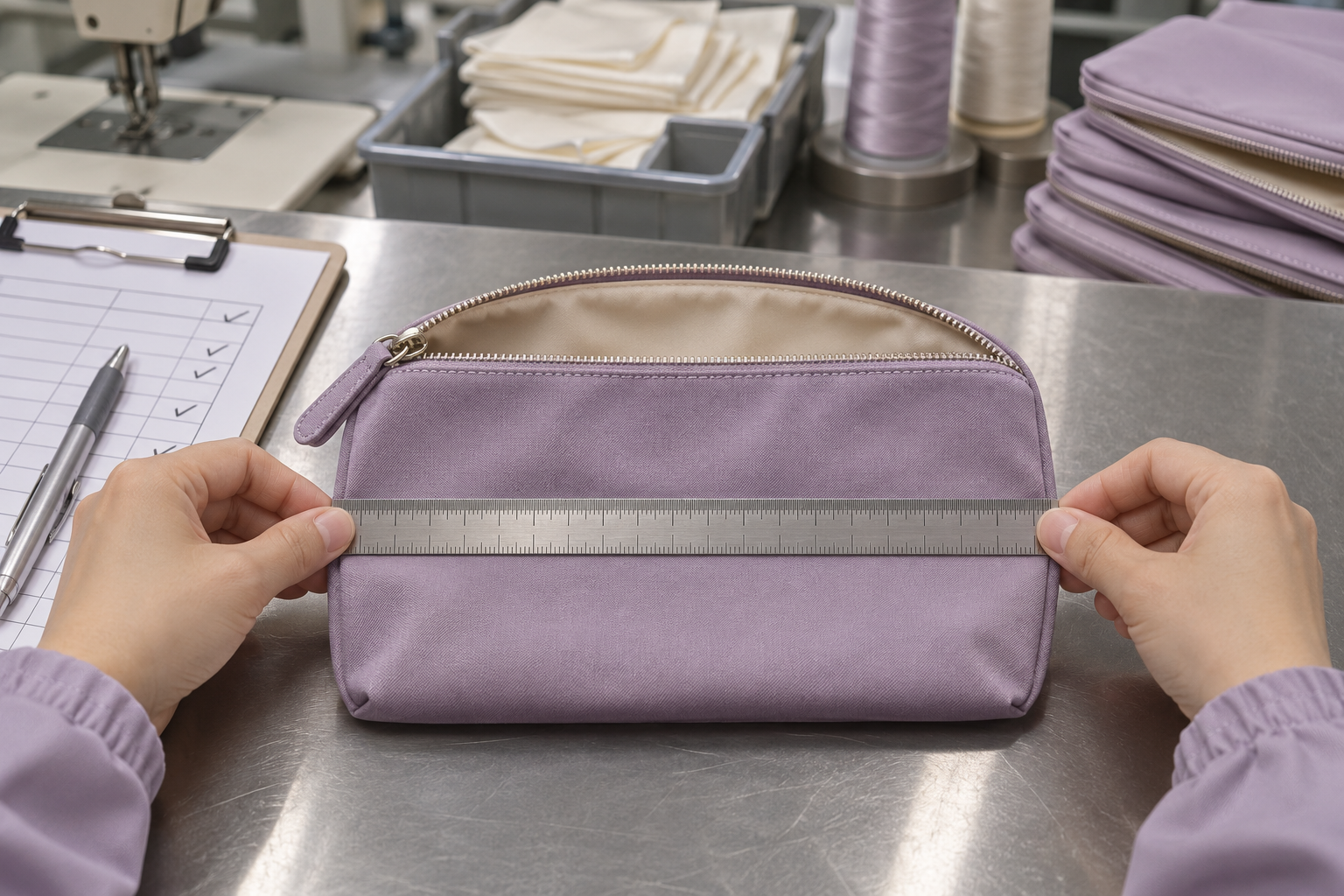
| Dimensions and fit | Measure from the specified points in the specified condition. Use approved contents or a fixture if fit is a requirement. | Measured values, tolerance, and any fixture or load used. |
| Zipper and hardware | Operate the closure through its intended travel. Check attachments and finish against the approved criteria. | Location and condition of any snag, separation, loose part, or finish mismatch. |
| Seams and lining | Turn back accessible lining and inspect seams, pocket joins, and areas near the closure. | Defect description, location, unit identification, and a close-up. |
| Branding | Check artwork, orientation, and placement against the current proof and specified measurement points. | Artwork revision and a photo showing the position reference. |
For an agreed functional or durability check, have the inspector record the test conditions and any limits. Treat an on-site zipper movement check as evidence of operation under the observed conditions. Where the order requires performance or compliance testing, verify the separate evidence against the applicable requirements and the relevant SKU.
How Do I Reconcile Bags, Labels, and Cartons?
Trace the physical bag to its unit label, outer carton, and packing-list entry. For each opened carton, record its identifier, the SKU and color on the carton mark, the observed unit labels and counts, and any mixed assortment. Where barcode scanning is required, compare the scanned result with the approved SKU mapping. Look at the actual bag as well, because a readable barcode can still belong to the wrong colorway.
Compare the total expected quantities with the final packing list by SKU. Keep sampled counts distinct from any full count. If the sampled carton contains the wrong assortment, isolate the affected cartons and decide whether the same packing instruction, label run, or packing shift may have affected others. Check carton protection and dividers against the agreed packing requirement when the product can be marked or deformed in transit.
Request a revised packing list if goods are removed, relabeled, or repacked. The record should show which cartons are ready to ship, which are still held, and whether any rework makes the earlier carton identification obsolete.

How Do I Decide Whether to Release the Shipment?
Review what was inspected, what remains open, and who has authority to release the goods. Check the lot ID, quantity in scope, sampled SKUs, methods, measured values, and defect counts against the brief. Confirm the report distinguishes defective units from individual findings when the approved plan uses one of those counting methods. A report marked pass is useful when you can match it to the goods being dispatched and all other release conditions are met.
For a failed or incomplete check, hold the identifiable affected goods and ask the supplier to document containment, correction, and how the correction will be verified. Agree whether the reinspection covers the original issue, additional checks affected by rework, or a new selection of the lot. If a shipment is split, authorize only separately identified goods with evidence that supports that decision.
Release the goods identified in the approved report and revised packing list. Keep the cartons listed as held separated and off the shipping instruction until reinspection evidence is accepted and written release is issued.
If a report refers to a component change that you cannot match to the order documents, use the sample approval and production handoff guide to reconstruct the approved revision before giving a disposition.
Manufacturing Insight: Why Can a Correct Retail Label Still End Up on the Wrong Bag?
When multiple colorways share the same pouch shape or sleeve design, the correct labels can be printed and scanned successfully while still being applied to the wrong bags. Once a bag is inside an opaque sleeve, the error may be hard to detect from the outside. Checking label artwork separately from packed contents leaves that part of the packing process unverified.
Open selected retail packs and compare the physical color or style to the barcode and the carton assortment. If the problem is confirmed, ask the supplier to separate affected stock, verify contents before resealing, and document the corrected carton identifiers. For structured cases with insert cards or accessories, check that the rework preserved the correct contents and pack configuration.
Example Scenario: Correct Barcode, Wrong Colorway Inside
Hypothetical example. An importer orders two colorways of a cosmetic pouch with identical paper sleeves and different SKU stickers. The inspector scans an ivory SKU label correctly, then opens the sleeve and finds a lilac pouch. The report records the physical color, scanned SKU, carton identifier, and a photograph showing the opened pack.
The buyer holds the cartons tied to the affected packing run and asks the supplier to identify other stock handled under the same instructions. The supplier sorts the affected goods and revises the packing list. The buyer asks the inspector to reopen selected packs from the corrected cartons and verify the pouch, barcode, and carton assortment together before authorizing dispatch.
Buyer Checklist for Cosmetic Bag Shipment Release
- Send one dated brief with the controlling specification, sample and packing revisions.
- Confirm lot quantities and which SKUs and cartons will be accessible.
- Agree on the selection method, defect criteria, and any additional checks.
- Ask for actual measurements, observed functional results, and referenced photos.
- Match sampled bag contents, unit labels, carton marks, and packing-list entries.
- Check the report for excluded stock, skipped tests, and unresolved deviations.
- Define containment and reinspection for failed or reworked goods.
- Send a written release that identifies exactly which goods may ship.
Frequently Asked Questions
Can a warehouse team repeat the supplier’s dimensional check after arrival?
Yes, if both teams have the same measurement instructions and reference. Send the warehouse the relevant specification revision, measurement points, and empty or loaded condition used at origin. If the readings differ, compare how the bags were positioned and which units were measured before drawing a conclusion about the full shipment.
How do I inspect a bag sold as part of a gift set?
Inspect the pouch against its own specification and verify the assembled set against the approved pack configuration. If fit depends on the included products, supply representative contents or an agreed fixture before the visit. Ask the inspector to document whether the set closes correctly, whether each item is present, and whether the insert or sleeve position matches the packing reference.
How should I review color when I only have inspection photos?
Use photos to compare the sampled bag and a known reference photographed together under the same conditions. Where color acceptance is important, specify the agreed physical assessment or measurement method and request its result. An isolated image taken under unknown lighting gives limited evidence because the recorded color can vary with lighting, camera settings, and the display used to view it.
What if an agreed test can damage a sampled bag?
Set aside units for that test according to the approved plan and record their IDs and disposition. Agree in advance on who provides the test units and whether any replacement is needed for the shipping quantity. Tell the packing team which units to segregate so a tested unit with damage or visible marks cannot re-enter the shipment.
What should I ask for when inspection findings are recorded on video?
Ask for the report to identify which criterion each clip supports and which unit or carton is visible. For example, a zipper video should show the identified bag, the full closure travel, and the agreed load or empty condition. Keep the original clips with written observations so the inspector’s evidence can be traced when you review the shipment later.
How soon should I send a hold instruction after finding a discrepancy?
Send it as soon as the affected goods can be identified, especially when a pickup has already been booked. Name the held carton range or SKU and ask the responsible party to confirm segregation and tell you whether any goods have moved. Update the disposition once the scope is clear and the agreed corrective evidence has been reviewed.
Accuracy Note
Confirm price, minimum order quantity (MOQ), lead time, certification scope, and regulatory or retailer requirements for the specified materials, quantities, destination market, and current project. Confirm inspection methods, defect limits, required tests, and release authority in the project documents before relying on inspection results for dispatch.
Set Your Inspection Requirements Before Production
Share your bag specification, SKU list, packaging requirements, and acceptance criteria so the inspection brief can be agreed before the order is placed. See where inspection fits in the custom bag manufacturing services process.