How Do I Turn a Cosmetic Bag Idea or Reference Photo Into a Production-Ready Specification?
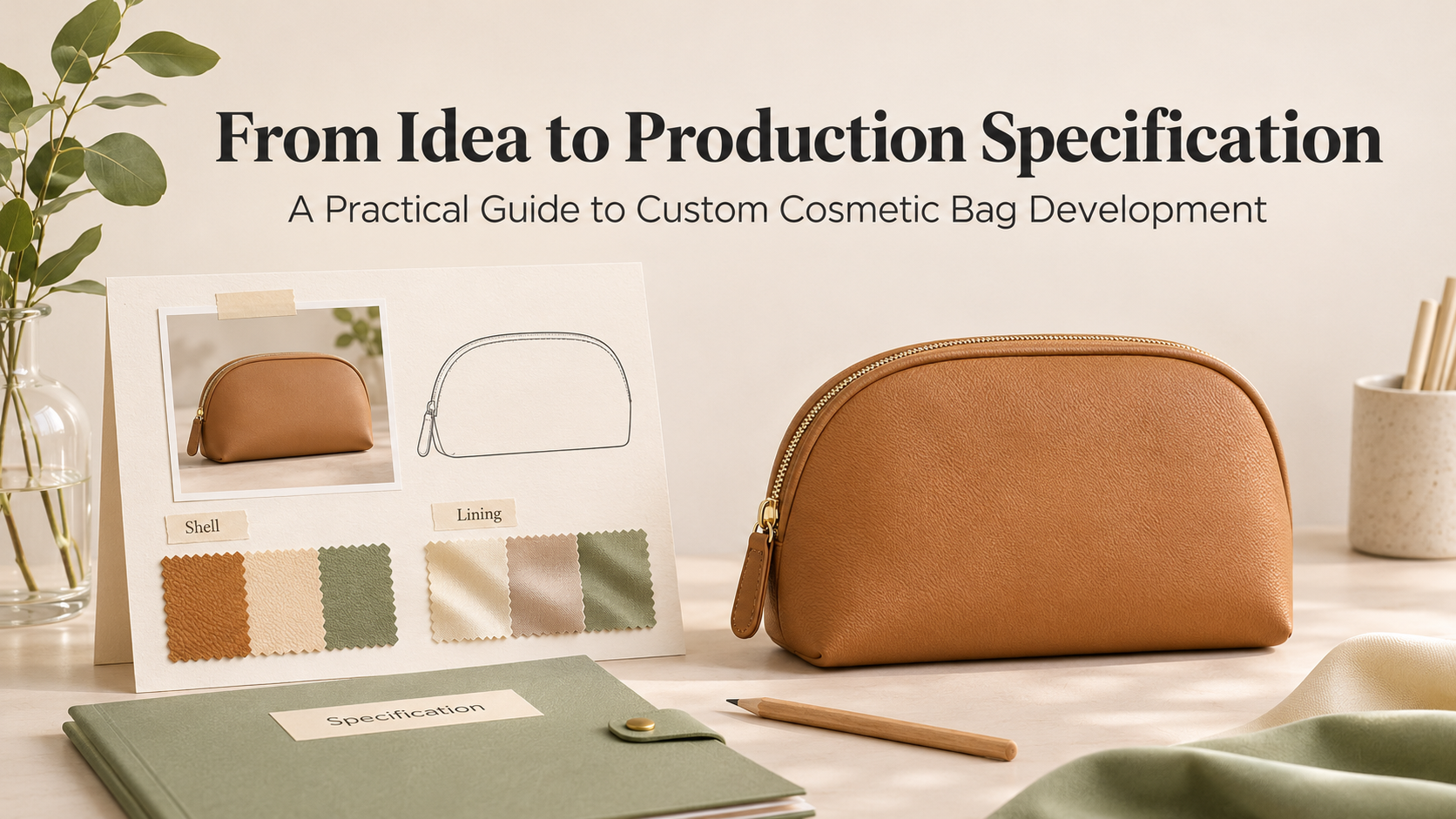
Turn a cosmetic bag idea into a production-ready specification by separating the appearance you want from the measurable details a manufacturer needs to reproduce it. A reference photo can communicate shape, style and mood, but it cannot reliably establish material composition, finished dimensions, internal construction or acceptable variation.
For beauty brands, private label founders and sourcing teams, the practical task is to replace assumptions with documented decisions. This guide explains how to annotate references, define measurements, build a bill of materials, specify branding and packaging, and manage changes through sampling. You do not need to know every manufacturing term before contacting a supplier. You do need to identify what is fixed, what requires a proposal and what must be approved before bulk production.
Quick Answer
To turn a cosmetic bag idea or reference photo into a production-ready specification, create an annotated brief covering intended use, finished dimensions, materials, construction, logo placement, packaging and acceptance requirements. Ask the manufacturer to identify missing information and propose practical options before sampling. Then use sample feedback to update the drawings, material references and measurement table. Keep the approved sample and specification linked by a revision identifier. Production readiness means the buyer and manufacturer have resolved the details needed to make and inspect the bag; it does not mean that a photograph or an attractive sample alone authorizes bulk production.
Buyer Snapshot: What Must Be Defined?
| Decision area | Information to record | Why it matters |
|---|---|---|
| Intended use | Contents, user, opening access and carrying conditions | Connects appearance with actual function |
| Dimensions | Measurement points, units, bag condition and agreed tolerances | Prevents different interpretations of the same size |
| Materials | Shell, lining, reinforcement, trims and reference identifiers | Defines what the bag is made from |
| Construction | Panel layout, pockets, seams, closures and attachments | Explains how the components work together |
| Branding and packaging | Artwork, placement, decoration method and packing arrangement | Controls the finished presentation |
| Acceptance requirements | Inspection methods, functional checks and agreed limits | Makes approval and inspection more consistent |
| Release control | Current revision, sample identity, open issues and authorization | Prevents obsolete instructions reaching production |
Table of Contents
- Making a cosmetic bag idea ready for development
- Annotating a reference photo
- Defining dimensions and usable capacity
- Building the bill of materials
- Specifying construction, branding and packaging
- Confirming the brief before sampling
- Releasing a specification for production
- Example scenario
- Buyer checklist
- Frequently asked questions
What Makes a Cosmetic Bag Idea Ready for Development?
A development-ready idea explains what the bag must do, what it should look like and which decisions are still open. A production-ready specification goes further: it records the resolved requirements that the manufacturer can follow and the buyer can inspect.
Start with the intended contents and sales context. A pouch holding a fixed skincare set has different fit requirements from an empty retail makeup bag. The first needs to accommodate identified products; the second may need a broader capacity and access brief.
If you are unsure about the format, the cosmetic bag category can help you describe the general shape. A category reference should still be followed by a project-specific drawing and material selection.
For example, “a structured travel pouch that holds the supplied bottles upright” is a more useful starting point than “a premium bag like this photo.” Add the features that matter most, such as opening access, packability or a particular exterior texture.
Buyer action: divide the brief into confirmed requirements, supplier proposals needed and unresolved decisions. Do not allow an unanswered field to become an undocumented factory assumption.
How Should I Annotate a Reference Photo?
Label the specific features you want to retain, change or exclude, and mark anything the image cannot establish. The manufacturer should not have to decide whether you are referencing the silhouette, texture, color, pocket arrangement or entire design.
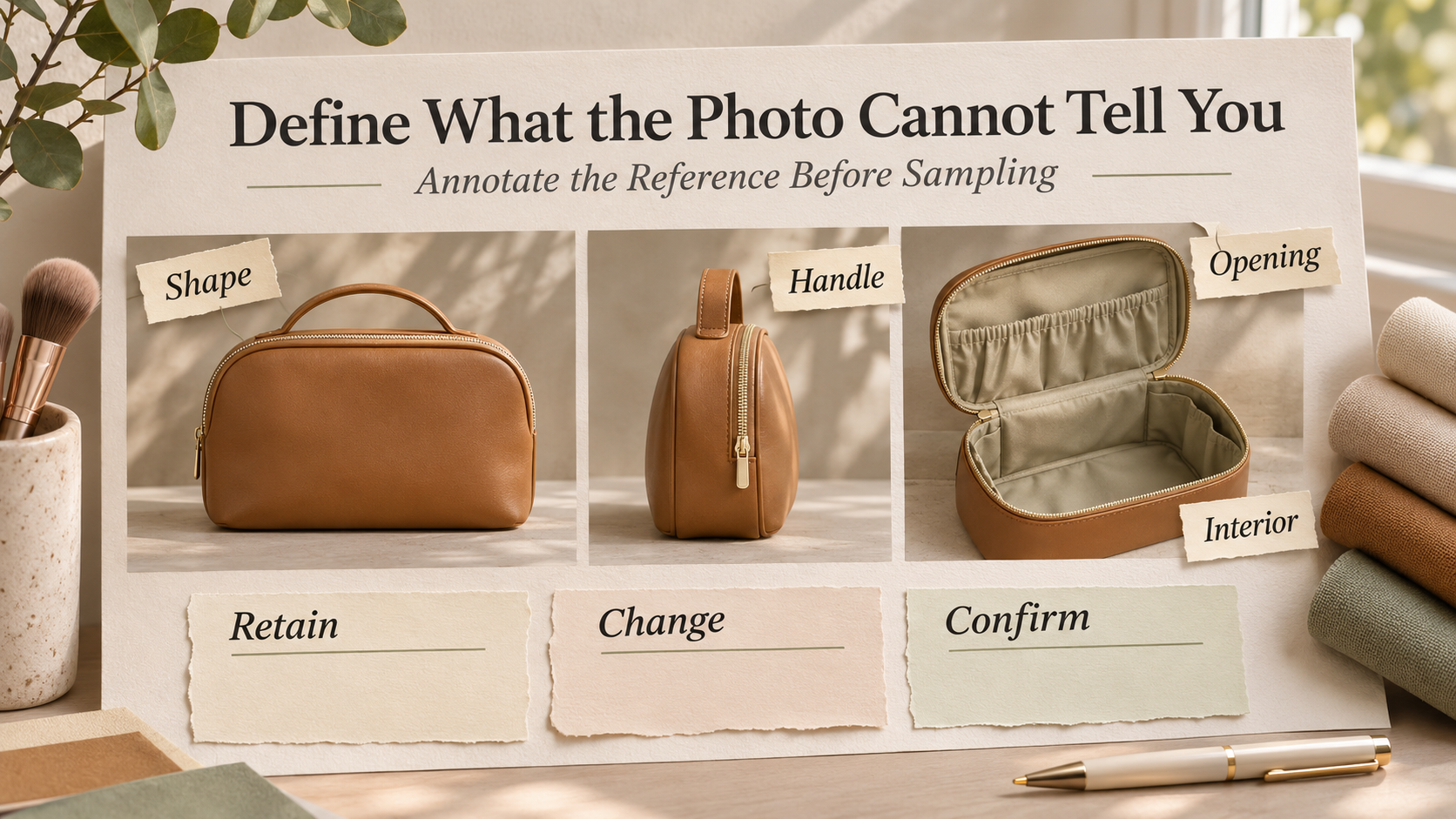
Use front, side, base and interior views where available. If you only have an exterior image, explicitly mark the lining, pocket layout and internal reinforcement as unknown. A photographed texture does not establish fiber composition, coating chemistry or thickness.
Keep references separated by purpose. For example, identify one image as the shape reference and a physical swatch as the color reference. Otherwise, the supplier may combine details you never intended to use together.
- Retain: the rounded silhouette and wide opening.
- Change: the handle position and exterior branding.
- Exclude: the decorative tassel.
- Confirm: the lining, base support and pocket construction.
Buyer action: ask the supplier to return an annotated sketch showing its interpretation. Resolve differences before treating the drawing as an instruction for sampling.
How Do I Specify Dimensions and Usable Capacity?
Specify finished measurements with clear endpoints, units and measurement conditions, then verify fit with the intended contents. Overall width, height and depth do not fully describe the usable interior or the space available through the opening.
For a soft bag, state whether measurements are taken empty and relaxed, laid flat or supported into its intended shape. For a tapered pouch, identify whether width refers to the top, base or widest point. Avoid mixing these definitions within the same measurement table.
A point of measurement is a defined dimension linked to a drawing or photograph. Techpack documentation commonly records these points together with tolerances, as described in Techpacker’s measurement-table guidance. The actual limits for your bag should be agreed for its design and function.
| Feature | Define in the specification | Verify on the sample |
|---|---|---|
| Body dimensions | Endpoints and whether dimensions are external or internal | Measurements under the stated conditions |
| Opening | Required access and any limiting opening dimension | Insertion and removal of intended contents |
| Pockets | Location, usable depth, opening and intended contents | Fit, access and interference with the main compartment |
| Handle or loop | Attachment locations and usable clearance | Grip, attachment security and loaded handling |
For example, a bottle may fit inside the main compartment but fail to pass comfortably through a curved zipper opening. Increasing the exterior dimensions alone may not correct that access problem.
Buyer action: supply the intended contents or an agreed dimensional reference. Record functional fit requirements separately from dimensional tolerances, and ask the factory to confirm that both can be met.
What Belongs in the Bill of Materials?
The bill of materials should identify the components used in the finished bag and connect them to approved references. “PU exterior with polyester lining” can describe a direction, but it leaves important purchasing and construction decisions unresolved.
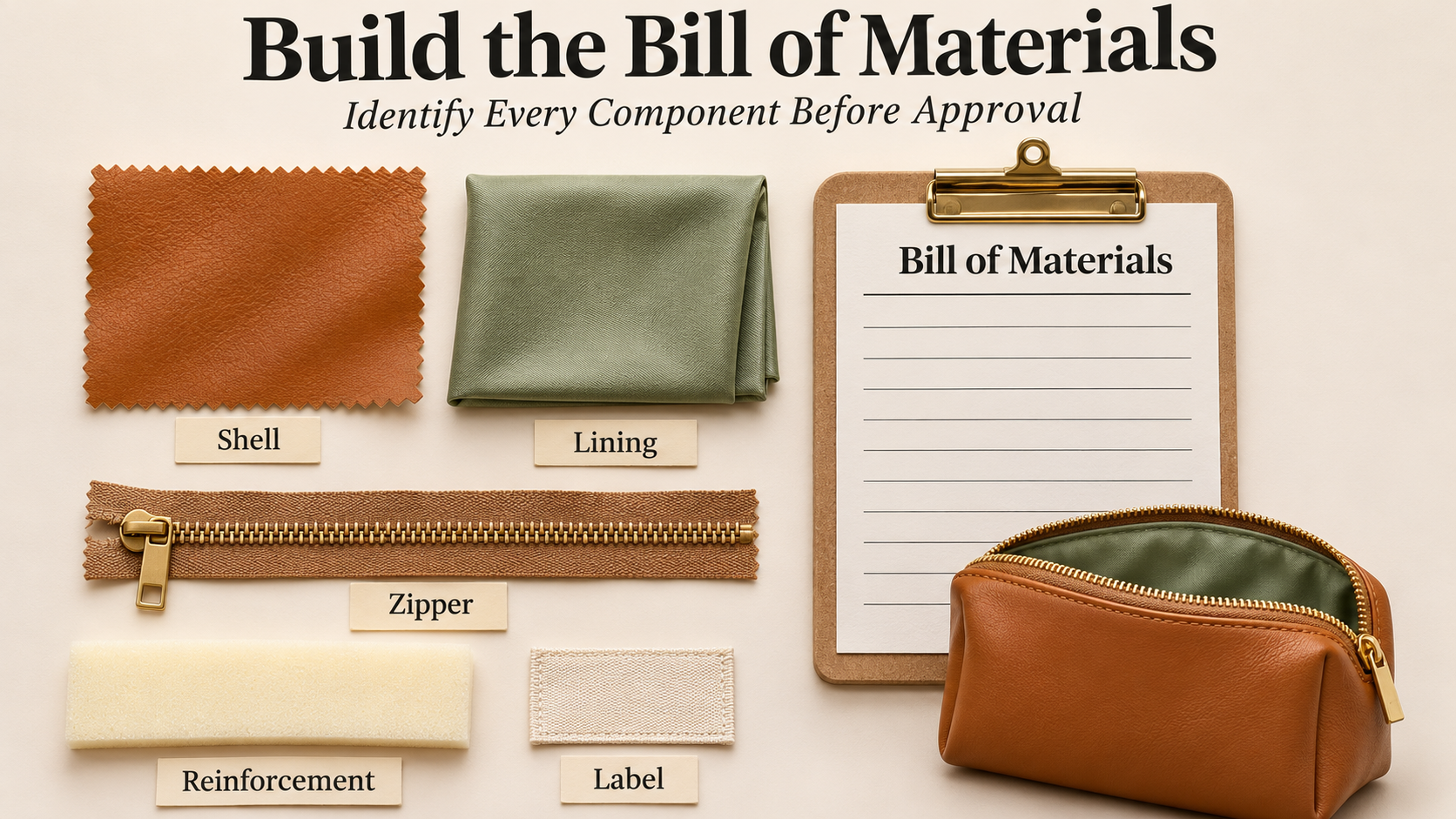
Record the shell, backing or coating where relevant, lining, padding, reinforcement, zipper, puller, thread, labels and other trims. Include packaging components in the BOM or link them to a separate packaging specification. Techpacker’s material-table guidance similarly organizes fabrics, trims, hardware, labels and packaging as identifiable components.
For each component, record its location, description, supplier material code where available, color reference, relevant technical characteristics and approval status. A retained swatch can help establish appearance and hand feel, but it should not be the only identification method.
Manufacturing Insight: Hidden Layers Can Change the Result
The shell is only part of a bag’s structure. Lining, backing, foam, reinforcement and seam construction can affect how it stands, folds and feels. Replacing a soft lining with a stiffer alternative may change the finished shape even when the outside fabric stays the same.
For example, two samples may resemble the reference photo while using different internal support. The difference becomes clearer when the bags are empty, filled or packed flat.
Buyer action: ask the manufacturer to identify hidden layers and any temporary sample substitutions. Require written approval before an alternative component replaces an approved material.
How Should I Define Construction, Logo Placement and Packaging?
Use drawings and written callouts to describe how the bag is assembled, how branding is positioned and how the finished unit is packed. These instructions should agree with the measurement table and material list.
Show pocket orientation, zipper direction, handle attachments, internal edge finishing and any reinforcement locations. If the exact assembly method is open, state the required result and request a factory proposal rather than guessing a technical instruction.
Logo placement needs a reference point. Specify its finished size, orientation and position relative to an identified seam, edge or centerline. Link the specification to the correct artwork file and decoration method.
A logo that looks centered on a flat panel may appear differently after the base is formed or the pouch is filled. Ask the supplier to check placement on the assembled sample, particularly near curves, seams or padded areas.
Packaging should state whether the bag is presented flat, shaped or filled, together with any insert, label, barcode or protective layer. A photograph of a gift box does not establish its internal fit or the packing arrangement.
Buyer action: request a finished sample with the proposed branding and a representative packing arrangement. Confirm presentation and fit together, rather than approving each from unrelated images.
What Should the Factory Confirm Before Sampling?
Before sampling, ask the factory to confirm the brief it will follow, the questions still open and the purpose of the sample. A shape-development sample and a sample intended to represent production materials serve different purposes.
Request a feasibility review covering material availability, construction, logo compatibility, opening access and packaging. If a material or trim is unavailable for the first sample, record the substitution and identify which decisions cannot be approved from that sample.
For example, a stock-color prototype may help evaluate shape and access. It does not confirm the final color, decoration appearance or behavior of a different production coating.
Ask the manufacturer to connect its quotation to the same specification revision. For the commercial information accompanying the design file, use the custom cosmetic bag RFQ checklist.
Buyer action: obtain written confirmation of the sample scope, proposed substitutions, outstanding decisions and commercial assumptions before work begins.
How Does a Development Specification Become Ready for Production?
Update the specification after sample review, resolve conflicting instructions and issue an identified revision with a clear release decision. An approved appearance does not automatically approve all materials, tests, packaging or production arrangements.
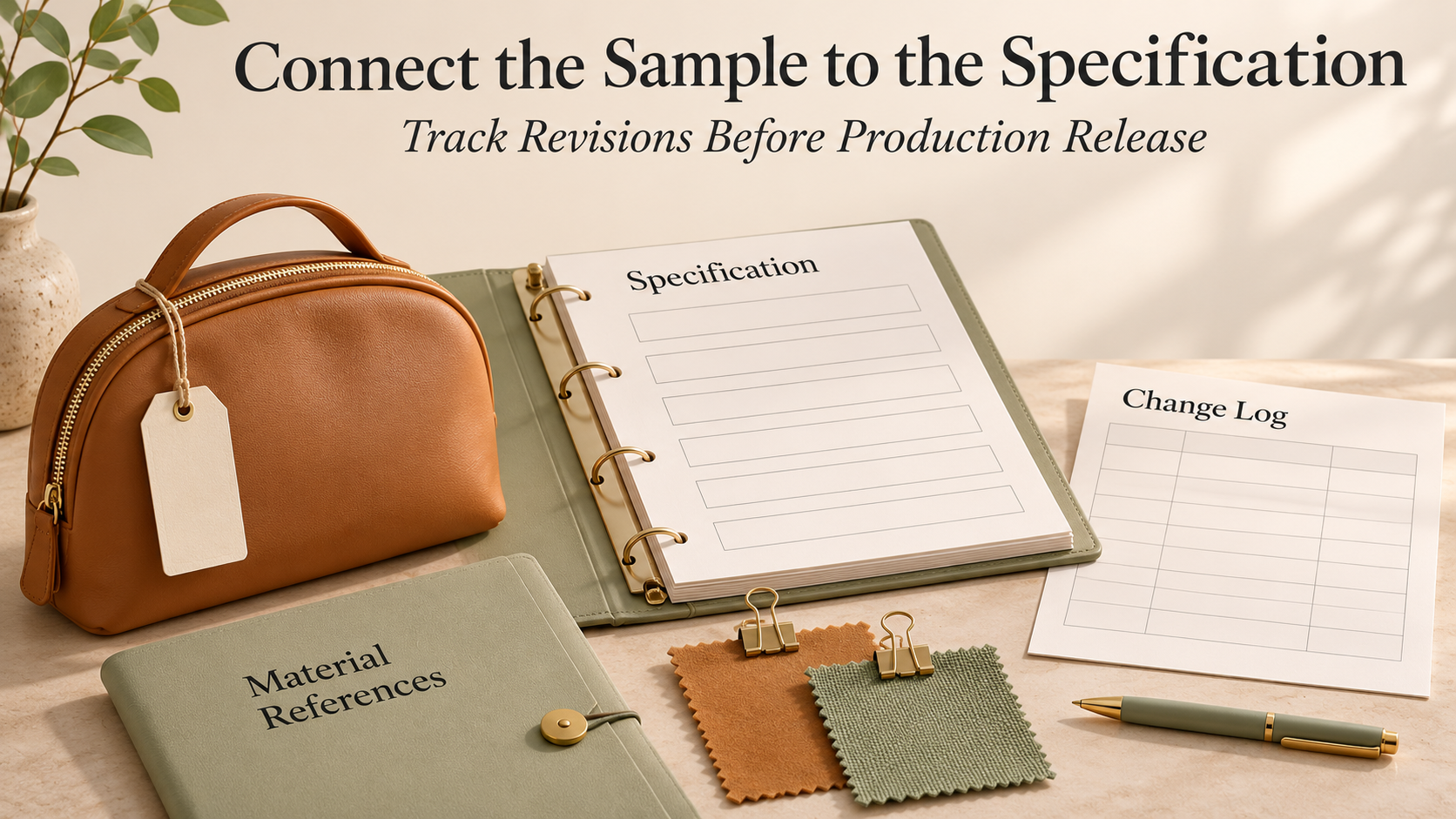
Use the sample review to replace provisional details with confirmed information. Record corrections in the master file instead of leaving them only in email or messaging threads. The cosmetic bag sample approval checklist provides a separate framework for reviewing the physical bag.
Each release should identify the style, revision, issue date, related artwork, material references and sample. A change log should explain what changed and whether the change affects price, sourcing, testing or the schedule.
| Status | What it means | Buyer decision |
|---|---|---|
| Concept review | Appearance and intended use are being defined | Request options and clarify unknowns |
| Sampling release | The brief is sufficient for the stated sample purpose | Authorize that development work |
| Revision required | Some requirements are unverified or not met | Record corrections and the evidence needed |
| Production release | The agreed specification and required approvals are complete | Issue explicit authorization under the agreed order terms |
If the physical sample and written specification disagree, resolve the conflict before release. Do not assume everyone will choose the same source as authoritative.
Buyer action: ask the manufacturer to acknowledge the released revision and withdraw superseded instructions from use. Keep bulk inspection requirements separate from the decision that the design is ready to manufacture.
Example Scenario: Turning a Travel Pouch Reference Into a Clear Brief
This is a hypothetical development example, not a reported customer project. A skincare brand has a reference photograph of a rounded pouch and wants a private label version for a travel set.
The photograph shows the exterior and handle, but not the lining or base construction. The buyer annotates the rounded shape as a preference, removes the decorative puller from the brief and identifies the bottles the pouch must hold.
The manufacturer is asked to propose the opening arrangement, internal support and lining. Each proposal remains unapproved until the buyer reviews the information and relevant sample evidence.
The resulting specification records the agreed measurement points, component references, artwork position and packing method. If sample review shows restricted access through the opening, that issue is added to the change log and corrected before production release.
The useful outcome is a traceable set of decisions: the reference explains the design direction, while the released specification explains what to manufacture.
Buyer Checklist Before Releasing the Specification
- Identify the style, current revision and intended use.
- Label reference images by the features they are meant to communicate.
- Define measurement endpoints, units, conditions and agreed tolerances.
- Verify opening access and usable capacity with the intended contents.
- Identify shell, lining, reinforcement, closures, trims and packaging.
- Link the correct artwork to the decoration method and placement drawing.
- Record inspection requirements and any testing still needed.
- Resolve substitutions, sample discrepancies and conflicting instructions.
- Obtain acknowledgement of the released revision and explicit production authorization.
Frequently Asked Questions
Can I start if I only have a reference photo?
Yes. A reference photo can start a development discussion if you explain which features matter and identify the details you do not know. Add intended contents, approximate size direction, branding needs and target use. Ask the manufacturer to propose the missing technical details. Treat the first brief as a development document until materials, measurements and construction have been confirmed.
Do I need CAD software or a professional technical drawing?
No particular software is essential for an initial brief. Clear annotated photographs, sketches and tables can communicate the requirements. More detailed drawings may become useful for complex structures, repeated components or precise placement. The important point is that the buyer and manufacturer use consistent references and can identify each requirement without relying on an informal verbal explanation.
Is a specification sheet the same as a tech pack?
A specification sheet may be one part of a broader tech pack. A tech pack can bring together drawings, measurements, materials, artwork, construction notes, packaging and revisions. Suppliers may use these terms differently, so agree on the actual documents required. A file’s title matters less than whether it contains the information needed for the agreed development or production stage.
What if I do not know the correct material thickness or construction method?
Describe the required result and ask the manufacturer to propose suitable options. Explain the desired structure, feel, cleaning expectations and intended contents. Keep proposed materials clearly identified and compare relevant samples before choosing. Once an option is approved, record its specification and reference rather than leaving a broad instruction such as “use a suitable material” in the production file.
Should I use one specification for every color?
A shared specification can work when the structure and measurements stay the same, but each colorway needs an identifiable component mapping. Shell color, lining, zipper tape, thread, logo and packaging may vary independently. If a colorway uses a different coating, supplier material or decoration process, record that difference and determine whether additional sample approval or verification is needed.
Does a production-ready specification guarantee consistent bulk quality?
No. It gives the manufacturer and buyer a defined reference, but consistent output still depends on material control, production execution and inspection. The specification should connect to the agreed quality plan and acceptance requirements. A satisfactory development sample does not establish the condition of every bulk unit, and a material substitution may require renewed review even when the design remains unchanged.
Accuracy Note
This guide provides a development framework, not a universal manufacturing standard. Material availability, MOQ, pricing, sample timing and production lead time must be confirmed for the actual design, quantity, color split, decoration and packaging. Performance, certification and regulatory requirements should be checked for the intended product, market and current requirements. Agree project-specific tolerances and acceptance criteria with the manufacturer.
Prepare Your Reference for a Development Discussion
Share your reference images, intended contents, target size, branding files and the decisions that are still open. Ask Bling Accessory Co. to review the brief and identify the information needed for the next development stage.
Author: Website Operations & Digital Marketing Manager
Last Updated: November 13, 2026