How Do I Choose a Reliable Custom Cosmetic Bag Manufacturer in China?
By Website Operations & Digital Marketing Manager
Last updated: September 27, 2026
Choose a reliable custom cosmetic bag manufacturer in China by checking project fit, verifying who controls production, and requiring documented approvals before placing an order. A polished catalog or competitive unit price is useful for discovery, but neither shows whether a supplier can reproduce your approved bag consistently.
This guide is for beauty brands, private label businesses, retailers, and promotional buyers sourcing OEM or ODM cosmetic bags. It explains how to move from an initial shortlist to a justified supplier decision: define the product, evaluate manufacturing responses, approve a representative sample, compare complete quotations, and verify the first production run. The aim is to identify a manufacturer whose capabilities, communication, and production controls match your specific materials, construction, order requirements, and destination market.
Quick Answer
To choose a reliable custom cosmetic bag manufacturer in China, assess evidence in stages: product capability, business identity, sample accuracy, quotation scope, quality controls, and production scheduling. Send shortlisted suppliers the same brief and ask each to identify assumptions, outsourced processes, and approval requirements. Compare samples against a written specification, not just appearance. Before ordering, agree on material substitutions, inspection criteria, packaging, payment milestones, and responsibility for defects. Treat the first order as a further validation step. A manufacturer is a stronger match when its documented process explains how the approved sample will become repeatable bulk production.
Buyer Snapshot: What Evidence Should Drive the Decision?
| Decision factor | Evidence to request |
|---|---|
| Product fit | Comparable construction and a written review of your proposed design. |
| Manufacturing responsibility | Identified contracting entity, production location, and ownership of outsourced work. |
| Development capability | A sample plan that separates design trials from production approvals. |
| Commercial fit | An itemized quotation with MOQ conditions, exclusions, and delivery scope. |
| Quality control | Agreed checks, defect definitions, inspection access, and corrective action responsibilities. |
| Schedule credibility | Milestones tied to material availability, approvals, production, and shipment. |
| Repeatability | Controlled specifications, retained references, and a documented change process. |
Table of Contents
- Define the project before shortlisting
- Shortlist for manufacturing fit
- Verify responsibility for production
- Evaluate development capability
- Compare quotations and schedules
- Approve samples and quality controls
- Make the supplier decision
- Validate the first order
- Example scenario
- Buyer checklist
- Frequently asked questions
What Should I Define Before Contacting a Custom Cosmetic Bag Manufacturer?
Define the intended use and nonnegotiable requirements before comparing suppliers. Without a common brief, quotations may describe different bags even when their reference images look similar.
Include dimensions, items the bag must hold, opening style, outer material, lining, logo, quantity by color, packaging, destination, and required arrival date. If a specification is undecided, label it as an open question and request clearly separated alternatives.
For example, a pouch intended for a filled skincare gift set needs a fit check with representative contents. A photograph of an empty sample cannot establish usable capacity or the ease of closing its zipper.
Buyer action: Create a dated brief and distinguish mandatory features from cost-saving options. Use that same version with every shortlisted supplier.
How Do I Shortlist Manufacturers That Fit My Product?
Shortlist by relevant construction and development capability, then evaluate commercial fit. A large catalog does not establish competence with every material, structure, or decoration method shown.
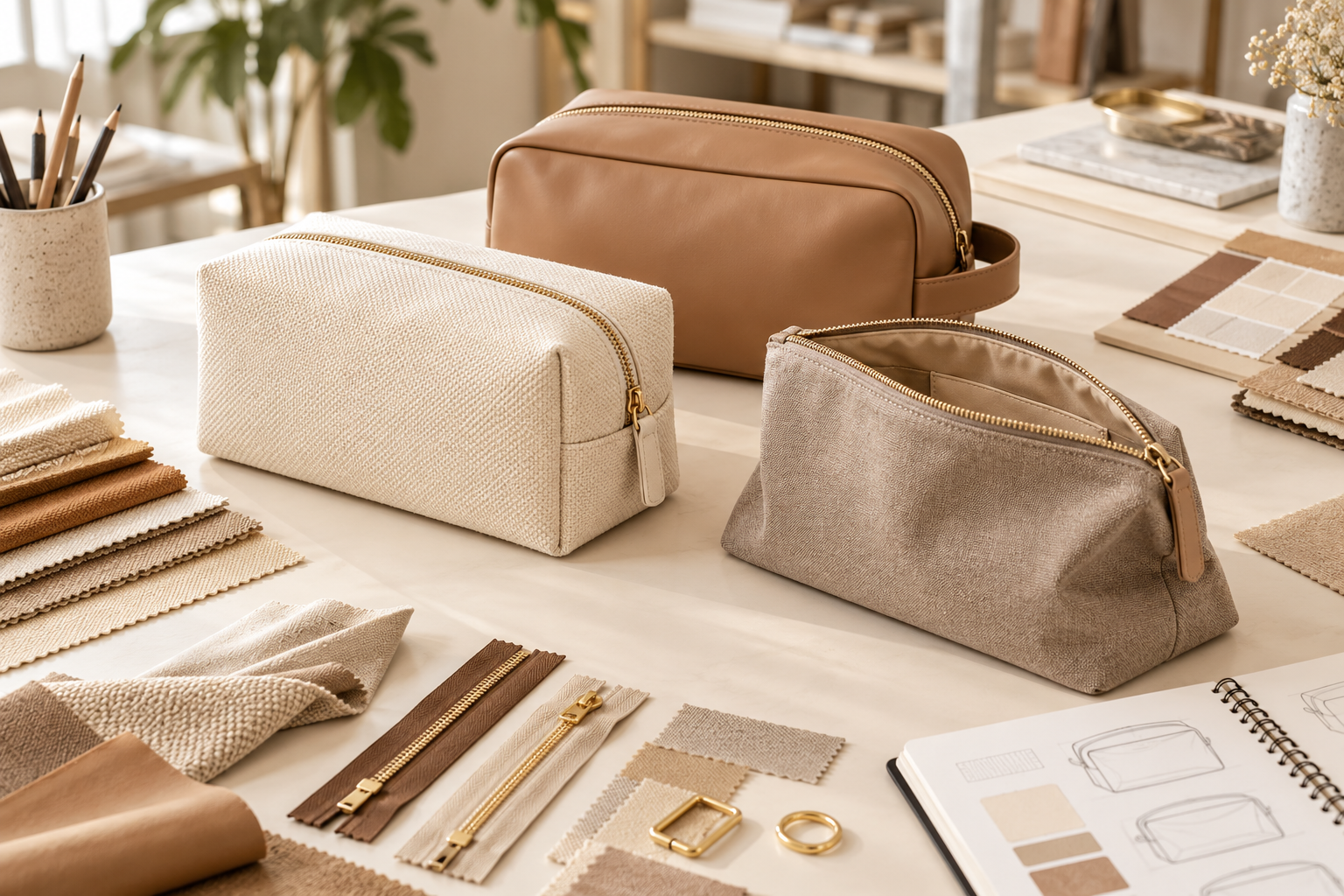
Ask for examples that match the difficult features of your design: a structured base, curved zipper, internal divider, transparent panel, or decorated textured surface. The cosmetic bag collection can help identify the product format you want to describe in your brief.
For example, experience sewing a flat fabric pouch does not by itself demonstrate the ability to develop a padded organizer with fitted compartments. Ask how the proposed manufacturer would control compartment dimensions and assembly consistency.
Buyer action: Request a short feasibility response stating which features are routine, which need trials, and which cannot be supported within your requirements.
How Can I Verify Who Will Actually Make My Bags?
Verify the relationship between the contracting business, production site, and people responsible for quality. “Factory direct” is a claim to investigate, not an approval decision.
Request the legal business identity, production address, and an explanation of in-house and outsourced processes. Where different entities handle contracting, manufacturing, exporting, or payment, obtain a documented explanation and independently resolve inconsistencies before committing funds.
Printing or other specialist operations may be outsourced. The relevant question is who approves those operations, checks incoming results, and corrects failures. A live walkthrough or independent site assessment can add evidence, but its scope should match your concerns.
Buyer action: Record the production responsibility chain. For a deeper identity check, use the guide to verifying whether a cosmetic bag supplier is a real factory.
What Shows That a Manufacturer Understands My Design?
A useful technical response explains how your choices affect assembly and identifies what must be tested. Agreement with every request is less informative than a specific, workable development plan.
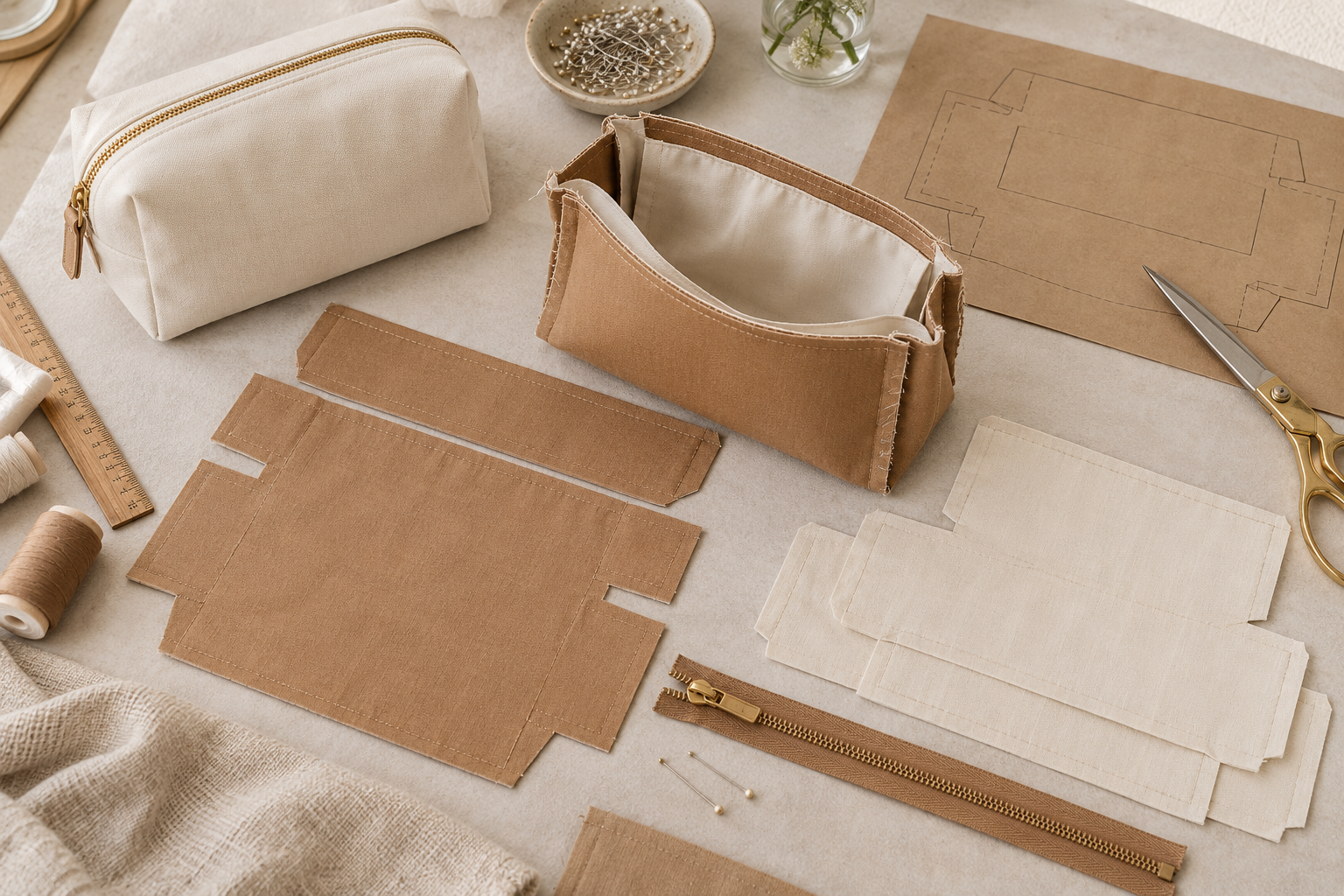
Material thickness, lining, reinforcement, and folded seam allowances contribute to the layers the operator must sew. A thicker combination may require a construction adjustment near corners or zipper ends. Ask the developer to explain the proposed solution and show it in the sample.
Logo production also interacts with assembly. A panel decorated before sewing needs placement allowance for seams and shaping; a completed bag may restrict access for decoration. The appropriate sequence depends on the bag structure and logo method.
For example, moving a printed logo near a curved seam can change its visible position after assembly. Approval should therefore cover the finished bag, not only the flat artwork.
Buyer action: Request a written list of technical risks, proposed trials, and approval points. Retain the decisions with your specification so they remain available to production and QC.
How Should I Compare Price, MOQ, and Lead Time?
Compare complete quotations for the same approved specification and delivery scope. A lower unit price is meaningful only after differences in materials, packaging, development charges, and included services are understood.
MOQ can vary by material, custom color, logo method, component sourcing, and packaging. Ask whether the limiting minimum comes from bag assembly or an upstream purchase. A stock material alternative may change the minimum, but its appearance and reorder availability still need approval.
Ask when the lead-time clock starts and what can interrupt it. Material confirmation, artwork approval, sample sign-off, payment, and production scheduling may have separate dependencies. Distinguish the expected shipment date from the date goods must arrive.
For example, a quotation using available fabric cannot be compared directly with one allowing for custom-dyed fabric. Ask both suppliers to quote the same material route before judging the price difference.
Buyer action: Reconcile assumptions line by line using the guide to getting an accurate cosmetic bag manufacturing quote. Keep accepted alternatives separate from the base specification.
What Must the Sample and QC Plan Prove?
The sample should establish the approved product, while the QC plan explains how bulk production will be checked against it. Neither document replaces the other.

A development sample may use a temporary zipper, substitute lining, or provisional logo. List every deviation and decide which requires another physical sample. Do not let approval of the shape become accidental approval of unspecified components.
Define measurable or observable acceptance criteria: dimensions and agreed tolerances, zipper operation, seam appearance, logo position, lining attachment, cleanliness, and packaging. Include filled-product checks where the intended use makes them relevant.
For example, checking whether a zipper closes on an empty pouch does not show that it operates properly around the intended contents. The approved use condition should form part of the evaluation.
Buyer action: Approve a dated specification and representative sample, agree how references will be retained, and document inspection timing, reporting, and the response to nonconforming goods.
How Do I Make the Final Supplier Decision?
Use minimum approval requirements before weighing price or convenience. A favorable commercial offer should not compensate for unresolved identity, unapproved substitutions, or refusal to define acceptance criteria.
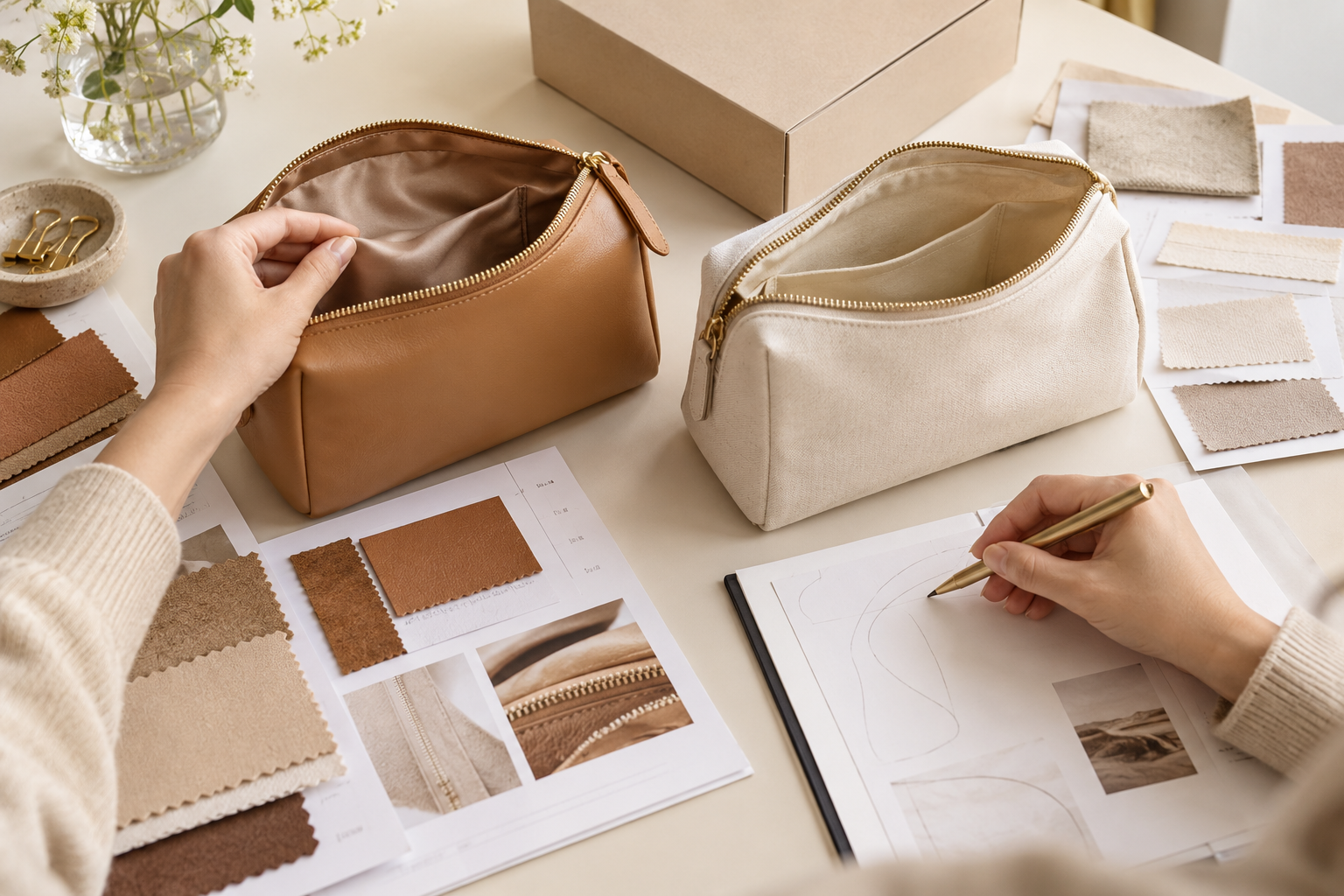
| Decision | When it is appropriate |
|---|---|
| Proceed to the next stage | Required evidence is consistent, the product fits the brief, and responsibilities are documented. |
| Hold for clarification | A material, sample deviation, schedule assumption, or commercial term remains unresolved but has a defined resolution path. |
| Do not approve | Critical inconsistencies remain unexplained, required capabilities are unavailable, or the supplier will not accept necessary controls. |
Among suppliers that meet the essential requirements, weigh total project cost, development responsiveness, handling of changes, and reorder suitability. These priorities may differ between a one-off promotional campaign and a continuing retail range.
For example, an unanswered packaging question may justify a temporary hold; an inability to produce the required structure may eliminate the supplier for this project.
Buyer action: Keep a decision record containing the evidence, open issues, and reason for selection. The supplier interview questions can help close remaining information gaps.
How Do I Validate Reliability During the First Order?
Use the first order to check whether the supplier follows the approved process under production conditions. Sample approval establishes a reference; it does not guarantee execution across the order.
Agree on checkpoints appropriate to the project, such as material confirmation, early production review, finished-goods inspection, and packing verification. Define who receives evidence and who authorizes action when a discrepancy appears.
For example, a proposed lining substitution should trigger a documented review before use. Whether it requires a new sample or testing depends on the change and the product requirements.
Buyer action: After receipt, review product conformity, actual milestones, communication, and corrective actions. Approve reorders against a controlled specification and reconfirm material availability rather than relying on “same as last time.”
Example Scenario: Choosing a Manufacturer for a Retail Travel Pouch
This is a hypothetical sourcing example, not a customer case or a reported project result.
A beauty brand needs a lined travel pouch that fits its planned product assortment. One proposal appears cheaper but leaves lining, internal reinforcement, and retail packaging unspecified. Another identifies those components and flags the need for a filled-pouch trial.
The buyer does not select the second proposal automatically. It sends both suppliers the same clarified brief, requests comparable quotations, and asks for samples representing the intended materials and contents.
The selection then depends on evidence: product fit, resolved sample deviations, transparent commercial scope, and an agreed production control plan. This process makes the price comparison useful without treating a higher price as proof of reliability.
Buyer Checklist Before Approving a Manufacturer
- The intended use and mandatory product requirements are documented.
- The contracting entity, production location, and payment arrangements are understood.
- In-house and outsourced processes have named responsibilities.
- The sample represents the approved specification, with deviations resolved.
- Quotation scope, MOQ conditions, and additional charges are clear.
- Schedule milestones distinguish approvals, production, shipment, and arrival.
- Inspection criteria and defect-handling responsibilities are agreed.
- Required market documentation is matched to the proposed product and materials.
- Substitutions, specification changes, and reorder references have an approval process.
Frequently Asked Questions
Can I choose a manufacturer without visiting China?
Yes, remote sourcing is possible, but it requires evidence beyond messages and catalog photographs. Combine identity checks, relevant samples, documented specifications, and agreed inspection arrangements. A live production walkthrough or independent assessment can address specific unanswered questions. Decide whether a visit is necessary based on product complexity, unresolved risks, and the commitments you are considering.
Is a factory always a better choice than a trading company?
No. A factory and a trading company can offer different strengths, and either may be unsuitable for your project. Direct manufacturing access can help technical discussions, while an intermediary may coordinate multiple specialist suppliers. Evaluate transparency, product knowledge, production access, commercial responsibility, and corrective action capability. The supplier’s business model should be clear before you compare its offer.
Should I choose OEM or ODM development?
Choose based on how much of the product you need to define or change. OEM commonly involves production to buyer requirements, while ODM may start from a supplier-developed design; suppliers can use these terms differently. Confirm the actual development scope, modification limits, ownership of artwork or tooling, and any exclusivity agreement. A familiar label does not settle those terms.
Does a low MOQ mean the manufacturer is less reliable?
No. A low MOQ may reflect stock materials, shared components, or a production setup suited to smaller runs. Ask what makes the minimum possible and whether the same choices will remain available for reorders. Reliability depends on whether the supplier can fulfill the agreed specification consistently, not on the minimum quantity alone.
Is an ISO certificate enough to approve a supplier?
No. A certificate should be checked for its holder, scope, covered site, and current status; it does not replace product evaluation. ISO explains that external certification bodies issue certificates, rather than ISO itself. Use its certification guidance when checking such claims, and assess your sample, quality plan, and applicable product documentation separately.
How small should the first order be?
The first order should fit your demand, cash exposure, and the supplier’s feasible production conditions while providing useful evidence about execution. There is no universal trial quantity. Confirm that a smaller order will use the intended materials, construction, and quality controls. If it uses special development arrangements, document what will change when production expands.
Accuracy and Project Requirements
Prices, MOQ, sample timing, production lead time, testing, and documentation must be confirmed for the actual materials, order configuration, destination market, and current requirements. This guide does not establish any supplier’s certification status or product compliance. Manufacturing observations describe considerations to evaluate with the project team; they are not evidence of a completed factory audit.
Discuss Your Cosmetic Bag Project with Bling Accessory Co.
Prepare your reference design, dimensions, material preferences, logo artwork, quantity by color, packaging needs, destination, and required arrival date. Identify any open decisions so they can be addressed in the project discussion.