A supplier quotes a production window, but your launch calendar needs a date you can actually plan around. Custom cosmetic bag production lead time becomes useful once you know what starts the clock, which approvals or components can stop it, and what the supplier means by “finished.” A pouch can be sewn and still be waiting for printed sleeves, carton labels, or inspection release.
This guide is for beauty brands, retail sourcing teams, and promotional buyers comparing OEM or ODM orders after sampling. It shows how to turn a quoted window into dated milestones, compare suppliers on the same basis, and identify which decision you can make now to protect your goods-ready date.
Quick Answer
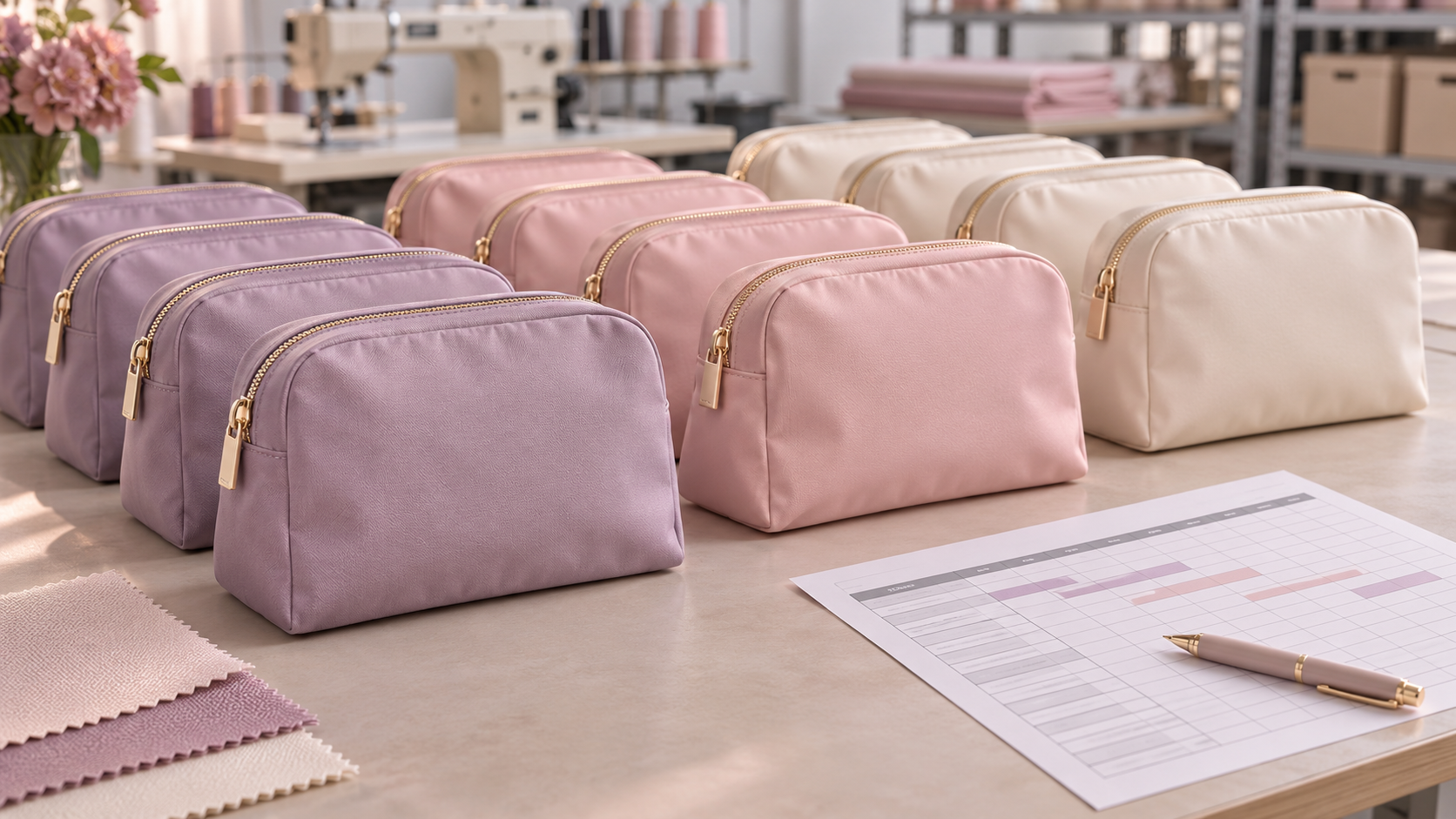
The Bling Accessory Co. cosmetic bag service page lists 30–45 days for production as a planning reference. The listing gives no start or finish milestone and does not specify calendar or working days. For your order, ask the manufacturer to confirm the trigger for starting the clock and a dated goods-ready milestone. Materials, trim availability, logo operations, order mix and factory scheduling can shift that date. Get separate dates for sample approval, packing, inspection release, carrier handover and warehouse receipt so you can see which of those milestones the quoted window covers.
Source for the published range: Bling Accessory Co. cosmetic bag service page.
Buyer Snapshot
| Decision factor | What the buyer should confirm |
|---|---|
| Start milestone | What approvals, materials and order conditions must be in place before the clock starts? |
| Day count | Are days calendar or working days, and what shutdowns affect the schedule? |
| Materials and trims | Which components are available, allocated or still waiting for an upstream supplier? |
| Order mix | What quantities are assigned to each style, color and packing configuration? |
| Line reservation | Is the production slot confirmed, and when does the reservation expire? |
| Packing and QC | When will the agreed lot be packed, available to inspect and cleared for release? |
| Logistics handoff | When and where will the goods pass to the responsible party for transport? |
When Does Custom Cosmetic Bag Production Lead Time Start?
It starts at the milestone the buyer and manufacturer agree to use in the order schedule. Ask the supplier to name that trigger in writing. It could be approval of the production reference, confirmation of purchase terms, receipt of agreed payment, allocation of bulk materials, or a combination of these. A project can clear one condition while several others remain open.
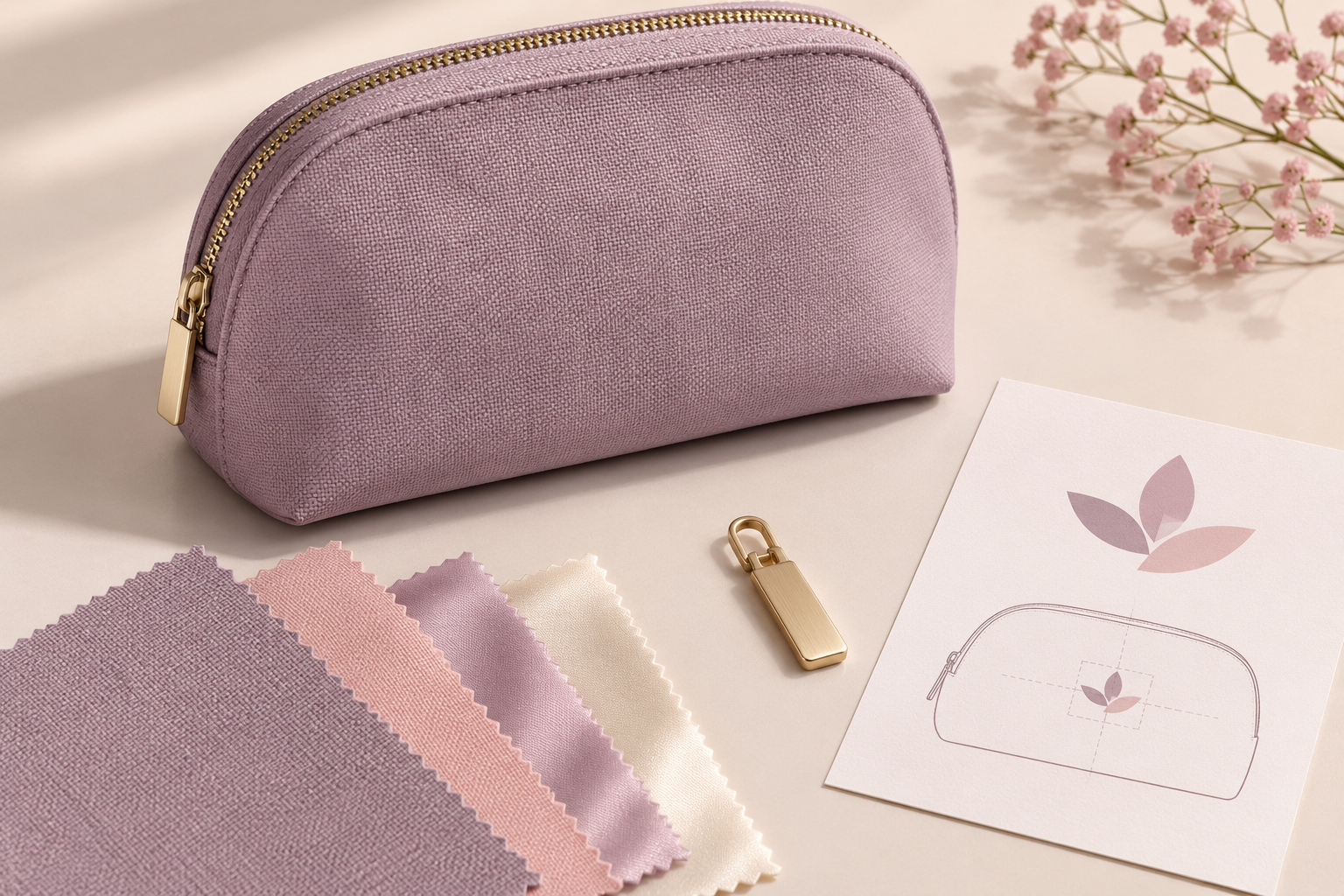
Record the approved sample revision and final specification with the purchase order. If you are still waiting on the production reference, use the custom cosmetic bag sample timeline guide to plan that earlier stage. Then ask whether the factory can confirm the first production slot and which order conditions must be met for that reservation to hold.
For example, a brand can approve a pouch’s shape and stitching while a custom zipper pull is still awaiting color approval. Ask whether the zipper pull approval gates the bulk order, whether other work can proceed in parallel, and when the resulting goods-ready date will be reconfirmed. Record any at-risk work that would require written authorization if the final component changes.
Which Dependencies Can Change the Bulk Production Finish Date?
The finish date can move when work on the longest chain of dependent steps starts late or takes longer. For a simple pouch, the constraint might be the planned sewing slot. For a program with custom trims or retail packing, it might be the arrival of an approved component, a printing step, or the date the packed lot can be inspected.
Materials and trims
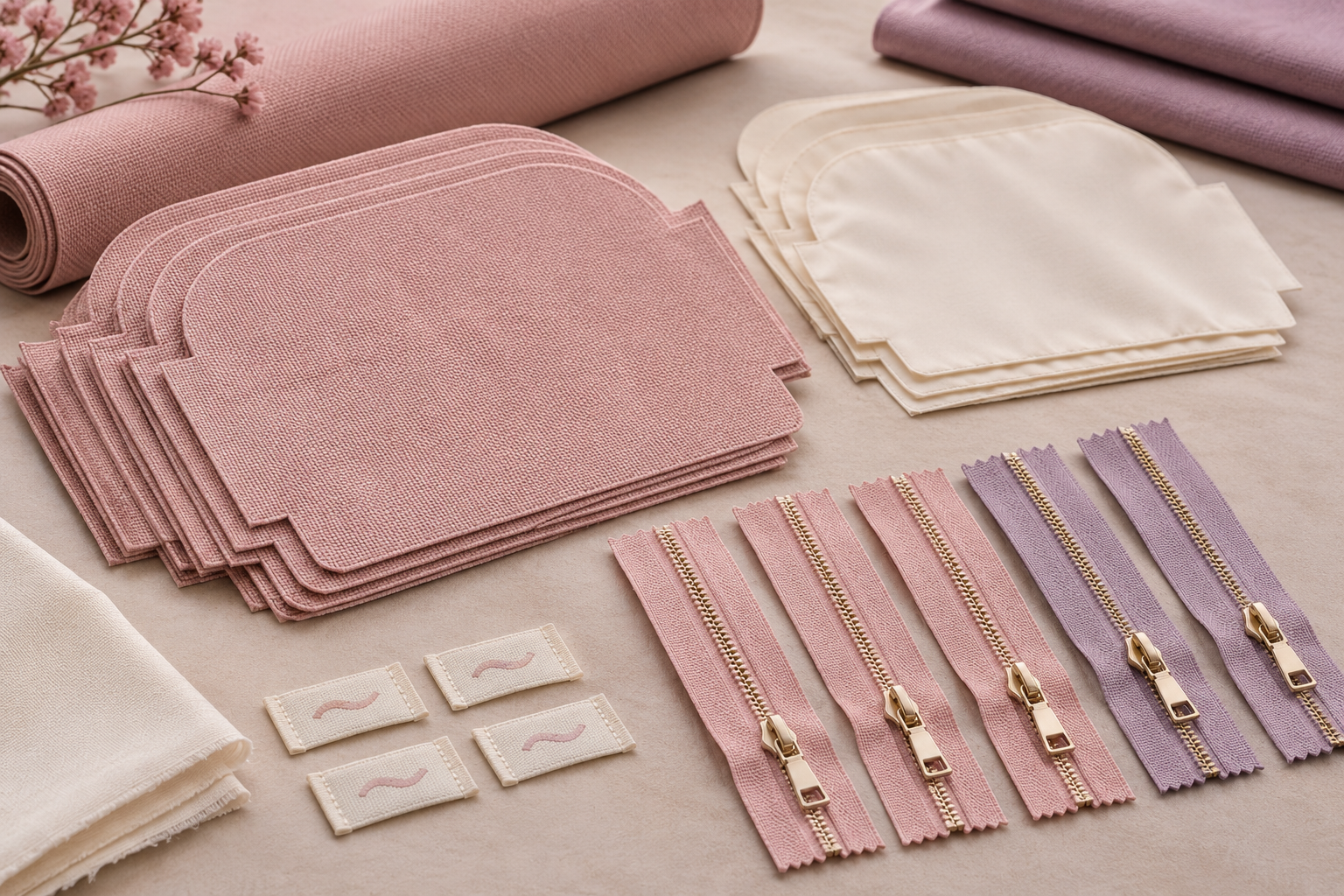
Ask whether shell fabric, lining, zippers and labels are physically available and reserved in the needed quantity. A supplier can have a fabric swatch while the required color is still pending approval or replenishment. Separate “in stock,” “allocated to this PO,” and “due from the component supplier” on the order timeline.
Logo method and order mix
Ask which branding operations sit before assembly and which can happen afterward. When an approved logo is printed on a flat panel before sewing, a late artwork change can delay all units that need that panel. Multiple colorways may share a pattern while needing separate material lots, branding setups or packing instructions. Request a schedule by SKU if one color arriving late would affect a gift set or assortment.
Line loading and inspection availability
Ask which operation sets the pace and whether it is scheduled or estimated. A confirmed sewing window may still leave decoration, packing or a third-party inspector to be booked. If an issue moves the plan, request the next feasible date and the milestone that would have to change to recover it.
Use the custom bag manufacturing services page to review the available development and production stages, then ask the quoting team which stages apply to your design.
How Can Buyers Compare Production Timelines From Different Suppliers?
Give each supplier the same specification and ask for calendar dates against identical start and finish milestones. A shorter duration might start only after trims arrive, while a longer quote may start at order release and include trim sourcing. For a fixed launch, compare the resulting dates for packed goods and inspection release, then assess how firm the assumptions behind those dates are.
| Quote item | Ask the supplier to state | Why it matters |
|---|---|---|
| Start basis | Order release date and remaining prerequisites. | Shows what could delay the first day. |
| Materials and logo | Allocation status, artwork approval deadline and component due dates. | Exposes work that must finish before assembly. |
| Factory completion | Last sewn unit date and packed lot date, with quantities by SKU. | Separates a completed operation from an order ready for inspection. |
| Inspection release | Inspection window, release criteria and reinspection allowance if applicable. | Reveals the time between packing and permission to hand over goods. |
| Handover | Goods-ready date, handover point and the party booking transport. | Lets the buyer check the planned pickup or sailing cutoff. |
| Exceptions | What changes the commitment and who will issue an updated schedule. | Gives both sides a way to handle changes before they affect launch. |
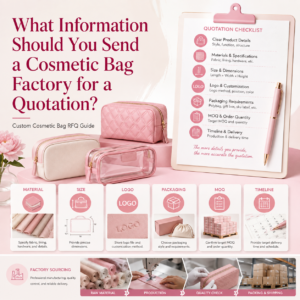
Use the same quantity breakdown, approved spec revision and packing instructions for each comparison. The custom cosmetic bag RFQ guide covers the other information a supplier needs to quote the project.
Please confirm the start trigger and calendar date, whether the duration uses working or calendar days, the planned packed-lot and inspection-release dates, the earliest carrier handover, and any open decision that could move those dates.
Which Date Belongs on the Launch Calendar?
For factory tracking, use the agreed goods-ready date and define exactly what must be ready. For a retail launch, track when inventory will be usable at your warehouse or fulfillment site. Work backward from that date through local delivery, receiving, freight and carrier cutoff, then check whether the planned inspection release supports the handover. Build the allowance around the actual route and receiving requirements.
Agree who books freight and where carrier handover occurs. When the order uses an Incoterms® rule, record the rule, version and named place in the order documents. The International Chamber of Commerce’s Incoterms® guidance explains how the rules clarify tasks, costs and risks associated with delivery. Keep the factory’s planned goods-ready date and the warehouse target visible in the schedule.
Also agree how the lot will be released after QC. The NIST Engineering Statistics Handbook describes acceptance sampling as using a sample to decide the disposition of a lot. If your order calls for that method, specify the lot, acceptance plan and who authorizes release. If the lot is held, update the plan for correction, reinspection and handover.
The cosmetic bag pre-shipment QC guide explains how to plan the inspection and define the evidence the supplier should provide.
Manufacturing Insight: Why Can Packaging Hold a Finished Sewing Run?
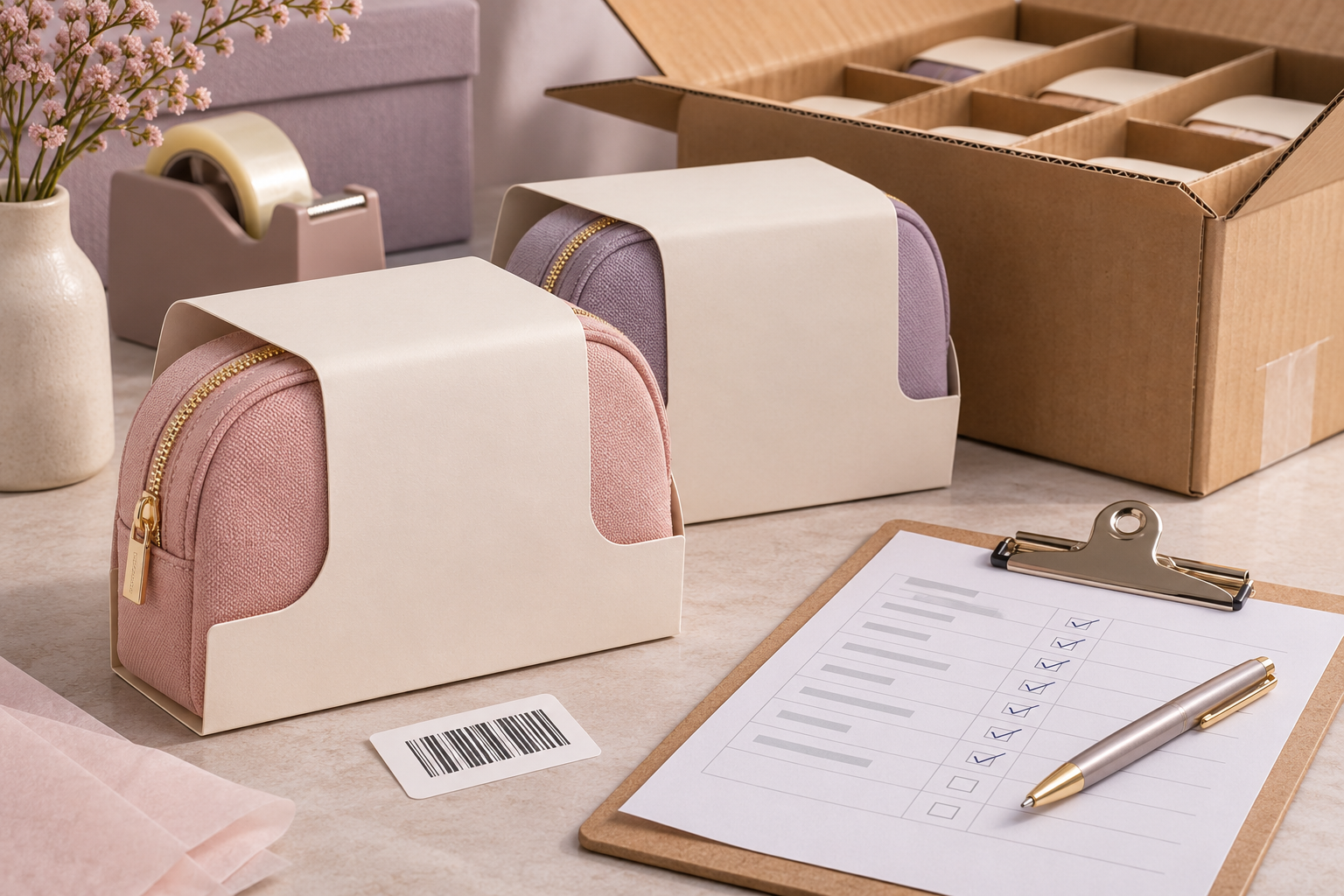
A retail-ready bag can depend on both a sewing schedule and a packaging supply schedule. If the finished pouches are waiting for a SKU-specific barcode, sleeve or tray, the packing team can only complete the lot once those components are available and approved. An inspection that requires packed units can also move if the packaging arrives late.
Take a counter display with sleeves that differ by color. The pouches may look identical from a construction standpoint, but each sleeve must carry the correct product identification, and the master carton may require a specific assortment. Ask for a packed reference and confirm the barcode, color-to-SKU mapping and carton configuration together. Have the supplier log the artwork approval and the expected packaging delivery date separately from the sewing finish.
If the program can accept a simpler pack-out, ask whether a plain sleeve with an approved SKU label would satisfy the retailer’s requirements. Confirm the change in writing, including the inspection reference and how existing packaging materials will be handled. If the retailer requires printed packaging, keep that component on the dated schedule and escalate as soon as the proof or delivery slips.
Example Scenario: A Gift Pouch With a Late Custom Zipper Pull
Hypothetical example. A skincare brand orders two colorways for a gift-with-purchase campaign. The stock nylon is allocated and the production sample is approved for construction. One colorway uses a custom pull that is waiting for a finish approval, and the campaign needs both colors at the fulfillment center.
The buyer asks the factory for two dated schedules. The first keeps the custom pull and shows when that colorway can be assembled, packed and released. The second uses an already approved stock pull, subject to written permission from the brand. Both schedules show whether the first colorway can be finished and inspected independently and whether partial delivery would work for the campaign.
The brand compares the approval deadline and warehouse dates against the actual campaign requirement. If both colors must be available on the same day, the later colorway controls launch readiness. The buyer confirms the chosen component in the purchase order, updates the reference for QC and asks the factory to reconfirm the packed-lot and handover milestones.
Buyer Checklist Before Confirming a Bulk Schedule
- Send the final specification, sample revision and logo artwork with the quote request.
- State the total order quantity and the breakdown by color, style and packaging SKU.
- Record the factory’s exact start trigger and whether the quote counts working or calendar days.
- Get dated confirmations for long-lead parts, packaging and the production slot.
- Agree which work can run in parallel and who can authorize changes after release.
- Define packing completion, inspection readiness and what must happen before goods are released.
- Confirm the carrier handover point, booking responsibility and destination receiving deadline.
- Ask for a revised milestone plan if approvals, component delivery or inspection dates slip.
Frequently Asked Questions
Can the factory start bulk work before every component is approved?
Sometimes. A factory may be able to reserve approved materials or start work on unaffected parts if the buyer authorizes it. First identify which work would become unusable if the open approval changes a dimension, color or attachment method. Write down the permitted work, who owns any resulting cost, and the latest approval date before committing the remainder of the order.
Does doubling the order quantity double production time?
Order duration can rise by a different proportion than unit count. Pattern setup or proof approval may be shared, while cutting, sewing and packing still require capacity. The factory may schedule multiple lines, split the run or move it to a later available slot. Ask for an updated goods-ready date and quantities by lot using the actual SKU mix.
Is a repeat order likely to be faster?
A repeat order can be faster if the approved specification remains current, the right components are available and the supplier has room in its schedule. Recheck the actual fabric and trim commitments, especially where the original run used custom colors or branding hardware. Confirm any design or packing changes, ask whether a fresh approval is required, and obtain a new schedule for the reorder.
Can the factory ship part of the order first?
A partial shipment may work if the supplier can identify, pack and release a separate lot and the buyer can receive it independently. Confirm the SKUs, quantities, inspection arrangements and freight costs for each shipment. If an order must ship as a mixed assortment, first check whether the retailer or fulfillment team can build the assortment from separate receipts.
What happens to the schedule if a lot fails inspection?
The factory and buyer need an updated release plan once the findings are reviewed. Ask when sorting, repair or replacement would finish and whether a fresh inspection is required under the agreed procedure. Obtain a new handover date before relying on the original freight booking, particularly where the booking has a cutoff or a change fee.
Can a rush request shorten the quoted production lead time?
A rush request can help if the supplier identifies a specific change that advances the finish date. Ask whether a stocked component, approved packing format, or earlier production slot changes the actual handover. Request the revised dates, any price changes, and written confirmation of the QC steps and approval deadlines that apply to the accelerated schedule.
Accuracy Note
Confirm pricing, minimum order quantities (MOQs), lead times, certification scope, and applicable regulatory or retailer requirements for the selected materials, order quantities, destination market and current specifications. A published range is a starting point for planning. Use the project-specific quote and the latest written milestone schedule for your purchase decision.
Request a Production Schedule for Your Cosmetic Bags
Share your approved specification or reference sample, quantity by SKU, logo method, packaging requirements and required warehouse date. Ask for a start trigger, a packed-lot date, an inspection-release date and a proposed handover date.